Fact checked by Nick Blackmer
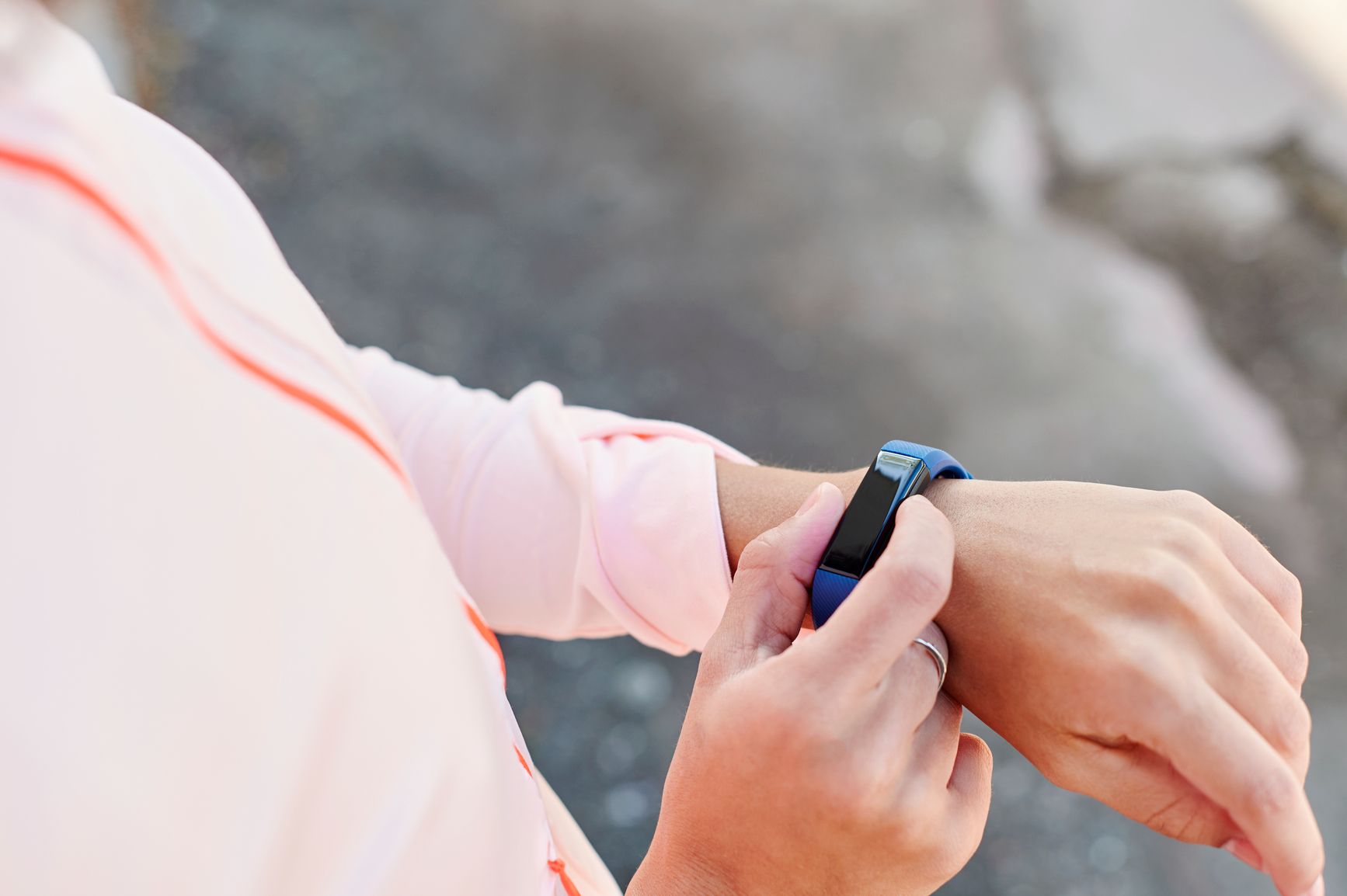
:max_bytes(150000):strip_icc():format(jpeg)/HDC-Stocksy-2958333-eb3b3bb2bc9340e0996e8f41adf5c6da.jpg "Woman looking at her fitness tracker")
Credit: Ivan Gener / stocksy
- Most wearable devices now offer some form of recovery metric.
- These scores are typically derived from multiple data points, such as heart rate variability (HRV) and respiratory rate.
- While recovery metrics can be useful, your own perceived readiness and how you feel remain the most reliable indicators.
Wearables are surging in popularity, offering new ways to think about and track health. For example, many devices now include a recovery metric—often labeled a recovery score, readiness score, or body battery—designed to show how well your body has bounced back from the previous day and how prepared it is to tackle what’s next.
But what do these scores actually measure—and how much do they really matter for overall health? Here's what to know.
What Does a Recovery Score Measure?
Most wearable devices from companies like Fitbit, Oura Ring, Garmin, and WHOOP provide some sort of recovery metric. These measurements combine multiple inputs to deliver one score that measures how physically capable you might be for handling the upcoming day.
While companies that produce wearables don’t release the exact formulas behind these scores, the devices typically incorporate factors like resting heart rate and sleep quality, along with:
- Heart rate variability (HRV): a measure of the variation in time between each heartbeat (a higher score generally indicates better resilience)
- Blood oxygen saturation: the amount of oxygen circulating in your blood
- Respiratory rate: the number of breaths taken per minute
What the Metrics Can (and Can’t) Tell You
These metrics essentially tell you how much stress your body is carrying, and how prepared it is to handle more. A higher recovery score might indicate that you’re ready for vigorous exercise, while a lower score could signal the need for lighter workouts or a day off to rest.
Because recovery scores are still relatively new, Eamon Duffy, MD, MBA, FACC, a sports cardiologist and an assistant professor of medicine at Columbia University, said experts are still figuring out their most beneficial clinical and athletic applications.
For the average person interpreting these scores, however, Duffy and Ashton Leal, CPT-NASM, a certified personal trainer at Soho Fit Personal Training Fitness Studio, said it’s best to look for trends over time. Instead of focusing on a single day’s score, consider how recent numbers compare with those from a week or a month ago. “It’s really less of a diagnostic score than it is a motivational score,” Duffy said.
The more you pay attention to the numbers, Leal explained, the easier it becomes to spot patterns in daily habits, such as overtraining or poor sleep, that can affect how your body feels. “You can kind of catch those things very quickly,” he said, “and you'll be able to make [better decisions] in regards to, ‘Should I train today? Should I not? Do I feel rested enough?’”
Still, recovery metrics have limitations. For one, they don’t measure things like muscle damage, tissue repair, injury risk, and how you feel day to day. They can also be inaccurate. Wearable devices use photoplethysmography (PPG) signals to measure metrics like heart rate, but variables like skin tone, tattoos, cold body temperature, motion, water, and device placement can all affect data quality.
That’s partly why both experts agreed that a recovery score shouldn’t be a replacement for good, old-fashioned bodily awareness. A high score doesn’t necessarily mean it’s the right day for a 10-mile hike, for example, just as a low score doesn’t mean it’s time to hit the couch. As Duffy put it, “How you feel is the most important metric.”
How Can You Improve Your Recovery Score?
Improving your recovery score is really about maintaining healthy lifestyle habits. While that should be the ultimate goal, if you’re also hoping to raise your score in the process, experts suggested focusing on the following:
- Getting enough sleep. Shoot for seven to nine hours each night, ideally at the same time each day. Blue light exposure late at night can also compromise sleep quality, so try to avoid screens late at night.
- Eating enough high-quality food. Try to eat whole, unprocessed foods—and make sure you’re consuming enough, said Leal, who noted that a lot of clients are actually undereating when they begin working with him.
- Drinking plenty of fluids. Even mild dehydration is bad for recovery, increasing your heart rate while lowering your HRV. “That will really spike up your nervous system,” Leal said. He recommends 125 fluid ounces of water each day for men and 90 for women.
- Limiting alcohol consumption. Alcohol consumption suppresses HRV, raises resting heart rate, and disrupts sleep quality—none of which supports a desirable recovery score.
- Reducing daily stress. Work pressure, anxiety, and emotional strain can all lower your HRV, impacting your recovery score. To improve your numbers, keep your daily strain as low as possible.