Medically reviewed by Kayla Girgen, RD
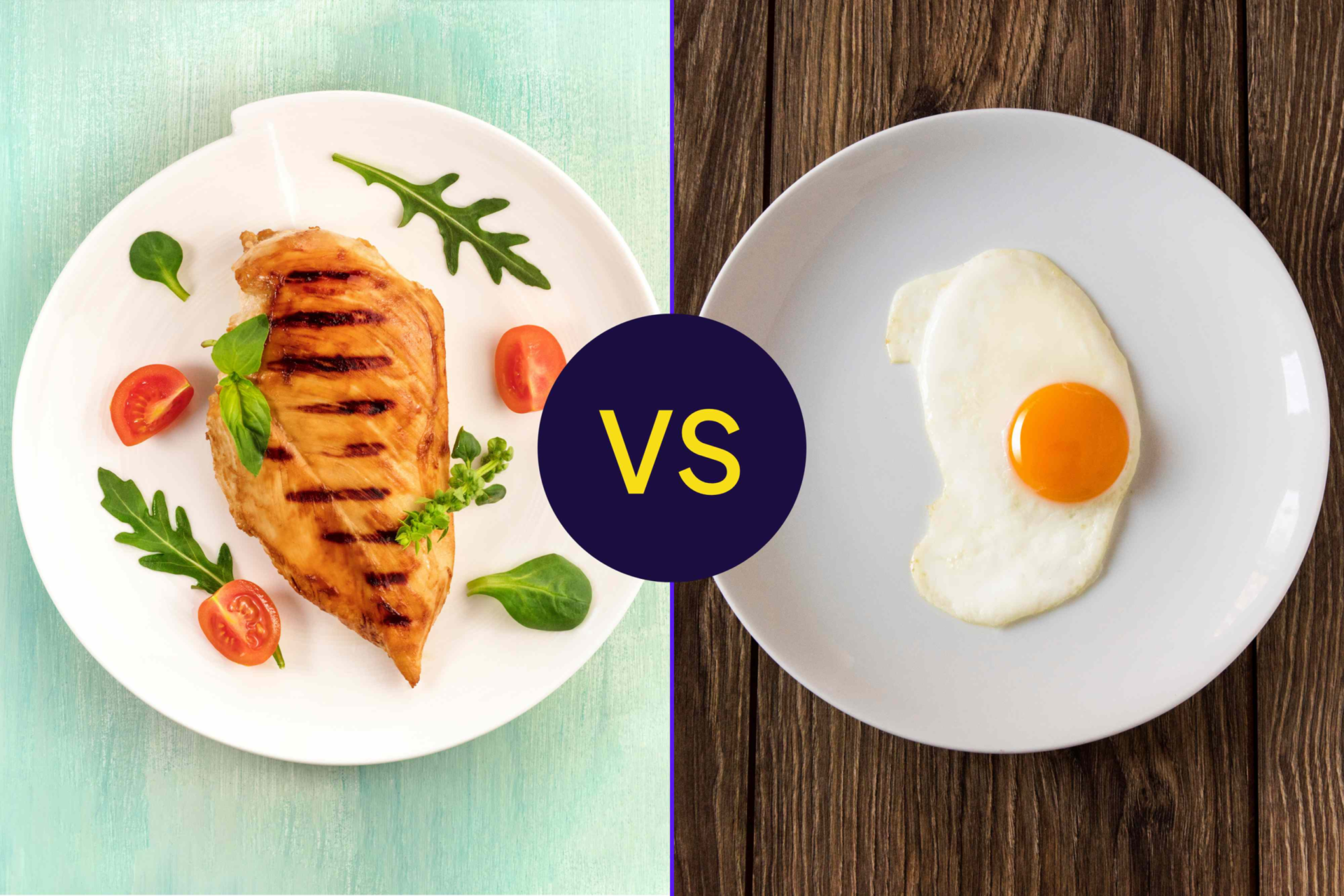
:max_bytes(150000):strip_icc():format(jpeg)/Health-chicken-vs-eggs-aa7c09747dac4b58a68456a503ca6c27.png "Comparison of chicken breast and a fried egg on separate plates with a VS symbol in the center.")
Credit: Design by Health; Getty Images
- Chicken breast offers a high amount of protein per serving, which helps you stay full.
- Some people may avoid eggs if they’re trying to follow a low-fat diet, though that’s likely not necessary for weight loss.
- Chicken and eggs can both support weight management, as long as they’re prepared without significant amounts of oil, butter, or high-calorie sauces.
Depending on portion size and preparation method, both chicken breast and eggs can fit into a balanced diet and support weight management. However, there are nutritional differences between the two foods, which could affect how full you feel and how many calories you consume.
Higher Protein in Chicken Supports Weight Loss
Protein is one of the most important nutrients for weight loss, and chicken breast has more than eggs:
- Chicken breast, one 3.5-ounce serving: 32 grams of protein
- One large egg: 6.2 grams of protein
Based on their size alone, most people wouldn't expect an egg to nutritionally match an entire serving of chicken breast. Still, you'd have to eat about five large eggs to meet the protein content found in one chicken breast serving.
If you're looking to lose weight, getting enough protein is crucial. Protein can stimulate appetite-reducing hormones in the body, helping you feel full for a longer period of time. Your body also uses more energy to digest protein than it does for fats or carbohydrates, which could slightly raise the total number of calories your body burns throughout the day.
Because of this, studies show that eating a high-protein diet is linked to lower weight, reduced body fat, and better blood sugar levels.
How Does Fat Content Play a Role in Weight Loss?
By weight, eggs have more fat than skinless chicken breast does:
- Two large eggs (100 grams): 10 grams of fat
- One serving of chicken breast (100 grams): 3.2 grams of fat
Fat is a more energy-dense nutrient, which means that foods with more fat tend to be higher in calories. Two eggs and one serving of chicken breast (both 100 grams) have about the same amount of calories, though the protein content in eggs is much lower.
For people who are trying to lower their calorie consumption by following a low-fat diet, chicken breast may be a better protein choice.
However, the higher fat content in eggs may not actually be bad for weight loss. Research shows that you don't necessarily need to follow a low-fat diet to lose weight, and low-fat diets don't appear to affect appetite or fullness as compared to high-fat diets.
To cut calories and reduce your fat intake, consider changing how you prepare your food. Grilled or baked chicken will have less fat than fried or sauced chicken, and hard-boiled or poached eggs won't have add extra fat from butter or oil, unlike scrambled or fried eggs.
Nutritional Head-to-Head
Both eggs and chicken breast are solid choices for weight loss, but they have some nutritional differences. Specifically, skinless chicken breast stands out for its high protein and low fat content, while eggs generally offer a wider range of nutrients. Here's how the two compare:
| | Two large eggs (100 grams) | Chicken breast, 3.5 ounces (100 grams) |
| Calories | 143 | 158 |
| Protein | 12.5 grams (g) | 32.1 g |
| Fat | 10 g | 3.2 g |
| Carbohydrates | 0.97 g | 0 g |
| Calcium | 48 milligrams (mg) | 6 mg |
| Iron | 1.7 mg | 0.5 mg |
| Magnesium | 11.5 mg | 32 mg |
| Potassium | 132.8 mg | 343 mg |
| Choline | 294 mg | 72 mg |
| Cholesterol | 414 mg | 116 mg |
| Selenium | 31.2 micrograms (mcg) | 31.9 mcg |
Eating Chicken and Eggs for Weight Loss
If you're looking to lose weight, it's best to build consistent, balanced eating habits over time. Eggs and chicken breast can both be part of that balanced eating—but how you prepare these foods and what you pair them with matters. To help limit your caloric intake and boost nutrient density, consider the following tips:
- Start your day with eggs: Research shows that eating eggs, especially for breakfast, can be a good choice for weight loss. In one study, people who had eggs for breakfast ate fewer calories at lunch as compared to people who ate cereal.
- Avoid chicken skin: Removing chicken skin and trimming any extra fat can reduce calories.
- Choose healthier cooking methods: For both eggs and chicken, frying can add extra calories from butter or oil. Boiling or poaching are considered the healthiest ways to cook eggs, while roasting or grilling is best for chicken.
- Add high-fiber foods: Like protein, fiber can make you feel full. That means pairing chicken or eggs with high-fiber foods—including beans, vegetables, fruit, and whole grains—can help you control hunger.
- Combine chicken and eggs in meals: Rather than choosing between them, add both chicken and eggs to your diet if you're looking to lose weight. For example, mix strips of chicken and hard boiled egg into your salad, or top your grilled chicken and grain bowl with a poached egg.




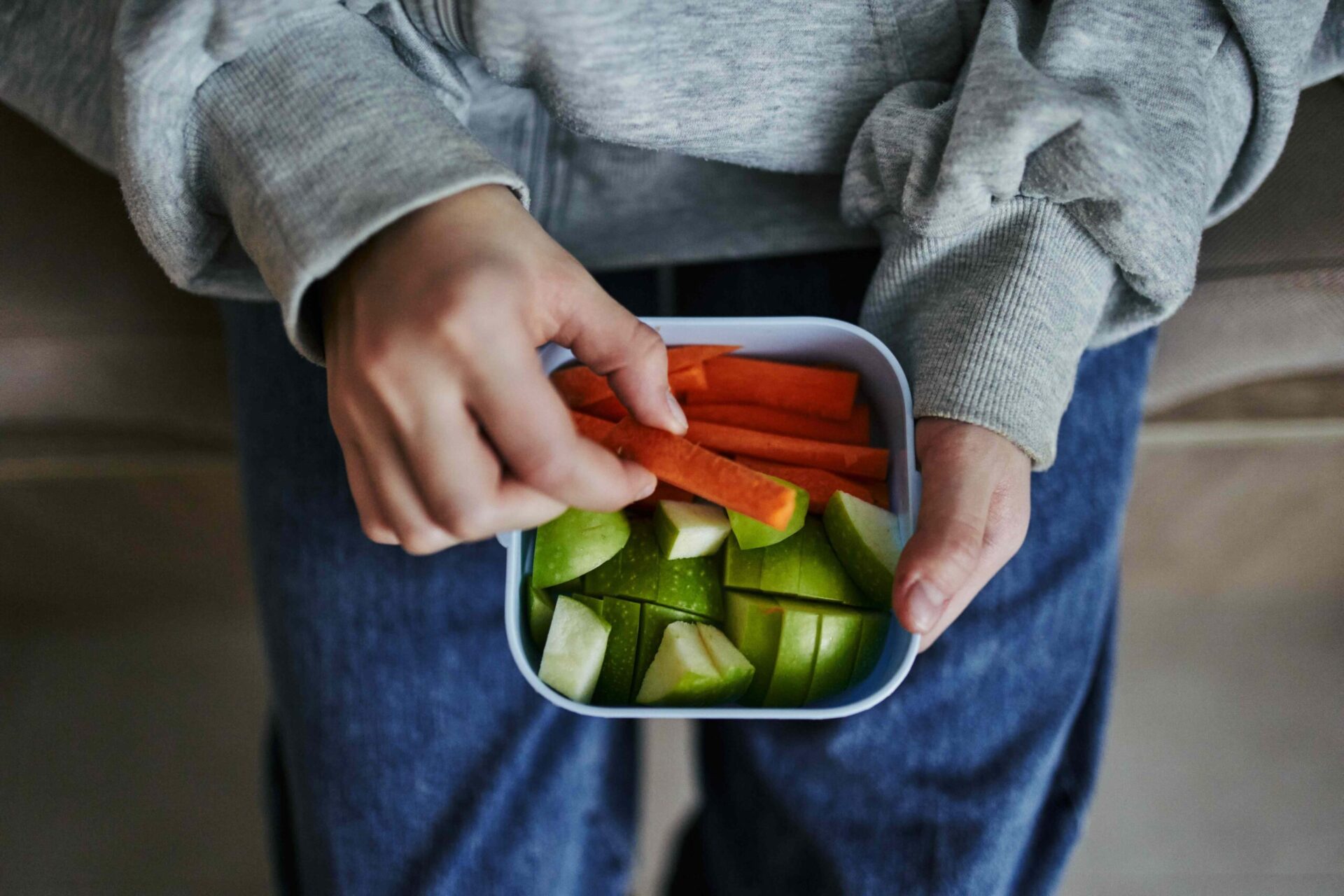
:max_bytes(150000):strip_icc():format(jpeg)/Health-GettyImages-1359002988-c5035308e08d4f738370002f8c2c837b.jpg "A person holding a bowl with sliced carrots and apple pieces on their lap")