The American Express® Gold Card comes with plenty of perks, including 4 points per dollar spent on dining and purchases at U.S. supermarkets. Earning bonus points on dining and U.S. supermarkets is capped at $50,000 annually and $25,000 annually (respectively), and you receive 1 point per dollar spent after reaching those caps.
You’ll also receive up to $10 each month in Uber Cash for rides and Uber Eats orders in the U.S. after adding your Amex Gold to your Uber account and paying with any Amex card.
Cardmembers can also receive up to $100 every calendar year in statement credits for purchases at Resy-affiliated restaurants in the U.S. (received in biannual increments of up to $50). Finally, they can receive up to $84 per calendar year in statement credits for U.S. Dunkin’ purchases (up to $7 per month).
But in addition to other great perks on the card, one may not be on your radar: the monthly dining statement credits.
The Amex Gold gives cardmembers up to $120 per calendar year in statement credits — up to $10 per month — for dining purchases from select merchants.
While you need to enroll your card for these benefits, it’s a great way to save money every month. In fact, maximizing these perks entirely covers the card’s $325 annual fee (see rates and fees).
Read on to find out how to use the Amex Gold dining benefits.
Eligible Amex Gold dining merchants
You can use your Amex Gold monthly dining statement credits at the following merchants:
- Buffalo Wild Wings
- Five Guys
- Goldbelly*
- Grubhub
- The Cheesecake Factory
- Wine.com*
- Wonder

Reward your inbox with the TPG Daily newsletter
Join over 700,000 readers for breaking news, in-depth guides and exclusive deals from TPG’s experts
*Available through June 30

After you enroll and use your Amex Gold card at any of these merchants, you’ll automatically receive a statement credit of up to $10 each month (up to $120 each calendar year).
Because you’re purchasing directly from the merchant, you can also stack this benefit with applicable Amex Offers or bonuses through online shopping portals.
Related: Why I love my Amex Gold card — and will keep it for years to come
How to use the Resy and Dunkin’ statement credits
The Resy and Dunkin’ statement credits are easy to use. To receive a Resy statement credit, you just need to make a purchase at a Resy-affiliated restaurant in the U.S. No reservation is required.
Keep in mind that this statement credit is given biannually in increments of up to $50. It’s important to time your purchases well to take full advantage of this benefit. Keep an eye on your statement to ensure the credit posts correctly.
TPG contributing editor for credit cards Matt Moffitt has used his statement credit at two Resy-affiliated restaurants in Austin, Texas, and had different experiences.
The first time, the statement credit didn’t post correctly. He thinks that’s because the restaurant was part of a boutique hotel, and the restaurant charge was coded under the hotel name, not the restaurant name. He waited the obligatory eight weeks to see if it would post automatically.
It didn’t, so he used the online chat function in his Amex account to request a manual credit, which was granted.
The second time, he made a purchase at a stand-alone restaurant, and he received the statement credit automatically after five days.

For the Dunkin’ statement credit, making any purchase at a U.S. Dunkin’ location will net you up to $7 in statement credits each month (up to $84 each calendar year). If you’re a frequent coffee drinker, getting the full value from this credit should be easy.
Make sure to double-check whether Dunkin’ is in your area before factoring those statement credits into the effective cost of the Amex Gold for you. If you don’t have a location nearby, you can trigger the credit by reloading your balance through the Dunkin’ mobile app.
Enrollment is required for these benefits.
Related: How to maximize Amex Gold credits when traveling abroad
How to enroll for the Amex Gold dining statement credits
You can’t receive monthly dining statement credits on the Amex Gold without enrolling in the benefits first.
So, how do you enroll? Let’s use the up to $120 dining statement credit as an example.
If you’re using the American Express mobile app, choose the “Membership” icon at the bottom of your homepage and then tap “Explore All Card Benefits” to see a full list of perks — some of which require enrollment.
From there, find the “$120 Dining Credit” and check whether you’re already enrolled.
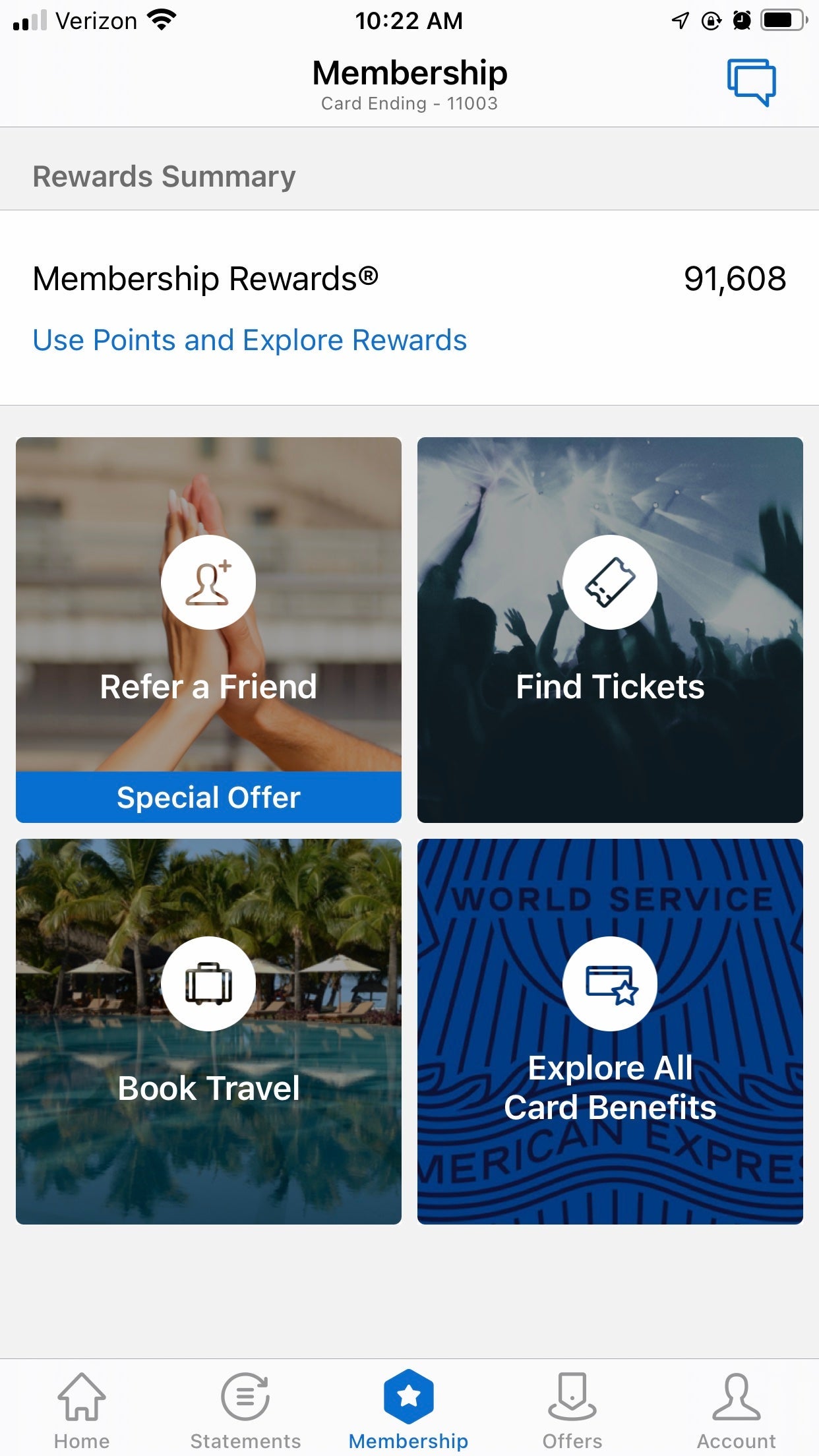
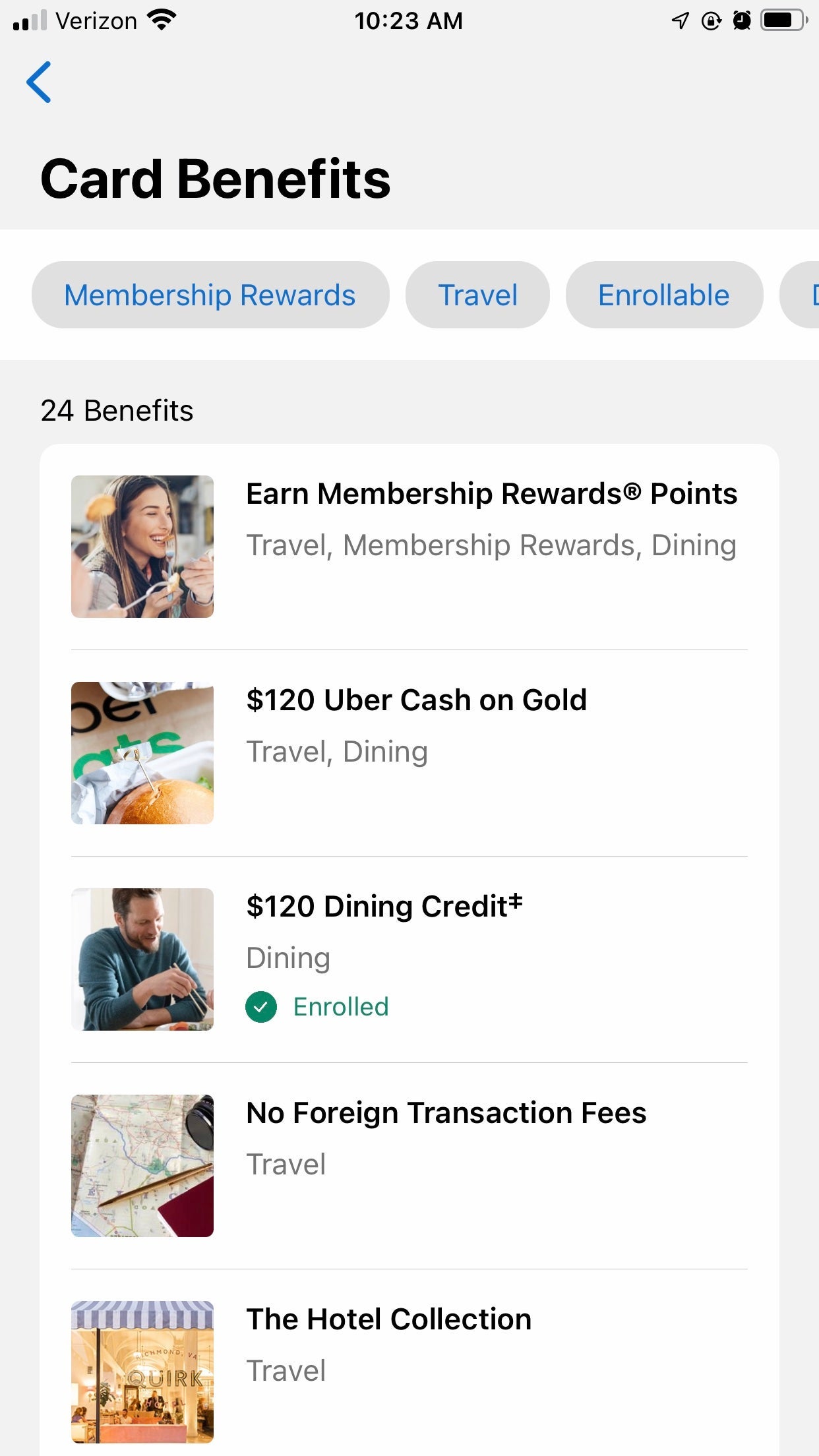
1 of 2
AMERICAN EXPRESS MOBILE APP
If not, tap it, and you’ll be taken to a page where you can complete enrollment.
If you’re using a computer, log in to your American Express account and navigate to your Amex Gold card. Click on “Rewards and Benefits,” then click on “Benefits” on the right side of the page (inside the blue menu bar at the top).
From there, you should see the option to enroll in the up to $120 dining statement credit (or an indication that you’ve enrolled already). Rinse and repeat these steps for the other two dining benefits.
A benefits tracker also shows how much of your credit you’ve used so far this month and through the year, resetting on Jan. 1 each year.
Note that you only need to complete enrollment once. You don’t need to do it every month. Once your card is registered, you can use the benefits every month.
Related: Amex Gold checklist: 5 things to do when you get the card
Important reminders
Aside from the requirement to enroll your card to receive the monthly statement credits, there are a few additional caveats for the Amex Gold dining credits.
First, the dining credit is different from the Uber benefit on the card. When you add your Amex Gold to your account, you’ll receive up to $10 in Uber Cash every month (up to $120 each calendar year).
This Uber Cash is valid for Uber Eats orders and Uber rides in the U.S. An Amex Card must be selected as the payment method for your Uber or Uber Eats transaction to redeem the Amex Uber Cash benefit.

While you can use your Uber Cash at any restaurant available through the Uber Eats app, you can use the dining credit only at the merchants mentioned above. However, Grubhub has a wide variety of dining spots — and you might even find a new favorite in the process.
And, remember that the Amex Gold is running special, limited-time anniversary offers, including the ability to enroll and get a one-time statement credit of up to $96 when using the Amex Gold to pay for an annual Uber One membership, unlocking savings and exclusive benefits on Uber and Uber Eats. This is available through Oct. 30.
As long as you enroll in advance and use your card at an approved merchant, you should receive a statement credit within a few days.
There are two other things you should know, as well.
First, purchases by authorized users will trigger these perks. Authorized users don’t receive separate statement credits each month, so make sure to coordinate with them when using these benefits.
Second, the up to $120 dining statement credit cannot be used to purchase gift cards or merchandise.
Related: When you should (or shouldn’t) use the Amex Gold Card
Bottom line
The Amex Gold offers three dining statement credits to help offset its steep $325 annual fee. If you’re considering this card or deciding whether to keep it, these benefits may help you decide if it’s right for you.
Ensure you can consistently use these statement credits before including them in the projected value you’ll get from the card.
To learn more, check out our full review of the Amex Gold.
Apply here: American Express Gold Card
For rates and fees of the Amex Gold card, click here.

Stacie Harris is a local resident and reporter of the Maple Grove area. Stacie reports on medicine and science for the Maple Grove Report.






:max_bytes(150000):strip_icc():format(jpeg)/GettyImages-2253385503-49d609f27e75489cbb35796a15282f5b.jpg "Hong Kong - November 26, 2025 : Lululemon store at Hong Kong International Airport.")