6 Foods With More Fiber Than Brown Rice


Medically reviewed by Allison Herries, RDN

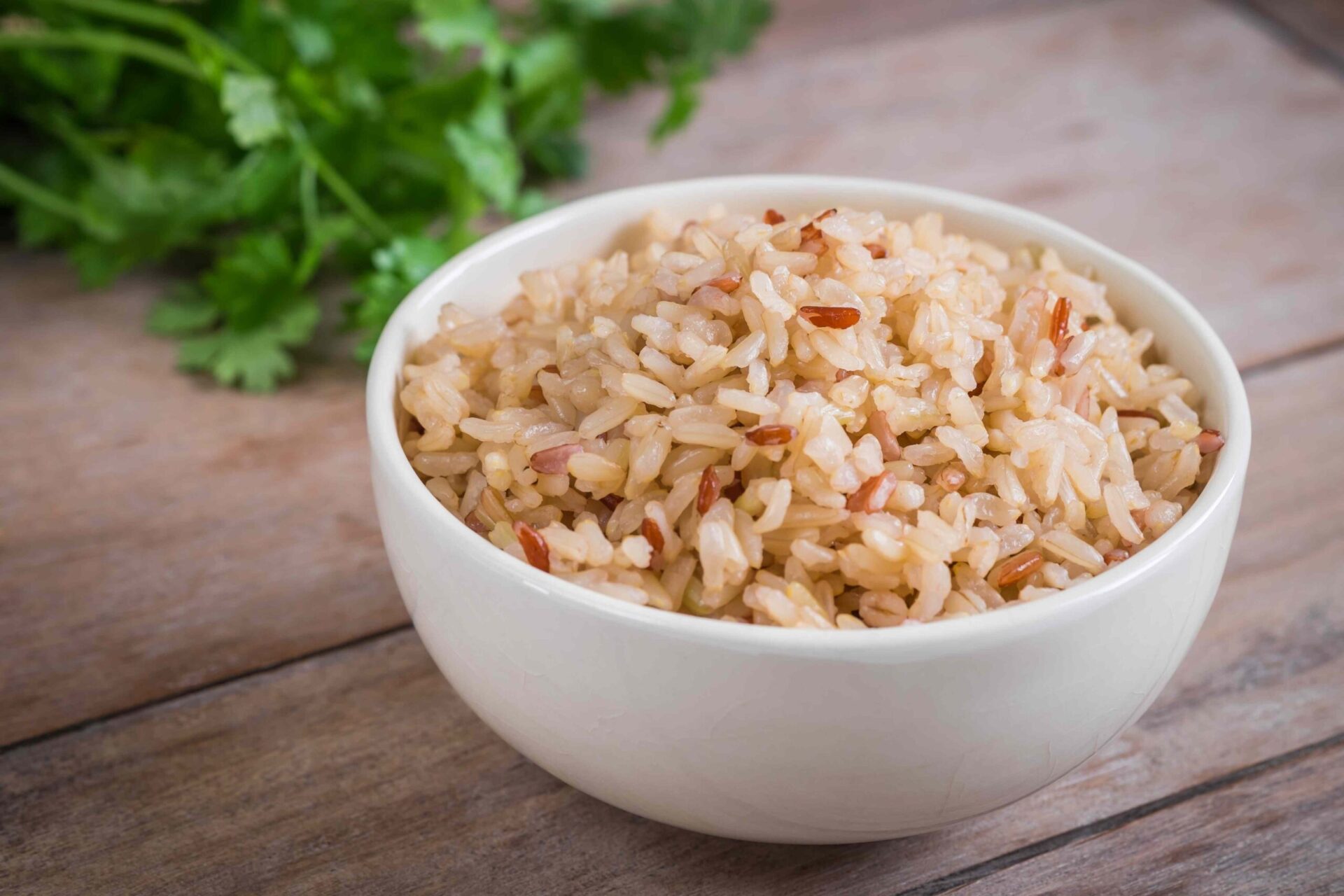
Brown rice is a solid source of fiber, but other foods offer even more fiber per serving.Credit: Amarita / Getty Images
Brown rice is a solid source of fiber, but other foods offer even more fiber per serving.
Credit: Amarita / Getty Images
  • A cup of raw brown rice offers about 6.8 grams of fiber. This is considered high, as it exceeds 20% of the Daily Value (DV) for fiber. 
  • Foods that offer even more fiber than brown rice include oats, black beans, quinoa, and bulgur.
  • Dietary fiber can have numerous benefits for digestive and metabolic health, including improved bowel movements and fewer blood sugar spikes after a meal.

Brown rice is a rich source of fiber. Roughly half a cup—or 100 grams—of raw medium-grain brown rice contains about 3.4 grams of fiber. That's about 12% of the 28 grams of fiber adults are recommended to eat every day. Several other foods exceed this percentage, providing more fiber per serving.

1. Barley

Credit: Juan Silva / Getty Images
  • Fiber content: 31.8 grams, about 114% of the DV
  • Serving size: 1 cup

Barley is a nutrient-dense whole grain packed with functional ingredients, vitamins, and minerals like:

  • Vitamins A, B1, C and E
  • Gamma-aminobutyric acid (GABA)
  • Saponarin and other flavonoids
  • Polyphenols
  • Calcium
  • Potassium
  • Magnesium
  • Selenium

Its nutritional profile makes barley a great food option for managing weight, regulating blood sugar, and promoting gut and heart health. Barley may also have positive effects on sleep, diabetes, inflammation, and cognition.

Barley is a versatile grain that you can prepare as a standalone dish or pair with dishes such as porridge, stews, soups, muesli, baked foods, beverages, and granola. To gain the most nutrients and fiber from barley, it’s best to consume it in its minimally processed form.

2. Bulgur

Credit: Luc TEBOUL / Getty Images
  • Fiber content: 17.1 grams, 61.1% of the DV
  • Serving size: 1 cup

Bulgur is a popular staple food in Mediterranean and Middle Eastern cuisine. Made from the groats of different wheat species, especially durum wheat, a cup of dry cereal contains more than half the DV of fiber for adults.

High-fiber foods like bulgur promote satiety (the feeling of fullness), support weight management, and may lower the risk of colorectal cancer by promoting the production of butyrate, a beneficial short-chain fatty acid.

Bulgur is also a rich source of:

  • Carbohydrates
  • Protein
  • Potassium
  • Magnesium
  • Phosphorus
  • Sodium
  • Calcium
  • Folate
  • Vitamin B3

Bulgur is produced by parboiling (partially boiling), drying, and then cracking or milling wheat kernels. While some water-soluble nutrients may be lost during this process, parboiling can reduce phytic acid (an antinutrient), which may help improve the availability of certain nutrients.

3. Black Beans

Credit: Krit of Studio OMG / Getty Images
  • Fiber content: 16.6 grams, about 59% of the DV
  • Serving size: 1 cup

Beans are great sources of fiber and are also widely known for their high protein content. They are also excellent sources of:

  • Potassium
  • Folate
  • Iron
  • Zinc
  • Calcium
  • Phosphorus
  • Potassium 
  • Vitamin K

Black beans are also cholesterol-free and low in saturated fat, making them heart-friendly foods. Research suggests that eating black beans may help lower inflammatory response and improve the body’s sensitivity to insulin, a hormone that helps regulate blood sugar.

4. Oats

Credit: Irina Marwan / Getty Images
  • Fiber content: 14.5 grams, about 52% of the DV of fiber
  • Serving size: 1 cup, raw

Oats are a highly nutritious, easy-to-prepare cereal meal. Oats are considered one of the healthiest grains to consume, as they are packed with important nutrients, such as:

  • Carbohydrates
  • Protein
  • Thiamine
  • Magnesium
  • Potassium 
  • Phosphorus
  • Iron
  • Zinc
  • Vitamin B6
  • Calcium

Oat types include oat groats, steel-cut oats, instant oats, rolled oats, and oat bran. While they can all be part of a well-balanced diet, oat groats and steel-cut oats are the least processed and offer the highest fiber content. Instant oats and rolled oats, however, take less time to prepare and are easier to digest.

5. Quinoa

Credit: VICTOR de SCHWANBERG/SCIENCE PHOTO LIBRARY / Getty Images
  • Fiber content: 11.9 grams, 42.5% of the DV
  • Serving size: 1 cup

The American Heart Association describes quinoa as a “nutritional powerhouse” abundant in protein and carbohydrates. Quinoa is also notable for its high fiber content. 

Quinoa is a source of certain B vitamins, which play a role in metabolism. Because it doesn't contain gluten, it’s an excellent food option for people with celiac disease and related gastrointestinal disorders.

6. Sweet Potato

Credit: bhofack2 / Getty Images
  • Fiber content: 8.2 grams, 29.3% of the DV
  • Serving size: 1 cup, mashed

Sweet potatoes are highly nutritious, sweet, starchy root vegetables. They contain bioactive compounds, such as polyphenols, anthocyanins, and other beneficial phytochemicals. They are also a rich source of other nutrients like:

  • Carbohydrates
  • Protein
  • Simple sugar
  • Starch
  • Calcium
  • Potassium
  • Sodium
  • Magnesium
  • Vitamin C
  • Vitamin A

Cooking turns starch in sweet potatoes into maltose, a simple sugar. In their raw form, sweet potatoes have less maltose, which may make them better for blood sugar regulation. However, raw potatoes are harder to digest and may cause gastrointestinal discomfort for some people.

How Dietary Fiber Affects Your Digestive System

Fiber plays a significant role in digestion, nutrient absorption, and overall gastrointestinal health. There are two main forms of fiber:

  • Soluble fiber: This type of fiber dissolves in water, forming a gel-like paste. It slows down food digestion, helping with satiety and softening stool.
  • Insoluble fiber: This type does not dissolve in water. It remains intact, adding bulk to your stool.

A balance of soluble and insoluble fiber influences key aspects of the gastrointestinal system and can lead to effects like:

  • Increased satiety
  • Increased stool bulk and bowel movement
  • A cleanup of unwanted buildup in the gastrointestinal tract
  • Lower risk of constipation
  • Prevention of post-meal blood sugar spikes
  • Lower risk of colon cancer
  • Reduced risk of diverticulitis, a condition where pouches form in your intestines, typically causing pain




Source link

Leave a Reply

Subscribe to Our Newsletter

Get our latest articles delivered straight to your inbox. No spam, we promise.

Recent Reviews


United Explorer Card overview

The United℠ Explorer Card (see rates and fees) isn’t your average airline credit card, as it’s packed with premium-like perks that you typically see from credit cards with a high annual fee. This card is a great option for those who don’t fly with United Airlines frequently but want to enjoy premium perks when they fly. You should also consider the Explorer if you don’t want to pay as high an annual fee as those found on United’s more premium cards. Card rating*: ⭐⭐⭐⭐

*Card rating is based on the opinion of TPG’s editors and is not influenced by the card issuer.

The United Explorer Card has an introductory annual fee of $0 for the first year, then $150 thereafter and offers many benefits.

Aside from the usual airline credit card perks like free checked bags and priority boarding, the United Explorer has a handful of premium-level benefits.

The recommended credit score for the United Explorer is at least 670, but it’s not unheard of to be approved with a lower score.

Here’s what you need to know about the card, its benefits and whether it deserves a spot in your wallet.

United Explorer pros and cons

Pros Cons

  • First checked bag for free
  • Priority boarding
  • Inflight discounts on eligible purchases
  • Global Entry/TSA PreCheck statement credit
  • Multiple travel-related statement credits

  • Other United cards have higher earning rates on some purchases
  • You might get more use from a transferable points card instead of a cobranded United card
  • Has a modest annual fee

United Explorer welcome offer

New applicants for the United Explorer Card can earn up to 80,000 United MileagePlus bonus miles: 70,000 bonus miles after spending $3,000 on qualifying purchases in the first three months from account opening, plus 10,000 bonus miles after adding an authorized user to your account within the first three months of account opening.

United Explorer card art
THE POINTS GUY

TPG’s April 2026 valuations peg United miles at 1.35 cents apiece, making this welcome offer worth $1,080 (including the points from adding an authorized user).

It’s important to note that this card is subject to Chase’s 5/24 rule. Additionally, you won’t be eligible for a welcome bonus if you have received one on this card in the past 24 months.

Reward your inbox with the TPG Daily newsletter

Join over 700,000 readers for breaking news, in-depth guides and exclusive deals from TPG’s experts

Related: The best welcome offers of the month

United Explorer benefits

The United Explorer Card offers a good mix of perks for both frequent and occasional United flyers.

United Club passes

You’ll receive a pair of one-time United Club passes deposited into your United MileagePlus account each cardholder anniversary year. This benefit alone is worth $118 per year, as a day pass at the lounge costs $59 each with a same-day boarding pass.

Note that a friend or family member can only use one of your passes if the primary cardholder or authorized user is also entering the lounge.

United Club B18
United Club by Gate B18 at Chicago’s O’Hare International Airport (ORD). CAROLINE TANNER/THE POINTS GUY

TPG credit cards editor Olivia Mittak finds great value in the United Club passes this card provides; as long as she flies with a Star Alliance airline twice a year, she can almost get back the cost of the annual fee in value. United Club passes can be used whenever you’re flying on any Star Alliance airline.

Related: First look: United Airlines debuts massive new club in Denver

Elitelike perks

  • First checked bags for free: For the primary cardholder and one travel companion on the same reservation when you book with your card
  • Premier Access: Includes priority check-in, security screening, boarding and baggage handling where available
  • Expanded award availability: Access to additional saver award ticket availability
  • Inflight discount: 25% back on United inflight purchases, including food, beverages and Wi-Fi. Plus, receive 25% back on premium drink purchases in the United Club.
  • Award mileage discount: Ability to earn a 10,000-mile discount on award tickets after spending $20,000 each calendar year with the card

If getting free checked bags and a pair of United Club passes would elevate your travel experience with the airline, this card holds plenty of value.

Statement and travel credits

  • Hotel statement credit: Up to $50 back as a statement credit on the first and second prepaid hotel bookings when using the Explorer Card and booking directly through United Hotels
  • Ride-hailing credit: Up to $60 for ride-hailing purchases, given as up to $5 monthly credits (activation is required)
  • JSX statement credit: Up to $100 in JSX statement credits each anniversary year when booking directly with JSX
  • Global Entry, TSA PreCheck or Nexus credit: An application fee credit every four years for up to $120
  • Instacart credit: A $10 monthly Instacart credit, plus a three-month complimentary Instacart+ membership (ends Dec. 31, 2027)
  • United TravelBank cash: Up to $25 in United TravelBank cash for your first and second Avis and Budget car rentals booked through cars.united.com and paid for with the card
  • United travel credit: $100 in United TravelBank cash after spending at least $10,000 on purchases with your card

Elite status shortcuts

United elite status qualification is based on Premier qualifying points and Premier qualifying flights. You’ll earn 1 PQP for every $20 you spend on purchases with your Explorer Card (up to 1,000 PQPs in a calendar year) that can be applied toward your Premier status qualification, up to the Premier 1K level.

Travel and purchase protections

With the United Explorer, you’re getting various travel and purchase protection benefits, including:

DoorDash

For one year, get complimentary DoorDash DashPass to receive unlimited deliveries through DoorDash and Caviar with $0 delivery fees and lower service fees on eligible orders. After 12 months, you will be auto-enrolled in DashPass at the current $9.99 monthly rate. You must enroll by Dec. 31, 2027 to receive this benefit.

Instacart+ membership

Cardholders receive a complimentary three-month Instacart+ membership, which includes unlimited delivery and $0 delivery fees on eligible orders. After three months, the membership is automatically renewed at a lower annual rate, which includes a 25% discount.

Considering all these benefits, the $150 annual fee in year two and beyond seems well worth it.

Related: Why I’m actually not upset about the United Explorer’s changes

Earning miles with the United Explorer

As a cardholder, you’ll earn:

  • At least 9 miles per dollar spent on United flights (you may earn more depending on your level of United MileagePlus elite status)
  • 5 miles per dollar spent on prepaid United Hotels
  • 3 miles per dollar spent on all other United purchases
  • 2 miles per dollar spent on other hotel stays and dining
  • 1 mile per dollar spent on all other purchases
CHRIS NELSON/THE POINTS GUY

According to TPG’s valuations, this equates roughly to a 12.2%, 6.8%, 4%, 2.7% and 1.4% return on spending, respectively.

These are outstanding earning rates on United flight purchases, some of the best on the market. However, the earning rates are lackluster for other bonus categories like dining, hotels and everyday spending, and better card options exist on the market.

Related: My top 3 picks for the best cobranded hotel credit card

Redeeming miles with the United Explorer

You can redeem your MileagePlus miles across United’s vast network of domestic and international routes and on the carrier’s 24 Star Alliance and 15 nonalliance airline partners.

United uses a dynamic pricing structure on its own flights, so the value of your miles will vary when redeeming for United awards. Domestic awards in economy typically start at just 5,000 miles one-way, but we’ve seen sales with tickets as low as 3,900 miles.

United Polaris studio
UNITED AIRLINES

We recommend avoiding non-flight redemptions, such as hotel stays or merchandise, with your United miles, as they offer a poor value proposition.

Related: How to get maximum value from the United MileagePlus program

Which cards compete with the United Explorer?

Several cards compete with the United Explorer:

  • If you want a premium United experience: The United Club℠ Card (see rates and fees) is the ideal card for United lounge access — bar none. For any loyal United flyer who spends significant money with the airline each year, this card would make a great addition to your wallet. To learn more, read our full review of the United Club Card.
  • If you want a more all-around card: The Chase Sapphire Preferred® Card (see rates and fees) is one of the most popular travel rewards credit cards on the market. It offers bonus points in several categories, including travel and dining, and a slew of travel protections in case something goes awry when traveling. Additionally, you’ll have access to Chase’s excellent roster of transfer partners that can provide maximum value when redeeming your points. To learn more, read our full review of the Sapphire Preferred.
  • If you want tons of perks: The American Express Platinum Card® is one of the top premium travel rewards cards. As a cardmember, you’ll earn valuable Membership Rewards points, receive useful annual statement credits and get access to an extensive network of airport lounges worldwide, as this card offers the best lounge access on the market. Enrollment is required for select benefits; terms apply. To learn more, read our full review of the Amex Platinum.

For additional options, check out our full list of the best United travel cards and the best airline cards.

Related: Is the United Club Card annual fee worth it?

Is the United Explorer worth it?

If you fly with United or its partners at least once or twice a year, we recommend applying for the United Explorer. With several statement credits, lounge passes and a free checked bag, the United Explorer Card is jam-packed with perks to enhance your trips from start to finish.

Bottom line

The United Explorer Card isn’t your run-of-the-mill airline credit card. It has a decent earning rate to stockpile United miles that you can redeem for future travel and a range of benefits.

As long as you take advantage of its lounge passes and statement credits, this mid-tier card — which has a $0 introductory annual fee for the first year ($150 each year thereafter) — has a low cost with considerable value.

With these things in mind, this card would make a great addition to most United flyers’ wallets.


Apply here: United Explorer Card


Source link