

Won’t you take a trip down memory lane with me all the way to the distant past: 2011.
That was when The Points Guy founder Brian Kelly used to answer reader questions every single Sunday as folks wrote in with their points triumphs and travails.
We would hear from travelers who met their future spouses on a spur-of-the-moment trip that they had studiously saved up their frequent flyer miles for, or from folks who had made a simple error and lost tens of thousands of points they had hoped to use toward future travel.

As TPG expanded over the years and began to cover the ever-more-complicated world of points and miles, though, folks wrote to us less and less frequently. Maybe it was the faster and faster news cycle, the proliferating number of points credit cards out there, or just the simple fact that we all seem to be a lot busier.
Sure, these days we sometimes hear from readers about amazing trips they booked with points and miles, but it’s not that often. That’s too bad, because there’s no greater feeling than traveling for “free” and experiencing something or someplace you never thought possible. And we love sharing that high with our readers, especially because it’s often some of our articles that helped them turn that dream into a reality.
On the flipside, it takes time and effort to rack up rewards points, and folks occasionally write to us with tales of woe about how simple blunders or oversights have derailed their trips. Trust us, we’ve also been there.

Relaunching reader success and mistake stories
That’s why we at The Points Guy think it’s high time to formally relaunch our series of reader successes and reader mistakes.
We know you’re taking our advice, signing up for credit cards, earning those statement credits and visiting those airport lounges like rockstars.
We also know that using points and miles has gotten more complex than ever.

Reward your inbox with the TPG Daily newsletter
Join over 700,000 readers for breaking news, in-depth guides and exclusive deals from TPG’s experts
So we want to hear from you about all the things you’re doing right (and the incredible trips you’re finding ways to take), and the errors you might have committed (again, we all do it!), so our community can learn from them.
We have even created two web forms for you to fill in, depending on what you want to share.
Have an amazing success you want the world to know about? Tell us about it here.
Want a shoulder to cry on as you see your travel plans go down the tubes? We are the sympathetic friends you need, so let it all out.
Tell us your stories
What kinds of things do we want to hear about? Tell us about that once-in-a-lifetime safari you just booked. Or how you accidentally canceled a credit card and lost 100,000 points it took you years to stock up on.
Did you accrue enough points paying for a wedding to book that dream honeymoon in the Maldives? Do tell!
Or did you transfer hundreds of thousands of credit card points to an airline partner only to find that the award you had seen days earlier had disappeared? We’ve been there.
And we want to hear it all.
Shall I go first? I recently booked tickets to one of the most remote corners of the earth, Ningaloo Reef, to swim with whale sharks on my Australian honeymoon. In business class. All the way. Using miles.
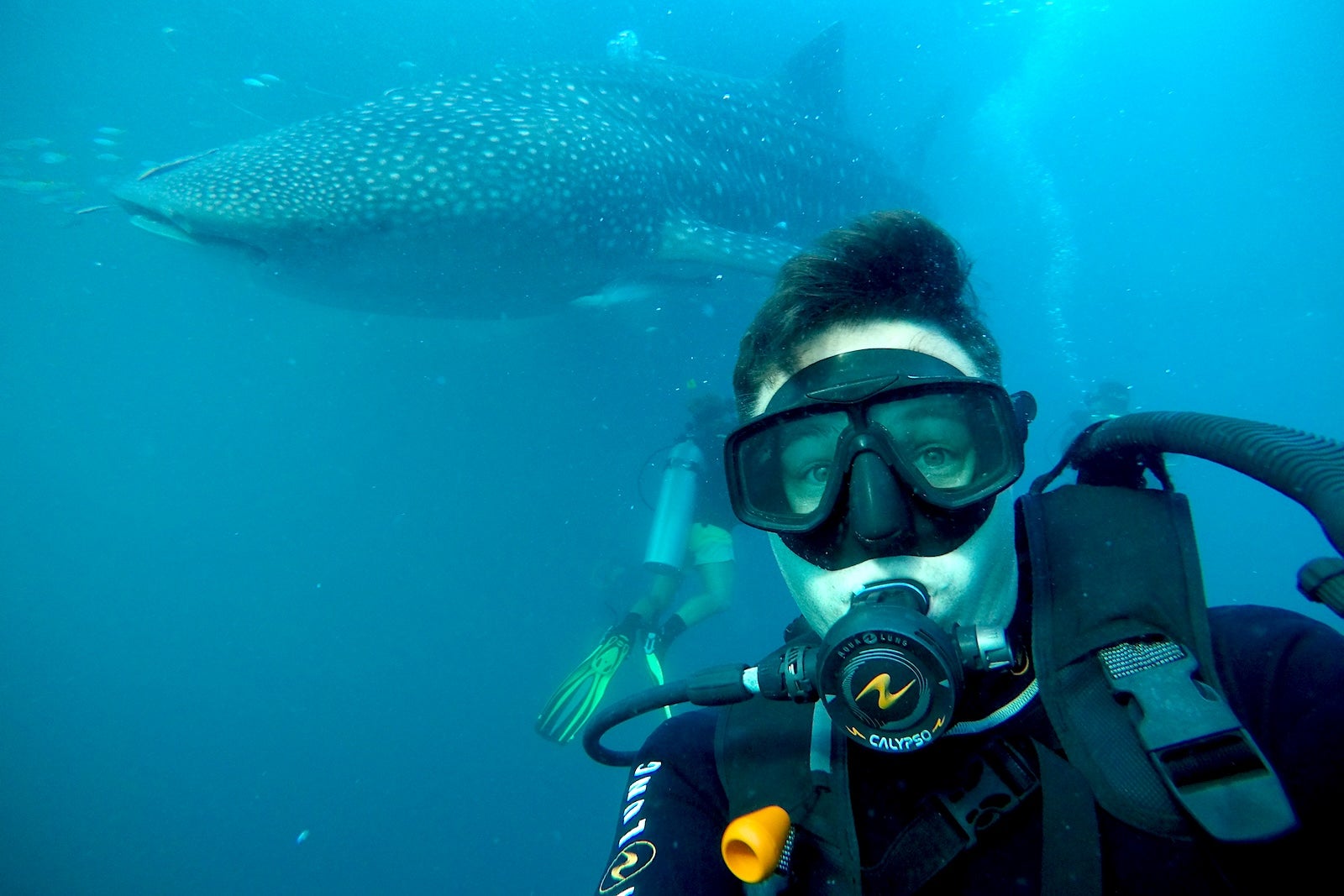
Each ticket would have cost me, wait for it, $20,425! Instead, I used 100,000 United MileagePlus miles each (thank you, cardholder award discount!) for our tickets from San Diego to Melbourne and then 20,000 American Airlines AAdvantage miles each to continue to Exmouth via Perth on Qantas. The taxes and fees, you ask? Just $120 each.
But it’s not all Polaris seats and kangaroos. You should have seen me just the other day at the Kuala Lumpur International Airport (KUL), where I was stuck in an immigration line for an hour instead of breezing through an electronic kiosk because I filled in the wrong date by accident on my entry visa card and my passport got flagged. Or the time I had to sleep on the airport floor in Rio de Janeiro because a connecting flight was canceled and I hadn’t thought to get a Brazilian visa just in case. Or the time I mixed up my departure time and date for a flight to Asia and showed up at the airport … a whole day late! Or the time … well, you get it. I’ve made a lot of whoopsies.

We want to share those travel highs with you so we can celebrate. But we also want to hear about your biggest mistakes … and commiserate.
Where to submit your stories
Remember, there’s one form if you want to submit a reader success story.
Whereas this is the form for reader mistakes.
For the latter, let’s be clear: We have a fantastic ombudsman, Michelle Couch-Friedman, who helps travelers resolve ongoing issues with travel companies where readers feel they are owed compensation for circumstances beyond their control. And you can reach her at this email address.
But that’s not what our reader mistakes series is.
This series is about unforced errors that travelers have unequivocally made themselves and that do not require our help or recourse. What they do, however, is teach the rest of us to avoid common pitfalls and to learn from them.
But let’s also focus on the positive, too. We want to hear all about your travels and where your points and miles have taken you, so don’t be shy.
We can’t wait to hear what you all have to say, so please write in and tell us all about your recent experiences!

Stacie Harris is a local resident and reporter of the Maple Grove area. Stacie reports on medicine and science for the Maple Grove Report.





:max_bytes(150000):strip_icc():format(jpeg)/GettyImages-2253385503-49d609f27e75489cbb35796a15282f5b.jpg "Hong Kong - November 26, 2025 : Lululemon store at Hong Kong International Airport.")