Xfinity Customer? You May Be Owed Money From a $117.5 Million Data Breach Settlement


Comcast has agreed to pay $117.5 million to settle a class-action lawsuit stemming from a cyberattack that exposed the personal information of approximately 36 million Xfinity customers in October 2023. The settlement is now open for claims, and current and former customers who received a breach notification from Comcast in December 2023 may be eligible for a flat cash payment of around $50, or up to $10,000 if they can document losses tied to the breach. The deadline to file is August 14, 2026.

When Comcast notified users of the breach (PDF) in December 2023, the company admitted data thieves stole usernames, passwords, names, contact information, dates of birth and the last four digits of Social Security numbers. 

In a class action lawsuit, Hasson v. Comcast Cable Communications LLC (PDF), customers contended that Comcast was responsible for financial damages and for the time spent pursuing identity theft protection related to the breach. While Comcast denied any wrongdoing, the company reached a preliminary settlement in January, agreeing to pay $117.5 million to 36 million affected customers.

The official settlement website is now live, although payments won’t begin until after the court’s final approval hearing. That hearing is currently scheduled for July 7.

If you qualify for a settlement payout, you can file on the website now. You need a unique settlement member ID number included within the initial online communication sent to affected Comcast customers to file the claim.

Read more: The $135M Google Data Settlement Site Is Live. See if You’re Eligible

You have multiple options if you don’t want to file a claim. If you object to the agreed-upon settlement, you can write to the court or ask permission to speak at the final approval hearing. 

You can also opt out of the settlement, which will allow you to retain your right to separately sue Comcast in relation to this data breach. If you don’t file a claim or opt out of the settlement by Aug. 14, you will lose out on payment from this settlement.

As part of the settlement, Comcast must pay for and provide identity defense services to any affected member of the class action suit. Unlike the settlement payouts, affected customers who do not file a claim will also be able to apply for the identity defense services. Anyone who opts out of the settlement will not be eligible for those services.

Representatives for Comcast and the law firm Lynch Carpenter LLP, which served as lead counsel for the plaintiffs, did not immediately respond to a request for comment.

Who can be part of the Comcast settlement?

Not every Comcast customer is automatically eligible to claim part of the settlement payout — the money is reserved for people whose personal information was accessed during the 2023 data breach.

In order to join, you must meet these three qualifications:

  1. Be a living, individual human being in the US or its territories.
  2. Used Comcast services during the October 2023 data breach.
  3. Received a notification of being affected by the Comcast data breach.

While the court is scheduled to hold a final approval meeting on July 7, those affected can file a claim on the official settlement website until Aug. 14. The approval meeting’s time and date are subject to change. Any updates will be posted on the website.

While some class action suit settlements pay out a lump sum to affected customers who don’t file a claim, that is not the case for Hasson v. Comcast Cable Communications LLC. You must file a claim and provide a payment method by the deadline to be compensated as part of the settlement.

How much will the Comcast settlement pay?

The amount of money each claimant will receive will be proportional to the out-of-pocket losses or lost time you can prove you incurred as a result of the data breach. 

The total payment for each claimant is capped at $10,000 and is affected by the total pool of settlement money and the number of affected customers who file a claim.

If you don’t want to go through the process of proving out-of-pocket losses or lost time are connected to the data breach, you can instead choose to accept an alternative cash payment of $50. The alternative cash payment is subject to change depending on the total number of claimants.

A third of the settlement money ($39.2 million) is earmarked to pay attorneys’ fees, subject to court approval. After this amount is paid out, the remaining settlement money will be divided among the settlement members who submitted the claim form before the deadline.

Whether you’re claiming restitution for out-of-pocket losses, lost time or accepting the alternative cash payment, you must file by Aug. 14. Payments will be distributed after the final approval hearing, assuming there are no appeals.


Source link

Leave a Reply

Subscribe to Our Newsletter

Get our latest articles delivered straight to your inbox. No spam, we promise.

Recent Reviews


SD Tables in SAP:

The SAP SD module is built on tables and uses them to store data. We’ll go through SAP SD tables and their relationships in this tutorial. SAP SD tables are critical storage for corporate data connected to SAP ERP software’s sales and distribution activities. The SD tables are basically divided into three parts:

These are the SD module’s building blocks, and it’s only natural to address tables in this sequence. Please look at the slides to see how the tables from different blocks were connected. Being an expert in SAP SD necessitates an understanding of these relationships. 

 Become a SAP SD Certified professional by learning this HKR SAP SD Training !

1) Sales

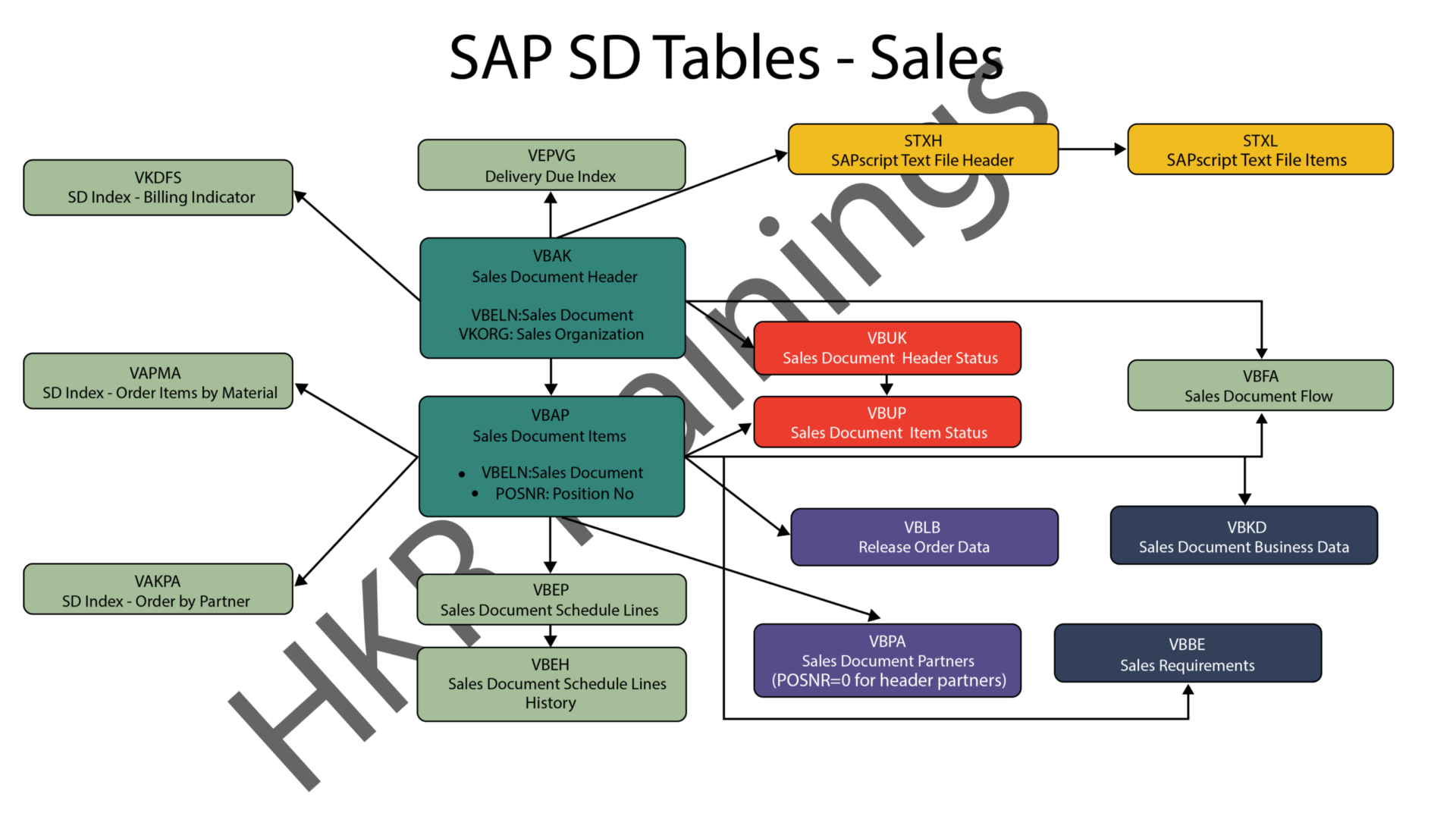
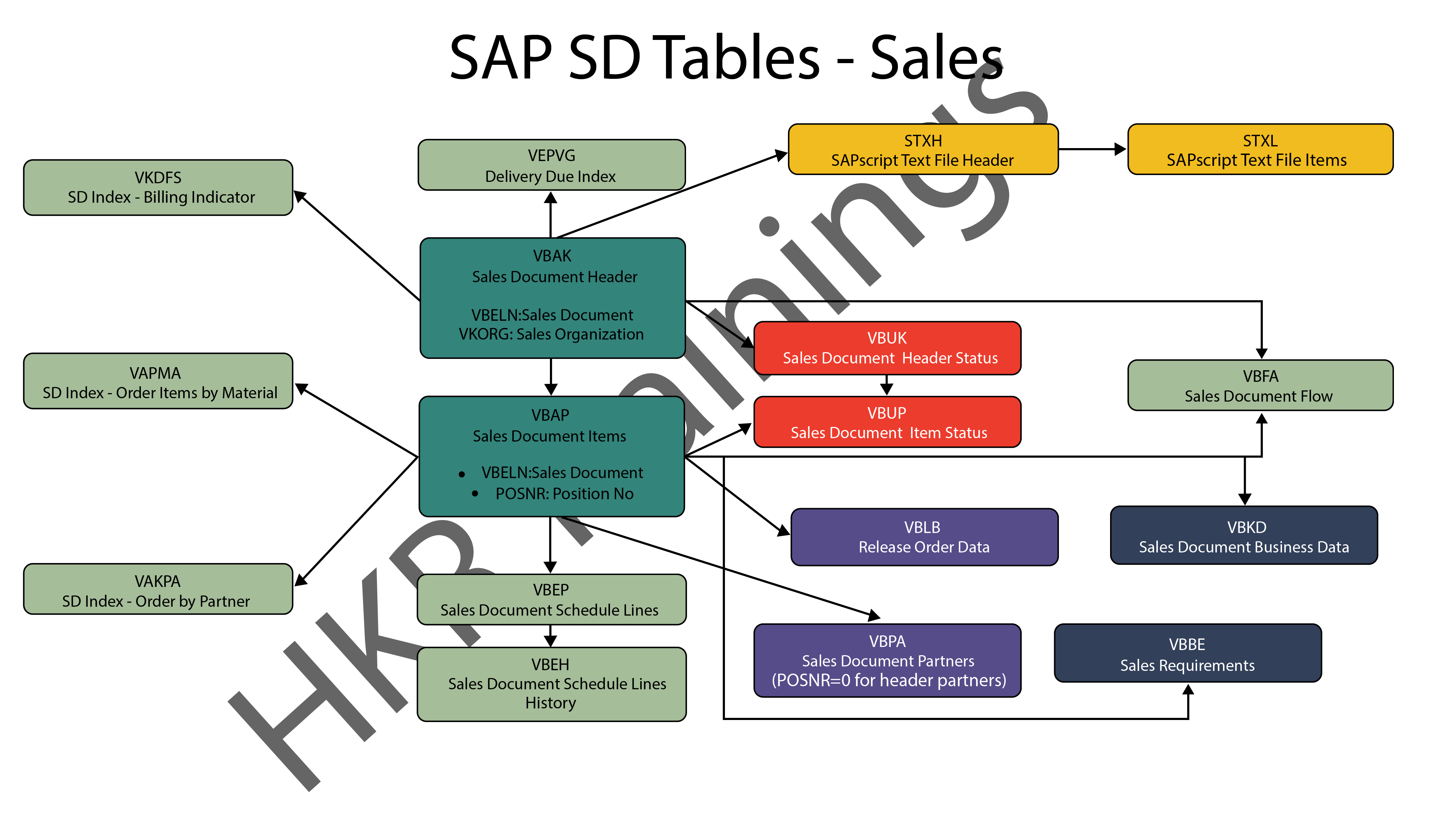
In SAP SD, the first block is about sales procedures.This indicates that the SAP SD tables in this block would be related to sales orders, quotations, and other similar transactions. We designed a visual slide that lists all of the tables and their relationships. 

SAP SD Sales

2) Shipping

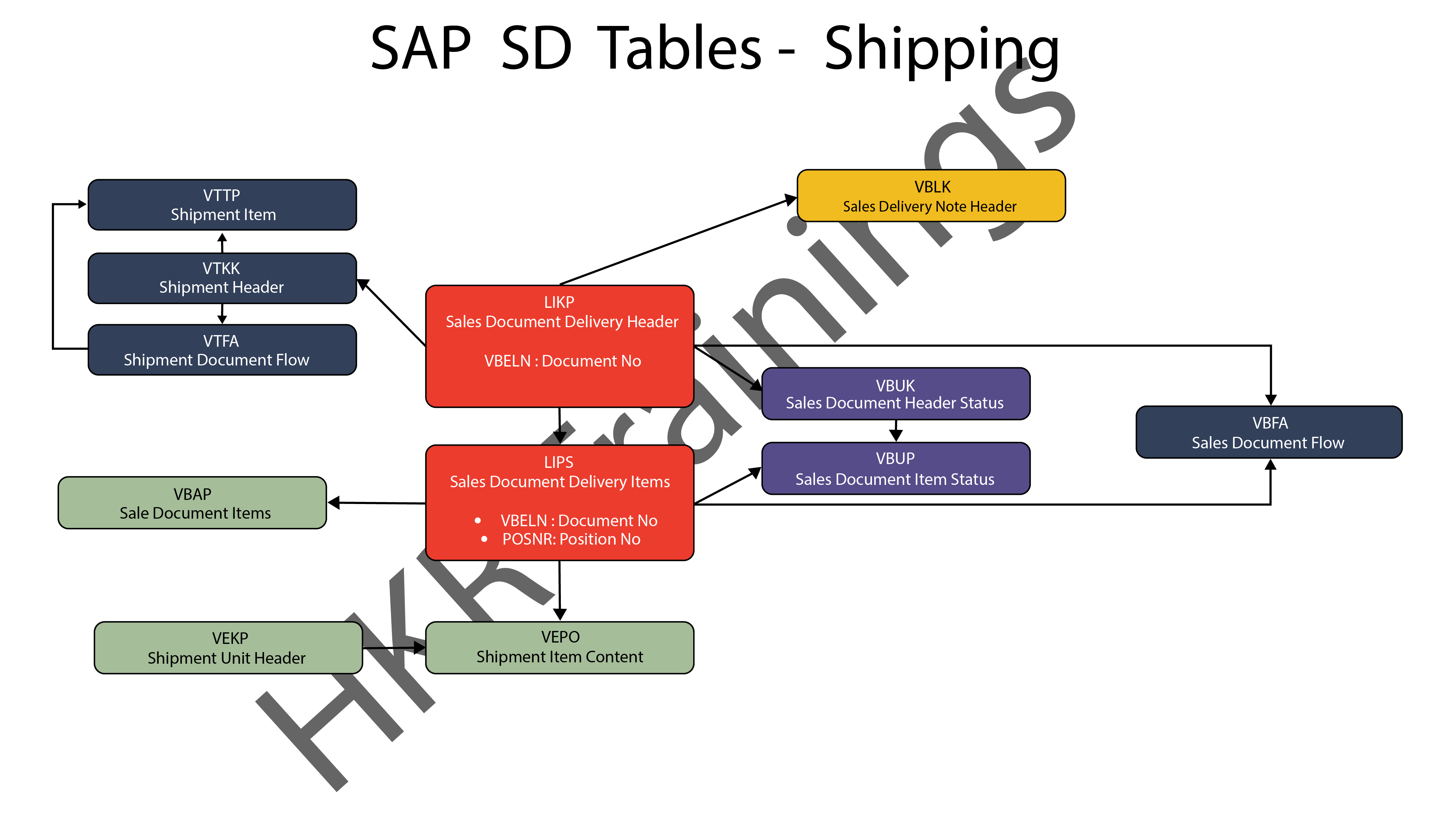
ThIs section is about SAP SD’s shipping processes. In this section, SAP SD tables deal with inbound and outbound deliveries, as well as shipments. Likewise, we’ve created a visual slide with links illustrating table relationships. 

SAP SD Shipping

SAP SD Training

  • Master Your Craft
  • Lifetime LMS & Faculty Access
  • 24/7 online expert support
  • Real-world & Project Based Learning
3) Billing

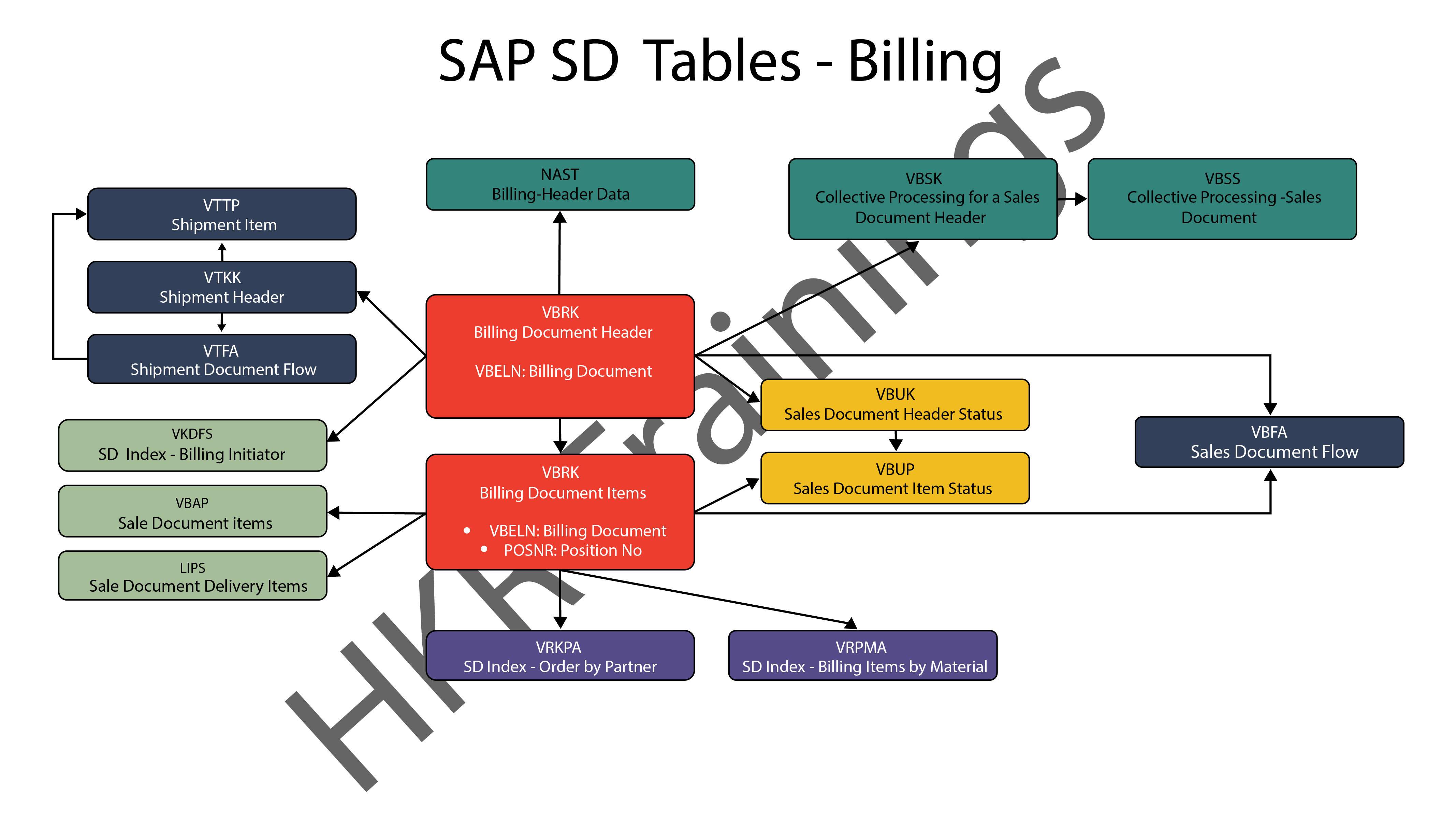
The billing feature of SAP SD is the last but not least. SAP has a variety of tables which are used to support a company’s billing procedures. Billing documents, as well as other related data, such as output conditions, are saved in these tables by SAP. 

SAP SD Billing

Want to know more about SAP SD,visit here SAP SD Tutorial !

SAP SD Significant Tables for Sales and Distribution

The following are the SAP SD tables for customers, sales documents, delivery documents, billing documents, shipping unit.

1) Customers

KNA1: General Data

KNB1: Customer Master – Co. Code Data (payment method, reconciliation acct)

KNB4: Customer Payment History

KNB5: Customer Master – Dunning info 

KNBK: Customer Master Bank Data

KNKA: Customer Master Credit Mgmt.

KNKK: Customer Master Credit Control Area Data (credit limits)

KNVV: Sales Area Data (terms, order probability)

KNVI: Customer Master Tax Indicator

KNVP: Partner Function key

KNVD: Output type

KNVS: Customer Master Ship Data

KLPA: Customer/Vendor Link

2) Sales Documents

VBAKUK: VBAK + VBUK

VBUK: Header Status and Administrative Data

VBAK: Sales Document – Header Data

VBKD: Sales Document – Business Data

VBUP: Item Status

VBAP: Sales Document – Item Data

VBPA: Partners

VBFA: Document Flow

VBEP: Sales Document Schedule Line

VBBE: Sales Requirements: Individual Records

Top 30 frequently asked SAP SD Interview Questions !

3) SD Delivery Document

LIPS: Delivery Document item data, includes referencing PO

LIKP: Delivery Document Header data

4) Billing Document

VBRK: Billing Document Header

VBRP: Billing Document Item

5) SD Shipping Unit

VEKP: Shipping Unit Item (Content)

VEPO: Shipping Unit Header

Acquire SAP Basis certification by enrolling in the HKR SAP Basis Training in Pune!

SAPS, sap-sd-tables-description-2, SAPS, sap-sd-tables-description-4

Subscribe to our YouTube channel to get new updates..!

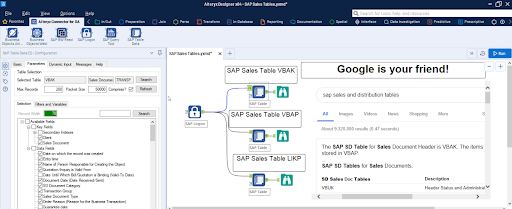
The most significant SAP Sales and Distribution (SD) tables for Alteryx users

For users of Alteryx and the DVW Alteryx Connector for SAP, we’ll now look at the most significant SAP Sales and Distribution (SD) tables 

SAP Sales and Distribution table

Related Articles SAP SD Modules !

The following SAP systems contain SAP Sales and Distribution tables:

  • SAP ECC 
  • SAP ERP
  • SAP S/4HANA

SAP Transaction Tables for Sales and Distribution (SD)

The SAP SD transaction tables for sales, delivery and billing process is as follows: 

1) Sales Document Tables

The documents of SAP Sales include:

  • Inquiries
  • Quotations
  • (Sales) Orders
  • Contracts
  • Credit Memo Requests
  • Debit Memo Requests 

The following are the most important tables in a sales document:

  • VBAK – Sales Document: Header Data
  • VBAP – Sales Document: Item Data 

SAP SD Training

Weekday / Weekend Batches


2) Delivery Document Tables

The documents of SAP Delivery include:

  • Delivery / Shipping Notifications
  • Deliveries

The key Delivery Document tables are:

  • LIKP – SD Document: Delivery Header Data
  • LIPS – SD document: Delivery: Item data 

Related Articles SAP SD Flow ! 

3) Billing Document Tables

The documents of SAP Billing include:

  • Invoices
  • Credit Memos
  • Debit Memos
  • Intercompany Invoices

The key Billing Document tables are:

  • VBRK – Billing Document: Header Data
  • VBRP – Billing Document: Item Data

Master Data Tables for SAP Sales and Distribution (SD)

  • KNA1 – General Data in Customer Master
  • KNB1 – Customer Master (Company Code)
  • KNKK – Customer master credit management: Control area data
  • KNVV – Customer Master Sales Data 

Data Tables for SAP Sales and Distribution (SD) Configuration

  • TVFK – Billing: Document Types
  • TVFKT – Billing: Document Types: Texts
  • TVKO – Organizational Unit: Sales Organizations
  • TVZB – Customers: Terms of payment 
  • TVZBT – Customers: Terms of Payment Texts

Conclusion:

We hope this blog is very helpful in knowing various tables discussed on SAP SD.   


Source link