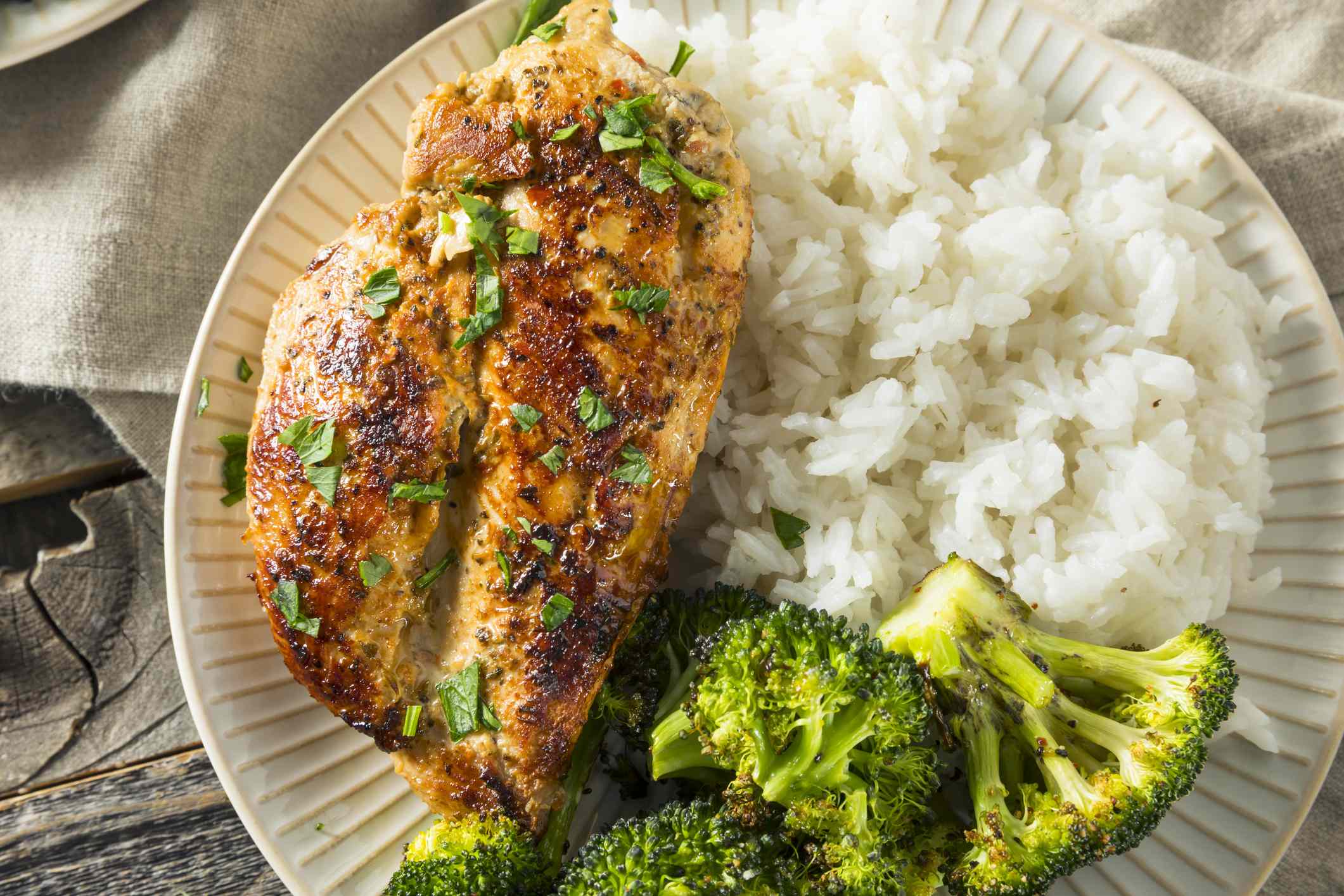
:max_bytes(150000):strip_icc():format(jpeg)/Health-GettyImages-904329028-525400d90f504579a0baa5b2cdac559c.jpg "A plate with grilled chicken breast white rice and steamed broccoli")
Credit: bhofack2 / Getty Images
- Chicken and rice can be a convenient, affordable, meal that supports metabolism.
- When eaten alone often, it may lack key nutrients like omega-3s, antioxidants, and fiber.
- Pair chicken and rice with fruits and vegetables, and include a variety of protein sources, whole grains, and healthy fats throughout the week.
Chicken and rice is a go-to meal for many people because it is simple, affordable, and easy to prep. When eaten regularly, it can support your metabolism and help maintain muscle. But relying on it every day without enough fiber, vegetables, and healthy fats may leave some nutrition gaps.
How Chicken and Rice Supports Your Metabolism
Chicken is a complete source of protein, meaning it supplies all nine essential amino acids your body cannot make on its own. Research suggests that regularly eating high-protein foods may slightly increase metabolism in both the short and long term. It is also generally more filling than fat or carbohydrates.
In the short term, protein can temporarily increase metabolism because your body uses energy to digest and process it. Over time, eating enough protein and strength training may help maintain muscle, which supports metabolism because muscle burns more calories at rest than fat tissue.
Chicken also provides B vitamins, which help support metabolism and turn the food you eat into energy.
Pairing chicken with rice adds carbs, your body’s preferred source of energy. Carbs help fuel your brain, muscles, workouts, and daily activities. Having enough energy may also help you stay more active throughout the day.
Other Potential Benefits
Chicken and rice may offer other benefits beyond metabolism, including:
- Better blood sugar management: Pairing protein with carbohydrates can help slow digestion and support steadier blood sugar levels.
- A nutrient boost: Chicken provides nutrients like B vitamins, selenium, and phosphorus, while rice provides carbohydrates for energy. Choosing brown rice adds more fiber, minerals, and antioxidants.
- Convenience: Chicken and rice are affordable, easy to prep in bulk, and simple to customize with vegetables, sauces, or seasonings.
Potential Drawbacks of Eating Chicken and Rice Every Day
Chicken and rice can absolutely be included in a balanced diet. But eating the same meal every day can make it harder to get the wide range of nutrients your body needs to support overall health and metabolism.
While chicken and rice provide protein, carbohydrates, and some key nutrients, the combo is relatively low in vitamin C, omega-3 fats, and fiber unless you add other foods to the plate.
Vitamin C, found in foods like citrus fruits, bell peppers, strawberries, and broccoli, is important for immune health. Omega-3 fats, found in fatty fish, walnuts, chia seeds, and flaxseeds, support heart and brain health. Fiber is especially important for digestion, gut health, heart health, and blood sugar balance.
Eating the same foods every day can also get boring for some people, which may make it harder to stick to your nutrition goals long-term.
How To Make Chicken and Rice More Nutritious
Chicken and rice can be a nutritious go-to meal, especially when you add fiber, healthy fats, and different flavors. Eating it two to three times per week can give you the convenience while still leaving room for variety.
Try these simple tips:
- Prep it in bulk: Make a batch of chicken and rice at the start of the week so meals come together faster.
- Change the flavor: Use different spices, herbs, marinades, or sauces so it doesn't feel like the same meal every time.
- Add something colorful: Toss in vegetables like broccoli, peppers, spinach, carrots, or green beans for more fiber and antioxidants.
- Opt for brown rice more often: White rice can be helpful when you want quick energy, but brown rice adds more fiber, vitamins, and minerals.
- Mix up your proteins: Choose fish, turkey, eggs, tofu, beans, or lentils on other days to get a wider range of nutrients.