Android 17 Includes Better iOS File Sharing And A Forced Break For Addictive Apps


Google mission to add an extra layer of polish to its mobile OS continues with Android 17. With last year’s update, the company focused on upgrading its notification experience and adding a big-screen desktop mode. Android 17, not surprisingly, will lean into more integration with Google’s Gemini (including the nifty ability to create app automations). But if you’re not into AI, there are still a few notable additions, especially when it comes to file sharing with iOS, 3D emojis and reining in addictive apps. 

Google surprised us all last year when it added support for Apple’s AirDrop in Android’s Quick Share feature on Pixel 10, 9 and 8a phones, and we’ve heard official word that it’s expanding that feature to more devices soon. Today on the Android Show livestream, ahead of Google I/O, Google confirmed that the feature already works on Samsung’s Galaxy S26, Oppo’s Find X9 and N6 and Vivo’s X300 Ultra. The company also revealed it will be heading to Samsung’s S25, S24 and recent foldable lineup; OPPO’s Find X8; the OnePlus 15; and Honor’s Magic V6 and V8 Pro “this year.”

While you wait, the company is adding the ability to generate QR codes on any Android phone today to let you quickly share files with iOS users over the cloud.Google also says Quick Share is headed to popular apps like Whatsapp “soon.” It’s unclear why that feature isn’t broadly accessible to every app on Android, without additional developer work, similar to iOS’s ubiquitous sharing options. And speaking of iOS, Google also says it’s worked together with Apple to make it easier for people to switch from iOS to Android devices. Apple confirmed that the feature is a part of the new iOS 26.5 update

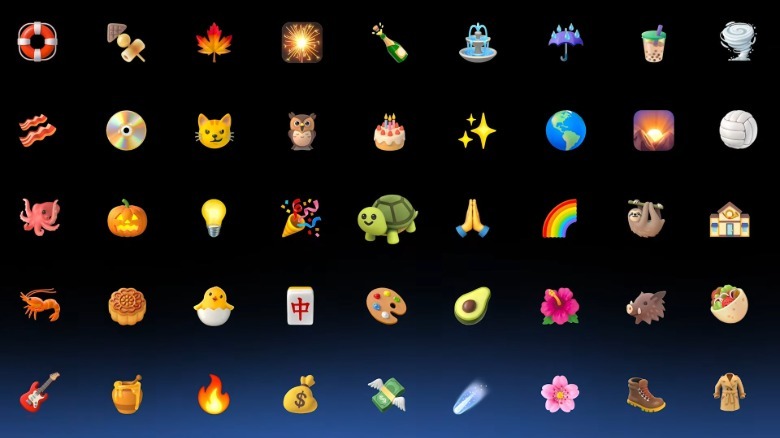
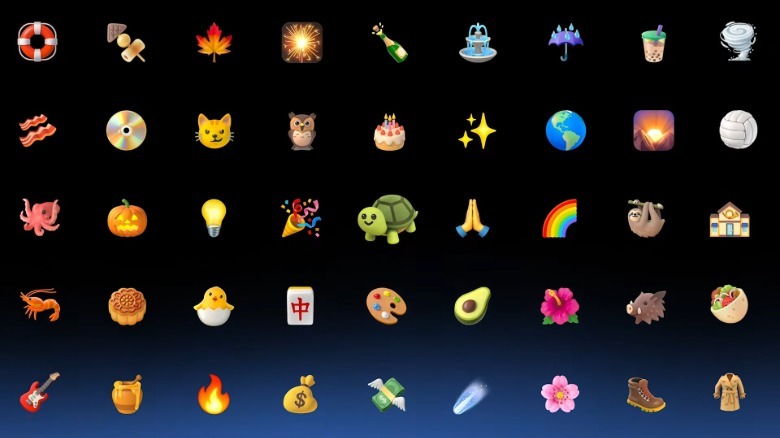
As for those 3D emojis, they’re precisely what they sound like: Sightly more realistic three-dimensional emoji. You can definitely call this progress for Google, as the last time we’ve seen some major emoji evolution was almost a decade ago in Android Oreo O, when the company moved away from undefined amorphous blobs, towards a flatter and more distinctive design. Hopefully this upgrade is a presage of more design changes coming to Android 17. 

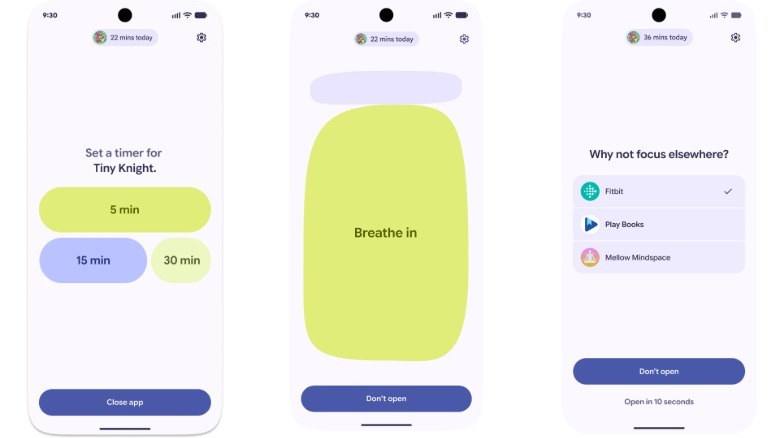
A potentially more useful new feature in Android 17 is Pause Point, a 10-second delay that appears when you open distracting apps, giving you a chance to rethink your life choices before doomscrolling on TikTok for an hour. During that window, you can set a timer for the destructive app you want to use, do a quick breathing exercise or hop to a healthier app option like Fitbit.

Google pitches Pause Point as a more practical way to stop distracted browsing than a total lockout, and it’s harder to snooze than a typical app timer. As someone who’s absolutely guilty of wasting too much time on TikTok, Pause Point actually sounds compelling. It’s also interesting to see that Google actually added friction to turn off the feature — doing so requires a full restart, which gives you even more time to rethink your social media browsing habits.
Ironically, Android 17 is also making it easier to produce content for social media, while also making it a bit more annoying to browse. Google’s new Screen reactions feature lets you quickly record an overlayed video on top of whatever is on your screen — perfect for chatting about the latest news or gossip. Most social media apps offer similar capabilities, but it’s potentially more useful as a core part of Android, since people could also use it to share commentary videos with friends and family, without broadcasting them to the world. (Even more ironically, Android 17 also features a slew of new features for polishing your Instagram videos.)

Update 5/12/26 2:30PM: Added more details about AirDrop compatibility and a 3D Emoji image.


Source link

Leave a Reply

Subscribe to Our Newsletter

Get our latest articles delivered straight to your inbox. No spam, we promise.

Recent Reviews


Lululemon clothing is being investigated for PFAS.Credit: winhorse / Getty Images
Lululemon clothing is being investigated for PFAS.
Credit: winhorse / Getty Images
  • The Texas attorney general is investigating whether Lululemon clothing contains PFAS, commonly known as “forever chemicals.”
  • PFAS are widely used for stain- and water-resistant products, but their long-term health effects are still not fully understood.
  • Experts say exposure from clothing is likely low, but there are some signs to tell if your clothes contain PFAS.

Texas Attorney General Ken Paxton announced Monday that his office is launching an investigation into whether clothing from the athleisure brand Lululemon contains per- and polyfluoroalkyl substances (PFAS), long-lasting compounds commonly referred to as “forever chemicals.” The investigation has thrust these chemicals—linked to a range of negative health outcomes and used in a variety of products—into the spotlight. Here’s what to know about the Lululemon probe, PFAS, and what it could mean for your health if these compounds are lurking in your clothing.

What's the Investigation About, Exactly?

According to a press release from Paxton’s office, the investigation will examine whether Lululemon’s clothing contains PFAS "that their health-conscious customers would not expect based on the brand’s marketing.” The office “will also review the company’s Restricted Substances List, testing protocols, and supply chain practices to determine whether Lululemon’s products comply with its stated safety standards,” the release continued.

Per the release, the allegations stem from "emerging research and consumer concerns."

Lululemon, meanwhile, denied using PFAS in its apparel, which includes leggings, workout tops, and casual athleisure wear. In an email to Health, a company spokesperson said: 

"The company phased out the substance in FY23, which had been used in durable water repellent products, a small percentage of our assortment. The health and safety of our guests is paramount, and our products meet or exceed global regulatory, safety, and quality standards. We require all our vendors to regularly conduct testing for restricted substances, including PFAS, by credible third-party agencies to confirm ongoing compliance.”

What Are PFAS?

PFAS is an umbrella term for a class of chemical compounds used in a wide range of everyday products, including furniture, carpets, paint, food packaging, and clothing. They’re often added to fabrics for their stain-resistant or water-repellant properties, said Alex LeBeau, Ph.D., MPH, CIH, a toxicologist, certified industrial hygienist, and owner of Exposure Consulting in Orlando, Florida.

These compounds—which number in the thousands—have been dubbed “forever chemicals” because they don’t break down easily and have been discovered in soil, air, water, and in animals. They’ve been found in humans, too. Nearly everyone in the U.S. has measurable amounts of PFAS in their blood, according to the Centers for Disease Control and Prevention. 

How Harmful Are PFAS?

Scientists still don’t fully know how PFAS affect human health. The chemicals can be particularly challenging to study because the category includes thousands of compounds, products contain varying levels, and exposure can come from many sources.

Two of the most widely studied PFAS—PFOS and PFOA—were phased out in the U.S. in the 2010s, LeBeau said. Those long-chain PFAS, which tend to accumulate in the body and stick around for longer, were largely replaced with short-chain alternatives, which are thought to be less bioaccumulative but may still raise health concerns.

Much of the research into PFAS has focused on what happens when people ingest them through water or food. A 2025 study found a link between PFAS in drinking water and increased incidence of digestive, endocrine, respiratory, and oral cancers. Still, LeBeau said that overall, “the health impacts are still up for debate in the scientific community.” Many human studies have produced mixed results, and much of the existing research has been conducted in animals.  

While it’s possible for PFAS to be absorbed through the skin from clothing, LeBeau said it’s not considered as concerning as ingesting the chemicals. “Dermal PFAS uptake does not appear to be a concerning PFAS exposure route into the body,” he said. “Limited animal studies have suggested that PFAS may permeate the skin, but skin impact may also depend on the PFAS chemical form.”

How to Know If Your Clothing Contains PFAS

There is no federal law requiring clothing manufacturers to stop using PFAS or disclose whether their products contain them. Although, some states have banned their use in apparel and other products, and many well-known brands have said they are voluntarily phasing them out—including Lululemon. 

While LeBeau said people should be most concerned about PFAS in their food and water, it's understandable to want to avoid potentially harmful chemicals altogether. Unfortunately, it's not always easy to tell whether clothing contains PFAS—but there are a few clues.

One is if a garment is labeled as being made with GORE-TEX or Teflon, both of which are PFAS-based materials. Clothing marketed as moisture-wicking, waterproof or water-repellant, or stain-resistant is also more likely to contain PFAS. It’s also a good sign if a brand explicitly labels a product or line as PFAS-free and that claim has been verified through third-party testing.


Source link