Fact checked by Nick Blackmer
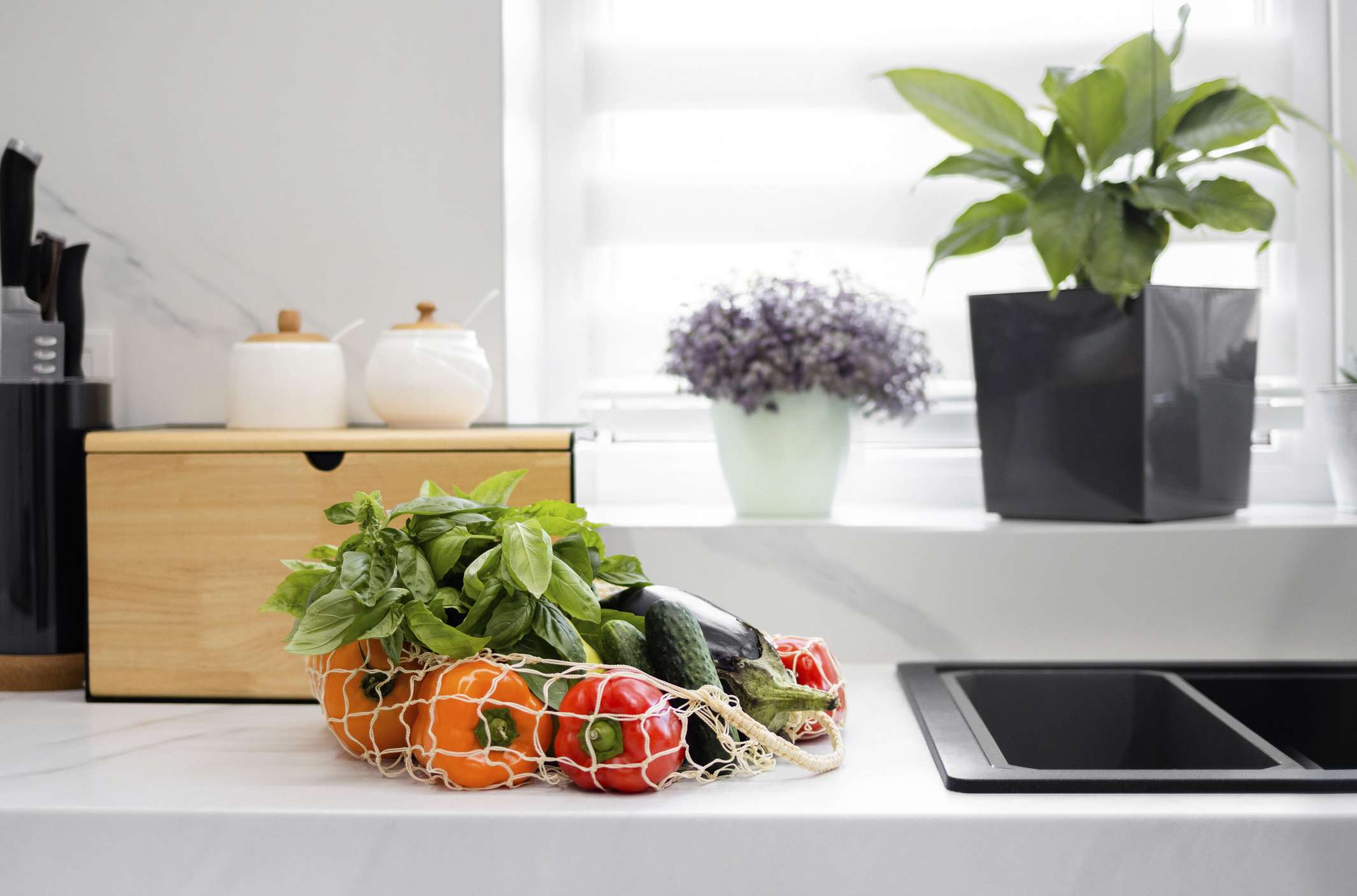
:max_bytes(150000):strip_icc():format(jpeg)/Health-GettyImages-FoodToNeverKeepOnKitchenCounter-9f52767ec27a4bf59f9c15494645b28c.jpg "Fresh vegetables and fruits in a reusable bag in the modern kitchen counter.")
- Many common foods should not be stored on the countertop; refrigeration slows bacterial growth and preserves freshness.
- Items like eggs, berries, bell peppers, cucumbers, and mayonnaise last longer and stay safer when kept in the fridge.
- Proper storage methods, such as using crisper drawers and airtight containers, help extend shelf life and reduce food spoilage.
While some foods can safely be kept on your countertop, certain types of food need to be refrigerated or stored differently to minimize bacterial growth, preserve freshness, and reduce spoilage. Here are eight foods that should never be stored on the kitchen counter, along with safer storage options for each.
1. Eggs

To reduce the growth of harmful Salmonella bacteria, eggs must be refrigerated. Whole eggs in their shell can be safely refrigerated for three to five weeks.
2. Asparagus

Asparagus spears maintain better quality and retain more moisture when stored in the fridge. Additionally, research shows that asparagus retains more nutrients (such as vitamin C) when stored at cooler temperatures between 32 and 35.6 degrees Fahrenheit (between zero and 2 degrees Celsius).
To properly store asparagus, wrap the ends of the stalks in a wet paper towel and place them in a plastic bag to store in the refrigerator for up to four days.
3. Bell Peppers

Studies show that refrigerating bell peppers is necessary to reduce water loss, reduce shriveling, and prevent spoilage.
To preserve freshness, bell peppers can be stored in a plastic bag in the fridge for up to five days.
4. Berries

Studies show that refrigerating berries slows down decay and prevents the reduction of their natural sugars and organic acids.
It is recommended that strawberries be stored in the fridge for one to three days; blueberries for 10 to 14 days; and fresh blackberries for three to six days.
5. Potatoes

Potatoes should not be left on countertops or anywhere they can be exposed to sunlight, heat, or dampness, which can lead to early spoilage.
To maximize nutrient retention, research shows that potatoes should be stored in a dark, cool place, such as a pantry or cupboard. To help with overall freshness and shelf life, store potatoes in perforated plastic bags or paper bags.
6. Cucumbers

Cucumbers and other water-rich produce should be stored in the fridge to preserve freshness and moisture, which would otherwise be depleted if left on the countertop.
It is recommended to consume cucumbers within one week of refrigeration to ensure the best quality, taste, and moisture levels.
7. Mayonnaise

To reduce the growth of harmful bacteria that can cause food poisoning, condiments such as mayonnaise should be stored in the fridge after opening.
Once open, the United States Department of Agriculture (USDA) recommends refrigerating mayonnaise for up to two months.
8. Sliced or Pre-cut Produce

For optimal freshness, fruits and vegetables that are sliced or cut at home—or bought pre-cut—should not be left on a countertop for storage.
Refrigerating pre-cut produce is key to minimizing the growth of bacteria that could lead to foodborne infections or illnesses.
How To Make Food Last Longer In the Fridge
To help foods last longer in the fridge, there are some safe storage tips. Try the following to maximize shelf life:
- Vegetables: Store vegetables in a high-humidity crisper drawer. Crisper drawers set to a higher humidity can help extend the freshness and shelf life of vegetables.
- Fruits: Fresh fruits should be stored in a crisper drawer set to a lower humidity, which is best for their freshness.
- Eggs: Keep eggs in their shell until ready to cook. Whole eggs in their shell can be refrigerated for three to five weeks; hard-cooked eggs can be refrigerated for up to one week; and fresh, raw egg yolks or fresh, raw egg whites can be refrigerated for two to four days.
- Meats and Poultry: Store meats and poultry in your fridge's meat drawer, which blows cool air directly into the drawer to keep meats cold without freezing them. Additionally, leftover cooked meats can be stored in airtight containers for three to four days. Storing meats in an airtight container minimizes bacterial growth and keeps cooked meats fresher and moister for longer.
- Seafood: Store uncooked seafood at 40 degrees Fahrenheit (4.44 degrees Celsius) or below, or place it on ice in the refrigerator.
Note: It is important to consume meats, poultry, seafood, and eggs within the USDA’s recommended storage times for refrigerated foods.







:max_bytes(150000):strip_icc():format(jpeg)/Health-GettyImages-TypesOfSaunas-f03979ce340d4bfba326fadf6086fd24.jpg "Serene woman relaxing in infrared sauna.")