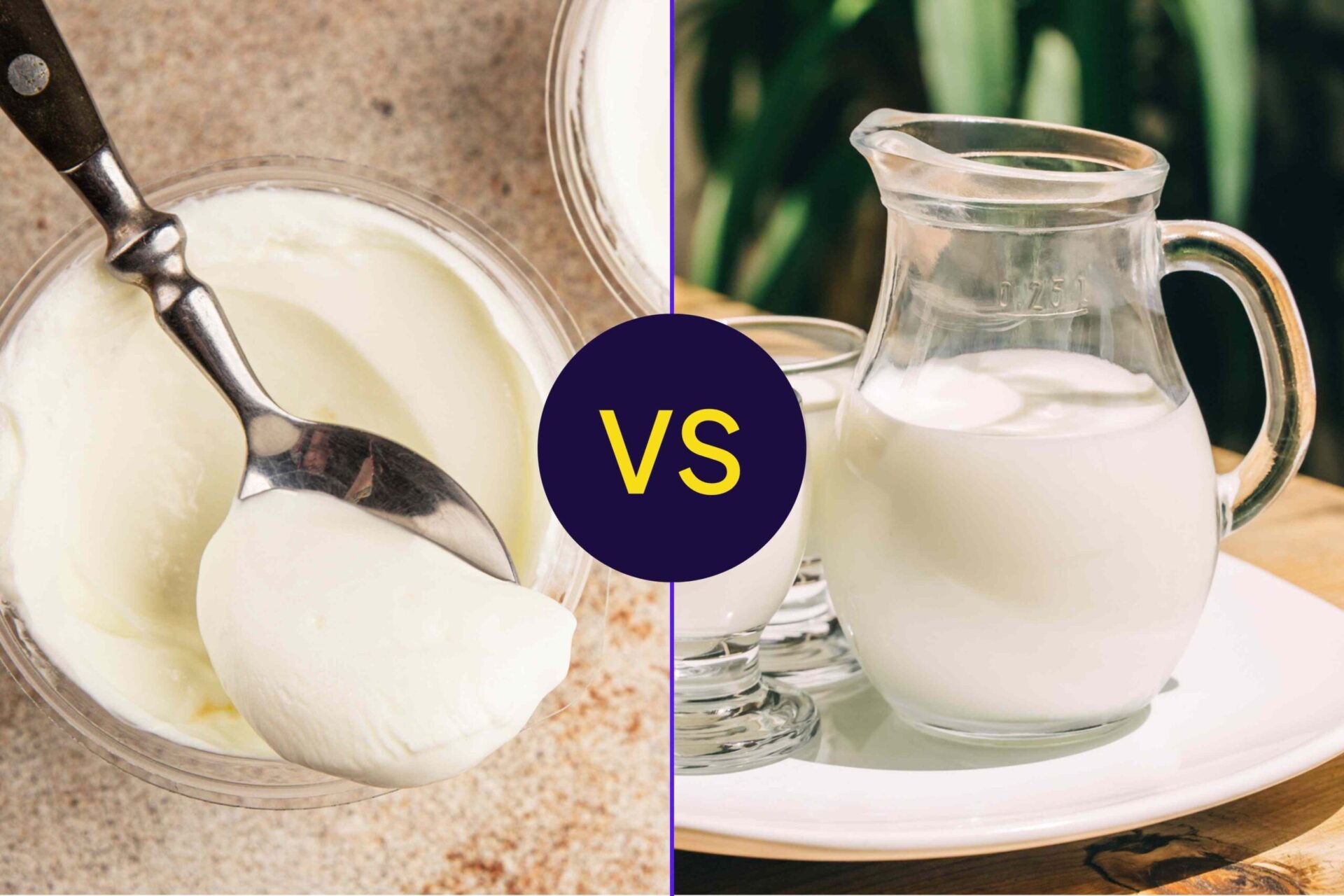
:max_bytes(150000):strip_icc():format(jpeg)/skyrvskefir-41edb2a0245448c694b35a1577624781.jpg "A split image showing a spoonful of yogurtlike product on the left and a pitcher of milk on the right with a VS label in the center")
Credit: Health / Getty Images
- Skyr has more protein and less fat than kefir.
- Kefir has less lactose and more diverse probiotics to support gut health and digestion.
- Both skyr and kefir products can contain sweeteners, cream, or added flavors. You can choose better options by reading labels and the ingredients list.
Skyr is a thick and creamy Icelandic-style yogurt, while kefir is a fermented milk drink. Both dairy products can support health in different ways.
Nutritional Comparison
Here is a nutritional comparison of 100 grams of kefir and skyr:
| Nutrient | Kefir | Skyr |
| Calories | 52 kcal | 64 kcal |
| Protein | 3.5 grams (g) | 11.1 g |
| Fat | 0.9 g | 0.2 g |
| Carbohydrates | 7.4 g | 4.1 g |
Skyr Has More Protein
Skyr is a high-protein dairy product with 10–15% protein content. Eating enough protein supports muscle mass and satiety.
A 2022 study showed that older males who did resistance training and ate skyr (containing 18 grams of protein) immediately after workouts gained more muscle and strength than those who did not get protein right away.
High-protein foods like skyr can also support satiety and feelings of fullness.
Skyr Usually Has Less Fat
Both kefir and skyr are low-fat dairy products, but skyr often contains even less fat. It is a good choice for people looking for low-fat or fat-free dairy options.
Kefir Has More Diverse Probiotics
Probiotics are living microorganisms that support gut health. They prevent harmful bacteria and yeast from growing.
Probiotics also support the gut barrier and immune system. This means they help keep harmful compounds out of your bloodstream while also helping absorb the nutrients you need.
Kefir is made by fermenting milk with kefir grains. These grains contain a mixture of beneficial microorganisms, including lactic acid bacteria, acetic acid bacteria, and various yeast species. So, kefir products often contain a much more diverse range of beneficial microbes.
Skyr is made by fermenting skimmed milk with a few selected bacteria. It does not contain yeast.
Pasteurization after fermentation kills all bacteria, including beneficial ones. To get probiotics, you should look for products with ‘live cultures'.
Kefir Often Has Less Lactose
Milk contains a high amount of lactose. When you consume dairy, an enzyme called β-galactosidase digests lactose. However, people with lactose intolerance do not produce enough of this enzyme, so they experience digestive side effects when they consume lactose.
Lactic acid bacteria in kefir grains produce β-galactosidase, which helps break down lactose into lactic acid, making kefir slightly tangy.
Fermentation can reduce the lactose content of kefir by around 30% compared with unfermented milk, but lactose reduction depends on fermentation conditions.
β-galactosidase activity may also be present in the final product depending on fermentation conditions. Some studies suggest that consuming kefir may help improve lactose tolerance.
Still, kefir has some lactose. You can opt for lactose-free versions by reading labels.
Not All Kefir and Skyr Products Are Created Equal
Adding various fermented dairy products such as skyr and kefir to your diet can support digestion, gut health, and satiety. However, not all dairy products are created equal. Some contain added sweeteners, cream, or artificial flavorings. Reading labels and ingredient lists helps you choose products with minimal or no additives and live bacteria.
How To Incorporate Skyr and Kefir Into Your Diet
Here are ways to add skyr and kefir into your diet:
- Smoothie base: Blend kefir into smoothies to create a rich, creamy texture.
- Breakfast oats: Use kefir or skyr as a base for breakfast oats.
- Chocolate probiotic drink: Mix kefir with banana and cacao for a chocolatey drink.
- High-protein dessert: Mix skyr with fresh fruit and honey for a sweet snack.
- Cream cheese substitute: Use skyr as a substitute for cream cheese by spreading it onto crackers.
- Savory dips: Mix skyr with garlic and lemon juice to create a high-protein dip for veggies.
- Frozen snacks: Mix skyr with fruit or matcha and freeze it for a cool, high-protein snack.
- Chia pudding: Use skyr or a mix of skyr and kefir to make a chia pudding.







:max_bytes(150000):strip_icc():format(jpeg)/GettyImages-2253385503-49d609f27e75489cbb35796a15282f5b.jpg "Hong Kong - November 26, 2025 : Lululemon store at Hong Kong International Airport.")