Boston to open new remote terminal for Delta, JetBlue flyers


Travelers flying Delta Air Lines and JetBlue Airways from Boston Logan International Airport (BOS) have a new way to skip the dreaded Transportation Security Administration queues.

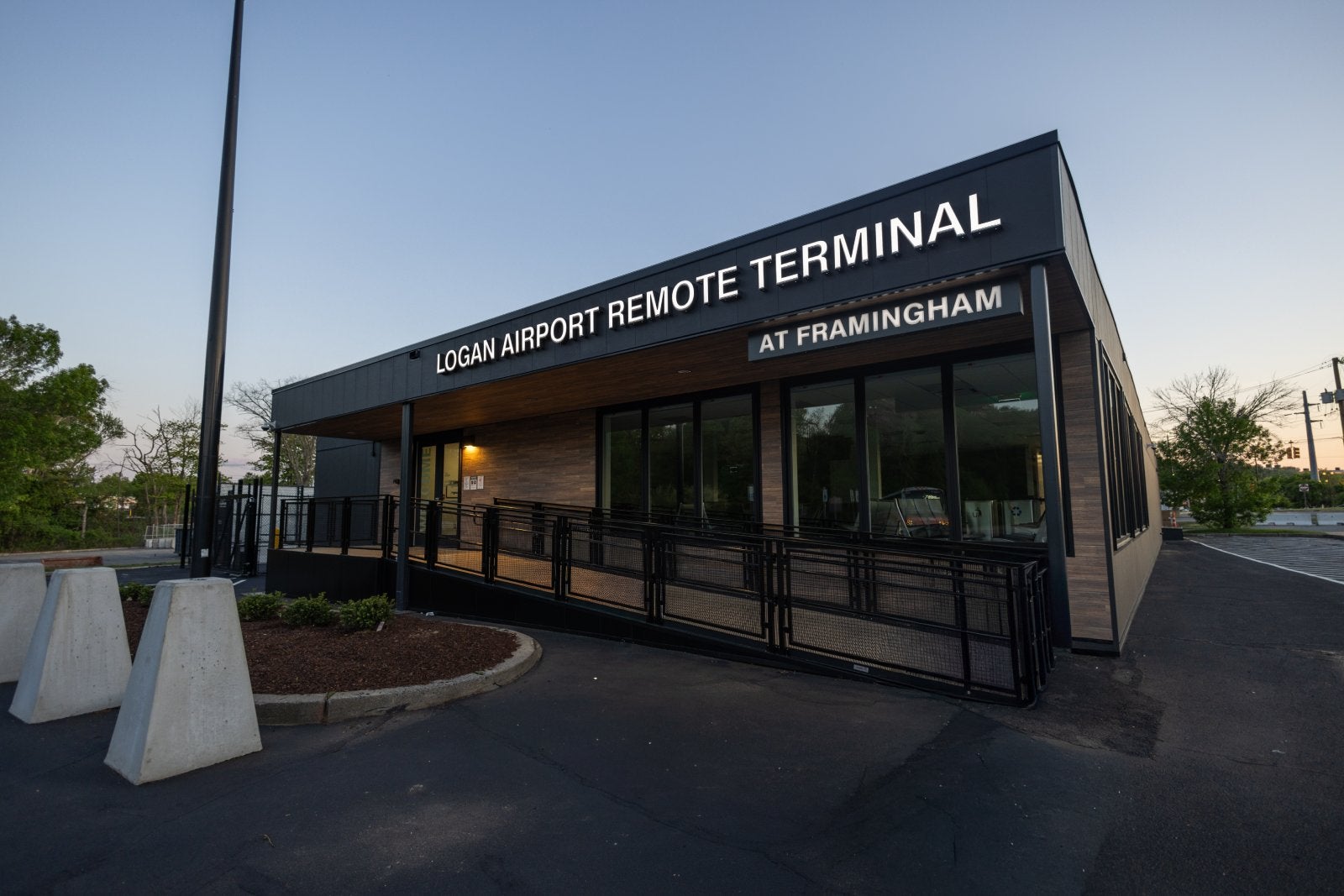
Beginning June 1, mobility company Landline and BOS operator Massport will open a new remote terminal in Framingham, Massachusetts — a suburb west of Boston — with hourly buses to the airport. Delta and JetBlue flyers will be able to check in, drop bags and clear TSA in the new terminal, which is in a former park-and-ride lot, before hopping on a Landline coach bus for the 45- to 60-minute ride to BOS.

The coach will drop travelers off inside security at either gate A18 in Terminal A for Delta or C8 in Terminal C for JetBlue. Checked bags will be transferred directly between planes and buses.
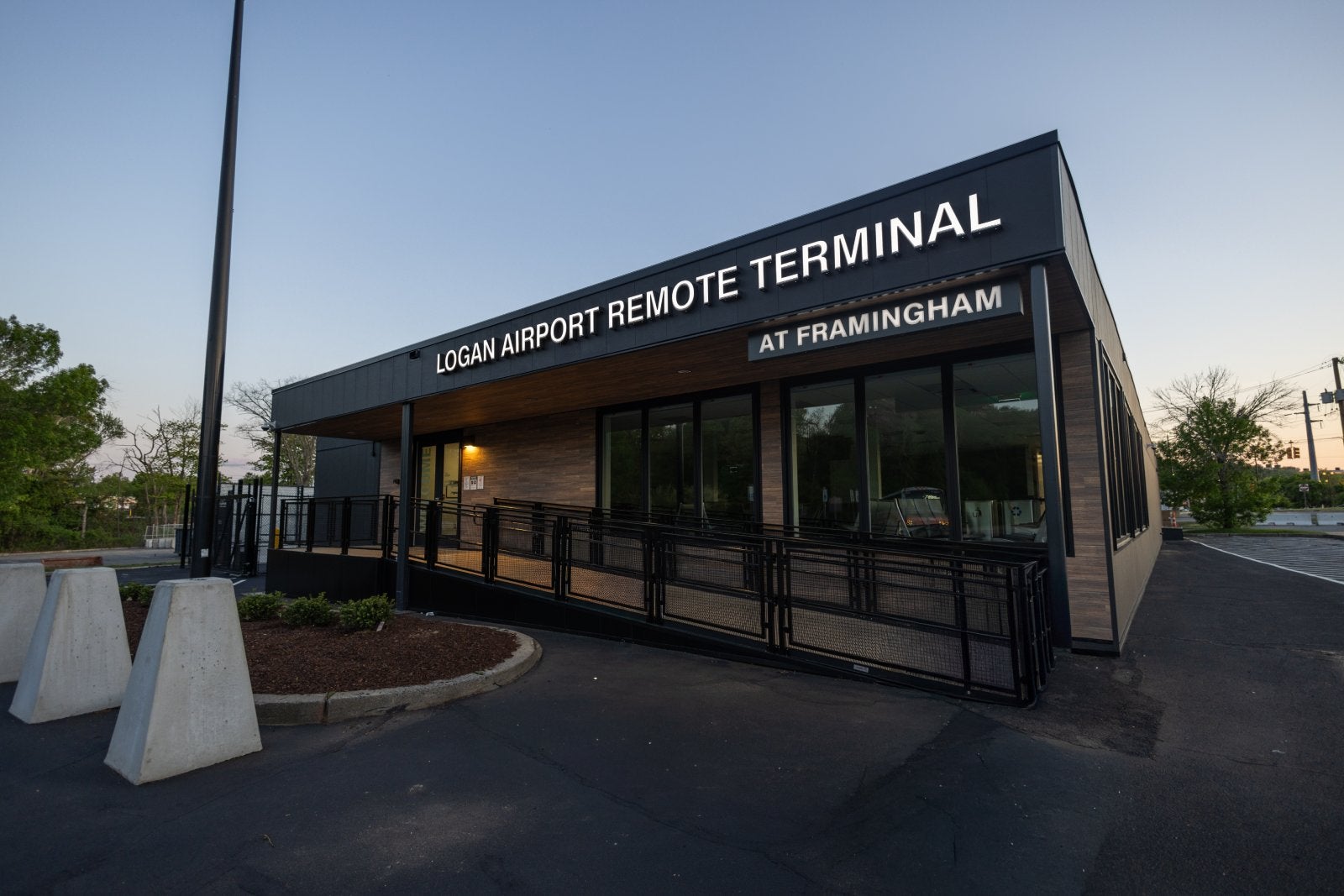
The new Logan Airport Remote Terminal includes a bag drop for Delta and JetBlue and a TSA checkpoint for travelers. LANDLINE

The new remote BOS terminal service is the latest evolution of Landline. Founded on the idea that buses could replace short-haul flights at a lower cost and connect smaller communities to major hubs, Landline has grown into an airport ground transportation network that operates both independently and as a partner to airports and airlines such as Air Canada, American Airlines and Sun Country Airlines. Its mission is to reduce some of the friction in the journey to and through a major airport.

David Sunde, CEO and co-founder of Landline, is excited about what the company’s newest offering could mean in busy metropolitan areas around the country.

“The story here is that big airports are out of space,” Sunde said in an interview. “Construction at big airports is really difficult and really expensive. Now, we have a counterpoint that is we can stand up, in six months, a facility in a parking lot, in a suburb of one of the biggest metro areas and busiest airports in the U.S. and have it screening people almost immediately.”

While the speed is impressive — Massport only unveiled plans for a remote TSA screening facility in Framingham last year — the partnership’s implications for airport access and screening are significant.

Few, if any, places in the world allow flyers to clear security remotely and ride a bus or train to the airport. Many places have, or have tried, “in-town” terminals for check-in and bag drop; however, travelers still must proceed through security checks once they reach the airport. The in-town check-in service for Hong Kong International Airport (HKG) is one of the best-known contemporary examples.

Landline worked for years to transport travelers inside security from one airport to another via bus. It took four years from its launch to implement the first “tarmac-to-tarmac” bus connectio, linking Atlantic City International Airport (ACY) in New Jersey and Lehigh Valley International Airport (ABE) near Allentown, Pennsylvania, with Philadelphia International Airport (PHL) in partnership with American and the TSA.

Reward your inbox with the TPG Daily newsletter

Join over 700,000 readers for breaking news, in-depth guides and exclusive deals from TPG’s experts

BOS is the third major airport — after Chicago’s O’Hare International Airport (ORD) and PHL — where Landline brings travelers who have been screened elsewhere inside security. The company’s other operations at Denver International Airport (DEN), Minneapolis-St. Paul International Airport (MSP) and Pearson International Airport (YYZ) in Toronto all arrive landside (or outside security).

Landline’s new BOS service is different. The company is partnering with Massport rather than an airline, which means users do not earn loyalty points for the Landline bus portion of their rides, nor do they have connection guarantees if the bus, or their flight, is late.

“The airlines have awareness of where you are and that’s certainly a step above driving yourself to Logan,” Sunde said. Landline will communicate with Delta and JetBlue regarding who was screened in Framingham and making the journey to BOS.

The new Landline service is marketed and sold under the existing Logan Express brand rather than as a new route for an airline. Seats cost for as little as $9 one-way. Kids under 17 ride for free.

Richard Davey, the CEO of Massport, told The Boston Globe in September that the agency hopes to encourage more people to take transit to BOS rather than drive with the remote terminal.

“Part of the intent is to reduce people’s anxiety of getting to the airport,” he said. “We’re going to start small to see if we can get folks excited about it.”
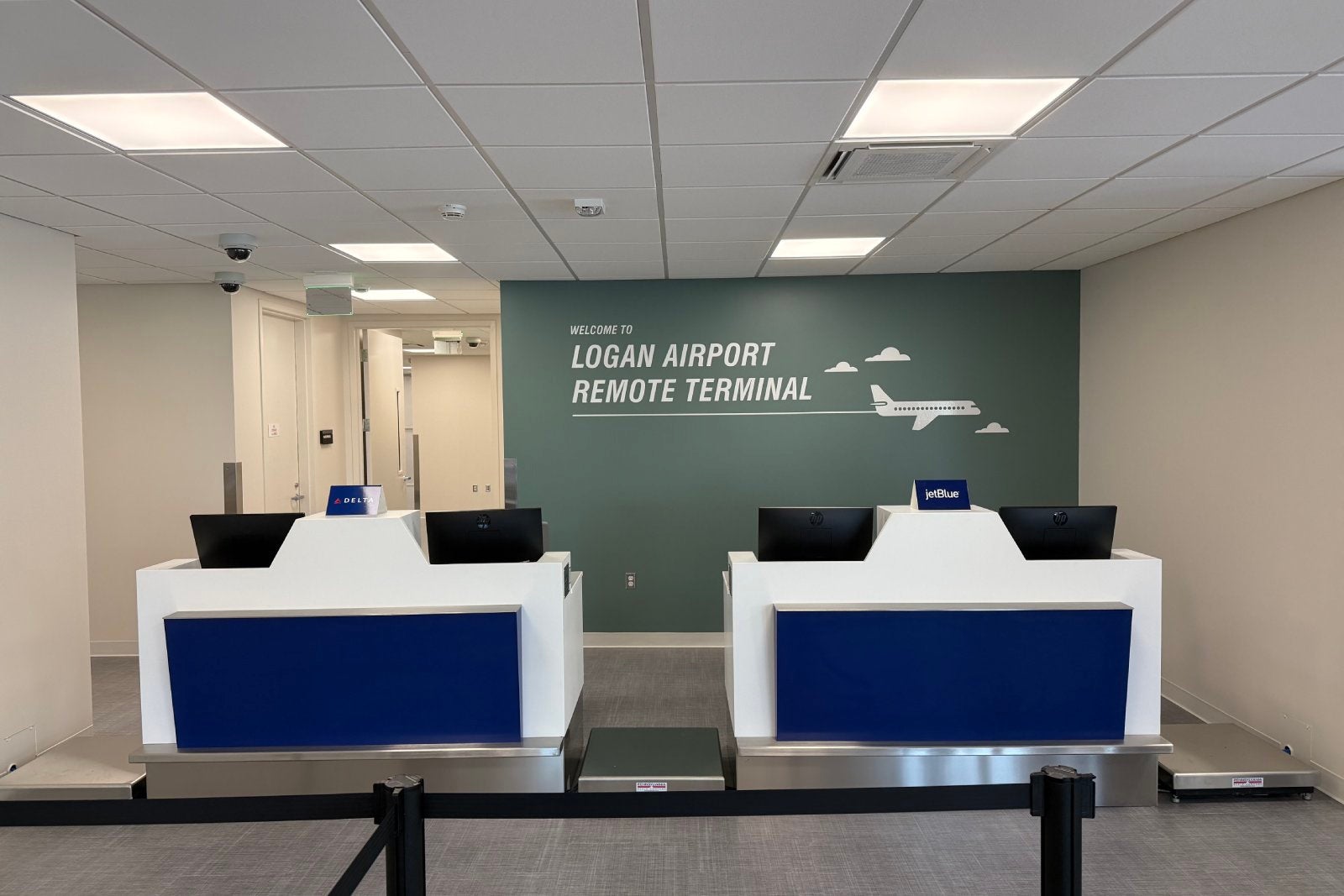
Bag drop desks for Delta and JetBlue in the new remote terminal. LANDLINE

Charlie Schewe, director of sales-east at Delta, described the new remote terminal as “the kind of innovation we want to be part of — elevating the journey and getting people to their destination seamlessly.”

“We’re excited to try new ways to enhance our customers’ journey by thinking outside the box and collaborating with our airport partners,” Daniel Blake, vice president of airport experience at JetBlue, said.

Delta and JetBlue, the initial airline partners for the remote terminal bus service, will together fly 51% of all seats from BOS in June, schedule data from aviation analytics firm Cirium shows.

Massport is planning a new Logan Express facility in the southern Boston suburb of Braintree that, if the new Landline Framingham bus is successful, could include a TSA checkpoint and serve as another remote terminal for the airport.

Sunde did not say what they consider a “success” for the new service, which replicates an existing Logan Express line.

Related reading:


Source link

Leave a Reply

Subscribe to Our Newsletter

Get our latest articles delivered straight to your inbox. No spam, we promise.

Recent Reviews


What is Network Security?

The planning and implementation of network security procedures to preserve the integrity of networks and programs against hacking and illegal access is indeed a subcategory of information/cyber security. It defends the organization’s IT structure and network-accessible services against a wide range of cyber threats, including viruses, Trojan, spyware, spam ware, malware, and more. Network security includes user credentials, internet connectivity, firewalls, backups, and encryption. A network security professional’s goal is to make the system more secure by offering technical assistance using intrusion detection systems, encrypting, firewalls, and digital certificates, among other things.

Wish to make a career in the world of JNCIA? Start with JNCIA Training !

What is Cyber Security? 

Cyber security is a broad word that refers to all areas of the internet. It is a subcategory of data security that is concerned with defending the authenticity of systems, devices, and programs against assault, damage, or illegal access from the outside. It refers to a collection of approaches, technologies, and procedures for defending systems and networks from cyber-attacks. It protects networks against unwanted electronic access by putting in place a variety of security mechanisms and controls. All inbound and outbound network traffic is monitored by cyber security professionals to limit the danger of cyber assaults while also protecting the firm from unauthorized system use.

Wish to make a career in the world of Cyber Security? Start with Cyber Security Training! 

Cyber Security Training

  • Master Your Craft
  • Lifetime LMS & Faculty Access
  • 24/7 online expert support
  • Real-world & Project Based Learning

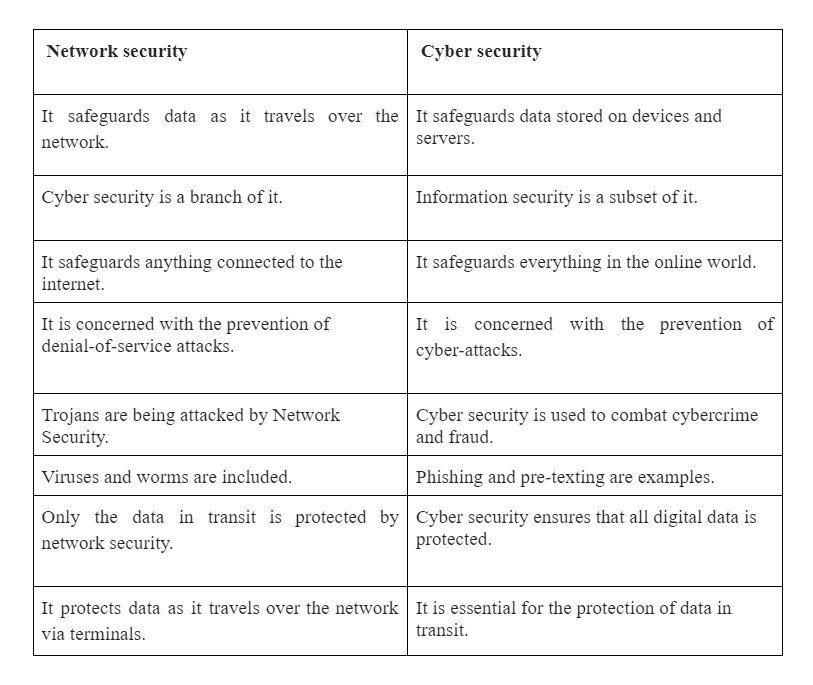
(Network Security vs Cyber security) Difference Between Both

1. Definition

Cyber security is a branch of information security that refers to a set of strategies and methodologies for preventing harm, attack, or illegal access to networks, devices, programs, and data. Cyber security, to put it simply, is the process of defending internet-connected devices and networks against digital threats. The process of safeguarding files and folders in a computer network from misuse, hacking, and illegal access to the system is known as network security. Network security is a subcategory of cyber security that guards against unwanted access to your system and network-accessible resources.

2. Security

While the phrases are interchangeable, they are vastly distinct in nature of security. If you see an organization as a walled castle, network issues are associated with keeping the peace within the castle walls and defending the organization’s sovereignty from network-related threats. Cyber security, on either hand, safeguards a company against external risks such as those posed by the internet. It defends an organization’s systems, networks, and applications against all types of digital attacks, such as phishing, baiting, and so on. The goal of network security is to secure an organization’s IT infrastructure from internet dangers such as viruses.

Wish to make a career in the world of Forescout Administrator ? Start with Forescout Administrator Training

3. Data

Network security becomes a component of cyber security, but cyber security is indeed a broad word like data security. While the authenticity of data and programs is the most important factor in both circumstances, cyber security emphasizes threat monitoring and detection to a higher extent. Network security is primarily concerned with protecting an organization’s IT network from the inside, while cyber security is concerned with protecting an organization’s information security technologies (ICT) against cybersecurity threats that exploit system weaknesses. Network security includes firewalls, user names and passwords, backup, and encryption.

If you have any doubts on Cyber Security, then get them clarified from Industry experts on our Cyber Security Tutorial !

Acquire Cyber Security certification by enrolling in the HKR Cyber Security Training in Banglore!

HKR Trainings Logo

Subscribe to our YouTube channel to get new updates..!

4. Security Expertise

Cyber security experts or analysts are those who, by their knowledge and experience of databases, firewalls, network security, and encryption, are fully responsible for defending network infrastructure and related systems. An expert in cyber security control, detection, and recovery is a cyber security professional. A security professional’s primary responsibility is to monitor all inbound and outbound traffic and to collaborate with other departments within the company to manage risk assessment tools and technology. A network security professional’s job includes securing the organization’s IT infrastructure, which contains data assets, financial data, and other confidential data

Network security and Cyber security

frequently asked Cyber security Interview questions and Answers !!

Cyber Security Training

Weekday / Weekend Batches

Conclusion

In brief, cyber security is an important part of information security dealing with data security during retention and transmission, while network security is indeed a subdivision of cyber security concerned with securing an organization’s IT infrastructure and limiting access to it. Both phrases are frequently used interchangeably, with the exception that cyber security is a much larger term, whereas network security is one component of information/cyber security.

Related Articles

  1. Cyber Security VS Data Science
  2. Cyber security Technologies


Source link