Boston to open new remote terminal for Delta, JetBlue flyers


Travelers flying Delta Air Lines and JetBlue Airways from Boston Logan International Airport (BOS) have a new way to skip the dreaded Transportation Security Administration queues.

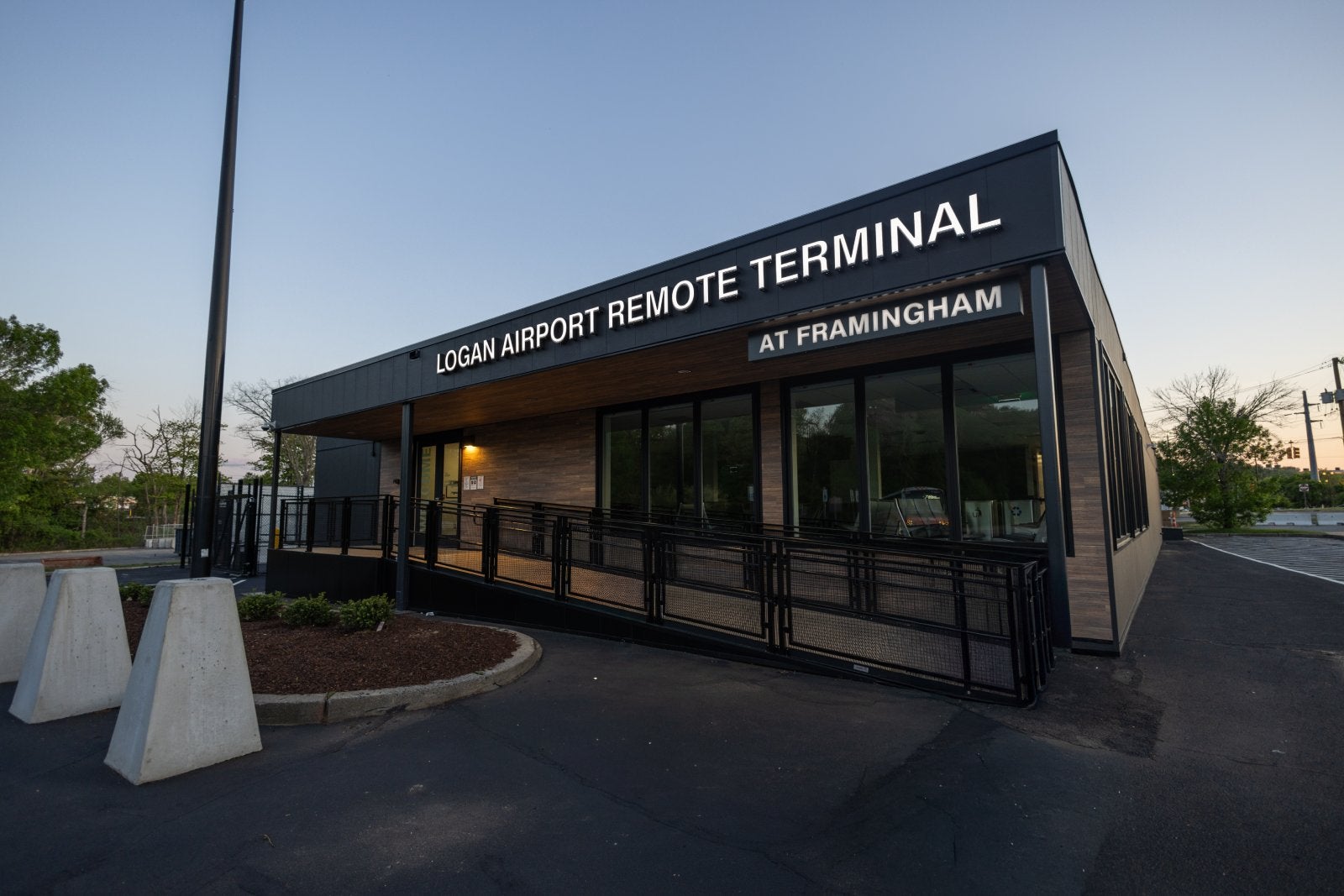
Beginning June 1, mobility company Landline and BOS operator Massport will open a new remote terminal in Framingham, Massachusetts — a suburb west of Boston — with hourly buses to the airport. Delta and JetBlue flyers will be able to check in, drop bags and clear TSA in the new terminal, which is in a former park-and-ride lot, before hopping on a Landline coach bus for the 45- to 60-minute ride to BOS.

The coach will drop travelers off inside security at either gate A18 in Terminal A for Delta or C8 in Terminal C for JetBlue. Checked bags will be transferred directly between planes and buses.
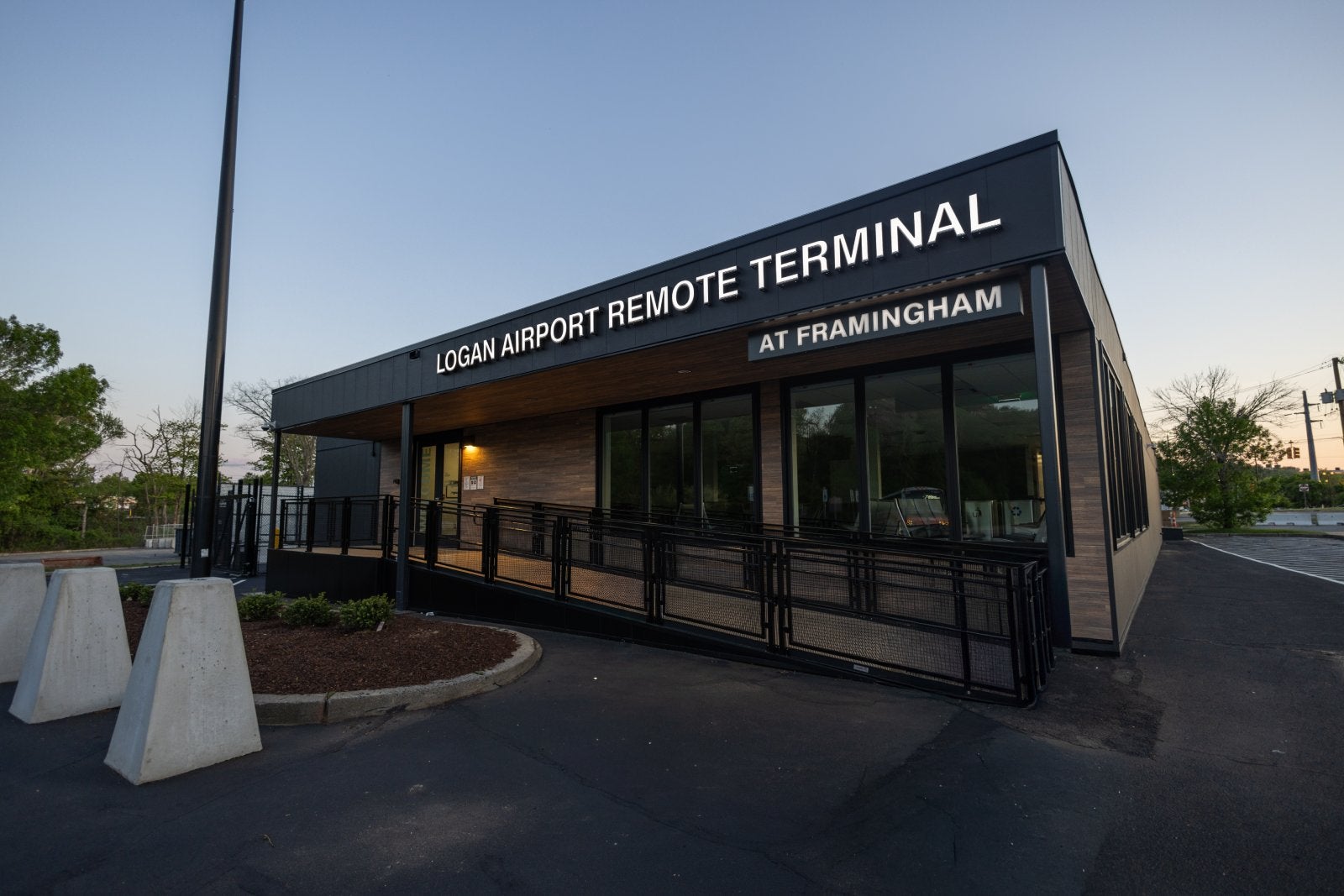
The new Logan Airport Remote Terminal includes a bag drop for Delta and JetBlue and a TSA checkpoint for travelers. LANDLINE

The new remote BOS terminal service is the latest evolution of Landline. Founded on the idea that buses could replace short-haul flights at a lower cost and connect smaller communities to major hubs, Landline has grown into an airport ground transportation network that operates both independently and as a partner to airports and airlines such as Air Canada, American Airlines and Sun Country Airlines. Its mission is to reduce some of the friction in the journey to and through a major airport.

David Sunde, CEO and co-founder of Landline, is excited about what the company’s newest offering could mean in busy metropolitan areas around the country.

“The story here is that big airports are out of space,” Sunde said in an interview. “Construction at big airports is really difficult and really expensive. Now, we have a counterpoint that is we can stand up, in six months, a facility in a parking lot, in a suburb of one of the biggest metro areas and busiest airports in the U.S. and have it screening people almost immediately.”

While the speed is impressive — Massport only unveiled plans for a remote TSA screening facility in Framingham last year — the partnership’s implications for airport access and screening are significant.

Few, if any, places in the world allow flyers to clear security remotely and ride a bus or train to the airport. Many places have, or have tried, “in-town” terminals for check-in and bag drop; however, travelers still must proceed through security checks once they reach the airport. The in-town check-in service for Hong Kong International Airport (HKG) is one of the best-known contemporary examples.

Landline worked for years to transport travelers inside security from one airport to another via bus. It took four years from its launch to implement the first “tarmac-to-tarmac” bus connectio, linking Atlantic City International Airport (ACY) in New Jersey and Lehigh Valley International Airport (ABE) near Allentown, Pennsylvania, with Philadelphia International Airport (PHL) in partnership with American and the TSA.

Reward your inbox with the TPG Daily newsletter

Join over 700,000 readers for breaking news, in-depth guides and exclusive deals from TPG’s experts

BOS is the third major airport — after Chicago’s O’Hare International Airport (ORD) and PHL — where Landline brings travelers who have been screened elsewhere inside security. The company’s other operations at Denver International Airport (DEN), Minneapolis-St. Paul International Airport (MSP) and Pearson International Airport (YYZ) in Toronto all arrive landside (or outside security).

Landline’s new BOS service is different. The company is partnering with Massport rather than an airline, which means users do not earn loyalty points for the Landline bus portion of their rides, nor do they have connection guarantees if the bus, or their flight, is late.

“The airlines have awareness of where you are and that’s certainly a step above driving yourself to Logan,” Sunde said. Landline will communicate with Delta and JetBlue regarding who was screened in Framingham and making the journey to BOS.

The new Landline service is marketed and sold under the existing Logan Express brand rather than as a new route for an airline. Seats cost for as little as $9 one-way. Kids under 17 ride for free.

Richard Davey, the CEO of Massport, told The Boston Globe in September that the agency hopes to encourage more people to take transit to BOS rather than drive with the remote terminal.

“Part of the intent is to reduce people’s anxiety of getting to the airport,” he said. “We’re going to start small to see if we can get folks excited about it.”
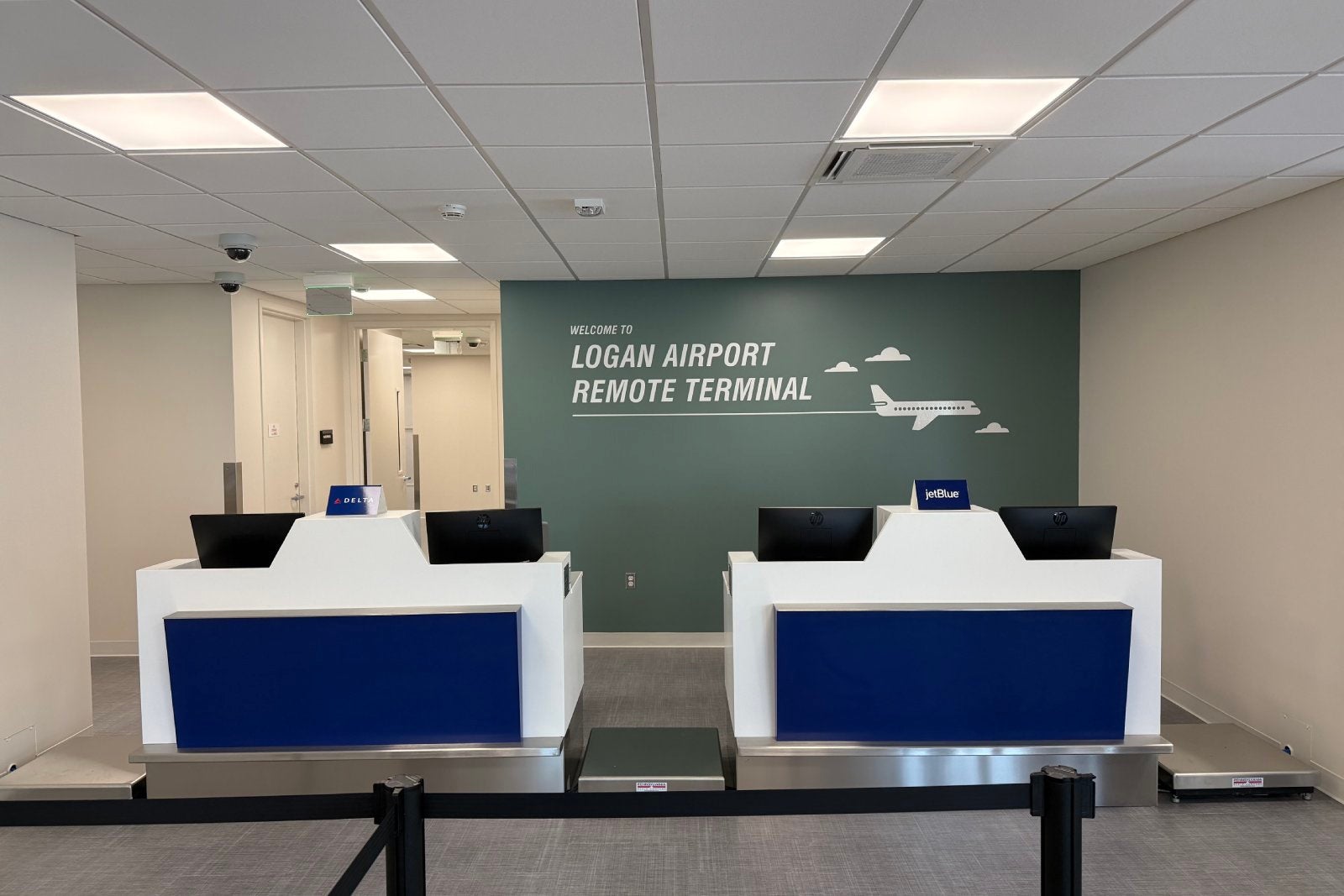
Bag drop desks for Delta and JetBlue in the new remote terminal. LANDLINE

Charlie Schewe, director of sales-east at Delta, described the new remote terminal as “the kind of innovation we want to be part of — elevating the journey and getting people to their destination seamlessly.”

“We’re excited to try new ways to enhance our customers’ journey by thinking outside the box and collaborating with our airport partners,” Daniel Blake, vice president of airport experience at JetBlue, said.

Delta and JetBlue, the initial airline partners for the remote terminal bus service, will together fly 51% of all seats from BOS in June, schedule data from aviation analytics firm Cirium shows.

Massport is planning a new Logan Express facility in the southern Boston suburb of Braintree that, if the new Landline Framingham bus is successful, could include a TSA checkpoint and serve as another remote terminal for the airport.

Sunde did not say what they consider a “success” for the new service, which replicates an existing Logan Express line.

Related reading:


Source link

Leave a Reply

Subscribe to Our Newsletter

Get our latest articles delivered straight to your inbox. No spam, we promise.

Recent Reviews


Database Administrator Duties – Table of Content

The database administrator is responsible for performing a number of duties. Based on the work the Database administrator does, their role varies. Different roles of database administrators are Database architect, Data modeler,  Database analyst, System DBA, Application DBA, Performance analyst, Task-oriented DBA and Data warehouse administrator. Now, let us go through the duties of database administrators.

         Interested in learning SQL Server DBA Join HKR and Learn more on SQL Server DBA Certification Course!

The following are some of the main responsibilities that comprise a database administrator everyday work:

Installing and maintenance of the software: A DBA will often work together with other employees of the organization to install and configure a new Oracle database, SQL Server, etc. The system administrator will configure the hardware and will deploy the OS for the database server; then, the DBA will install the database software and configure it to use it. Since the updates and the patches are necessary, the DBA is responsible for this continuous maintenance. Whenever a new server is required, the DBA is responsible for transferring data to the new platform from the existing system.

Extracting, Transforming, and Loading Data: Extracting, transforming, and loading data is related to importing huge volumes of data efficiently which have been retrieved from multiple systems within a data warehouse environment. The external data is cleaned and processed to adapt to the desired format to be able to import it to a central repository.

Specialized data handling: Databases can be large and include unstructured data types like documents, images, video, or sound files. The management of a large database needs higher-level skills as well as additional tuning and monitoring to maintain efficiency

                                                                       Lets’s get started with SQL Server DBA Tutorial online!

SQL Server DBA Training

  • Master Your Craft
  • Lifetime LMS & Faculty Access
  • 24/7 online expert support
  • Real-world & Project Based Learning

Database Recovery and backup: Database Administrators create recovery and backup plans and procedures according to the industry best practices and then ensure that the required steps are taken. Backups are costly and time-consuming, so database administrators may need to convince management to take the required precautions to keep the data safe. System administrators or other staff can usually create the backups.  It is the responsibility of the DBA to ensure that it is done in a  timely manner. If the server fails or some data loss occurs, the DBA will use the present backups to restore the lost information on the system. Different recovery strategies are needed for different types of failures, and DBAs should be ready for every eventuality. As technology evolves, it becomes increasingly common for the DBA to back up databases in the cloud, MS Azure for SQL Server and Oracle Cloud for Oracle databases.

Security: A Database administrator should be aware of potential weaknesses in the company’s database software and overall system and try to minimize risks. While no system is fully immune to attacks, the implementation of best practices may reduce risks. If there is an irregularity or a security breach, the DBA may refer to the audit logs to find out who did what with the data. The Audit trials also matter when using regulated data.

Authentication: A significant aspect of database security is the configuration of employee access. Database administrators are responsible for managing the access and the type permissions the users are given. For example, a user can be allowed to view only some pieces of information or not be permitted to make changes to the system.

Capacity planning: The DBA should know the current size of the database and the speed at which it is growing so that they can predict future requirements. Storage is the amount of space the database occupies in the server and the backup space. Capacity is the level of usage. If the organization is growing rapidly and has a large number of new users, then the DBA will need to develop the capacity to manage the additional workload.

Monitoring the performance: Monitoring the databases for performance problems is part of continuous system maintenance performed by a DBA. If any part of the system slows down processing, the DBA needs to modify the software configuration or should add extra hardware capability. There are many kinds of monitoring tools, and DBA’s are responsible for understanding what they need to improve the system. Third-party organizations may be ideal to outsource this aspect, but ensure they provide modern DBA support.

    Top 30+ frequently asked SQL Server DBA interview questions & answers for freshers & experienced professionals

HKR Trainings Logo

Subscribe to our YouTube channel to get new updates..!

Tuning the database: Performance monitoring indicates where the database must be modified to work most effectively. The physical configuration, how the database is indexed, and the way queries are managed may all have a dramatic impact on the database performance. We can proactively adjust a system according to the application and use it with effective monitoring instead of waiting for an issue to develop.

Troubleshooting: DBA’s are available for troubleshooting if an issue arises. Whether they want to restore the lost data quickly or fix a problem to minimize damage, the database administrators should understand and answer problems quickly when they arise.

If a user requires help or assistance at any time, DBA has a responsibility to help them. The DBA also provides complete support for new users of the database. And Users’ queries must be executed quickly. The users expect fast retrieval of responses to their queries. So, the database administrator enhances the query processing by increasing their performance.

Database administrator’s responsibilities

The Database administrator has the following responsibilities:

  • Make the decision with respect to the database content.
  • Plans access strategy and storage structure.
  • Gives assistance to users.
  • Defines integrity and security checks.
  • Interprets the strategies related to recovery and backup.
  • Monitor performance and respond to changing requirements.

Skills needed for database administrator

Following are the skills needed for a database administrator to become successful:

  • Designing the database.
  • Familiarity with Structured Query Language (SQL).
  • Understanding the distributed architecture.
  • Familiarity with the various operating servers.
  • Familiarity with the Relational Database Management System. 
  • Willing to deal with challenges and resolve issues quickly.

Enroll in our IBM BPM Admin Training program today and elevate your skills!

SQL Server DBA Training

Weekday / Weekend Batches

Conclusion:

In this blog, we have gone through the duties of a  database administrator. We hope you found this information useful. If you need any information related to database administrators, keep in touch with us.

Other Blogs:


Source link