Research Shows Eating More Beans and Soy May Lower Your Risk of High Blood Pressure


Fact checked by Nick Blackmer

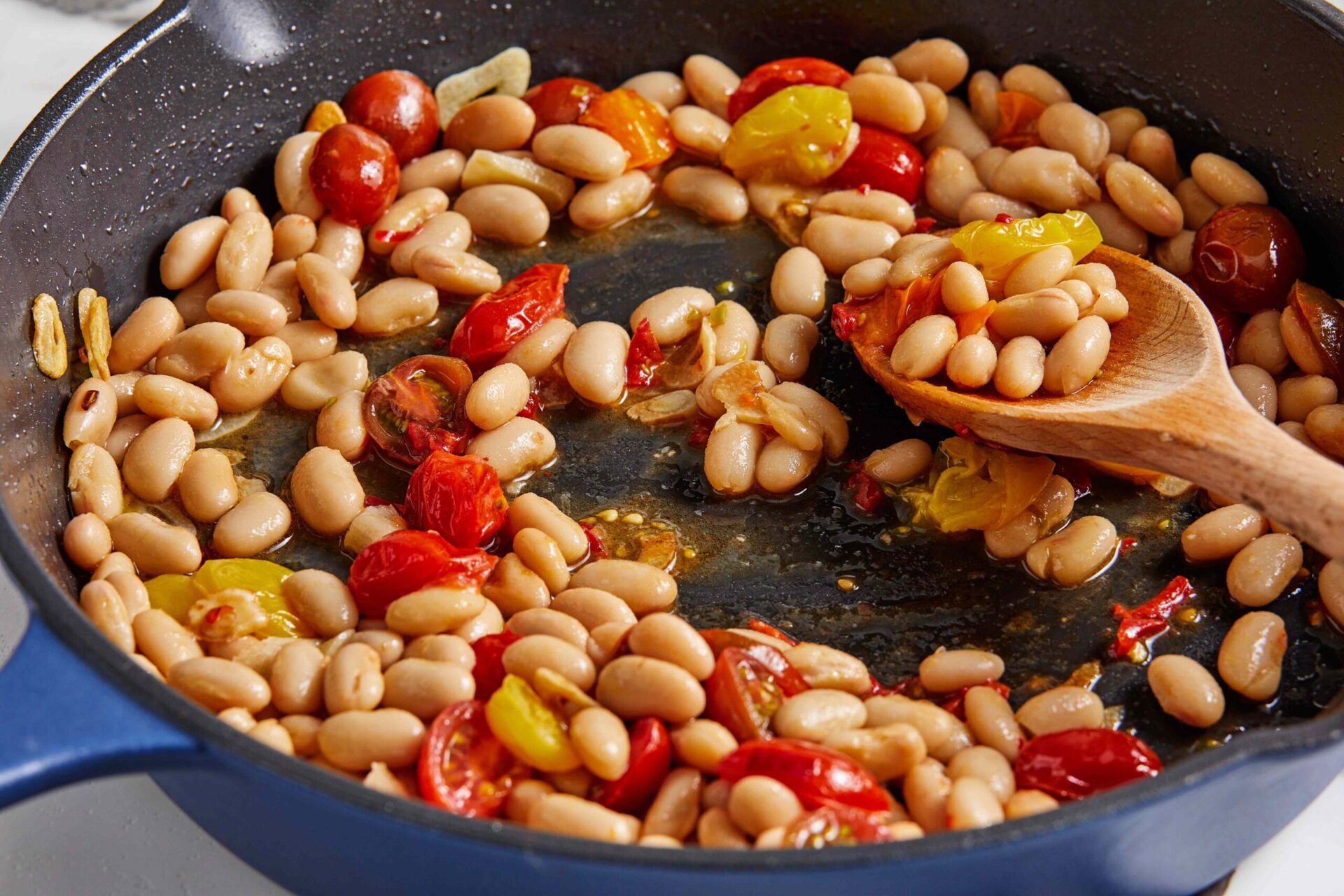
Regularly eating beans may help prevent high blood pressure.Credit: The Washington Post / Contributor / Getty Images
Regularly eating beans may help prevent high blood pressure.
Credit: The Washington Post / Contributor / Getty Images
  • New research links legume and soy consumption with a lower risk of high blood pressure.
  • Specifically, eating about 100 grams of legumes or 60 to 80 grams of soy products per day may help reduce the risk of hypertension.
  • However, the study cannot prove that soy and legume consumption directly reduces hypertension risk.

What you eat can have a big impact on blood pressure, and a recent review suggests that a diet rich in two food groups could help prevent it from getting too high: legumes and soy products. And when it comes to eating these foods for blood pressure benefits, quantity matters, according to the new paper.

Why Researchers Examined This—and What They Did

High blood pressure is incredibly common, affecting 1.4 billion people worldwide, and is a major risk factor for heart problems. Previous studies have suggested a link between legumes and soy with reduced blood pressure, but researchers wanted to “clarify the association,” they wrote in their paper, which was published in the journal BMJ Nutrition, Prevention & Health.

The team examined 12 existing studies investigating blood pressure and consumption of legumes like beans and chickpeas and soy products like tofu and tempeh. In each study, researchers observed participants over time rather than instructing them to consume a specific amount of legumes or soy. The studies ranged in size from about 1,100 to 88,500 participants and were conducted in several countries, including the U.S., France, the United Kingdom, China, Iran, South Korea, and Japan.

How Much Legumes and Soy Do You Have to Consume For Potential Benefits?

After adjusting for factors that could influence blood pressure, such as diet, exercise, and age, a few trends emerged: People who ate the most legumes had a 16% lower risk of hypertension, and those who ate the most soy had a 19% lower risk compared with those who ate the least.

Specific daily quantities were also tied to reduced risk of hypertension. For legumes, 100 grams per day was associated with a 12% to 14% lower risk, while up to 170 grams a day was associated with a 30% lower risk. Those amounts translate to roughly a half-cup to one cup of cooked beans, peas, or lentils.

Consuming 60 to 80 grams (or about 2 to 3 ounces) of soy per day—about a half-cup of edamame or a little less than one serving of tofu—was linked to a 28% to 29% reduction, which remained steady even with higher intake. 

For people in the U.S. and Europe, these quantities are significantly higher than what most currently consume. The study noted that average legume consumption in these regions is only about 8 to 15 grams per day.

The Research ‘Advances the Field’—But Has Limitations

According to Sirisha Vadali, MD, a board-certified cardiologist and advanced lipidologist based in Arizona, the study “strongly” supports the idea that legumes and soy are beneficial for preventing hypertension. But while the findings may not change recommendations, she said they “meaningfully advance the field” in two ways: by showing dose-response relationships and by rating the evidence as probably causal. 

However, because this is an analysis of observational studies, the research cannot definitively conclude a cause-and-effect relationship between soy and legume consumption and reduced hypertension risk. Another limitation, acknowledged by the authors, is the variation among the populations studied and the types of legumes consumed, which makes it difficult to determine whether black beans offer more benefit than chickpeas, for example, or whether tofu is more effective than tempeh.

Why Legumes and Soy May Help Lower Blood Pressure

Dagfinn Aune, PhD, one of the study’s authors and a research fellow in the department of epidemiology and biostatistics at Imperial College London’s School of Public Health, said that legumes and soy contain several nutrients that could account for their blood pressure benefits. 

Fiber is particularly notable. It can lower cholesterol levels and keep blood sugar levels steady, two factors that reduce the risk of hypertension. It also benefits gut health by serving as a prebiotic that helps gut bacteria produce beneficial short-chain fatty acids. Emerging research has suggested a link between gut health and blood pressure regulation.

Soy also contains two types of isoflavones, genistein and daidzein, Aune said. Genistein may reduce various cardiovascular risk factors, while daidzein has anti-inflammatory and antioxidant properties and may offer protective cardiovascular benefits.

It’s also possible that the blood pressure benefits are a secondary effect of another outcome associated with legume and soy consumption: weight loss. “Both legumes and soy have been associated with less weight gain, and obesity is a major risk factor for hypertension,” Aune told Health.

Simple Ways to Add More Legumes and Soy to Your Diet

Legumes and soy-based foods are versatile and can be incorporated into every meal of the day. To eat more soy, Craig Basman, MD, FACC, FSCAI, a board-certified cardiologist and associate director of the Structural & Congenital Heart Program at Hackensack Meridian Medical Group, suggested starting with tofu. Buy it firm and crumble it into a stir-fry or chili, or opt for silken tofu, which you can blend into dressings or desserts. Edamame is another easy option—try steaming it and topping it with a sprinkle of salt.

As for legumes, a can of rinsed black beans can go a long way. Try adding them to your favorite soup or salad. Hummus, made from chickpeas, is another good option, or you can blend white beans into smoothies for a creamy texture, Basman said.

Just keep in mind that beans can cause gas, bloating, or other gastrointestinal discomfort in people who aren’t used to eating them. To avoid this, Basman suggested:

  • Starting with smaller portions: “Begin with just a couple of tablespoons of beans a day, and gradually increase the amount over a few weeks.”
  • Rinsing canned beans: A simple rinse washes away some of the sugars that can cause gas.
  • Soaking dry beans: For best results, soak dry beans overnight and then cook them in fresh water.
  • Drinking plenty of water: Water helps fiber move more easily through the digestive system.

What’s powerful about the study findings "is how achievable they are,” Vadali said. “Legumes and soy aren’t exotic superfoods. Better yet, they’re affordable, familiar, and adaptable. For [hypertension] prevention, the biggest gains come from moving intake from rarely to regularly.”




Source link

Leave a Reply

Subscribe to Our Newsletter

Get our latest articles delivered straight to your inbox. No spam, we promise.

Recent Reviews


Last updated on
Jun 12, 2024

SQLite vs PostgreSQL – Table of Content

What is SQLite? 

SQLite is an auto, file-based, and completely open-source relational database management system (RDBMS) that is noted because of its mobility, reliability, and excellent performance even when in low-memory applications. Even if the system fails or there is a power outage, its transactions are ACID-compliant. The SQLite project touts itself as a “serverless” database on its website. Typical relational database systems are deployed as a server process, with programs communicating with the host server via interprocess communication. SQLite, on the other hand, enables any system that utilizes the databases to read and write directly to the database disc file. This makes it easier to set up SQLite because it eliminates the requirement to set up a server process. Similarly, apps using the SQLite database don’t need to be configured; everything they need is to access.

What is PostgreSQL? 

PostgreSQL, or Postgres, describes itself as “the world’s most sophisticated open-source relational database.” It was built with the intention of being highly expandable and consistent with industry standards. PostgreSQL is indeed an object-relational database, which means that while it’s essentially a relational database, it also has features that are more commonly associated with object databases, such as table inheritance and feature overloading. Concurrency is a feature of Postgres that allows it to efficiently handle numerous processes at the same time. It does so without using read locks because it uses Multiversion Concurrency Control (MVCC), maintains the synchronization, coherence, exclusivity, and durability of its transactions, often known as ACID compliance. Although PostgreSQL isn’t as popular as MySQL, it still has a variety of third-party libraries and tools, such as pgAdmin and Postbird, that make dealing with it easier.

Take your career to next level in PostgreSQL with HKR. Join PostgreSQL online training now

Difference between SQLite and PostgreSQL

However both SQLite & PostgreSQL are available as open Relational Database Management Systems (RDBMS), there may be a few distinctions to consider when picking which one to utilize for your company. The following are the significant distinctions that influence the SQLite vs. PostgreSQL decision:

Database Model
  • SQLite is indeed an embedded database management system. This means it’s a Serverless DBMS that can be used within your apps.
  • To set up and run across a network, the PostgreSQL DBMS uses a Client-Server Model thus needs a Database Server.
Setup Size
  • SQLite is much smaller than PostgreSQL, with a data size of less than 500KB. Its installation files are over 200MB in size.
Data Types Supported
  • INTEGER, NULL, BLOB, TEXT, & REAL are the only data types supported by SQLite. In SQLite, the phrases “data type” and “storage class” are interchangeable.
  • PostgreSQL, on either hand, can store almost any type of information that you could need to put in your database. This could be an INTEGER,  CHARACTER, SERIAL, VARIABLE, or something else entirely.

PostgreSQL Training

  • Master Your Craft
  • Lifetime LMS & Faculty Access
  • 24/7 online expert support
  • Real-world & Project Based Learning
Portability
  • SQLite keeps its database as a single conventional disc file that may be found anywhere in the directory. The file is also saved in a cross-platform form, making copying and moving it a breeze. SQLite is among the most transportable Relational Database Management Systems because of this (RDBMS). PostgreSQL, on either hand, is only portable when the database is exported to something like a file and afterward uploaded to a server. It can be a time-consuming task.
Multiple Access
  • When this comes to user management, SQLite falls short. This also misses the capacity to control several users accessing the system at the same time.
  • PostgreSQL is excellent at managing users. It provides well-defined authorizations for users, which decide which database actions they are allowed to do. It can also support numerous users accessing the system at the same time.
Functionality 
  • Because SQLite is indeed a simple database management system, it includes basic capabilities that are appropriate for all sorts of users. PostgreSQL, on either hand, is a sophisticated database management system with a wide range of capabilities. As a result, users can accomplish a lot more using PostgreSQL than they can with SQLite.
Speed
  • SQLite is quick given the fact that this is a lightweight database management system having simple operations and a minimalist design.
  • PostgreSQL might not have been the best database for quick read queries. This is due to its sophisticated design as well as the reality that this is a large database management system. It is, nevertheless, a robust database management system for conducting complex processes.
Security Features 
  • Authentication is not included with SQLite. Anyone with database access has the capacity to read and modify the database file. It renders it inefficient for storing sensitive and private information. Many security features come included with PostgreSQL. It also necessitates extensive configurations from its users in order for it to be secure. As a result, PostgreSQL is a secure database management system for storing private and sensitive information.
HKR Trainings Logo

Subscribe to our YouTube channel to get new updates..!

Features of SQLite 

  • Small footprint: The SQLite module is quite light, as its name implies. Although the amount of space it takes up fluctuates based on the system on which it is installed, it can be less than 600KiB. Additionally, SQLite is completely self-contained, which means you don’t need to install any extra dependencies for it to work.
  • SQLite is known for being a “zero-configuration” database that is ready to use right out of the box. SQLite doesn’t operate as just a server process, so it doesn’t need to be halted, restarted, or resumed, and it doesn’t arrive with just about any configuration files to handle. These capabilities make the process of installing SQLite and incorporating this with an app much easier.
  • SQLite is an excellent database choice for embedded applications that require portability but do not require future expansion. Single-user local apps, mobile applications, and games are examples.
  • A whole SQLite database is kept in a single file, unlike many other database systems, that often store data as a vast batch of distinct files. This file could be transferred through external devices and file transfer protocol and can be found everywhere in a directory structure.
  • Testing: Using a DBMS that utilizes a dedicated servers process to test the functionality of multiple applications can be excessive. SQLite features an in-memory mode that allows you to run tests rapidly without having to worry about the expense of entire database transactions, making it an excellent choice for testing.
  • SQLite can be used as a disc access alternative in circumstances in which an app wants to study and modify files to disc directly. This is because SQLite has more capability and is simpler to use.

Features of PostgreSQL

  • PostgreSQL, more than SQLite, strives to follow SQL standards to the letter. PostgreSQL offers 160 of the 179 characteristics needed for proper core SQL:2011 compliance, as well as a vast range of optional capabilities, as per the authorized PostgreSQL documentation.
  • Community-driven and open-source: The source code for PostgreSQL is created by a huge and dedicated community as a fully open-source project. Likewise, the Postgres society preserves and provides a number of online resources that explain how to use the database management system, such as the official paperwork, the PostgreSQL website, and several online forums.
  • Extensible: PostgreSQL’s catalog-driven operation and dynamic loading allow users to enhance it dynamically and on the fly. An object code file, including a shared library, can be designated.
  • Data consistency is critical: PostgreSQL has indeed been completely ACID-compliant from 2001 and uses multi-version monetary control to guarantee data consistency, making it an excellent option of RDBMS where data consistency is crucial.
  • PostgreSQL is interoperable with a wide range of computing languages and systems. This means that migrating your database to a different operating system or integrating it with a specific tool will be simpler with such a PostgreSQL database compared with some other database management system.
  • Complex operations: Postgres provides query strategies that make use of several CPUs to speed up query processing. This, together with its extensive support for numerous simultaneous writers, makes it an excellent candidate for data warehousing and other complex tasks.

Click here to get latest PostgreSQL interview questions and answers

PostgreSQL Training

Weekday / Weekend Batches

Conclusion

SQLite and PostgreSQL,  are the most widely used open-source relational database management platforms today. It has its own set of characteristics and limits and shines in specific situations. When choosing an RDBMS, there are many factors to consider, and the decision is rarely as straightforward as selecting the quickest or most feature-rich option. If you require a relational database system in the future, do some study on these and other technologies to identify the one that best fits your needs.

Related Article:


Source link