U.S.-Iran peace deal emerging, while war threats still loom


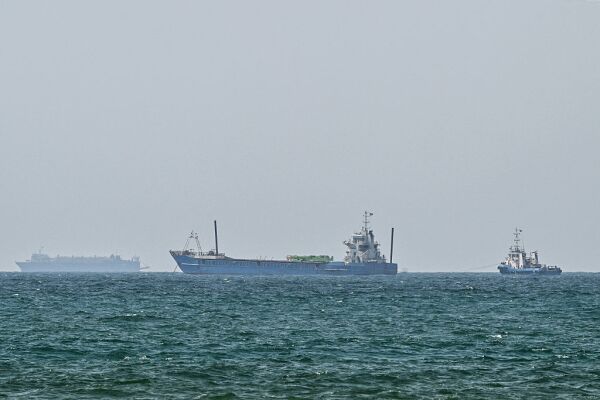
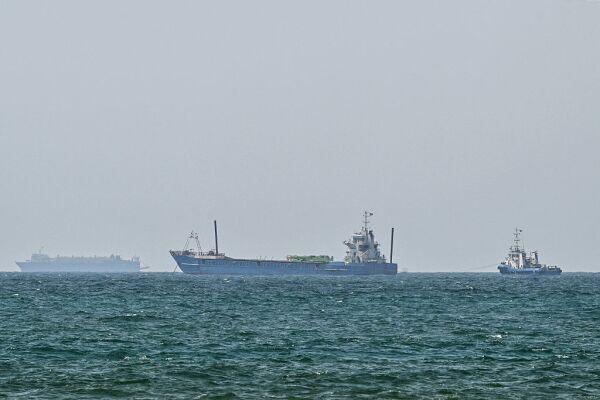
Vessels are anchored off the coast of Sharjah in the United Arab Emirates on May 21, 2026.

Vessels are anchored off the coast of Sharjah in the United Arab Emirates on May 21, 2026.
Vessels are anchored off the coast of Sharjah in the United Arab Emirates on May 21.
AFP via Getty Images

President Donald Trump and other administration officials are tempering expectations raised of an imminent agreement to end the war in Iran while Iranian officials have signaled there are still disagreements on key issues.

Trump, after saying Saturday that the U.S. and Iran had "largely negotiated" a memorandum of understanding that would reopen the Strait of Hormuz, said Sunday in a series of posts in social media that the U.S. would not rush into any agreement.

"If I make a deal with Iran, it will be a good and proper one," adding: "So don't listen to the losers, who are critical about something they know nothing about," Trump posted on Sunday.

Speaking in New Delhi, U.S. Secretary of State Marco Rubio said Monday, the United States would "give diplomacy every chance to succeed before we explore the alternatives."

Iran has not officially commented on the proposed agreement. But semi-official news agencies, often used for Iranian leadership messaging, have said that disputes over "one or two" issues were jeopardizing the potential deal.

On Monday, Tasnim news agency, close to Iran's Revolutionary Guard Corps, accused the U.S. of "obstructionism" over the release of some frozen Iranian funds in exchange for lifting restrictions over transit through the Strait of Hormuz.

The news agency also said the agreement being negotiated called on Iran to restore the number of ships transiting through the vital waterway to pre-war levels within 30 days and for the U.S. to completely lift its blockade within the same time. Another state-backed agency, ISNA, said Iran would insist on administering the strait along with Oman. The two countries share the narrow waterway, with the transit passage governed by the U.N. law of seas.

The U.S. and Israel attacked Iran on Feb. 28, sparking a regional war that for the first time spread to U.S. allies in the Gulf including Saudi Arabia and the United Arab Emirates. Iran struck U.S. military bases and energy infrastructure in those countries in retaliation for U.S. and Israeli strikes. A ceasefire was agreed in April. Several thousand Iranians were believed killed in the U.S. and Israeli strikes.

While Trump originally focused on the idea of regime change in the Islamic republic and the perceived threat of Iran building nuclear weapons, current talks have centered on re-opening the Strait of Hormuz.

World oil prices have risen sharply after Iran restricted access to the vital waterway. Shipping disruptions related to container traffic through the strait have affected the global availability and the cost of a huge variety of products from fertilizer to plastic consumer goods.

US Secretary of State Marco Rubio speaks to journalists before boarding his plane at Indira Gandhi International Airport in New Delhi on May 25, 2026.
US Secretary of State Marco Rubio speaks to journalists before boarding his plane at Indira Gandhi International Airport in New Delhi on May 25.
Julia Demaree Nikhinson | AFP via Getty Images

Rubio, on an official visit to India, said the agreement being discussed with Iran was "a pretty solid thing on the table in terms of their ability to open up the strait." He said the U.S. intended to engage in "a very real, significant, time-limited negotiation on the nuclear matter." "Hopefully, we can pull it off," he added.

Iran's state-backed ISNA news agency quoted a senior Iranian diplomat as saying that Iran has not made any commitment in negotiations on the initial agreement on nuclear issues, including highly enriched uranium.

The U.S. has pressed Iran to send highly enriched uranium out of the country for safe-keeping. Iran, which says its nuclear program is for peaceful purposes, sees it as a sovereignty issue and has indicated opposition to that option.

Hossein Nooshabadi, a senior foreign ministry official quoted by Iran's ISNA news agency, said Iran's demands include "ending the war on all fronts including Lebanon, releasing billions of dollars of Iran's frozen assets, lifting the U.S. naval blockade and opening the Strait of Hormuz, withdrawing U.S. forces from the surrounding environment of the Islamic Republic, and the freedom to sell Iranian oil are envisioned in the potential agreement between Iran and the United States."

Iran's foreign ministry spokesman, Esmaeil Baghaei, said Sunday that if a deal were signed Iran and the U.S. would discuss nuclear issues over a 60-day period, which the Nooshabadi said would begin after the 30-day initial agreement over the Strait of Hormuz.

"At this stage we are not discussing nuclear details, and the 14-point memorandum of understanding is focused on ending the war," he said.

Nooshabadi said the 60-day talks were contingent on the lifting of sanctions and a complete release of frozen Iranian assets by the U.S.

Trump wrote Saturday the U.S. would continue its naval blockade of the Strait of Hormuz until an agreement with Iran was "⁠reached, certified, and signed."

Iran's parliament spokesman Ebrahim Rezaei said in a social media post that Iran would not yield to threats and if the U.S. wanted an agreement it should negotiate but if it wanted even higher prices at the gas pumps it should "continue bluffing".

Israel, which has played a key role in Trump's decision-making on Iran, is strongly opposed to a deal that includes a stop to the war in Lebanon.

Despite a U.S.-brokered extension to the ceasefire between Israel and Lebanon this month, Israel has continued to occupy southern Lebanon and launch waves of airstrikes. Lebanon's health ministry says more than 3,200 people, including women, children, medical personnel and first responders, have been killed in Israeli attacks since the war with the Iran-backed Lebanese group Hezbollah began in March.

Israel says 22 soldiers and a military contractor along with two civilians have been killed in Hezbollah attacks.

Copyright 2026, NPR


Source link

Leave a Reply

Subscribe to Our Newsletter

Get our latest articles delivered straight to your inbox. No spam, we promise.

Recent Reviews


Now let me brief about the SAS tool:

SAS is also known as “Statistical analytical software” – popular data analytical software. The main purpose of this SAS software is to alter, manage, retrieve, and mine from multiple data sources. The basic functionalities of SAS included are managing the data, statistical analysis purpose, developing the applications, and data warehousing. The SAS technology consists of a point and click user interface mainly for non-programmers and also used to perform more advanced options through SAS programming language. In the SAS tool, data will be extracted from multiple sources to analyze and identify the data patterns.

Let’s start with SAS programming concepts.

Fundamental concepts of SAS programming:

The following are the important windows used in SAS programming:

SAS windows:

These SAS windows are mainly used by large business enterprises and training institutes. The main aim to use this SAS window is that due it includes a lot of essential utilities that reduce the time required to write the SAS codes.

The following diagram explains the overview of SAS windows;

SAS Window

1. Log window:

This is a type of execution window. With the help of this window type, you can check the condition of your program execution. You can view errors, notifications, and warnings related to program execution in this windows type.

2. Code window:

This type of window is also called an editor window. You should use them as a blank paper, and notepad, where you can write your SAS programming code.

3. Output window:

As the name tells, this type of window is used to display the output of the given program or program code. In this window, you should write your code in the editor.

4. Result window:

This window is a type of index that consists of output lists of programs that help to run them in one session. It also holds the particular session results, if you once close the software, then you have to restart it. The resulting window in SAS window type will be empty.

5. Explore Window:

This window type consists of lists of all the libraries and packages in the system. With the help of this window type, you need to browse the system that includes supported file types.

One more important point to be remembered, a few business enterprises use the LINUX operating system. This type of OS will not support the graphical user interface to write your SAS program code and it’s very inconvenient to use.

SAS data sets:

SAS data sets are also known as data files. However, data files consist of rows and columns, where rows include observations and columns include variable names.

Join our BDD Training today and enhance your skills to new heights!

SAS Training

  • Master Your Craft
  • Lifetime LMS & Faculty Access
  • 24/7 online expert support
  • Real-world & Project Based Learning

SAS variables:

SAS consists of two types of variables:

1. Numeric variables:

This is the default type of variable. These variables are mainly used in mathematical expressions.

2. Character variables:

Character variables hold values that are not used in mathematical expressions. They are used as text or strings. A character variable can be expressed by using the symbol “$” at the end of the variable name.

SAS libraries:

SAS library is a list of SAS files that can be stored in the same folder or any directory on your computer devices.

There are two types of SAS libraries available such as;

1. Temporary library: In this type of library, the data sets will be deleted when your SAS session ends.

2. Permanent library: In this type of library, data sets will be saved permanently; henceforth they are available across the SAS sessions.

With the help of this library, the user can also define or generate a new library type called a user-defined library by using the keyword “LIBNAME”.

SAS programming and SAS code structure:

When you begin SAS programming, you should know two building blocks;

They are;

1. DATA step: This DATA step creates the SAS program data sets and then transmits them into the PROC step.

2. PROC step: This type of SAS step processes the data sets.

Important rules to be followed when you begin with the SAS program;

a. Every code in the SAS program should begin with either DATA or PROC step.

b. Every line of the SAS program code should end with a semicolon.

c. A SAS programming code should end with these keywords “RUN” or “QUIT”.

d. SAS programming codes are not always case sensitive.

e. You can write the codes across multiple lines or multiple statements in a single line.

Program example:

DATA Employee_Info;

Input Emp_ID  Emp_Name$ Emp_Vertical$;

datalines;

201 Mark SQL

202 John SAS

203 Adam JAVA

;

RUN;

Informats and Formats in SAS:

As I said earlier SAS uses two types of variables;

They are;

1. Numeric

2. Character

When your SAS program consists of non-standard variables, then SAS will throw the errors or you will not get the desired output. To overcome this type of hustle SAS makes use of Formats and Informats.

Informat:

The main purpose of using these Informats is to read or read the input data types available from external files or flat files (you can also know them as a text file or sequential file). This type of SAS informat informs SAS software on how to read/ write the data into SAS variables. SAS program consists of three types of informats:  character, date or time, and numeric. The following are the syntax structure of informats:

a. Character informat: “$INFORMATw”.

b. Numeric informat: “INFORMATw.d”.

c. Date or time informat: “INFORMATw”.

Here the “$” defines the character format and “w” indicates the variable width. And the “d” used to indicate the numeric data.

Formats:

Informats in SAS are used as an instruction to read the data, whereas the formats are also a type of instruction to display the output data. Here formats are used into three classes informats (for example character, numeric, and date/time formats) and also hold dot values.

The syntax used to format the statement is as follows;

FORMAT variable-name FORMAT-NAME;

SAS Loops:

While working with SAS programming, in some cases, you may get a situation where we need to execute the block of statements several times. You will get an error when you execute the same statements again and again. In SAS programming, the DO statements are used to implement the loops. This is also known as the “Do loop”. The image shows the loop statements execution;

There are three types of Do loops used in SAS programming;

1. Index: in this case of do, the loop will begin from the start value until the stop value of the condition given index variable at the end of the program.

2. While: the loop conditional statement continues until the while condition becomes false, then the loop will be terminated.

3. Until: the loop continues till the Until condition becomes true and the program will be executed successfully.

   Want to know more about SAS,visit here SAS Tutorial !

HKR Trainings Logo

Subscribe to our YouTube channel to get new updates..!

Basic statistical procedures used in SAS:

The following are vital statistical procedures used in SAS;

1. PROC MEANS:

This type of basic statistical procedure is mainly used to calculate any arithmetic mean and standard deviation while working with SAS operators. It may be difficult for those who are new to statistical analytics. So before you start coding, you should make use of this basic procedure.

2. Arithmetic mean:

This is nothing but the sum of the value of any numeric variables, which are divided by the number of variables that give you the Arithmetic mean. It is also called mean and also measures the central tendency. A measure of central tendency is nothing but a single value that defines the set of data to identify the central position of the data sets.

3. Mean of a Data sets:

If you want to supply only data sets without using any variables, first you should calculate the mean of all the given variables at the data set.

4. Mean of selected variables:

Here you need to supply the names to the variables by using the Var option, and then you will get the mean of the selected variables.

5. Mean by class:

With the help of this, you need to find the mean of the numeric variables by grouping them. Here the grouping can be done by using some parameters. For example, parameters like “make” and “type” can be used to group them.

6. Standard deviation:

Standard deviation is a measure used to verify the given data set. For example, if the value of standard deviation is “0”, it means that data points are very close to the mean of the data set.

The below are the two methods used to calculate the standard deviation value;

1. PROC MEANS

2. SURVEYMEANS

SAS Training

Weekday / Weekend Batches


Conclusion:

In this SAS programming blog, you will be learning what are all the various approaches used to execute the SAS codes. SAS software includes various advanced level customized components to help while working with business enterprise applications. We have tried to explain basic to advanced level concepts to become a good SAS programmer. One more advantage of the SAS tool is that even non-programmer with basic SQL knowledge can also access this software tool.

 Related Article:

SAS Vs Python


Source link