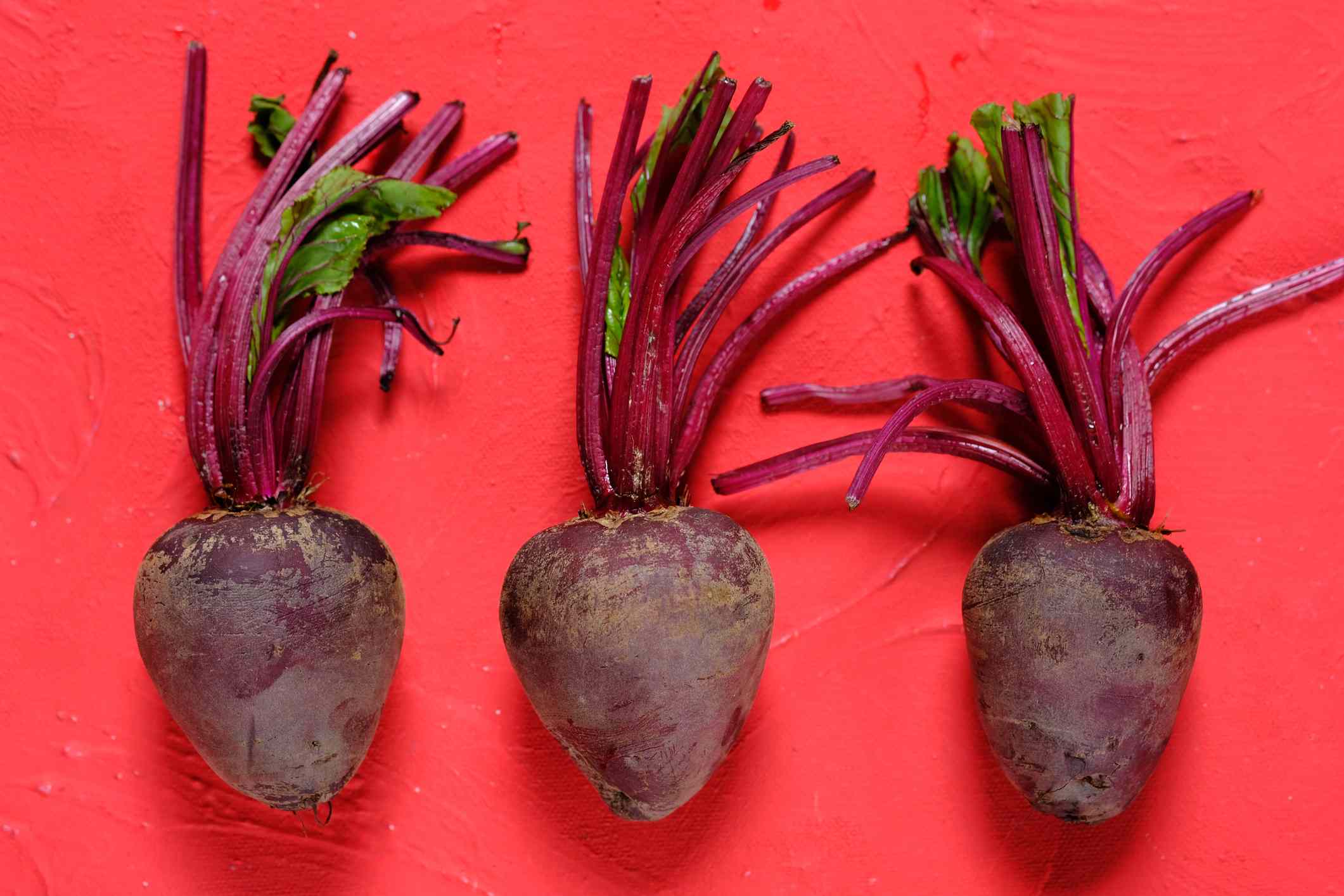
:max_bytes(150000):strip_icc():format(jpeg)/Health-GettyImages-1496563516-2dc88addb613414ebd37bb206b2a013f.jpg "Three beetroots with stems placed on a red surface")
Credit: Ika Rakhmawati Hilal / Getty Images
- Beets contain nitrates, which convert into nitric oxide in the body to help relax blood vessels and lower blood pressure.
- Other nitrate-rich vegetables include spinach, arugula, celery, parsley, lettuce, fennel, cabbage, and turnip.
- Other ways to support healthy blood pressure include following a DASH diet, reducing salt intake, exercising, getting quality sleep, and managing stress.
Beets contain nitrates. Your body converts nitrates to nitric oxide, which helps widen blood vessels. This can help lower blood pressure to some degree. However, the effects can vary from person to person.
1. How Beets Affect Blood Pressure
Nitrates in beets can help relax blood vessels and lower blood pressure.
Beets can improve endothelial function, which is the health of your blood vessel lining. When blood vessels are healthy, they relax easily, allowing blood to flow more smoothly.
Healthy blood flow is important because it delivers oxygen and nutrients to tissues throughout your body and removes waste from them. It also supports healthy blood pressure.
A 2024 research review found that nitrate-rich beetroot juice, containing 200–800 milligrams of nitrate, can lower systolic blood pressure (the top number) by about 5 mmHg. However, it had no effect on diastolic blood pressure (the bottom number) or 24-hour blood pressure.
Studies often look at the effects of beetroot juice rather than whole beets. This is because juice contains more concentrated nitrate than whole beets, so the effect is likely stronger.
A 2016 study compared the effects of 250 milliliters of raw beet juice and 250 grams of cooked beet daily for two weeks. Both interventions can help lower blood pressure and improve blood vessel lining health. However, the effects were stronger with the juice.
Whole beets are likely to have lower nitrate per serving than beetroot juice, but they are still rich in nitrates. A 2020 study showed that eating a lunch containing nitrate-rich vegetables can reduce post-meal blood pressure just as effectively as drinking beetroot juice. Other nitrate-rich vegetables include spinach, arugula, celery, parsley, lettuce, fennel, cabbage, and turnip.
Whole beets also have more fiber than beet juice. A glass of beetroot juice (250 milliliters) has about 2.7 grams of fiber, while 250 grams of raw beets provides about 7.6 grams of fiber.
Eating beets regularly may improve blood flow and pressure, but the effect can vary across different people. Many factors, such as having high blood pressure, age, sex, and overall diet and lifestyle, can influence the results.
People with high blood pressure, males, those under 45, and individuals with higher body weight may see greater benefits from beets on blood pressure. However, more research is needed to understand how regularly eating beets impacts different people.
Ways to Enjoy Beets
Beets have an earthy flavor and vibrant color, and are very versatile in meals. Here are some easy ways to include more beets in your diet:
- Eat beets raw: Shred or cut beets to add to your salads.
- Make a juice or smoothie: Juice beets or blend them into smoothies with yogurt, nuts, and seeds.
- Dry and make into powder: Dry beets and grind them into powder. It’s easy to add the powder to water, milk, smoothies, yogurt, soups, dips, and sauces.
- Blend into dips and sauces: Blend cooked or roasted beets into hummus, yogurt dips, or pasta sauces. They add natural sweetness, vibrant color, and extra nutrients to your meals.
- Roast: Roast beets and eat them as a side or add to other meals. They go well with whole grains, beans, or meat-based dishes.
- Boil: Boiled beets are great in salads or bowls. You can also use canned beets, but look for versions with no added sugar or salt.
Nutritional Value of Beets
A serving (85 grams) of beets contains:
- Energy: 38.2 kcal
- Protein: 1.44 grams (g)
- Carbohydrates: 7.47 g
- Fiber: 2.64 g
- Folate: 87.6 micrograms (mcg), 22% of the Daily Value (DV)
- Potassium: 291 milligrams (mg), 6% of the DV
Beets contain heart-healthy nutrients like potassium, fiber, and antioxidants called betalains.
Beets are packed with beneficial compounds, but they are not miracle foods for blood pressure. It is important to follow a heart-healthy diet, reduce salt intake, exercise, get quality sleep, and manage stress to support healthy blood pressure.