The Chase Sapphire Reserve® (see rates and fees) is one of our top picks in the premium travel rewards card market.
The card carries a $795 annual fee and a robust set of statement credits that can provide more than $2,000 in annual value when fully utilized.
Many of these credits are easier to use than you might realize. And even if you can’t use all of them, the Sapphire Reserve’s non-quantifiable benefits, like lounge access and travel protections, make it worth keeping in a frequent traveler’s wallet.
Let’s dive into the credits the Sapphire Reserve offers.
Overview of Sapphire Reserve credits
Here are the credits the Chase Sapphire Reserve offers:
| Credit | Value |
|---|---|
|
Up to $500 (split into two up-to-$250 credits that can be used at any time but cannot be combined) for prepaid bookings of two nights or more booked via Chase Travel℠ |
|
|
Up to $300 each account anniversary year for a broad suite of travel purchases |
|
|
Up to $300 each year (up to $150 from January through June and up to $150 from July through December) for Sapphire Reserve Exclusive Tables |
|
|
Up to $300 each year (up to $150 from January through June and up to $150 from July through December) for purchases with StubHub and Viagogo through Dec. 31, 2027. One-time activation is required. |
|
|
Up to $300 (two separate monthly $10 non-restaurant promos and one monthly $5 restaurant promo when you activate your DashPass membership by Dec. 31, 2027) |
|
|
$288 complimentary Apple TV+ and Apple Music subscriptions each year. One-time activation for each service is required. These subscriptions run through June 22, 2027. |
|
|
Global Entry, TSA PreCheck or Nexus
|
Up to $120 (every four years) |
|
Up to $120 each year ($10 monthly membership credit through Dec. 31, 2027) |
|
|
Up to $120 each year (up to $10 in monthly in-app credit on Lyft rides through Sept. 30, 2027) |
|
|
$500 (requires $75,000 or more in spending) |
|
|
$250 (requires $75,000 or more in spending) |
The Edit
The Edit by Chase Travel is Chase’s luxury hotel booking platform. Simply book a prepaid stay of at least two nights through The Edit, and your account will be credited up to $250.
You’ll receive two $250 credits, which can be used anytime during the year, but cannot be combined. A two-night minimum stay is always required.
With The Edit properties, you’ll be able to earn hotel rewards and receive elite benefits that you normally don’t see when booking through an online travel agency.*
For example, if you book a hotel through The Edit that is a World of Hyatt property, you’ll earn Hyatt points and receive any elite status benefits as long as you put your Hyatt membership number on the booking.

Reward your inbox with the TPG Daily newsletter
Join over 700,000 readers for breaking news, in-depth guides and exclusive deals from TPG’s experts
*Exception: Small Luxury Hotels properties booked through The Edit do not earn Hilton Honors points nor receive elite status benefits.

However, we must note you will not earn any Chase points on the portion of your The Edit stay covered by the credit.
Additionally, when staying at a property booked through The Edit, you’ll receive several perks, including complimentary breakfast, room upgrades (if available) and a $100 property credit.
If you stay in a high-end hotel at least once or twice per year, you should have no problem using this credit. Just remember that it must be triggered by booking through The Edit by Chase Travel.
Additionally, in 2026, cardholders receive a separate, one-time $250 credit to use at select Chase Travel hotels, such as IHG, Omni and Virgin Hotels (a two-night minimum is required). This credit must be used by Dec. 31.
Pro tip: If you have free night certificates from hotel loyalty programs, try to stack them on top of any nights booked with The Edit credit. For example, you could use The Edit credit for two nights and use a free night certificate on the third night, and you’ve got yourself a long-weekend getaway.
Related: Booking through The Edit by Chase Travel lets you earn hotel points and elite benefits
General travel
The Chase Sapphire Reserve has a $300 annual travel credit. The credit is extremely flexible, covering any travel purchase (unlike the travel credit on the Capital One Venture X Rewards Credit Card, which must be redeemed through the Capital One Travel portal).
Chase broadly defines travel and includes many everyday expenses, such as buses, parking and tolls.

This credit is automatically applied and should be easy for most cardholders to maximize — just remember that, since it’s automatic, you’ll have to be strategic about which purchases you make with your card if you’re trying to save the full amount for a specific travel-related purchase.
It’s important to note you won’t earn any bonus points on purchases covered by this credit.
Related: Chase Points Boost: A valuable redemption option or a disappointing devaluation?
Dining
With the Chase Sapphire Reserve, you’ll receive an up to $300 dining credit (up to $150 biannually) at Sapphire Reserve Exclusive Tables.
Top restaurants in major U.S. cities, like Chicago, Los Angeles, Miami and New York City, participate in the program, and the list of restaurants is expanding. This credit functions similarly to the Resy credit with American Express.

For the credit to be triggered, you simply need to pay with your Sapphire Reserve at an eligible restaurant participating in Sapphire Reserve Exclusive Tables. No reservation or activation is required.
This credit might be more challenging to use, as it is not available in every city, and the number of restaurants is limited. However, if you are in a city with participating restaurants, this could be your chance to try something new or use it for a special occasion.
Pro tip: Add your Sapphire Reserve card to Rakuten to earn cash back when dining at certain restaurants. Some Sapphire Reserve Exclusive Tables restaurants may be on Rakuten, allowing you to double-dip on earnings. Additionally, you can also try inKind, which offers cash back when you dine at select restaurants.
Related: Chase launches Sapphire dining program to elevate your dining game
StubHub and Viagogo
If you are a fan of live entertainment or sports, this credit should be easy to use. The next time an artist’s popular tour or your favorite sports team rolls through your city, you can effectively receive up to $300 off the cost of tickets. Even if you only go to a live event once a year, you should be able to extract some value.
StubHub and Viagogo are two of the biggest ticket marketplaces in the world. You will receive up to $150 biannually when making ticket purchases through Dec. 31, 2027, with StubHub or Viagogo (activation required).

Simply use your Sapphire Reserve to purchase tickets with StubHub or Viagogo, and this credit will be automatically applied. However, note that StubHub and Viagogo are ticket resale platforms, so prices may be higher than face value.
Pro tip: Click through Rakuten before going to StubHub or Viagogo, as you may be able to earn additional cash back or Amex Membership Rewards points. Additionally, check StubHub and Viagogo on the day of the event you want to attend — often, ticket prices drop significantly on that day. And toggle on “Include estimated fees” under “Price Display Options” in the search filters to see the total cost of your tickets, including fees.
Related: How to make the most of Chase Sapphire Reserve’s 5 lifestyle credits
DoorDash
The Chase Sapphire Reserve offers three monthly DoorDash promos. You’ll receive two $10 non-restaurant promos and one $5 restaurant promo each month.
The non-restaurant promos can be used to grab a sweet treat or a late-night snack from your favorite convenience or grocery store. Anybody who orders delivery should be able to use this credit. Additionally, you’ll receive a complimentary DashPass membership, giving you $0 delivery fees and reduced service fees on eligible orders.

It’s important to note that you must use your Sapphire Reserve as your payment method to receive these benefits. If you don’t use the full credit on a single order, the remaining value is forfeited. (You must activate by Dec. 31, 2027, to receive both benefits.)
I usually save at least $15 on delivery costs each month. For anyone who orders food delivery, this credit shouldn’t be hard to use.
Pro tip: If possible, order pickup to save on service fees.
Apple
The Chase Sapphire Reserve provides you with complimentary Apple TV+ and Apple Music subscriptions, valued at $288 per year.
With Apple TV+, you can watch popular movies and hit shows like “Ted Lasso” and “Silo,” and with Apple Music, you can stream over 100 million songs.

If you already subscribe to these services, you can cancel your current subscriptions and activate complimentary ones to save a few bucks every month.
If you’re not a current subscriber, you may just find your next binge-watch with Apple TV+, and hey, Spotify users, you can give Apple Music a try and help settle the never-ending debate on which streaming service is better.
(A one-time activation is required per service, and you need to activate Apple TV+ and Apple Music separately through Chase’s website or the Chase app. These subscriptions run through June 22, 2027.)
Related: Get Apple TV+ and Apple Music with your Chase Sapphire Reserve
Global Entry, TSA PreCheck or Nexus
You’ll receive up to $120 in application fee credit every four years for Global Entry, TSA PreCheck or Nexus. These programs offer expedited entry into the U.S. and Canada and expedited airport security screening across the country.
Pro tip: To extract maximum value, I’d recommend Global Entry, as it includes TSA PreCheck. Also, if you already have Global Entry and TSA PreCheck, you can use this credit for a friend or family member and pay the application fee with your card.
Related: Why you should get TSA PreCheck and Clear — and how you can save on both
Peloton
With the Chase Sapphire Reserve, you’ll receive up to $120 annually (up to $10 per month) on Peloton membership purchases (through Dec. 31, 2027; activation required; pay with your Sapphire Reserve in your Peloton account or app to receive your credit). While you may think you need a Peloton machine to use this credit, you don’t.
If you’re a Peloton equipment owner, this is a useful credit as it effectively saves you $10 per month on any membership, and you need a membership to access the majority of the content. Memberships run from $9.99 to $124.99 per month (plus tax).

Additionally, if you don’t have Peloton equipment currently and have been eyeing a bike or treadmill, you can earn 10 points per dollar spent on Peloton equipment and accessory purchases of $150 or more (through Dec. 31, 2027; maximum of 50,000 points).
Pro tip: Even if you don’t own Peloton equipment, you can still use the credit for a Peloton App One membership, which gives you exercises to do at home or on the road.
Related: World of Hyatt members can earn points using Peloton at hotels around the world
Lyft
You’ll receive up to $10 in monthly Lyft in-app credits ($120 annually; through Sept. 30, 2027; does not apply to Wait & Save, bike or scooter rides).
This credit is fairly straightforward to use: Simply book a ride on the Lyft app. The credit is added to your Lyft account on the first of each month, and if you don’t use it all, it will be forfeited.
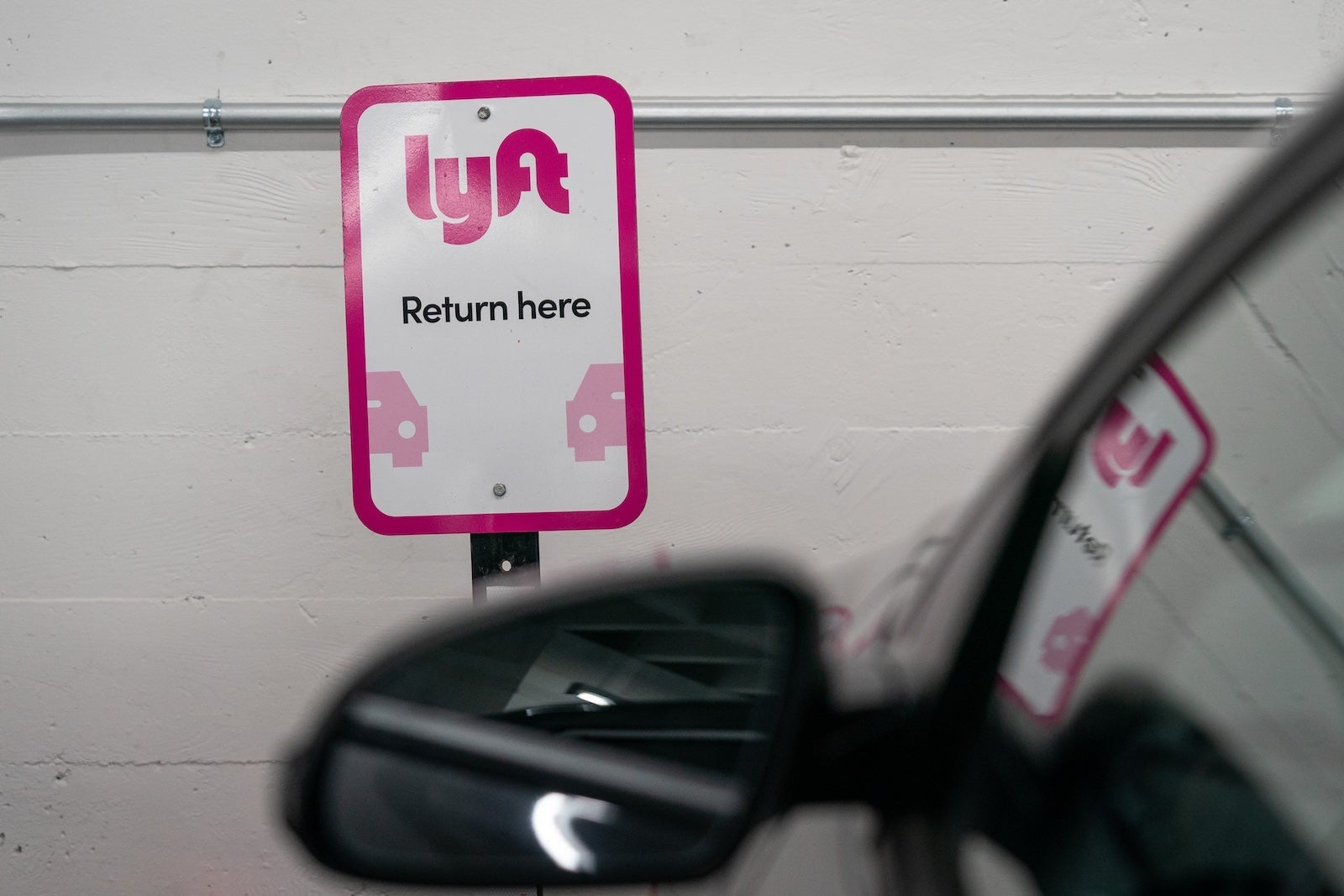
If you take at least one ride a month, you should have no issues using this credit.
Additionally, you’ll earn 5 points per dollar spent on Lyft rides (through Sept. 30, 2027).
Pro tip: Pair your Lyft account with one of its loyalty rewards partners — like Alaska Airlines Mileage Plan, Bilt Rewards or Hilton Honors — to double dip and earn Ultimate Rewards points and another loyalty program’s rewards when using Lyft.
Related: Chase extends Lyft partnership, with decreased earning rates for some cards
Earned credits
While not all Chase Sapphire Reserve cardholders may be able to spend at least $75,000 on their card each calendar year, if they do, they’ll unlock a $250 Shops at Chase credit and a $500 Southwest Airlines credit.
The Shops at Chase is an online shopping portal where you can purchase products from popular brands like Apple and Sony using points or your own funds.
In addition to these credits, after spending $75,000 in a calendar year, you’ll also earn IHG One Rewards Diamond, Southwest Rapid Rewards A-List and World of Hyatt Explorist status until the end of the following program year.
These credits and perks are not significant enough for most cardholders to justify targeting the $75,000 spending threshold, but they can offer extra value if you reach it organically.
Related: Sapphire Reserve cardholders to soon unlock Hyatt Explorist status, new Hyatt cards to launch
Bottom line
The Chase Sapphire Reserve offers statement credits worth over $2,000 annually.
Even if you only take advantage of a portion of these credits, you could still come out ahead — and that’s before factoring in premium perks like lounge access and travel protections. With practical, diverse and easy-to-use benefits, the Sapphire Reserve remains a compelling card to keep in your wallet.
To learn more, read our full review of the Chase Sapphire Reserve.
Apply here: Chase Sapphire Reserve

Stacie Harris is a local resident and reporter of the Maple Grove area. Stacie reports on medicine and science for the Maple Grove Report.






:max_bytes(150000):strip_icc():format(jpeg)/Health-GettyImages-TypesOfSaunas-f03979ce340d4bfba326fadf6086fd24.jpg "Serene woman relaxing in infrared sauna.")