Environmental clean-up of St. Louis River nears completion


st-louis-river1.png

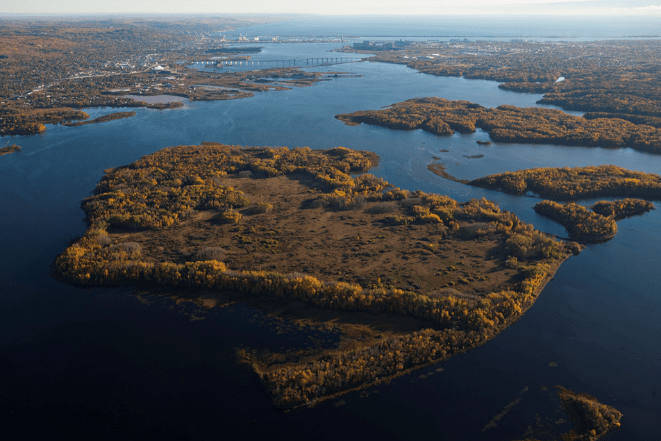
Minnesota is a major step closer to finishing a decades-long effort to clean up the St. Louis River estuary in northeastern Minnesota, the headwaters of Lake Superior, from a long legacy of industrial pollution.

Federal, state, tribal and community partners gathered Wednesday to celebrate the culmination of a two-year effort to clean contaminated sediment in the Thomson Reservoir in Carlton, Minn., 15 miles upstream of Duluth.

The $30.5 million project to address 225,000 cubic yards of contaminated sediment– enough to cover a football field more than 100 feet deep– marks the completion of the eighth and final sediment cleanup project on the Minnesota side of the St. Louis River Area of Concern, which is one of 43 sites around the Great Lakes prioritized for environmental cleanup in 1987.

The eight areas included several commercial shipping slips in the Duluth-Superior harbor that were contaminated with heavy metals and other pollutants, along with other areas along the river polluted by pulp and paper mills and historic industry.

Those sites have all been cleaned up in the past eight years due to “a lot of coordination… blood, sweat, tears, and a lot of money,” said Anne Vogel, Region 5 Administrator and Great Lakes National Program Manager for the U.S. Environmental Protection Agency.

Crews have dredged out contaminated sediment in some places. In other areas they’ve placed remedial caps on the sediment to prevent pollutants from being taken up by tiny bugs that work their way up the food chain into fish and wildlife.

At Thomson Reservoir, 20,000 tons of activated carbon was spread over the water. It sinks to the bottom and binds to the contaminants so they’re no longer available to the food web, explained Larae Lehto, a Superfund supervisor at the Minnesota Pollution Control Agency.

“So while the contamination is still there, it's no longer hazardous to the ecosystem," Lehto said.

The contaminants in the reservoir are dioxins and furans left behind from pulp and paper manufacturing prior to the enactment of the Clean Water Act in the 1970s. Lehto said the use of activated carbon had never been used on such a scale. “To our knowledge, this is the largest project of its kind” in North America, she said.
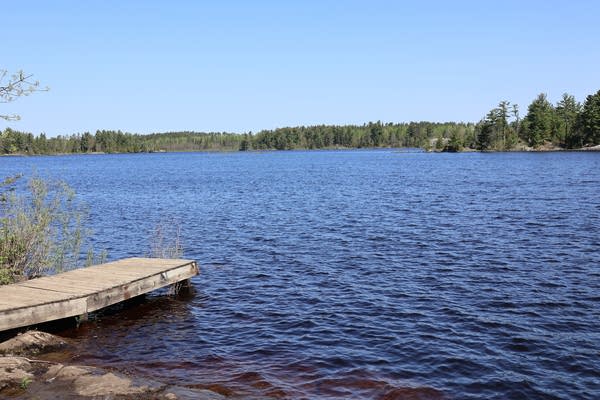
Thomson Reservoir in Carlton
Thomson Reservoir, shown here in Carlton, Minn. on May 27, is a dammed section of the St. Louis River 15 miles from Duluth. The U.S. Environmental Protection Agency and other partners have completed a $30 million project to clean up contaminated sediment in the reservoir.
Dan Kraker | MPR News

Today this stretch of the St. Louis River looks like a slice of the Boundary Waters, with sunlight sparkling off clean water, and majestic white pines rising from the rocky shoreline.

But Lehto said people who grew up in the Cloquet area decades ago used to call the river “Stinktown.” They told her, “You don't go to the river, you don't swim in the river, you don't eat the fish out of the river.”

The river began to come back to life in the late 1970s, when a major wastewater treatment plant came on line, preventing untreated sewage from being dumped into the water.

More recently, in addition to the contaminated sediment that’s been cleaned up, agencies have also restored more than 1,000 acres of habitat across 27 different project areas. One project along the Duluth shoreline completed in 2021 excavated nearly 20,000 dump trucks full of old timber waste that had been dumped in the river and suffocated aquatic life at the base of the food chain.

The federal government spearheaded the work with $250 million provided through the Great Lakes Restoration Initiative. That funding has helped leverage an additional $208 million from state, local and industrial partners.

There’s one more major project that still needs to be completed on the Minnesota side of the St. Louis River. A $23 million project to remove sediment and invasive cattails and restore coastal marsh and wetland habitats in an area of the river known as Mud Lake is expected to be completed next year.
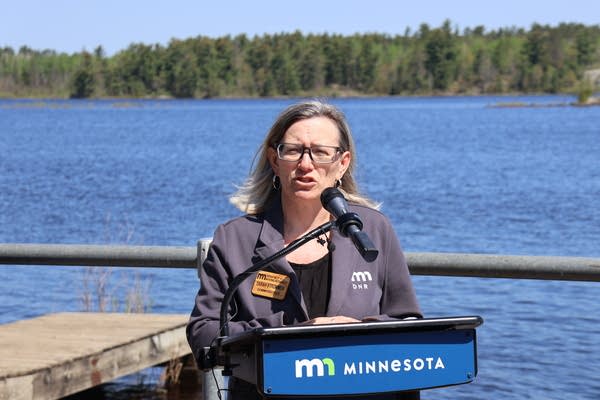
A woman speaking at a podium with a body of water and trees in the background
Minnesota Department of Natural Resources Commissioner Sarah Strommen speaks on May 27, at the Thomson Reservoir in Carlton, Minn. State agencies, along with the U.S. EPA and other partners, have finished a project to clean up contaminated sediment in the reservoir, the last of eight sediment projects finished as part of a broader effort to clean up legacy pollution in the St. Louis River.
Dan Kraker | MPR News

“When it's complete, we will be significantly closer to removing the St. Louis River estuary from the Great Lakes Area of Concern,” said Minnesota Department of Natural Resources commissioner Sarah Strommen.

Lehto expects the overall cleanup to wrap up in 2030 or 2031, after projects are completed on the Wisconsin side of the river.

But the payoff from the decades of remediation work is already visible in the increasing number of people who fish, paddle and even swim in the river– a sight that would have been unheard of a few decades ago.

As the river has transformed, the narrative surrounding it has changed, said Kris Eilers, executive director of the St. Louis River Alliance, “From talking about pollution all the time to talking about the beauty that is here now.”
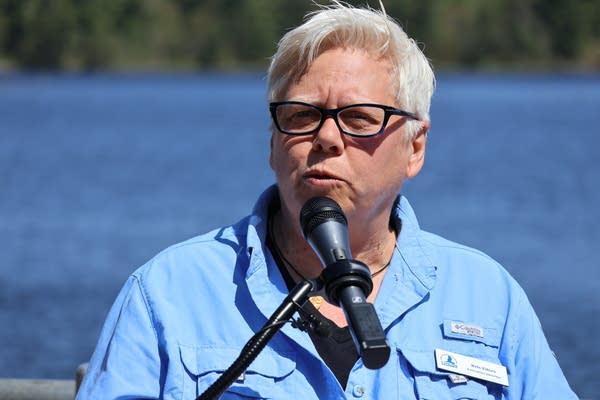
A man speaking at a podium with a body of water and trees in the background
Kris Eilers, executive director of the St. Louis River Alliance, speaks at an event at Thomson Reservoir in Carlton, Minn. on May 27, to celebrate the completion of the final contaminated sediment cleanup project in a longstanding effort to restore the St. Louis River estuary.
Dan Kraker | MPR News


Source link

Leave a Reply

Subscribe to Our Newsletter

Get our latest articles delivered straight to your inbox. No spam, we promise.

Recent Reviews


What is a Cybersecurity framework?

The cybersecurity framework consists of rules, guidelines, and practices that help users manage cybersecurity risks. It consists of objectives, and they have been around for several years. The framework is compulsory, and cybersecurity experts use it to secure data and other valuable assets by ensuring that they can control any risk associated with cyber-attacks and risks.

Many businesses are normally encouraged to implement and follow the frameworks to comply with international standards. Every organization has the power to use the framework, no matter the size or development. It is easier to adapt to it, and this is due to the modification feature provided by the customization options. 

  Become a Cyber Security Certified professional by learning this HKR Cyber Security Training

The main functions of a  Cybersecurity framework

There are several functions of the Cybersecurity framework. Some of the functions include:

  • Identify: Companies have to ensure that they use the framework to manage risks that may occur to data, systems, and assets. The activities in this function enable organizations to understand managing cybersecurity according to the resource, frameworks, information, e.t.c.Some activities include governance, asset management, risk strategies, risk assessment, and business environment.
  • Protect: Organizations have to implement shields that restrict or manage a cybersecurity attack’s impact. Some of the safeguards include firewalls, monitoring software, physical security, protective technology, data security, and maintenance, among others.
  • Detect: It involves the activities that recognize a cybersecurity event or attack. This method makes an organization think of methodologies to take after discovering the occasions. Some of the activities include the use of anomalies, continuous monitoring e.t.c
  • Respond: In this function, it’s time to take action on the detected cybersecurity events. You have to maintain the event and contain any impact the vent can have on different facilities like data warehouses, servers, e.t.c.Some of the activities include communication, mitigation, analysis e.t.c
  • Recover: It is where the organization implements different activities to restore any activities when hit by a cybersecurity attack or put in different temporary measures that need to be executed when an attack occurs. Some of these should be timely, and some examples are recovery planning and good communication.

Become a Tritonap Web Certified professional by learning this HKR Tritonap Web Training

Cyber Security Training

  • Master Your Craft
  • Lifetime LMS & Faculty Access
  • 24/7 online expert support
  • Real-world & Project Based Learning

Components of Cybersecurity frameworks

The framework has three components:

  • Framework core – it shows how the results of Cybersecurity exercises get arranged to make them more understandable.
  • Implementation tiers – it shows how an organization treats risk management.
  • Profiles – they show how organizations arrange themselves according to their goals, helping them have chances to improve cybersecurity at the company. 

   Want to know more about CyberSecurity,visit here Cyber Security Tutorial

Types of Cybersecurity frameworks

There are several types of Cybersecurity frameworks. Some of them include:

1. NIST Cybersecurity Framework

President Barack Obama started it to protect the infrastructure from attacks. Most organizations use NIST standards and principles to keep their assets safe. 

It consists of complex measures and receives updates after a certain period. Its implementation takes a long time to ensure all the procedures and standards meet the documentation. 

It follows all the Cybersecurity framework functions to implement all security systems gaps and identify all the risks. It recommends different ways companies can protect themselves from threats and attacks.

2. CIS framework

The Center for Internet Security invented it to protect companies from cybersecurity threats. It has experts who build different products and tools to serve various industries and government institutions. It works well with other frameworks like NIST, making it compliant with set standards like HIPAA.

It mainly uses tools like Benchmark, which helps companies configure security settings without impacting performance. Some of the other products and tools it provides include CIS SecureSuite®, CIS Hardened Images®, CIS Critical Security, Controls®, Albert Network Monitoring, Managed Security Services, Endpoint Security Services e.t.c

Top 30 frequently asked Cyber Security Interview Questions

Cyber Security & SIEM Tools, cybersecurity-framework-description-0, Cyber Security & SIEM Tools, cybersecurity-framework-description-1

Subscribe to our YouTube channel to get new updates..!

3. NERC-CIP

There was a period when many United States organizations were facing cybercrime attacks. It forced North American Electric Reliability Corporation – Critical Infrastructure Protection (NERC CIP) to develop guidelines to reduce cyber attacks on power infrastructure. It targeted the organizations in the supply chain sector.

It has a lot of emphasis on training staff, categorizing important assets and systems, and recovery plans.

4. ISO 27001 and 27002

These are internationally recognized certifications invented by the International Organization for Standardization (ISO) to evaluate the standards of different cybersecurity programs. It checks how the organization is internally organized and how they work with third-party partners.

ISO 27001 ensures that the company management can manage all the security risks by maintaining any threats.ISO 27002 ensures that a company has the best cybersecurity practices. The whole process of ensuring you are ISO certified takes a lot of time and resources.

5. SOC2

It was started by the American Institute of Certified Public Accountants (AICPA)  to ensure that companies and their partners are safe when dealing with the customer’s data. It has over 50 requirements that brands should meet, and it can take up to one year to become compliant.

Most users who have tried it view it as hard to implement, especially those working in the banking industry. It plays a better role in the organization and regulatory overview and governance.

  Become a Cyber Security Certified professional by learning this HKR Cyber Security Training in Canada !

Cyber Security Training

Weekday / Weekend Batches

Benefits of using Cybersecurity frameworks

  • It helps find gaps in the company infrastructure, projects, and staff.
  • It helps companies discover practices that work better than those in the frameworks.
  • It is more interesting as it gives the business a chance to implement it in stages.
  • It enables companies to compare what they have achieved and what needs to be done.
  • It shows the company’s willingness to work with the framework’s procedures.
  • It makes it easier to cooperate with partners when discussing security issues. 
Conclusion

Cybersecurity is vital in securing organization systems and data from security breaches. The Cyber security frameworks have enabled organizations to follow relevant rules and regulations by training their employees properly. It will help them prevent crucial data from hackers and threats. Further, these frameworks strengthened the businesses to fight against hidden or unknown threats by following the regulations.

Related Blogs:


Source link