Medically reviewed by Kierra Brown, RD
:max_bytes(150000):strip_icc():format(jpeg)/Health-GettyImages-1387459487-02911f77a0ed446a8717b3f2832e1d74.jpg "A person holding a bowl of oatmeal with raspberries and nuts, surrounded by oats and nuts in containers")
Credit: Arx0nt / Getty Images
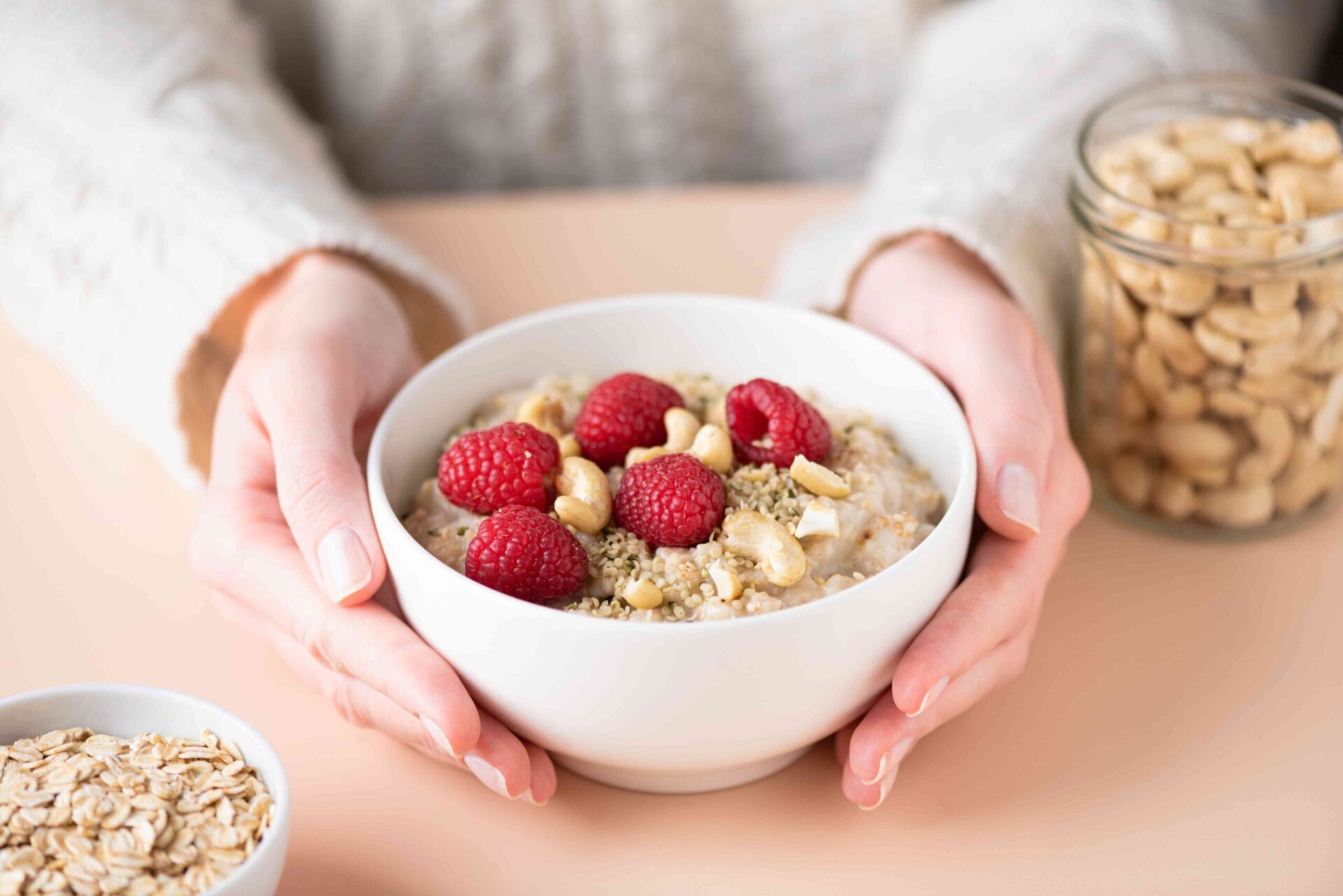
- Eat whole grains like oats and quinoa to increase your fiber intake.
- Adding fruits and vegetables to your diet boosts fiber and antioxidants.
- You may opt for nuts and seeds for a source of healthy fats and fiber.
Ways to boost your daily fiber intake include eating whole grains, fruits, and vegetables. These foods can help maintain your gut health and control your cholesterol levels.
1. Add More Whole Grains To Your Diet
Whole grains, especially when minimally processed, are packed with fiber. This fiber helps balance glucose levels (sugar in the blood), lowers inflammation, and may even help you feel fuller for longer.
Some fiber-rich whole grains include:
2. Sneak More Fiber Into Your Baking
When baking a treat, try adding some fiber to the recipe. All-purpose wheat flour doesn't have much fiber alone because it's been refined, which removes many of its nutrients, including fiber.
You can easily add some back in if you:
- Add a scoop of oats to bulk up your cookie batter.
- Sprinkle a bit of oats on top of muffins before baking for added texture and fiber.
- Mix a few tablespoons of ground flax into your muffin or pancake batter.
3. Eat More Fruits and Vegetables
Fruits and veggies are good sources of antioxidants (substances that protect the body's cells), essential nutrients, and dietary fiber.
Apples and pears are some of the richest sources of soluble fiber. Other sources of soluble fiber include citrus, broccoli, peas, carrots, cucumbers, and celery.
Good sources of insoluble fiber include raspberries, pears, apricots, figs, and prunes, which are known for promoting regularity.
4. Don’t Ignore the Peels
Eating the skin of certain fruits and vegetables can add more fiber to your diet.
Apples contain pectin, a type of soluble fiber, in their skin. Pectins help keep your low-density lipoprotein (LDL) cholesterol in check.
LDL cholesterol can cause clogged arteries (tubes that carry blood from the heart to the rest of the body). This increases your risk for conditions like coronary artery disease.
Potato skin is also a good source of fiber and iron.
5. Choose Fiber-Rich Snacks
Cheese and crackers are a simple and convenient snack that can help you sneak in some fiber.
Check the labels for crackers to see if they contain at least three grams of fiber per serving. Consider choosing options that also have little to no added sugars.
Whole grain options like shredded wheat crackers can contain three grams of fiber per serving, about six crackers, and zero added sugars.
You can also opt for a serving of fresh fruit paired with half a cup of Greek yogurt or cottage cheese to get some nourishing fiber and ample protein to keep you satisfied.
6. Try Chia Seeds
Chia seeds are packed with fiber, omega-3 fatty acids ( a type of fat), and antioxidants.
If you're trying chia seeds for the first time, consider making a chia pudding. You can make chia pudding by soaking 2 tablespoons of chia in one-quarter to one-third of a cup of milk overnight for an energy-boosting snack with 10 grams of dietary fiber.
Top your pudding with fresh or frozen raspberries for an additional fiber boost.
7. Sprinkle in Nuts and Seeds
A loose handful of nuts and seeds makes a convenient on-the-go snack that is high in healthy fats, essential minerals, and a bit of good old dietary fiber. In fact, nuts and seeds are a dietary staple in the Mediterranean diet and other long-standing, health-promoting eating patterns.
Nut butter is another good, nutrient-dense option. For example, 2 tablespoons of natural peanut butter contain three grams of dietary fiber, eight grams of protein, and other nutrients like vitamin E, magnesium, and calcium.
8. Toss in Legumes
Legumes such as peas, chickpeas, and lentils are rich in both protein and fiber. Half a cup of lentils contains about 8 grams of fiber, while peas provide 4 grams per two-thirds cup and chickpeas offer 4 grams per half cup.
Legumes like these are easy to toss into salads, good on their own, or delicious when seasoned. Adding them to soups is another way to boost fiber into your daily routine.
9. Enjoy Avocados
An avocado is a good source of monounsaturated fats, which are beneficial for heart health. It's delicious in salads, on toast, and in grain bowls. One medium avocado, about 150 grams, contains around 10 grams of dietary fiber.
In a hearty greens salad, enjoy half an avocado straight out of the skin, or smear it onto some whole-grain toast. It's delicious with salmon, too!
10. Use Supplements When Needed
A powder fiber supplement can be a good option to have on hand. It's shelf-safe, meaning it can be stored at room temperature for a long time, and it's easy to use.
One supplement is psyllium, a type of soluble fiber that comes from the seeds of the Plantago ovata plant. It's a laxative that absorbs water in the intestines, helps bulk the stool, and is a good option for constipation.
Make sure to drink plenty of water because it may cause swelling, which can potentially cause blockages.
Consider starting with foods with fiber first and using a supplement only as needed.
What To Know Before Increasing Your Intake
Adding too much fiber too quickly can cause digestive discomfort such as bloating, gas, and cramping. It may also affect the absorption of nutrients like iron, calcium, and zinc.
That's why it's best to gradually increase your fiber intake so you can give your digestive system some time to adjust.
For example, while black beans are a nutrition-packed source of dietary fiber, you should start with very small portions. Add 1-2 tablespoons of rinsed black beans to your salads or your rice dish. This helps boost your fiber intake without impacting your gut.