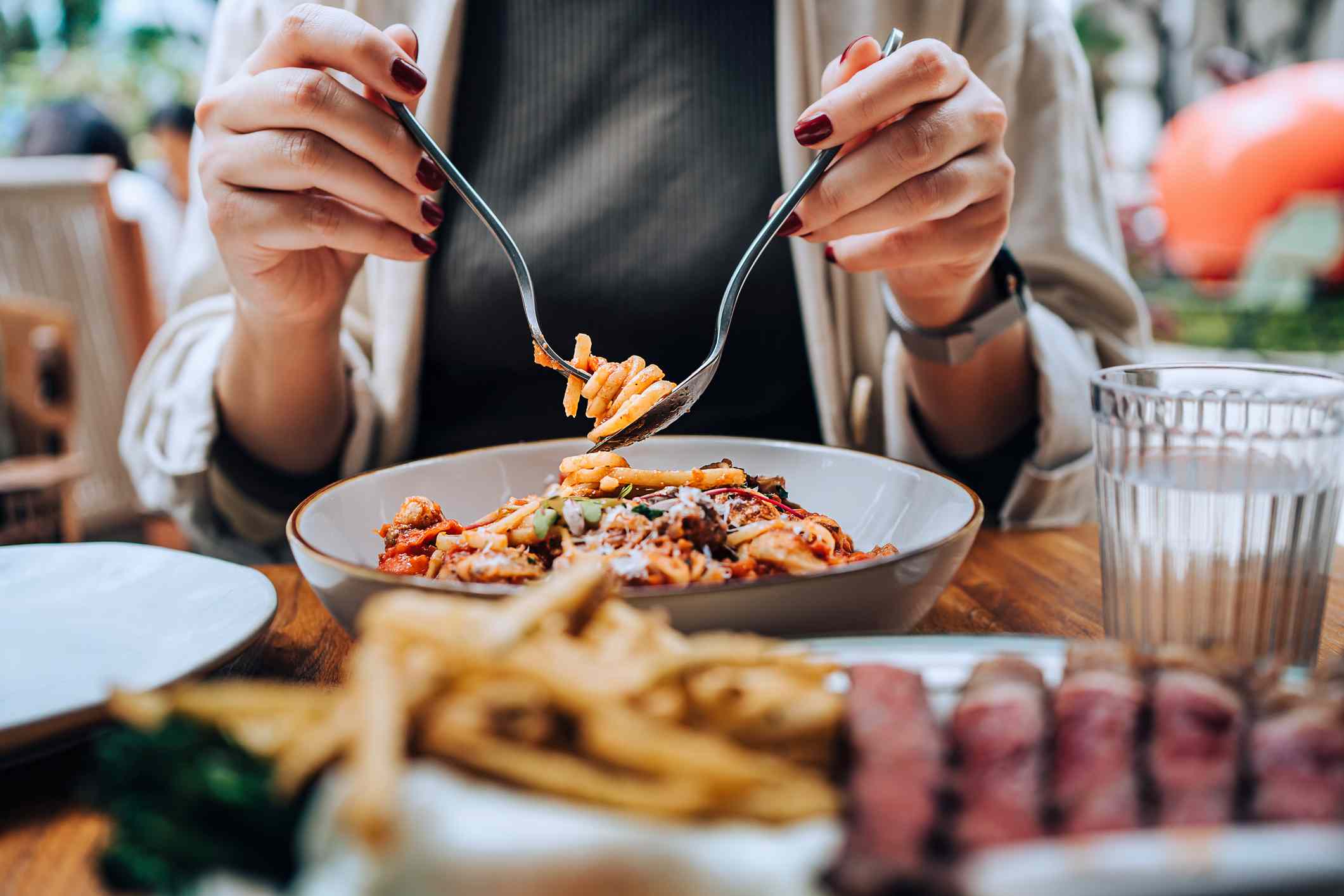
:max_bytes(150000):strip_icc():format(jpeg)/Health-GettyImages-RiceVsPotatoesVsPasta-ce4a718c03884272b208248e732ad231.jpg "Woman eating pasta bolognese at a restaurant")
- Potatoes, rice, and pasta’s effects on blood sugar vary based on type, preparation, portion size, and food pairings.
- Pasta cooked al dente often causes a smaller blood sugar rise because it digests more slowly.
- A balanced meal with protein and fiber has a greater impact on blood sugar control than choosing a single carbohydrate source.
Rice, potatoes, and pasta are carbohydrate staples in many people’s diets. If you eat these foods regularly, you may be wondering how they affect blood sugar and which options are best for supporting healthier glucose levels. All of these carbohydrates can fit into a balanced diet that supports blood sugar control. However, factors such as variety, cooking method, and what you pair them with can significantly affect their impact on blood sugar.
Which Food Usually Raises Blood Sugar the Fastest?
We assess how a food impacts blood sugar by using the glycemic index (GI) and their glycemic load (GL).
The GI ranks foods on a scale from 0 to 100 based on how quickly they raise blood sugar after eating. Foods with a GI below 55 are considered low-glycemic, while those with a GI above 70 are considered high-glycemic.
GL takes into account portion sizes. It considers both how quickly a food raises blood sugar and how much carbohydrate is typically consumed in a serving. A GL of 10 or less is considered low, 11–19 is moderate, and 20 or higher is high.
Here’s how different types and preparations of potatoes, rice, and pasta compare in terms of their GI and GL.
| | Glycemic Index | Glycemic Load |
| Mashed Potatoes | 87 | 17 |
| Baked Potatoes | 93 | 19 |
| White Rice | 80 | 36 |
| Brown Rice | 52 | 23 |
| White Pasta | 59 | 24 |
| Whole Wheat Pasta | 45 | 18 |
As you can see, the GI and GL vary significantly depending on type and cooking method.
In general, potatoes have the highest GI values, which means that they tend to cause the fastest rise in blood sugar. However, potatoes often have a lower overall impact on blood sugar than white rice, brown rice, and white pasta, based on their GL values.
A food’s influence on blood sugar also depends on its preparation and what you pair it with. For example, eating potatoes, rice, or pasta alongside protein, healthy fats, and fiber-rich foods can help slow digestion and reduce blood sugar spikes.
Why Pasta Often Causes a Smaller Spike
Compared with potatoes and rice, pasta, especially whole-wheat pasta, often has a smaller impact on blood sugar.
The process used to make pasta results in a dense starch structure that takes your body longer to break down and absorb. Studies show that pasta contains more resistant starch (RS) and slowly digestible starch (SDS), compared to rapidly digestible starch (RDS), compared to other carb sources, like bread and grains like couscous.
Additionally, cooking your pasta al dente, which means a firmer texture, can help make your pasta more blood sugar-friendly. If you’re looking for the best pasta for blood sugar, choose high-fiber, high-protein options, like whole wheat pasta or legume-based pasta, which take longer to digest and have a smaller impact on blood sugar.
Potatoes Aren't All the Same
When it comes to potatoes, there are several factors that can influence their impact on blood sugar.
Differences Between Varieties
There are many types of potatoes, some of which impact blood sugar more than others. A baked sweet potato has a GI of 91 and a Gl of 18, while a baked Yukon potato has a GI of 81 and a GL of 16.
The differences in GI and GL among potato varieties stem from their starch structures, sugar levels, and cooking methods.
Cooking Methods Matter
Research shows that boiling potatoes causes the starch in the cells to break down and become fully gelatinized. This makes it easier for the potato to be broken down and digested, leading to a faster rise in blood sugar.
Cooking methods such as baking and roasting tend to increase the formation of resistant starch, a type of starch that resists digestion in the gut, which results in a lower glycemic impact.
Cooling Cooked Potatoes Increases Resistant Starch
Cooling potatoes after cooking is one of the best ways to make them more blood sugar-friendly. Through a process called retrogradation, cooling converts digestible starch into resistant starch, making the potato more blood sugar-friendly.
Studies show that, compared to cooked potatoes, cooked and then chilled potatoes lead to a smaller rise in blood sugar.
Rice Can Vary Dramatically
Not all types of rice affect blood sugar the same way. Like potatoes and pasta, the variety and cooking method of rice affect how it influences your blood sugar.
- White vs. brown rice: Brown rice contains significantly more fiber and protein than white rice. Fiber and protein slow digestion and carbohydrate absorption, leading to a smaller and more gradual rise in blood sugar levels after eating.
- Jasmine vs. basmati rice: Basmati rice has a lower GI than basmati rice and typically causes a more gradual rise in blood sugar. This is because basmati contains higher levels of starches that are more resistant to digestion, making it harder to break down and absorb.
- Portion size matters: Even though certain types of rice have less of an impact on blood sugar, even lower-GI rice can significantly raise blood sugar if eaten in large amounts. Watching your portion sizes and choosing lower-GI varieties can help reduce blood sugar spikes and keep calorie intake in check.
The Biggest Factors Most People Overlook
When trying to choose a healthy, blood sugar-friendly carb source, many people focus solely on the food without considering other factors that can also impact blood sugar, including:
- Food pairing: Pairing carbs with fiber- and protein-rich foods can help slow digestion and reduce post-meal blood sugar spikes.
- Portion size: Even healthy, filling carbohydrate sources can significantly impact blood sugar when consumed in large amounts.
- Cooking methods: While certain cooking methods can help reduce a food’s impact on blood sugar, others can have the opposite effect. For example, breading and deep-frying foods, or adding sugary glazes and coatings, can significantly increase their impact on blood sugar levels.
Is There One That’s Actually A Better Choice for Blood Sugar?
When it comes to supporting healthy blood sugar regulation, overall diet quality matters more than any single food.
While choosing higher-fiber carbohydrate sources like potatoes, brown rice, and whole-wheat pasta can help promote more stable blood sugar levels, it’s also important to build balanced meals and snacks that include protein and fiber, and to be mindful of portion sizes to support better overall blood sugar control.