Medically reviewed by Simone Harounian, MS
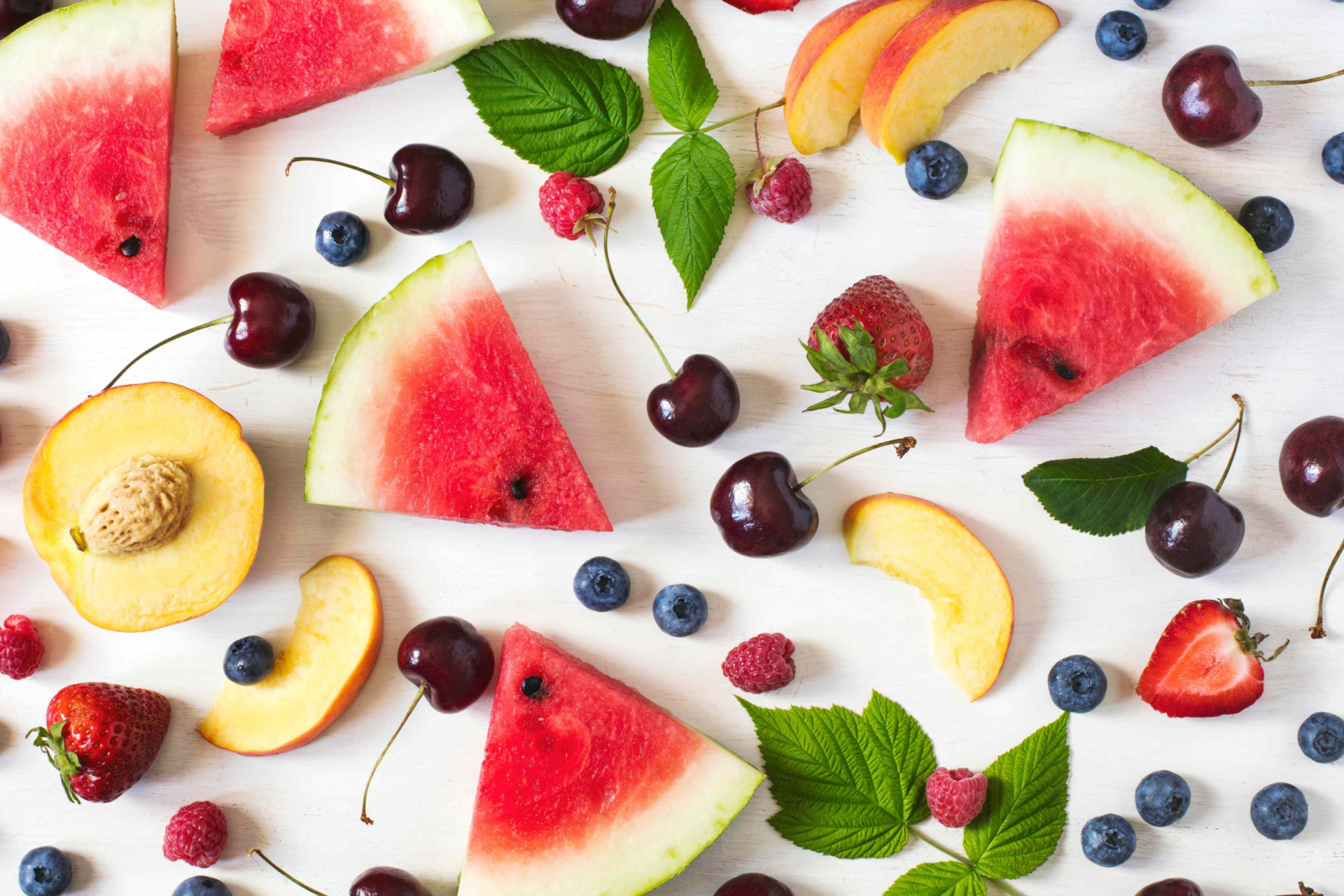
:max_bytes(150000):strip_icc():format(jpeg)/GettyImages-1006300902-74631692c1ef47e0a3908e970adc5fea.png "Assorted fresh fruits including watermelon slices cherries strawberries blueberries raspberries peaches and leaves.")
Credit: Anjelika Gretskaia / Getty Images
- Stone fruits, berries, and other fruits are in season during the warm, summer months.
- In-season fruits often taste fresher and sweeter, plus they can be lower in cost and more nutrient-dense.
- These fruits are delicious on their own as a simple snack, or they can be added to oatmeal, yogurt, salads, smoothies, and other classic summertime recipes.
Summer is the perfect time to grab a piece of fruit for a hydrating and sweet snack. In particular, choosing summer fruits that are in-season—including cherries, watermelon, and more—usually means lower prices and better taste, along with essential nutrients like fiber, vitamins, and minerals.
1. Watermelon

Few fruits say “summer” like a slice of watermelon. Watermelon is about 91% water, which makes it a great choice for staying hydrated on hot days.
One cup of diced watermelon contains about 46 calories, 12 grams of carbohydrates, and is a good source of vitamins A and C. It also contains lycopene, a powerful antioxidant that may help protect against cell damage.
How to add it to your diet: Slicing watermelon into triangles or cubes makes for a healthy and delicious snack. Additionally, you can blend watermelon into smoothies, make a watermelon salad with mint and feta, or even pickle or stir-fry the rinds. For best quality, store cut watermelon in the refrigerator and use it within five days.
How to choose the best one: A high-quality watermelon should feel heavy for its size and have a yellow field spot on one side—that’s a sign it ripened on the vine.
2. Peaches

Like other types of stone fruit, peaches are a summer staple. One medium fruit has about 58 calories and provides vitamin C, potassium, and fiber, all of which support heart health. Peaches also contain antioxidants called polyphenols that may reduce inflammation.
How to add them to your diet: You can eat peaches fresh, slice them into yogurt and oatmeal, blend them into smoothies, or dice them to make salsa. Peaches can also be baked, grilled, sautéed, or broiled for sweet or savory dishes.
How to choose the best ones: Choose peaches that give slightly when pressed near the stem and have a sweet, fragrant smell. These ripe peaches can be stored in the refrigerator. If you purchase a peach that's a bit too firm, let it sit in a paper bag at room temperature to ripen faster.
3. Cherries

Cherries, another type of stone fruit, are best enjoyed while they're at their peak during the summer months. There are more than 1,000 cherry varieties grown worldwide, ranging in color, shape, and sweetness levels.
Sweet cherries contain about 97 calories per cup and are a natural source of melatonin, which may support better sleep. Cherries also provide antioxidants called anthocyanins—these give cherries their deep red color and reduce free radicals, or unstable molecules that can damage cells and lead to chronic disease.
How to add them to your diet: Fresh cherries are a great snack, or you can mix them into oatmeal, throw them on top of a yogurt bowl, or bake them into muffins.
How to choose the best ones: Look for firm cherries with green stems attached, and avoid any fruit with bruises, browning, or blemishes. Once you've brought them home, make sure to only wash your cherries right before you eat them.
4. Blueberries

Blueberries hit their peak in summer, and their nutrition profile is impressive—one-half cup contains 84 calories, 4 grams of fiber, and about 16 milligrams of vitamin C.
Like cherries, blueberries are rich in anthocyanins, the antioxidants that give these tiny fruits their deep blue-purple color. Research suggests that, by reducing inflammation and neutralizing free radicals, anthocyanins may support brain health and reduce the risk of heart disease.
How to add them to your diet: Fresh blueberries make for an easy snack and work well in oatmeal, pancakes, smoothies, and salads. They can last up to two weeks in the refrigerator.
How to choose the best ones: Look for firm, plump blueberries with smooth skin. Avoid any underripe berries with a reddish or green tint, or any berries with shriveled or moldy spots.
5. Strawberries

Although strawberries are available year-round in many grocery stores, they are usually sweetest and most flavorful from late spring through summer when they’re in season.
One cup of whole strawberries contains 46 calories and provides 94% of the recommended daily value (DV) for vitamin C—more than a medium navel orange. Strawberries also contain ellagic acid, an antioxidant beneficial for heart health.
How to add them to your diet: Sliced strawberries are a good snack, or you can use them to make smoothies, yogurt parfaits, and fruit salads. Try adding strawberries to salads or whole-grain cereal for extra flavor and nutrition, too.
How to choose the best ones: Look for strawberries that are deeply red and free of bruising or mushiness. Avoid berries with white or pale coloring near the stem, which may mean they were picked before fully ripening.
6. Mango

Mangoes are a tasty tropical fruit known for their sweet flavor and soft, juicy texture. One cup of sliced mango contains 99 calories and is rich in vitamins C and A. It also delivers 1 gram of protein and 3 grams of fiber.
In addition, mangoes contain inflammation-fighting antioxidants called polyphenols, which may help protect against disease and support the healthy bacteria that live in your gut.
How to add it to your diet: Mango slices work well as a snack, or you can add the fruit to smoothies, salads, salsas, frozen treats, and yogurt bowls.
How to choose the best one: When you're shopping, choose mangoes that feel slightly soft with smooth skin. Small dark spots are usually harmless, but avoid mangoes that feel mushy or smell sour.
7. Cantaloupe

Cantaloupe, sometimes called muskmelon, has a rough netted rind and bright orange flesh. It's about 90% water, so it's a hydrating choice on hot summer days.
One of the most nutrient-dense melons available during the summer months, cantaloupe provides vitamin C and beta-carotene, a plant pigment that is converted into vitamin A, for better immune function. It also contains minerals like potassium and magnesium.
How to add it to your diet: Cantaloupe slices work well as a snack and can also be added to fruit salads, smoothies, sorbets, yogurt bowls, or savory dishes with herbs and salty foods, such as cured meats. While whole cantaloupes can stay out at room temperature, make sure to refrigerate any cut melon.
How to choose the best one: Choose a melon that smells floral and sweet. Avoid any that have visible nicks, mold, or mushy areas.
Why Buying Fruit In Season Matters
Making in-season produce a central part of your diet in the summer has a number of perks:
- Flavor and texture: Fruits grown out of season or harvested early for long-distance shipping may not develop the same sweetness and juiciness as in-season fruit.
- Nutritional value: Seasonal fruit is more likely to be grown closer to home, which means less time between harvest and your table. Some nutrients, including vitamin C, naturally decline after fruit is picked, so fresher fruit may be more nutritious.
- Cost: With more fruit available, in-season fruit is usually more budget-friendly. Prioritizing in-season fruit also offers opportunities to support local growers by shopping at farmers markets or produce stands.