Fact checked by Nick Blackmer
:max_bytes(150000):strip_icc():format(jpeg)/GettyImages-1405087960-7ce31aab85c44db1893abd1c8e535cf2.jpg "Young adult Hispanic woman does a home workout in her small apartment.")
Credit: Laura Olivas / Getty Images
- Crunches are a classic exercise for training the core.
- The number of crunches you can do at one time may reflect core endurance.
- However, crunches are not a comprehensive measure of core strength and may increase injury risk for some people.
When you think of exercises that target your core, crunches are probably one of the first that come to mind. They’re a classic exercise: quick, simple, and can be done almost anywhere, from a mat in your living room to a class alongside others.
Given how common they are, you might be curious about how your performance stacks up against other people your age—and if there’s actually any benefit to increasing the number of crunches you can do at one time. Here’s what you need to know.
What Crunches Do For the Body
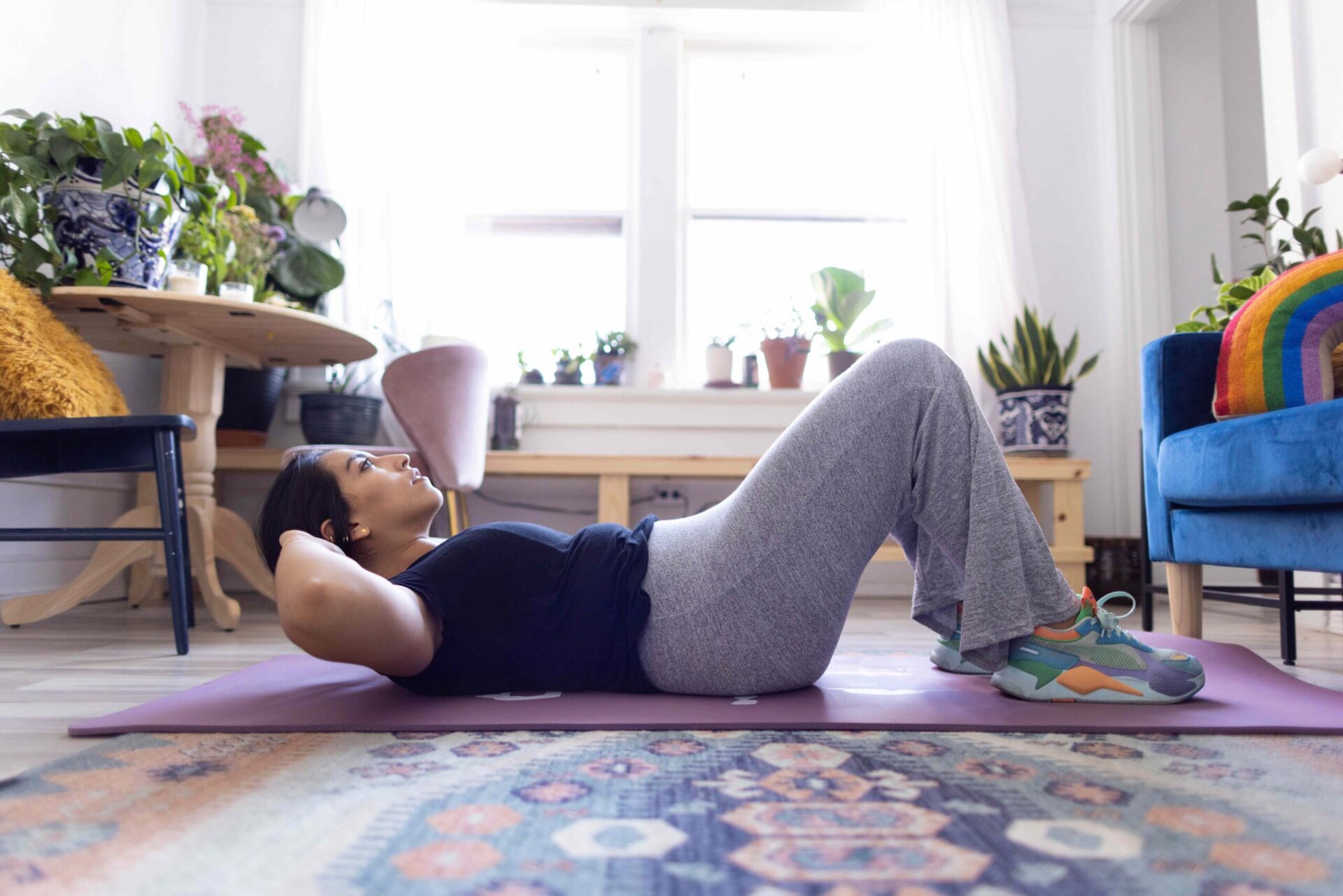
You’re probably familiar with what a crunch entails—lying on your back with your knees bent and feet flat, then lifting your shoulders and head. But what benefits do you actually get from regularly doing crunches?
According to Evan Williams, CSCS, a strength and conditioning coach for the Milwaukee Bucks, crunches largely help with core endurance, or the ability of the muscle involved—the rectus abdominis, which runs vertically along the front of your abdomen—to sustain tension or perform repeated contractions over a prolonged period.
That's important because core muscles that fatigue more quickly may be less able to support the spine and joints over time, which can shift the load onto these structures. That shift could affect posture and potentially cause pain.
Average Crunch Counts by Age
If you're curious about how your crunch performance compares with others, the American Council on Exercise provides the following "average" and "excellent" ranges for the number of crunches (referred to as "curl-ups") that can be performed without stopping.
Men:
- 18–25: average: 43–49; excellent: 77–99
- 26–35: average: 37–41; excellent: 62–80
- 36–45: average: 33–39; excellent: 60–79
- 46–55: average: 36–41; excellent: 61–78
- 56–65: average: 33–39; excellent: 56–77
- 66+: average: 26–30; excellent: 50–66
Women:
- 18-25: average: 41-48; excellent: 68-91
- 26-35: average: 33-36; excellent: 54-70
- 36-45: average: 30-32; excellent: 54-74
- 46-55: average: 30-32; excellent: 48-73
- 56-65: average: 23-25; excellent: 44-63
- 66+: average: 21-25; excellent: 34-54
What Your Crunch Score Says About You
As mentioned, crunches focus on aspects of core endurance, which helps the abdominal muscles support and stabilize the spine during everyday activities.
But because the crunch is such a specific movement—focused on spinal flexion, or bending the spine forward—a high crunch count doesn’t say much about how well your core can transfer force or resist unwanted movement, which are also important functions, Williams said.
A high crunch score also doesn’t indicate overall core strength. “If someone practices [crunches] enough, they will get better,” Williams said. “Because of this, improvements in crunch performance are not always a direct reflection of increased core strength, but rather an adaptation to the specific movement pattern and its demands.”
Williams said that if you were performing just one exercise to assess core strength, the plank would be a better option (the Marines recently replaced the sit-up—a movement similar to the crunch—with the plank in their physical fitness test).
Ideally, though, core strength should be assessed through a variety of movements targeting different functions of the core, Williams said. Besides planks, other examples include anti-rotation exercises like the Pallof press, anti-lateral flexion like the suitcase carry, and anti-flexion like the front rack carry.
When to Skip Crunches
Crunches are generally safe for people with proper form who don’t overdo it. But one concern with crunches is that repeated spinal flexion can place stress on the discs, potentially causing pain or posture issues.
“Over time, especially with high volume or poor technique, crunches can reinforce suboptimal movement patterns, exacerbate existing symptoms, and add stress to individuals who already spend much of their day in flexed postures, such as desk workers,” Williams said.
People with a history of low back pain, disc-related issues, core or pelvic dysfunction, or postural limitations may want to limit or avoid crunches, Williams said. Instead, they may want to prioritize exercises that “promote spinal stability and better force distribution,” including:
- Planks (and plank variations)
- Dead-bugs (and dead-bug variations)
- Palloff presses
- Bird-dogs
People just starting out may also want to focus on these movements, which Williams said can provide a better fitness foundation for progress down the road. “Beginners first need to learn how to properly brace and stabilize their core,” he said. Crunches don’t effectively teach this and may reinforce poor movement patterns, which can carry over both at the gym and in daily life.