Cardiologists Share the Foods They Eat for Optimal Heart Health


Fact checked by Nick Blackmer

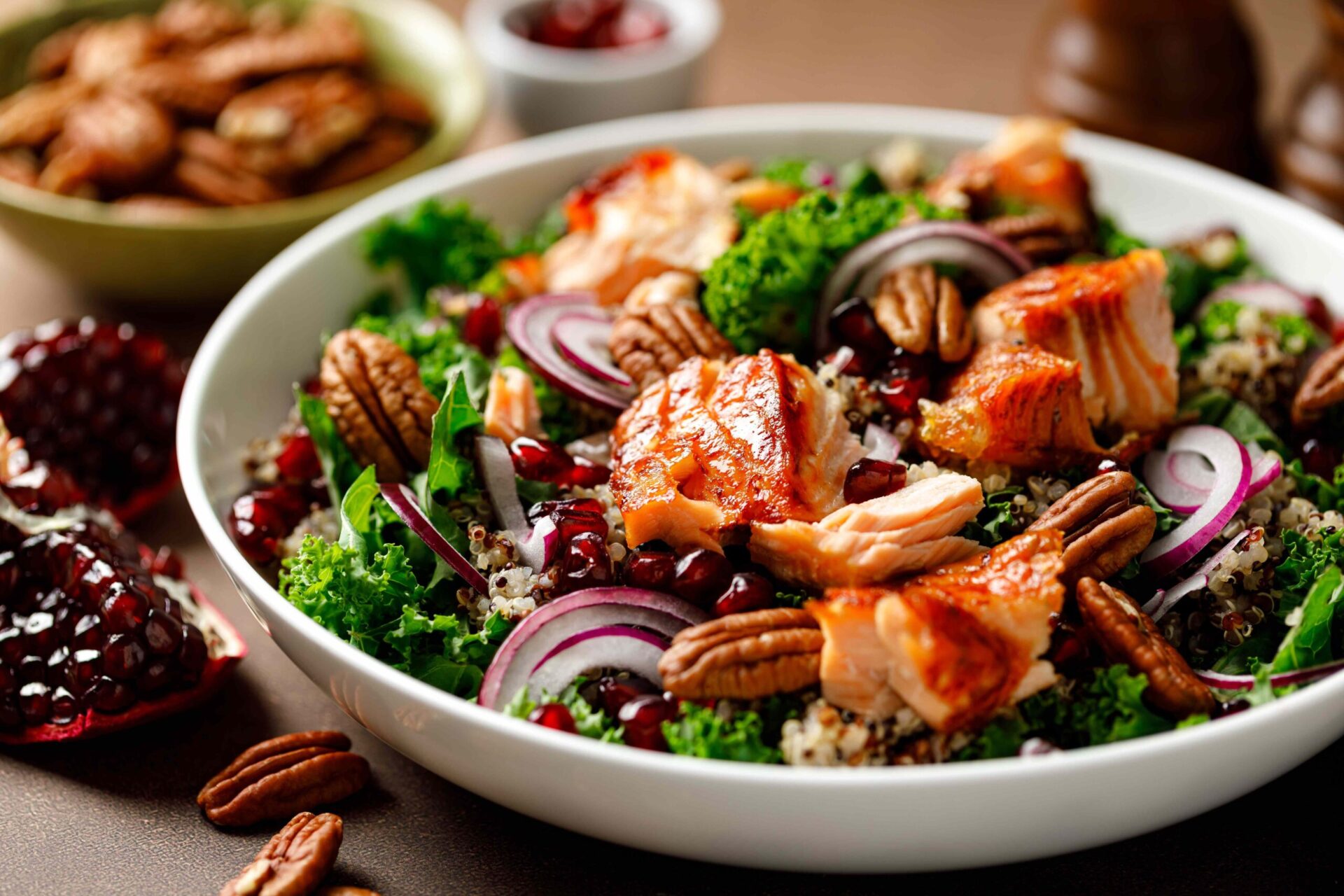
Doctors recommended foods like salmon, nuts, and raisins.Credit: YelenaYemchuk / Getty Images
Doctors recommended foods like salmon, nuts, and raisins.
Credit: YelenaYemchuk / Getty Images
  • Cardiologists say diet plays a major role in heart disease risk, but no single food works on its own.
  • Many heart-healthy eating habits focus on simple, familiar foods rather than restrictive diets.
  • Regularly choosing certain nutrient-dense foods can support cholesterol, blood pressure, and overall cardiovascular health over time.

Heart disease is the No. 1 cause of death in the U.S., but around 80% of cardiovascular diseases are preventable. While there’s no single food or diet that guarantees a healthy heart, certain dietary choices, like adding more fruits or beans to your diet, can have a powerful impact on heart disease risk factors, such as high blood pressure and high cholesterol. In this article, cardiologists share the foods they personally eat for heart health.

1. Beans and Lentils

Credit: MEDITERRANEAN / Getty Images

Tiffany Di Pietro, DO, board-certified cardiologist, told Health some of her favorite go-to heart-healthy foods are beans and lentils, which are "high in soluble fiber, which lowers LDL cholesterol," she said.

Soluble fiber binds to cholesterol and prevents it from being absorbed into the bloodstream. Research shows that eating three-fourths of a cup of beans per day may reduce LDL cholesterol levels by 19% and lower heart disease rates by 11%.

Di Pietro also recommends beans and lentils because they’re rich in potassium, which is essential for blood pressure control.

How to add it to your diet: Di Pietro incorporates beans and lentils into her diet by adding them to soups, stews, and salads. “I also suggest using lentils or black beans as a base for meatless meals once or twice a week,” she said.

2. Fatty Fish

Credit: SimpleImages / Getty Images

Fadi N. Chaaban, MD, director and chief of cardiology at Clara Maass Medical Center, regularly consumes fatty fish for his own heart at least twice a week. “Unlike red or processed meats, fatty fish provide healthy protein without contributing to arterial plaque buildup,” Chaaban told Health

Fatty fish are also excellent sources of omega-3 fatty acids, which help lower inflammation and reduce blood lipid and blood pressure levels. Omega-3 fats can also improve the flexibility of blood vessels, aiding circulation.

How to add it to your diet: Swap red meat for salmon once or twice a week, or try canned sardines or tuna. Chaaban recommends cooking fatty fish by baking, grilling, or broiling instead of frying. “Throw a salmon fillet on a baking sheet, add a little olive oil, squeeze lemon juice over it, and top it with any herbs you like,” he shared. Serve it with a side of steamed broccoli or over a healthy grain like quinoa.

3. Nuts

Credit: Olesia Shadrina / Getty Images

For an easy and delicious way to support heart health, incorporate nuts into your diet, recommended John P. Higgins, MD, professor of medicine at the University of Texas McGovern Medical School and senior cardiologist at Lyndon B. Johnson General Hospital.

“They’re nutrient-dense, widely available, and a practical source of unsaturated fats and fiber, which are beneficial for cardiovascular risk reduction," he told Health.

Studies show that regularly eating nuts, such as almonds, can significantly lower levels of “bad” LDL cholesterol and markers of inflammation, reducing heart disease risk. Snacking on almonds can also improve satiety and glycemic control, which are essential for maintaining a healthy heart.

How to add it to your diet: To make sure he’s getting plenty of heart-healthy nutrients in his diet, Higgins typically eats a small handful of raw almonds mid-morning or adds sliced almonds to his morning oatmeal. He also uses them as a crunchy topping for salads.

4. Fruits

Credit: Kieran Stone / Getty Images

Joyce Oen-Hsiao, MD, FACC, associate professor of medicine at Yale School of Medicine, recommends snacking on dried fruits when you’re craving something sweet. “Dried fruit is high in antioxidants, fiber, and potassium, all of which benefit heart health," she told Health. And unlike other candies and cookies, they do not have added sugar.

Oen-Hsiao recommends dried fruits like prunes, apricots, and raisins. These fruits are rich in nutrients that can help lower heart disease risk factors, such as high cholesterol. Just be mindful of portion sizes. “They tend to be higher in sugar than fresh fruits due to the sugar becoming more concentrated in the drying process,” she explained.

How to add it to your diet: Oen-Hsiao likes mixing dried fruit with heart-healthy nuts, like almonds, walnuts, pecans, and pistachios, for a balanced snack. 

5. Whole Grains

Credit: krisanapong detraphiphat / Getty Images

Swapping refined grains, like white bread and white pasta, for whole grains is an easy way to reduce your risk of heart disease.

Following a diet high in refined carbs can increase your risk of metabolic syndrome, a group of conditions that increases the risk of heart disease, stroke, and several other health issues. People who eat more refined grains are also more likely to gain weight over time compared to people who eat complex carbs.

“Whole grains like oats and brown rice provide fiber, which can help lower ‘bad’ cholesterol levels," said Bradley Serwer, MD, chief medical officer at VitalSolution. The fiber in whole grains also helps lower high blood pressure, one of the most critical risk factors for heart disease.

How to add it to your diet: Oen-Hsiao recommends keeping whole grains like oats, quinoa, and brown rice in your pantry. “You will always have something healthy to pair with the rest of your meal or snack,” she said.




Source link

Leave a Reply

Subscribe to Our Newsletter

Get our latest articles delivered straight to your inbox. No spam, we promise.

Recent Reviews


Being a founder is awesome. And it also really sucks.

It’s a huge amount of stress, disappointment and uncertainty, with little appreciation or guidance.

It’s perfectly normal to find yourself questioning what it all means.

I’ve been there myself… questioning whether the sleepless nights and stress was worth it. And now, I’m often the person founders turn to when they do the same.

In this essay, I wanted to talk about happiness, purpose, and how to get more of it when you’re constantly living in survival mode.

Three Types of Happiness

Martin Seligman, the father of positive psychology, describes three distinct paths to happiness: the pleasant life, the engaged life, and the meaningful life.

  • The pleasant life is about pleasure—closing a deal, hitting a milestone, getting some great customer feedback. As a founder, there’ll be phases where pleasure is hard to come by. Clearly, you can’t build a founder life on pleasure alone.
  • The engaged life is about flow—the state when you’re fully absorbed in solving a hard problem. Most founders have this in spades early on, but as their companies grow, their role can evolve away from flow. Being out of flow is often a signal you need to redesign your role.
  • The meaningful life is about purpose—the sense that what you’re doing matters. Unlike pleasure and engagement, meaning doesn’t require things to be going well. It sustains you through the hard times, not just in spite of them.

So when times are hard, meaning is what we can return to. Unlike pleasure and engagement, meaning is up to you.

And it’s work you can start right now.

How to Make Meaning

So how do you actually build meaning, even when you can barely see past next week? A meaningful life has three components:

  • A meaningful future
  • A meaningful past
  • A meaningful present

Creating meaning in each is an act of creativity. It’s an active process in which you assign meaning to things.

If you aren’t intentional about this, your brain will assign meaning for you. And if you’re not feeling great, your brain will come up with interpretations that match and then reinforce the negative feelings.

What I’m about to share with you is the process I run through when my clients start questioning themselves, and what they’re building.

1. A Meaningful Future

In Man’s Search for Meaning, Viktor Frankl documented the atrocities of the concentration camps. He writes:

“Any attempt to restore a man’s inner strength in the camp had first to succeed in showing him some future goal.”

A lot of modern therapy fixates on the past. But Frankl realised that getting clear on our future goal is even more powerful.

When it comes to founders, they often have goals… but unless you’re fully pumped, your goals need refinement. 

I commonly see three issues with a founder’s goals:

  • They have too many goals. We accumulate goals over time, but we rarely sit down and remove goals. For example, you had goals when you were 18 years old. Most of these have been parked, but some might still be guiding you now.
  • The goal isn’t big enough. For most founders, the more ambitious the goal, the more energy it unlocks. Just increasing the size of the goal can act as a powerful clarifying force for what matters.
  • The goal isn’t framed by its meaning. It’s the difference between ‘I want to make $100M’ versus ‘I want to help 10,000 customers avoid what happened to me’. One is financial, the other is personal.

Refining and reconnecting to your primary goal is critical for building a life of meaning.

Questions to work through:

  • What’s the biggest and most exciting goal you can dream up?
  • If that was your primary goal, what other goals stop being relevant?
  • What people or person could the bigger goal attract that would make it achieving it easier?

2. A Meaningful Past

Being a founder can sometimes feel like a full-contact sport. You can get hurt, through disappointment, bad luck, and even betrayal. That’s why painful events in the past need to be treated like a wound.

When we don’t process the past, unhelpful stories we tell ourselves to protect our ego can cause havoc in the present.

Treating the past means framing every single thing that happened in two ways:

  • A win: an accomplishment that we can celebrate.
  • A lesson: a failure that we learn from, that we can celebrate.

We leave everything else behind. If, for some reason, we can’t let something go, it means we haven’t learned something important from it. As my mentor used to tell me: failures will be repeated until learned.

This work can be done separately, but it’s even more powerful to do it in the context of a big goal. This way, the wins and lessons can be aligned to the vision that truly excites us.

Questions to work through:

  • What is the meaning of what you’ve been through?
  • How did those experiences serve you?
  • Where are they failing to serve you today?

3. A Meaningful Present

Here’s the thing: the future and the past don’t physically exist. They’re tools to help us act in the present.

Often, clarifying the meaning of a bigger future and a happier past makes changing the present obvious and necessary.

As founders, it’s easy to be driven entirely by the past: old goals, old activities, old habits. This stops us from growing. And a lack of growth is one of the fastest paths to feeling meaningless.

Most founders I work with don’t need to do more. They need the courage to do less.

Growth often requires us to:

  • Start doing something we haven’t done before
  • Stop doing something we’ve already mastered
  • Double down on getting even better at some things

The meaningful present is about making these changes — aligning how you spend your time with the future you’ve defined and the lessons you’ve drawn from the past.

Questions to work through:

  • What is the biggest bottleneck to making the big goal viable?
  • What do you need to stop doing—even if there’s a cost involved?
  • What do you need to delegate?

Happiness Isn’t Always Happy

A meaningful life isn’t always smiles and rainbows. It comes with difficulty, sacrifice, and discomfort. But it’s the thing that keeps you going when pleasure and engagement can’t.

If you’re a founder questioning what it all means, the answer isn’t to push harder or to quit. It’s to invest time in making meaning.

Start with the future. Let it reshape the past. And then rebuild the present around what actually matters.

Related Reading: 


Originally published on March 11th, 2026


How do top founders actually scale?

I’ve coached CEOs for 10,000+ hours—here’s what works.
Join 17,000+ founders learning how to scale with clarity.

Unsubscribe any time.


Source link