On Jan. 31, 1889, a Swedish immigrant named John Ogren was running machinery in the underground Chandler Mine in Ely, when the cage that transported workers up and down the mine shaft struck him in the head.
“Death was instantaneous,” read the graphic account of Ogren’s death in the Ely Iron Home newspaper. The “irresistible force” of the descending cage “struck him with a terrific blow, dashing out his brains in an instant and shattering his chest and shoulders.”
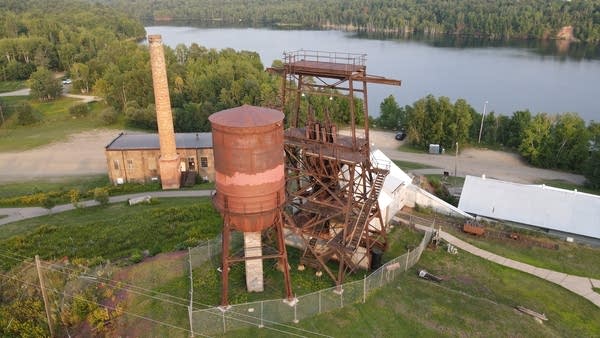
Ogren is believed to be the first miner killed while working in Ely’s burgeoning and brutally dangerous iron mining industry. He’s also the first name listed on a new Ely Miners Memorial that will be dedicated Sunday, June 14, at the historic Pioneer Mine Site in Ely, to honor the 218 miners killed in Ely between 1889 and 1966. The Pioneer, Ely’s last mine, closed the following year in 1967.
“First and foremost, it's for the families of those who lost loved ones in the mines,” explained Nick Wognum, President of the Ely Arts and Heritage Center Board, which manages the Pioneer Mine site and spearheaded the nearly 20-year effort to design and build the memorial.
Volunteers spent hours tracking down death records, reading old newspaper accounts, and even finding old gravestones to accurately compile the list of names and ages.
One of the biggest challenges, said Wognum, who also publishes the Ely Echo newspaper, was confirming how to spell the names. “In the 1800s and early 1900s, the spellings were absolutely horrible,” Wognum said. He suspects many names were spelled phonetically because so many of the mine workers were recent immigrants from Sweden, Italy and elsewhere around Europe.
“So we tried to get the correct spellings, which was to be honest as much of a task as it was to find the actual death records,” Wognum said.
The town of Ely was founded just a few years after iron ore was discovered in the area in 1883. The Chandler Mine was the first to open in 1887. The Pioneer Mine followed two years later. The high-grade ore from Ely’s iron ore mines was prized in the steelmaking process. And as the mines boomed, so did Ely.
Immigrants flocked to the region for the opportunity to work. Among them were the grandparents of State Rep. Roger Skraba of Ely, who came from Slovenia. His grandfather worked as an electrician in the Zenith Mine in Ely. He died in 1935, when he was struck by a broken cable.
His death was “instantaneous,” according to a newspaper account at the time. Skraba’s father was just five-years old then, the youngest of nine children left behind.
Skraba says the recognition for his grandfather and the other miners who lost their lives is “awesome.” But more broadly, he says, the memorial highlights why it was so important for mineworkers to organize for better working conditions.
“The Rockefellers, the Roebings, the Carnegies, all these people that were making big money on steel, were making it on the backs of these workers,” Skraba said. “And there was no safety.”
“Some of these men died for no reason other than greed,’ Skraba, a Republican, added.
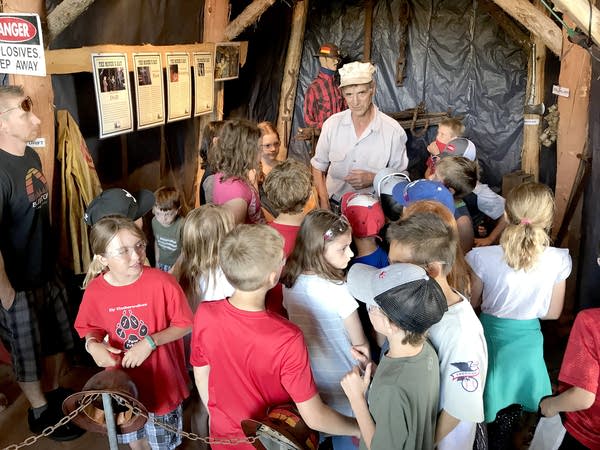
The memorial features two large granite tablets with the miners’ names engraved in them, along with their age and the name of the mine where they were killed. It’s placed next to a large ore car and in front of a museum the Ely Arts and Heritage Center operates at the Pioneer Mine site.
It cost $50,000 to build. The city of Ely and Iron Range Resources and Rehabilitation, a state economic development agency, each kicked in $15,000. The heritage center raised the rest from donations.
Wognum says the final $2,000 was donated by a man who walked into his office one day asking how much more money was needed to complete the memorial.
“I've got a relative who's going to be on your list,” the man told Wognum. “A great-grandfather who died in the mines. That's the least I could do to preserve his memory.”