What Happens After Your Smart Fridge Stops Getting Software Updates?


After time, your smart appliances could begin to function differently than anticipated. Here’s what to expect from your smart fridge in the future.

In a world where efficiency is king, refrigerators are quickly transforming from iceboxes to kitchen maximization tools. Equipped with AI functionalities, touchscreens, cameras, and mobile applications, smart fridges promise to manage grocery lists, track expiration dates, regulate temperatures, generate recipes and reduce energy bills. Some even sell themselves as functional entertainment hubs, posing as equal parts butler, sous chef, and DJ. But customers buying Wi-Fi connected fridges may not realize that the smart revolution comes at a cost, and it may have them buying a new fridge sooner than they’d hope.

A key question is longevity. According to a survey by Consumer Reports, most shoppers believe that their refrigerator should last a decade or more. But there’s a catch: The manufacturer might ditch the product before you are ready to call it quits. In this way, smart devices pose a unique problem for consumers. Because their functionalities depend on software, their ability to offer such services are reliant on the company’s willingness support them. Once technical support for a refrigerator is discontinued, it not only artificially shortens its lifespan but could cause serious security risks.

Exacerbating the issue is a general uncertainty around when such decisions might occur. For most consumers, it’s incredibly difficult to ascertain when your smart appliance may stop being smart. A 2025 FTC report found that 89% of smart device manufacturers failed to inform users of software support timelines. This is particularly true in the appliance industry, with Consumers Report noting that only three of 21 smart appliance brands guaranteed support for a specified length of time. Samsung, for instance, guarantees seven years of software updates, while GE’s end user licensing agreement states it will only provide support for its appliances five years after the product’s initial release or two years after its purchase, whichever is longer.  And while these guarantees are likely more robust some of their competitors, too many consumers are left wondering when their smart appliances might go analog. 

What happens when smart fridges lose their smarts
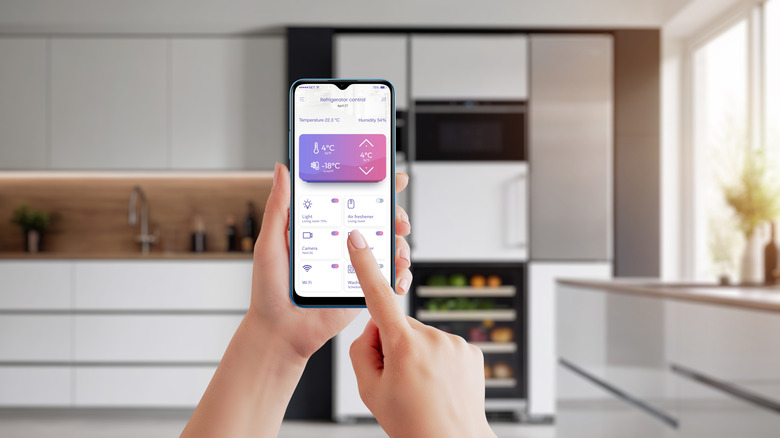
To understand what happens when your smart fridge stops receiving its regularly-scheduled software checkup, let’s engage your imagination. For years, your fridge has been your best friend in the kitchen. It orders cheese when you’re running low, crafts paella recipes, and even plays Mariachi music during Taco Tuesday. But now you’ve received notice that your fridge’s manufacturer will no longer extend software support. 

What happens next is a process as scary as its name: zombification. Eventually, many of those advanced features could degrade or disappear. And although not the end of the world, any frustration wouldn’t be misplaced. Imagine you were told to go back to flip phones or physical maps. Breaking technological dependence isn’t always what its cracked up to be. Plus, you’ve already invested for premium software, so why should you pay the price for a manufacturer no longer supporting it? The mounting graveyard of unsupported IoT devices, ranging from thermostats to night lights, is a stark reminder that while you may own your appliance, it doesn’t guarantee that you’ll always get what you paid for.

Now, I can already hear the detractors: “What’s the big deal? Won’t my smart fridge just turn into a regular cooler?” Not so fast, strawman. Unfortunately, discontinued smart fridges won’t necessarily last as long as their analog counterparts. Because IoT refrigerators contain complex systems of circuit boards, sensors, cameras, and electronic components, they possess more points of failure that often require costly maintenance. Moreover, some smart fridges may depend on software and cloud connectivity to execute basic functions like temperature regulation, ice making, and cooling. As such, you might not just have an expensive chrome brick on your hands, but one in need of constant repairs.

A hacker’s delight

A greater concern may be the cybersecurity risks. An often overlooked aspect of an appliance’s software support is that manufacturers can push through security patches, ensuring that your smart fridge doesn’t fall victim to cyberhackers. And while the thought of hackers taking over your appliances may sound like the plot of a terrible B-movie, its an increasingly common problem. 

Sporting less robust security protocols, IoT devices are infamously easy marks for hackers to enter a victim’s network without their knowledge, especially after companies stop providing software updates. Once inside, hackers can do much more than gauge your cheese supply. For one thing, attackers can use your fridge’s security vulnerabilities to spread malware throughout your home network, creating a gateway to steal personal information, commit fraud, and hijack devices. Moreover, hackers can weaponize the fridge’s cameras and microphones against you.

Just as worrisome is the ease with which hackers can enlist your fridge into botnet attacks. Botnets are a form of cyberattack that deploys masses of hijacked connected devices to execute blunt force hacking operations, including Distributed Denial of Service (DDoS) attacks, mass data exfiltration, cryptocurrency mining, phishing campaigns, and fraud. Once IoT devices like refrigerators, doorbells, smoke detectors, and thermostats kick the security update bucket, they become ripe for such attacks. 

And while a fridge sending spam emails may sound like the worst Brave Little Toaster villain ever, it’s a real problem. Some botnet attacks have posed serious national security issues, targeting government agencies and public infrastructure. Earlier this year, the U.S., Canada, and Germany disrupted a botnet network that infected over three million devices. Once infected, devices executed hundred of thousands of DDoS attacks, some of which targeted the Department of Defense. If you don’t want your fridge joining these zombie armies, you’d better check that it has received its latest security update.


Source link

Leave a Reply

Subscribe to Our Newsletter

Get our latest articles delivered straight to your inbox. No spam, we promise.

Recent Reviews


Being a founder is awesome. And it also really sucks.

It’s a huge amount of stress, disappointment and uncertainty, with little appreciation or guidance.

It’s perfectly normal to find yourself questioning what it all means.

I’ve been there myself… questioning whether the sleepless nights and stress was worth it. And now, I’m often the person founders turn to when they do the same.

In this essay, I wanted to talk about happiness, purpose, and how to get more of it when you’re constantly living in survival mode.

Three Types of Happiness

Martin Seligman, the father of positive psychology, describes three distinct paths to happiness: the pleasant life, the engaged life, and the meaningful life.

  • The pleasant life is about pleasure—closing a deal, hitting a milestone, getting some great customer feedback. As a founder, there’ll be phases where pleasure is hard to come by. Clearly, you can’t build a founder life on pleasure alone.
  • The engaged life is about flow—the state when you’re fully absorbed in solving a hard problem. Most founders have this in spades early on, but as their companies grow, their role can evolve away from flow. Being out of flow is often a signal you need to redesign your role.
  • The meaningful life is about purpose—the sense that what you’re doing matters. Unlike pleasure and engagement, meaning doesn’t require things to be going well. It sustains you through the hard times, not just in spite of them.

So when times are hard, meaning is what we can return to. Unlike pleasure and engagement, meaning is up to you.

And it’s work you can start right now.

How to Make Meaning

So how do you actually build meaning, even when you can barely see past next week? A meaningful life has three components:

  • A meaningful future
  • A meaningful past
  • A meaningful present

Creating meaning in each is an act of creativity. It’s an active process in which you assign meaning to things.

If you aren’t intentional about this, your brain will assign meaning for you. And if you’re not feeling great, your brain will come up with interpretations that match and then reinforce the negative feelings.

What I’m about to share with you is the process I run through when my clients start questioning themselves, and what they’re building.

1. A Meaningful Future

In Man’s Search for Meaning, Viktor Frankl documented the atrocities of the concentration camps. He writes:

“Any attempt to restore a man’s inner strength in the camp had first to succeed in showing him some future goal.”

A lot of modern therapy fixates on the past. But Frankl realised that getting clear on our future goal is even more powerful.

When it comes to founders, they often have goals… but unless you’re fully pumped, your goals need refinement. 

I commonly see three issues with a founder’s goals:

  • They have too many goals. We accumulate goals over time, but we rarely sit down and remove goals. For example, you had goals when you were 18 years old. Most of these have been parked, but some might still be guiding you now.
  • The goal isn’t big enough. For most founders, the more ambitious the goal, the more energy it unlocks. Just increasing the size of the goal can act as a powerful clarifying force for what matters.
  • The goal isn’t framed by its meaning. It’s the difference between ‘I want to make $100M’ versus ‘I want to help 10,000 customers avoid what happened to me’. One is financial, the other is personal.

Refining and reconnecting to your primary goal is critical for building a life of meaning.

Questions to work through:

  • What’s the biggest and most exciting goal you can dream up?
  • If that was your primary goal, what other goals stop being relevant?
  • What people or person could the bigger goal attract that would make it achieving it easier?

2. A Meaningful Past

Being a founder can sometimes feel like a full-contact sport. You can get hurt, through disappointment, bad luck, and even betrayal. That’s why painful events in the past need to be treated like a wound.

When we don’t process the past, unhelpful stories we tell ourselves to protect our ego can cause havoc in the present.

Treating the past means framing every single thing that happened in two ways:

  • A win: an accomplishment that we can celebrate.
  • A lesson: a failure that we learn from, that we can celebrate.

We leave everything else behind. If, for some reason, we can’t let something go, it means we haven’t learned something important from it. As my mentor used to tell me: failures will be repeated until learned.

This work can be done separately, but it’s even more powerful to do it in the context of a big goal. This way, the wins and lessons can be aligned to the vision that truly excites us.

Questions to work through:

  • What is the meaning of what you’ve been through?
  • How did those experiences serve you?
  • Where are they failing to serve you today?

3. A Meaningful Present

Here’s the thing: the future and the past don’t physically exist. They’re tools to help us act in the present.

Often, clarifying the meaning of a bigger future and a happier past makes changing the present obvious and necessary.

As founders, it’s easy to be driven entirely by the past: old goals, old activities, old habits. This stops us from growing. And a lack of growth is one of the fastest paths to feeling meaningless.

Most founders I work with don’t need to do more. They need the courage to do less.

Growth often requires us to:

  • Start doing something we haven’t done before
  • Stop doing something we’ve already mastered
  • Double down on getting even better at some things

The meaningful present is about making these changes — aligning how you spend your time with the future you’ve defined and the lessons you’ve drawn from the past.

Questions to work through:

  • What is the biggest bottleneck to making the big goal viable?
  • What do you need to stop doing—even if there’s a cost involved?
  • What do you need to delegate?

Happiness Isn’t Always Happy

A meaningful life isn’t always smiles and rainbows. It comes with difficulty, sacrifice, and discomfort. But it’s the thing that keeps you going when pleasure and engagement can’t.

If you’re a founder questioning what it all means, the answer isn’t to push harder or to quit. It’s to invest time in making meaning.

Start with the future. Let it reshape the past. And then rebuild the present around what actually matters.

Related Reading: 


Originally published on March 11th, 2026


How do top founders actually scale?

I’ve coached CEOs for 10,000+ hours—here’s what works.
Join 17,000+ founders learning how to scale with clarity.

Unsubscribe any time.


Source link