What Happens After Your Smart Fridge Stops Getting Software Updates?


After time, your smart appliances could begin to function differently than anticipated. Here’s what to expect from your smart fridge in the future.

In a world where efficiency is king, refrigerators are quickly transforming from iceboxes to kitchen maximization tools. Equipped with AI functionalities, touchscreens, cameras, and mobile applications, smart fridges promise to manage grocery lists, track expiration dates, regulate temperatures, generate recipes and reduce energy bills. Some even sell themselves as functional entertainment hubs, posing as equal parts butler, sous chef, and DJ. But customers buying Wi-Fi connected fridges may not realize that the smart revolution comes at a cost, and it may have them buying a new fridge sooner than they’d hope.

A key question is longevity. According to a survey by Consumer Reports, most shoppers believe that their refrigerator should last a decade or more. But there’s a catch: The manufacturer might ditch the product before you are ready to call it quits. In this way, smart devices pose a unique problem for consumers. Because their functionalities depend on software, their ability to offer such services are reliant on the company’s willingness support them. Once technical support for a refrigerator is discontinued, it not only artificially shortens its lifespan but could cause serious security risks.

Exacerbating the issue is a general uncertainty around when such decisions might occur. For most consumers, it’s incredibly difficult to ascertain when your smart appliance may stop being smart. A 2025 FTC report found that 89% of smart device manufacturers failed to inform users of software support timelines. This is particularly true in the appliance industry, with Consumers Report noting that only three of 21 smart appliance brands guaranteed support for a specified length of time. Samsung, for instance, guarantees seven years of software updates, while GE’s end user licensing agreement states it will only provide support for its appliances five years after the product’s initial release or two years after its purchase, whichever is longer.  And while these guarantees are likely more robust some of their competitors, too many consumers are left wondering when their smart appliances might go analog. 

What happens when smart fridges lose their smarts
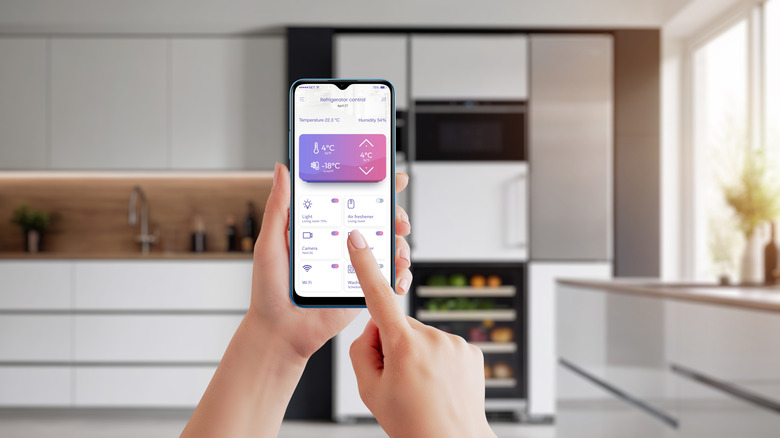
To understand what happens when your smart fridge stops receiving its regularly-scheduled software checkup, let’s engage your imagination. For years, your fridge has been your best friend in the kitchen. It orders cheese when you’re running low, crafts paella recipes, and even plays Mariachi music during Taco Tuesday. But now you’ve received notice that your fridge’s manufacturer will no longer extend software support. 

What happens next is a process as scary as its name: zombification. Eventually, many of those advanced features could degrade or disappear. And although not the end of the world, any frustration wouldn’t be misplaced. Imagine you were told to go back to flip phones or physical maps. Breaking technological dependence isn’t always what its cracked up to be. Plus, you’ve already invested for premium software, so why should you pay the price for a manufacturer no longer supporting it? The mounting graveyard of unsupported IoT devices, ranging from thermostats to night lights, is a stark reminder that while you may own your appliance, it doesn’t guarantee that you’ll always get what you paid for.

Now, I can already hear the detractors: “What’s the big deal? Won’t my smart fridge just turn into a regular cooler?” Not so fast, strawman. Unfortunately, discontinued smart fridges won’t necessarily last as long as their analog counterparts. Because IoT refrigerators contain complex systems of circuit boards, sensors, cameras, and electronic components, they possess more points of failure that often require costly maintenance. Moreover, some smart fridges may depend on software and cloud connectivity to execute basic functions like temperature regulation, ice making, and cooling. As such, you might not just have an expensive chrome brick on your hands, but one in need of constant repairs.

A hacker’s delight

A greater concern may be the cybersecurity risks. An often overlooked aspect of an appliance’s software support is that manufacturers can push through security patches, ensuring that your smart fridge doesn’t fall victim to cyberhackers. And while the thought of hackers taking over your appliances may sound like the plot of a terrible B-movie, its an increasingly common problem. 

Sporting less robust security protocols, IoT devices are infamously easy marks for hackers to enter a victim’s network without their knowledge, especially after companies stop providing software updates. Once inside, hackers can do much more than gauge your cheese supply. For one thing, attackers can use your fridge’s security vulnerabilities to spread malware throughout your home network, creating a gateway to steal personal information, commit fraud, and hijack devices. Moreover, hackers can weaponize the fridge’s cameras and microphones against you.

Just as worrisome is the ease with which hackers can enlist your fridge into botnet attacks. Botnets are a form of cyberattack that deploys masses of hijacked connected devices to execute blunt force hacking operations, including Distributed Denial of Service (DDoS) attacks, mass data exfiltration, cryptocurrency mining, phishing campaigns, and fraud. Once IoT devices like refrigerators, doorbells, smoke detectors, and thermostats kick the security update bucket, they become ripe for such attacks. 

And while a fridge sending spam emails may sound like the worst Brave Little Toaster villain ever, it’s a real problem. Some botnet attacks have posed serious national security issues, targeting government agencies and public infrastructure. Earlier this year, the U.S., Canada, and Germany disrupted a botnet network that infected over three million devices. Once infected, devices executed hundred of thousands of DDoS attacks, some of which targeted the Department of Defense. If you don’t want your fridge joining these zombie armies, you’d better check that it has received its latest security update.


Source link

Leave a Reply

Subscribe to Our Newsletter

Get our latest articles delivered straight to your inbox. No spam, we promise.

Recent Reviews


The Wells Fargo Autograph Journey℠ Card (see rates and fees) comes with a generous welcome offer of 60,000 bonus points after spending $4,000 on purchases in the first three months from account opening. This card is the mid-tier version of the Wells Fargo Autograph® Card (see rates and fees), which is currently offering 20,000 bonus points after spending $1,000 on purchases in the first three months from account opening.

With the Autograph Journey, you’ll enjoy perks like a $50 annual statement credit for airfare purchases (with a $50 minimum airline purchase) and bonus points on travel and dining purchases. The latter is a benefit of the Autograph Card as well, though select travel categories, like hotels and airfare, earn fewer points per dollar spent with the no-annual-fee card.

Previously, Wells Fargo Rewards points earned with Wells Fargo credit cards could only be redeemed at 1 cent each, making the Autograph Journey bonus worth $600 and the Autograph Card bonus worth $200. However, Wells Fargo introduced a number of travel transfer partners that allow you to use your rewards points with eight frequent flyer programs and two hotel loyalty programs for better value (up to $960 and $320, respectively, when redeemed for travel).

Here is everything you need to know about Wells Fargo’s transfer partners so you can get the most value out of your hard-earned Wells Fargo points.

Related: How (and why) you should earn transferable credit card points

Who are the Wells Fargo transfer partners?

You can transfer Wells Fargo points to the following programs at a 1:1 ratio (unless otherwise noted):

Aer Lingus, British Airways and Iberia all use Avios as their program currency. They can be transferred between any of these programs (including Finnair Plus and Qatar Airways Privilege Club) in any direction at a 1:1 rate; so, even if only one of these three programs was a Wells Fargo transfer partner, you could still easily transfer Avios to all three of the programs, as well as to Finnair Plus and Qatar Airways Privilege Club.

Similarly, you can link your Virgin Atlantic Flying Club and Virgin Red accounts to transfer your Virgin points between both programs. If you want to book Virgin Atlantic flights, you can use Virgin Atlantic Flying Club. Virgin Red offers members the chance to redeem rewards for other trip details, such as food tours, excursions and hotel stays.

Reward your inbox with the TPG Daily newsletter

Join over 700,000 readers for breaking news, in-depth guides and exclusive deals from TPG’s experts

Related: Airlines you can book using Avios: How to maximize your points and miles

Aer Lingus Airbus A321XLR. AER LINGUS

How do I transfer Wells Fargo points to partners?

Once you have earned Wells Fargo points from an Autograph card at the end of each billing cycle, they will be available in your Wells Fargo account. You could elect to redeem them through the Wells Fargo Rewards portal at 1 cent each or transfer them to one of the partner programs above at a 1:1 rate (except for Choice Privileges and Wyndham Rewards, which are 1:2).

You must first link any transfer partners in your Wells Fargo account by adding their membership numbers so you can easily transfer to them.

Thankfully, unlike other transferable currencies, there’s no minimum transfer amount, and you aren’t limited to specific increments. In fact, you could transfer just a single point if needed. This allows you to transfer the exact number you need for your specific redemption — rather than being forced to round up to the next multiple of 1,000, which can leave you with orphaned points or miles in a loyalty account.

Transfers are not reversible, so make sure you want to proceed before making the transfer.

The Mining Exchange, a Registry Collection Hotel
WYNDHAM HOTELS & RESORTS

What are the best Wells Fargo transfer partners?

There are great ways to maximize the value of Wells Fargo transfer partners. Here are some of our favorites:

  • British Airways Club members can book American Airlines and Alaska Airlines partner flights traveling up to 650 miles within North America for 13,500 Avios on all dates, plus taxes and fees of just $5.60. An example of such a route includes flying from San Francisco International Airport (SFO) to San Diego International Airport (SAN). Since American operates using dynamic pricing, redeeming Avios could be significantly cheaper and a better use of your rewards. However, it’s always best to double-check before transferring and redeeming your points.
  • Iberia Club business class to Europe costs just 40,500 Avios (plus reasonable taxes and fees) each way on off-peak dates for the following routes: Boston Logan International Airport (BOS), New York’s John F. Kennedy International Airport (JFK), Luis Muñoz Marín International Airport (SJU) in Costa Rica, Dulles International Airport (IAD) near Washington, D.C., and Chicago’s O’Hare International Airport (ORD) to Adolfo Suárez Madrid-Barajas Airport (MAD).
  • Flying Blue prices its awards dynamically; however, the program has now standardized saver-level pricing for all one-way flights between the U.S. and Europe, regardless of origin or destination. This means you can connect at no extra cost from as little as 25,000 miles in economy, 40,000 miles in premium economy or 60,000 miles in business class. Also, check out the program’s Promo Rewards, where select routes are discounted even further.
  • Virgin Atlantic Flying Club does impose high surcharges on its award tickets, but you can find great deals, such as flying from the East Coast to the U.K. during off-peak dates for just 6,000 points. Plus, if you book a partner award redemption, such as a main cabin Delta Air Lines flight from the U.S. to Europe, you’ll pay significantly lower surcharges. While the flight will cost you more Virgin points, it’s likely to be far fewer points than Delta SkyMiles charges its own members for the exact same flight.
  • Choice Privileges has well-located properties in Europe and Japan for 12,000 points or less per night. Choice points can also provide great value in the U.S. For example, some solid-value Choice Hotels are near national parks and in large cities.

Remember, transfers are irreversible, so it’s important to double-check airline and hotel availability before proceeding.

Iberia 350 business class
BEN SMITHSON/THE POINTS GUY

How do I earn Wells Fargo points?

You can earn Wells Fargo points from the following credit cards.

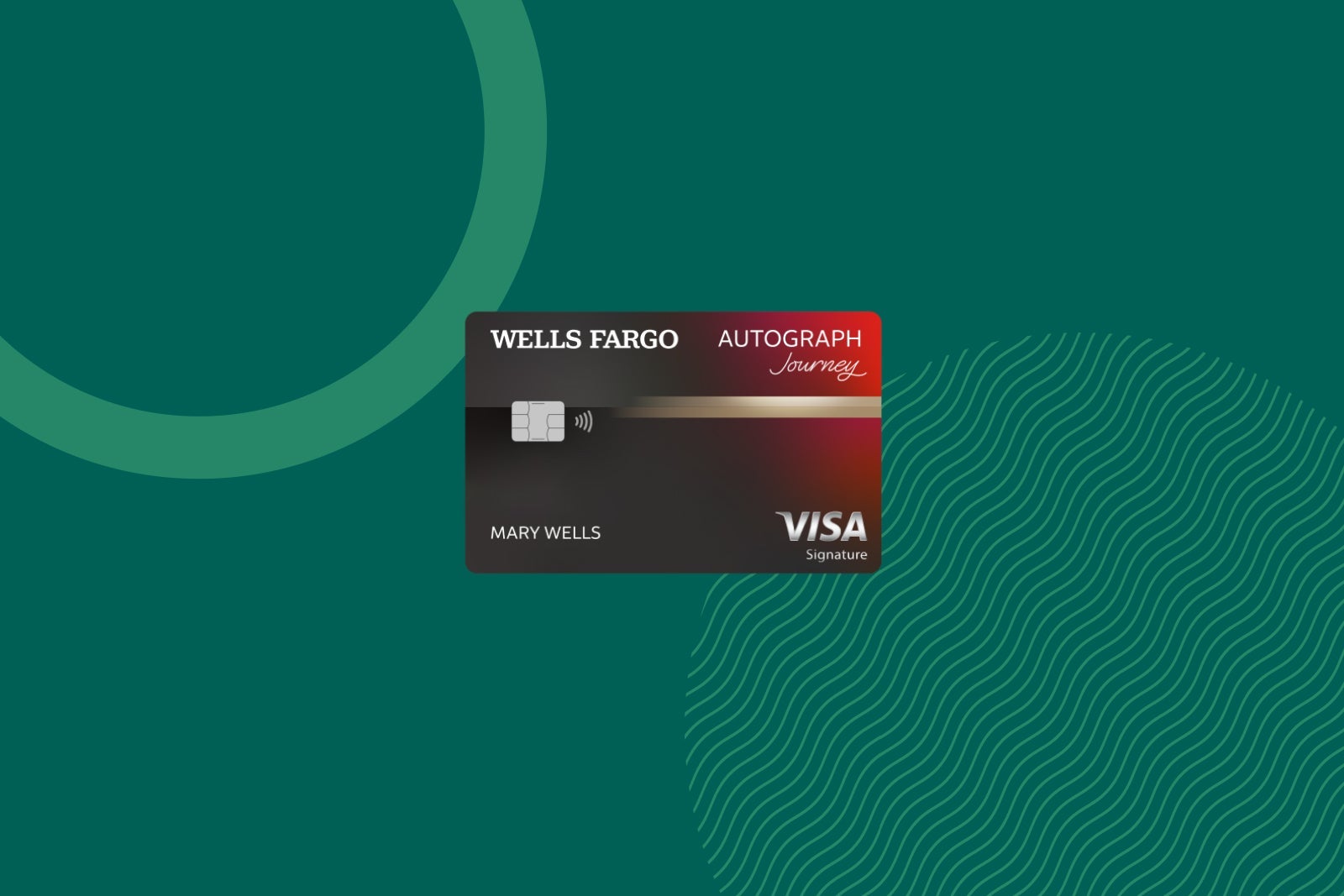
Wells Fargo Autograph Journey Card

Wells Fargo Autograph Journey Card
THE POINTS GUY

Current welcome bonus: Earn 60,000 bonus points after spending $4,000 on purchases in the first three months from account opening. This card comes with a $50 annual statement credit for airfare purchases (a $50 minimum applies) and valuable earnings rates on travel and dining purchases.

Annual fee: $95.

Earning rates:

  • 5 points per dollar spent at hotels
  • 4 points per dollar spent on airline purchases
  • 3 points per dollar spent on other travel and restaurant purchases
  • 1 point per dollar spent on other purchases

Some other cards require travel to be booked through the card provider’s travel portal to earn bonus points. With the Wells Fargo Autograph Journey Card, you’ll earn bonus points for booking directly with the airline or hotel, meaning you’ll never miss out on earning points and utilizing elite status benefits.

To learn more, read our full review of the Autograph Journey.


Apply here: Wells Fargo Autograph Journey Card


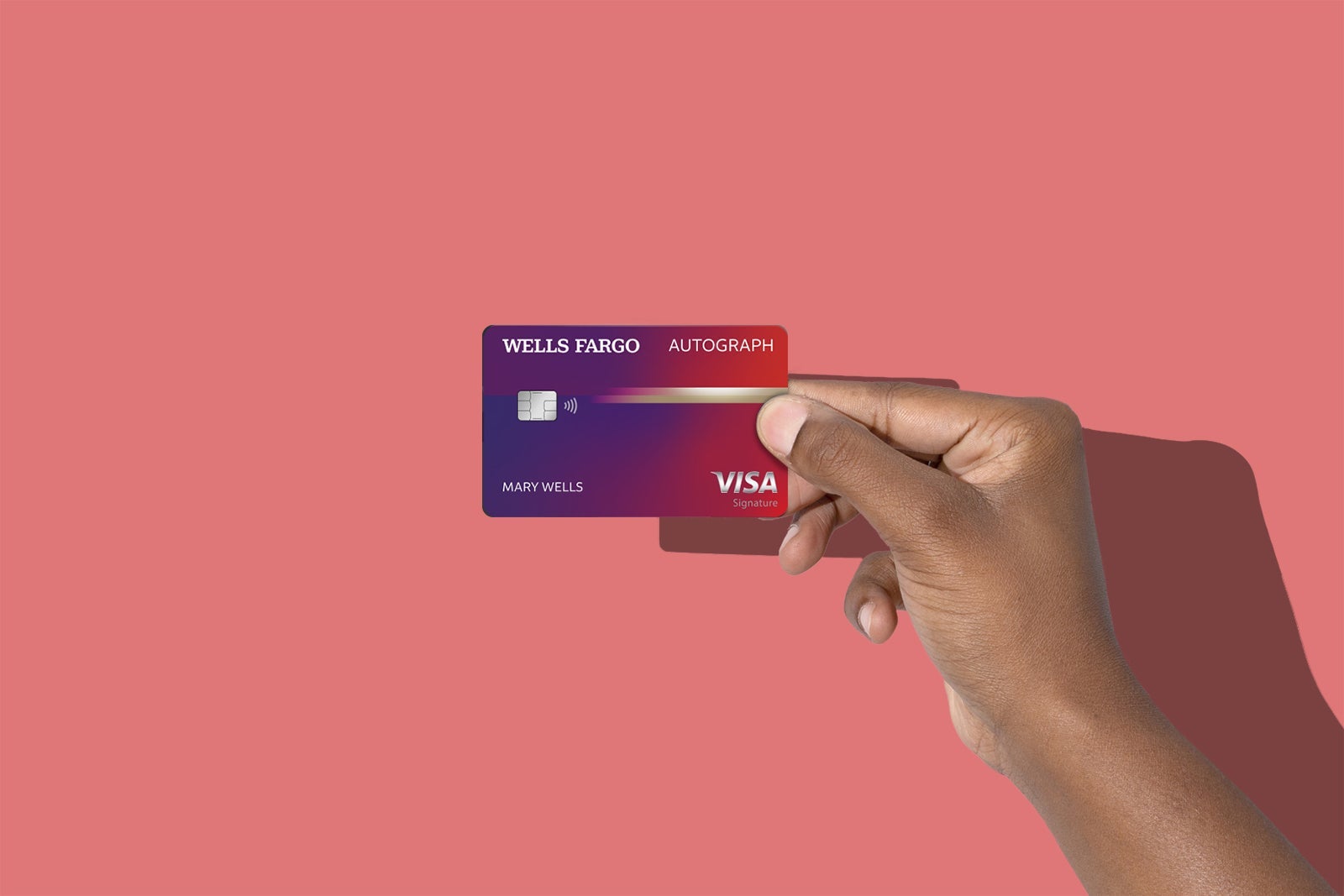
Wells Fargo Autograph Card

a hand holds a credit card
THE POINTS GUY

Current welcome bonus: Earn 20,000 bonus points after spending $1,000 on purchases in the first three months from account opening.

Annual fee: $0.

Earning rates:

  • 3 points per dollar spent on restaurant purchases (including takeout, catering and food delivery services)
  • 3 points per dollar spent on travel (including airfare, hotels, car rentals and cruises)
  • 3 points per dollar spent at gas stations and electric vehicle charging stations
  • 3 points per dollar spent on transit, eligible streaming services and phone plans
  • 1 point per dollar spent on other purchases

Plus, you’ll enjoy up to $600 in cellular telephone protection against damage or theft when you pay your monthly bill with the card (subject to a $25 deductible).

To learn more, read our full review of the Autograph Card.


Apply here: Wells Fargo Autograph Card


Related: Wells Fargo Autograph vs. Autograph Journey: Should you pay an annual fee for more benefits?

Royal Lancaster Choice hotel
ROYAL LANCASTER LONDON

Bottom line

The Wells Fargo transfer partner list may be small, but there are some excellent redemption options. Additionally, the ability to transfer points in any amount provides valuable flexibility that other credit card currencies lack.

We hope this transfer partner list will continue to grow and that the product evolves.


Source link