Disqualification Costs and More — DQ Motion Sparks Sanctions, Insured and Independent Counsel Selection, Law Firm IG and Dropbox/File Share Risk,


Judge Sanctions Barnes & Thornburg $172K as Tactics Backfire” —

  • “A federal judge in Washington, D.C. has issued a $172,635 sanction against Barnes & Thornburg and two of its attorneys for filing what the court found was a meritless motion to disqualify opposing counsel.”
  • “The move backfired, as the court spotlighted a slew of other missteps—including late night filings and serving more than a dozen depositions two days before opposing counsel was due to respond to Barnes & Thornburg’s motion for summary judgment. And the entire firm is liable, because its general counsel approved the litigation strategy, the judge wrote.”
  • “The sanction stems from a wage-and-hour suit in federal court where the Big Law firm represents GardaWorld, a security company. Barnes & Thornburg attorneys Teresa L. Jakubowski and Adam T. Calandra leveled six ethics violations against DCWageLaw, the two-lawyer firm representing security guards in a series of suits against GardaWorld.”
  • “But U.S. District Judge Beryl A. Howell rejected all six claims, finding defense counsel’s effort ‘to impugn the reputation of plaintiffs’ counsel by calling their ethics into question has boomeranged.’”
  • “The sanction order found the firm and its lawyers—Jakubowski and Calandra—jointly and severally liable in the case, Chang v. United American Security.”
  • “Barnes & Thornburg filed the disqualification motion just before midnight on Feb. 16, two days before DCWageLaw’s summary judgment reply was due. The same night, Barnes & Thornburg served 18 deposition subpoenas on plaintiffs and putative class members.”
  • “And two days later, on the day of the summary judgment filing deadline, Calandra threatened to file the same motion in 17 other cases DCWageLaw is litigating against GardaWorld.”
  • “Meanwhile, Barnes & Thornburg alleged DCWageLaw violated Rule 4.2 by making phone calls to two hourly security officers whom GardaWorld characterized as managers. It claimed that DCWageLaw created a conflict of interest under Rule 1.7 by simultaneously representing class and individual plaintiffs asserting identical claims against the same defendant.”
  • “Barnes & Thornburg later moved to withdraw its disqualification motion.”
  • “But at a Feb. 24 hearing Howell denied the motion to withdraw, finding that ‘the damage ha[d] been done,’ given the court’s finding that the disqualification motion had been filed ‘for tactical reasons,’ ‘to impugn the plaintiffs’ firm’s integrity and ethics,’ and ‘to chill their communications that might be appropriate with employees of defendant.’”
  • “The plaintiffs moved for sanctions—reimbursement of the attorney fees they’d spent responding to the opponent’s motion.”
  • “Later, on Feb. 20, Barnes & Thornburg moved to withdraw its disqualification motion upon receipt of four concessions from plaintiffs’ counsel.”
  • “The judge wrote that Barnes & Thornburg lawyers demanded plaintiffs’ counsel ‘refrain from contacting individuals who are supervisors or managers of our client,’ although plaintiffs’ counsel previously established that the contacts at issue were expressly permitted under District of Columbia law; stop including confidential settlement communications in pleadings filed with the court, stop including exhibits and other information subject to protective orders in other cases, and agree that all evidence obtained from these ex parte contacts with GardaWorld’s managers or supervisors be excluded from evidence.”
  • “Howell then granted DCWageLaw’s motion for sanctions, finding Barnes & Thornburg ‘unreasonably and vexatiously multiplied the proceedings in these consolidated matters, warranting an order that defense counsel satisfy personally the excess costs, expenses and attorney fees reasonably incurred because of such conduct.’”
  • “The judge also noted the timing of the disqualification and Barnes & Thornburg’s actions thereafter demonstrate that the motion was filed ‘for tactical reasons.’”
  • “Making the entire firm liable for the sanction was warranted because Barnes & Thornburg’s general counsel approved the filing of the disqualification motion, Howell said, citing a statement from Jakubowski that the disqualification motion was filed ‘in consultation with our internal general counsel’s office.’”

David Kluft asks: “If my client fires me, does that mean my access to their Dropbox files is no longer authorized?” —

  • “In 2017, a NY realty company gave their outside counsel access to the company Dropbox account. The company terminated the lawyer in 2018 but didn’t change the Dropbox passwords or expressly tell the lawyer to stop accessing the Dropbox account.”
  • “The lawyer accessed the DropBox account several times in 2019, including one time in December 2019 after successor counsel told the lawyer to cut it out. The company filed a claim for violation of the Stored Communications Act.”
  • “On summary judgment, the court rejected the lawyer’s argument that the ‘authorization’ defense applied: ‘Once a counsel’s legal services have been terminated by a client, that counsel should not reasonably expect continued authorization to access and benefit from the former client’s electronic resources.’”
  • “However, the Court found that there was a genuine issue of fact as to whether the lawyer had the requisite intent for a violation of the act prior to the time he was expressly prohibited from accessing the account.”
  • Decision: here.

Minnesota Court of Appeals Holds that an Insurer’s Reservation of Rights Can Entitle an Insured to Select Independent Counsel” —

  • “On June 1, 2026, the Minnesota Court of Appeals issued a decision in Fabyanske, Westra, Hart & Thomson, P.A. v. Western National Mutual Insurance Company, in which the court held that a conflict of interest on the part of counsel hired by an insurance carrier can entitle an insured to independent counsel that is paid for by the carrier. When an insurer defends an insured under a reservation of rights, and the facts to be determined in the underlying action are the same facts upon which coverage depends, the court concluded the insurer’s duty to defend transforms into a duty to reimburse the insured for reasonable attorney fees incurred in defending the lawsuit.”
  • “After roughly a year of litigation, the general contractor hired the law firm Fabyanske, Westra, Hart & Thomson, P.A. (Fabyanske) to review its coverage under the subcontractor’s policy. Fabyanske subsequently informed Western that the general contractor objected to the reservation of rights and asserted that such a reservation created a conflict of interest which provided the general contractor with a right to independent counsel.”
  • “The conflict of interest arose because Western agreed to defend the general contractor unless and until the general contractor was found to be negligent. Therefore, Fabyanske argued Western would benefit from the general contractor being found negligent because Western could then deny coverage. Western refused to withdraw its reservation of rights and denied the existence of any conflict. The general contractor continued to work with both Fabyanske and its carrier-hired counsel to defend the case.”
  • “After the underlying action settled, Fabyanske sent Western an invoice for its fees, Western refused to pay, and Fabayanske sued Western for failure to pay. The district court granted Western’s summary judgment motion, finding that there was no genuine issue of material fact as to whether a conflict of interest existed. Fabyanske appealed.”
  • “The court of appeals explained that general liability insurers have a duty to defend insureds when any part of the claim is arguably within the scope of coverage. And when coverage is questioned, insurers must inform the insured of that question and issue a reservation of rights. Yet that reservation itself can create a conflict of interest between the insurer and the insured. In such a circumstance, ‘the insurer’s duty to defend transforms into a duty to reimburse’ and the insured has the right to select independent counsel.”
  • “The court of appeals noted that (1) the general contractor tendered its defense to Western, (2) Western agreed to defend the general contractor subject to the reservation of rights that stated Western would not cover the general contractor for their own negligence, and (3) therefore, the same facts upon which Western was able to deny coverage—the general contractor’s negligence—would be decided in the underlying action. Thus, the court of appeals determined that a conflict existed between Western and the general contractor that transformed Western’s duty to defend into a duty to reimburse.”
  • “Drawing from these precedents, the court of appeals held that a conflict of interest entitling an insured to independent counsel exists when (1) the insurer defends under a reservation of rights and (2) the facts to be determined in the underlying action are the same facts upon which coverage depends.”
  • “This decision provides clarity for insureds and insurers and has important implications regarding the right to independent counsel.”


Source link

Leave a Reply

Subscribe to Our Newsletter

Get our latest articles delivered straight to your inbox. No spam, we promise.

Recent Reviews


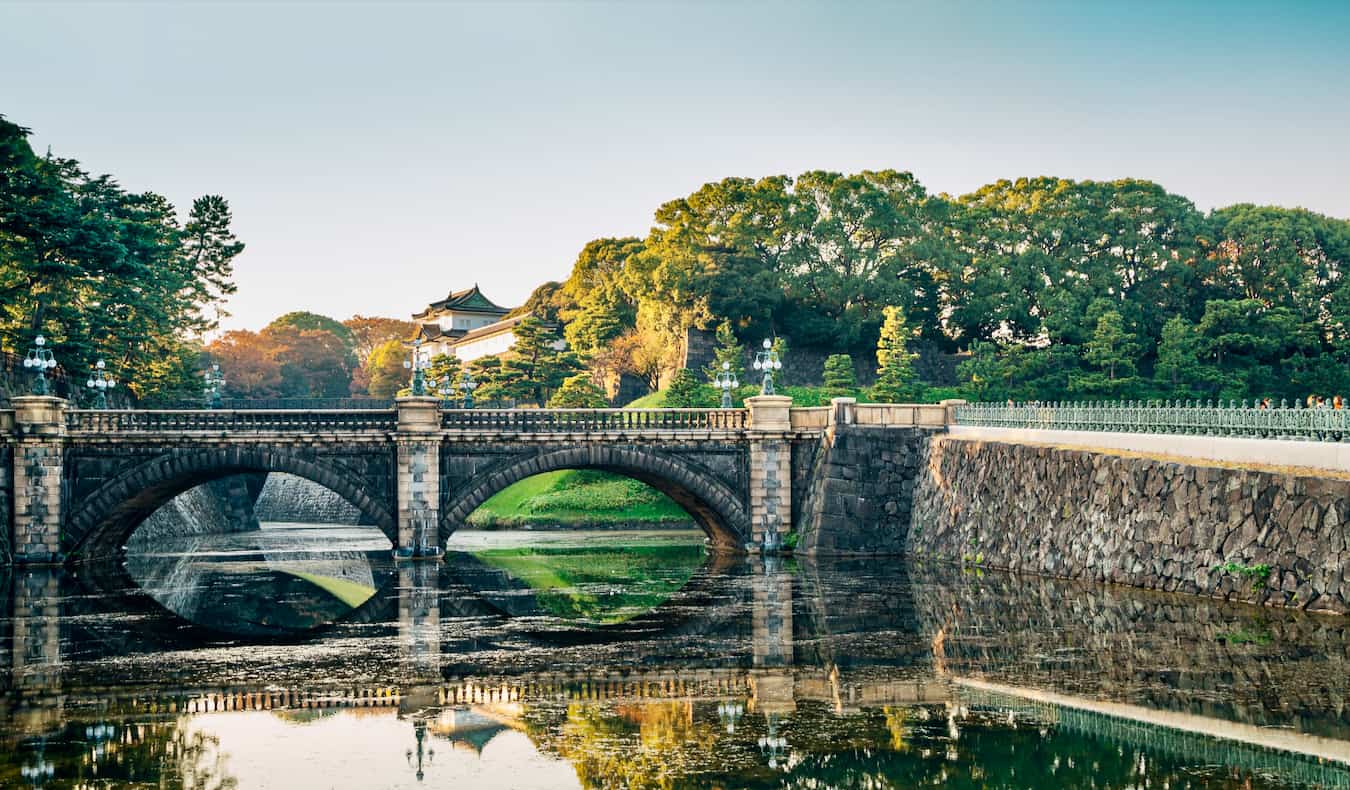
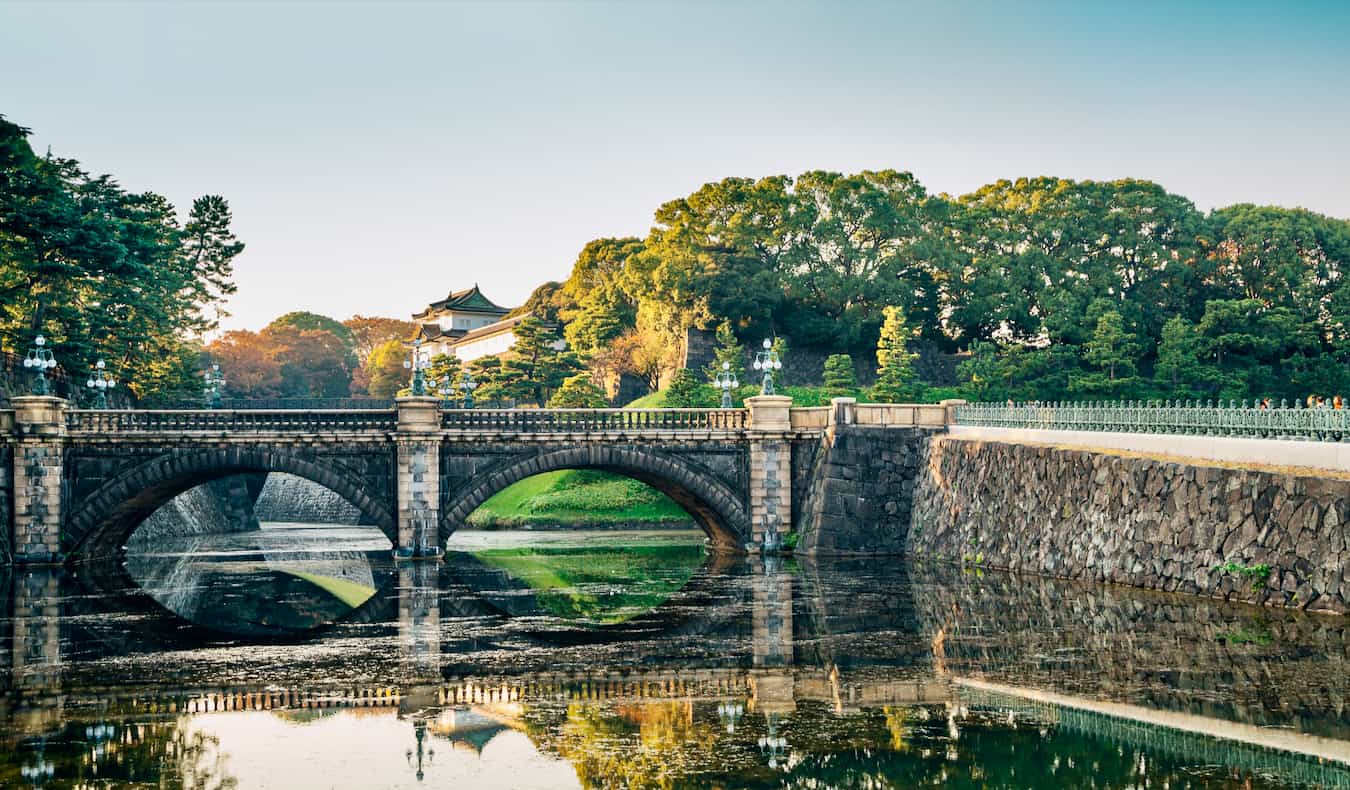
a peaceful garden near the Imperial Palace in beautiful Tokyo, JapanTokyo is one of those cities that feels endlessly deep. You can visit a dozen times and still discover new food stalls, hidden shrines, late-night bars, quirky subcultures, and neighborhoods that feel like completely different worlds. (I know because I’ve visited about 10 times already!)

One of my favorite ways to explore Tokyo is by taking an Airbnb Experience. Led by locals and long-term residents, these tours give you a front-row seat to Tokyo’s food culture, nightlife, history, and crafts in a way you rarely get when wandering on your own. I’ve done a lot of Airbnb Experiences in Tokyo over the years and think they are often even better than traditional tours you find on Get Your Guide (though Arigato Travel is next level and the best traditional tour company in the city so don’t miss out on them).

To help you pick from the endless Experiences you can find, below are my favorite in Tokyo that combine cultural immersion, hands-on learning, and just the right amount of fun:

Learn to Make Authentic Sushi with a Trained Chef

Sushi-making classes are common in Tokyo but this Airbnb Experience stands out because it’s done in an omakase restaurant. This class is given by a sushi master (or his apprentice). You don’t just learn how to shape rice or slice fish; you learn why certain cuts matter, how chefs season rice differently depending on style, and how to pair ingredients to highlight texture and flavor. The class is hands-on and surprisingly approachable. It’s a small group experience done in the morning so you can have a filling and fun breakfast experience before going out to explore Tokyo. I absolutely loved it.

Book here!

Shibuya Nightlife with Unlimited Drinks

This is my favorite nightlife tour in Tokyo. The host, Suemi, and her friends provide the absolute best time. This Shibuya nightlife tour one takes you to 3-4 izakaya spots that are very untouristy and filled without locals. You get unlimited food and drinks and it’s a really great experience. My guide, Shugo, was outgoing, spoke conversational English, handled large group dynamics well, was entertaining, explained the culture of izakaya restaurants in detail, and stayed past when the Experienced ended. He was great!

Additionally, Suemi and her friends also run an unlimited Sake tasting class, which is the best Sake class I’ve done in Tokyo. They go into incredible detail about how sake is made and use a lot of visuals so it’s really easy to understand. It’s a small group of six, which made the Experience really personable. If you take a Sake experience, take this one. (They also un a whiskey tasting experience that I haven’t done this one yet but I bet it’s just as good).

Book here!

Shinjuku Izakaya Tour

This experience is similar in spirit to the Shibuya nightlife tour but set in one of Tokyo’s other major nightlife hubs. Shinjuku is packed with tiny izakaya spots, many of them hidden in narrow alleyways or upstairs spaces you’d never think to enter on your own. On this tour, Yuma (a knowledgeable sake sommelier) takes you to several of these small, local spots and walks you through how izakaya culture really works.

You’ll try different styles of sake along the way and learn how to read menus, what to order, and how locals typically drink and eat in these settings. Yuma is outgoing, fun, and very good at explaining things clearly without overwhelming you. It’s social, relaxed, and a great way to experience Shinjuku nightlife without feeling lost or intimidated.

Book here!

Historic Tokyo Walking Tour

This is one of the most educational experiences I’ve done in Tokyo. Instead of focusing on the usual tourist areas, this tour explores quieter neighborhoods that retain a strong connection to the city’s past. The host is a lecturer specializing in Japanese history and traditional culture, and it really shows in the depth of information shared throughout the walk.

You’ll visit places like Nezu Shrine, walk through its tunnel of red torii gates, explore the old streets of Yanaka, and learn about the Edo period, the Meiji Restoration, and how the role of the samurai changed as Japan modernized. It’s a 2.5-hour walk that never feels rushed and gives you a much clearer understanding of how Tokyo became the city it is today. I learned a lot from this tour.

Book here!

Tokyo Coffee Culture Tour

Tokyo has an burgeoning coffee scene and this tour does a great job of showing it to you. You explore Jimbocho and Kanda, two very under visited neighborhoods, to learn about both old-school kissaten and modern specialty cafés. You’ll learn about brewing techniques, flavor profiles, and how Japan developed such a meticulous approach to coffee.

The tour includes visits to historic cafés, specialty shops leading Tokyo’s third-wave movement, and even wagashi shops where you’ll learn how traditional Japanese sweets pair with coffee. It’s a really thoughtful and unique afternoon experience.

Book here!

Organic matcha Tea Ceremony

This one-hour experience is a great introduction to matcha and Japanese tea culture. You’ll learn about the history of matcha, its role in Japanese society, and how to tell high-quality matcha from lower-grade varieties. The host walks you through the traditional preparation process step by step. You’ll whisk and taste authentic matcha in a calm, traditional setting that feels worlds away from Tokyo’s busy streets. It’s short but memorable, and it gives you a much deeper appreciation for something you’ll see everywhere while traveling in Japan.

Book here!

Tokyo Ramen Tour

Ramen is synonymous with Japanese food, and this tour helps you understand why it inspires such devotion. Over the course of about three hours, you’ll visit multiple ramen shops, each highlighting a different style or approach.
You’ll learn about ramen’s origins, modern trends, and regional variations while tasting everything from classic bowls to more experimental or fusion styles. The guide explains broth types, noodle textures, and toppings in a way that’s easy to follow. Come hungry as this tour will absolutely fill you up!

Book here!

Shibuya and Harajuku Street Art Tour

This tour takes you through Shibuya and Harajuku to see murals and installations hidden in alleyways and less obvious spaces. Street art is a much quieter, more underground scene in Tokyo (they Japanese aren’t so keen on murals on their buildings) so learning about where it is allowed and how the culture thrives in such a restrictive environment is really interesting. he tour also includes visual examples of murals before and after they were created, which adds helpful context. I think it is one of the most interesting and unique Airbnb Experiences and gives you a really good look at a side of Japan most people don’t see!

Book here!

 
***

There’s a lot of Airbnb Experiences in Tokyo and I know I’m probably I’m missing some really great ones (After all, I’m only one person) but these eight will give you a good start. Try to do at least one when you’re in Tokyo because most conventional organized tours are all cookie cutter experiences. These Airbnb tours are way more fun!

Book Your Trip to Tokyo: Logistical Tips and Tricks

Book Your Flight
Use Skyscanner to find a cheap flight. They are my favorite search engine because they search websites and airlines around the globe so you always know no stone is left unturned.

Book Your Accommodation
You can book your hostel with Hostelworld as they have the biggest inventory and best deals. If you want to stay somewhere other than a hostel, use Booking.com as they consistently return the cheapest rates for guesthouses and cheap hotels.

For places to stay, check out my article on my favorite hostels in Tokyo. If you want to stay in a hotel, check out this list of favorites.

And, for a neighborhood by neighborhood breakdown of Tokyo, check out this post.

Don’t Forget Travel Insurance
Travel insurance will protect you against illness, injury, theft, and cancellations. It’s comprehensive protection in case anything goes wrong. I never go on a trip without it as I’ve had to use it many times in the past. My favorite companies that offer the best service and value are:

Looking for the Best Companies to Save Money With?
Check out my resource page for the best companies to use when you travel. I list all the ones I use to save money when I’m on the road. They will save you money when you travel too.

Be sure to check out the Japan Rail Pass if you’ll be traveling around the country. It comes in 7-, 14-, and 21-day passes and can save you a ton of money!

Want More Information on Tokyo?
Be sure to visit my robust destination guide on Tokyo for even more planning tips!


Source link