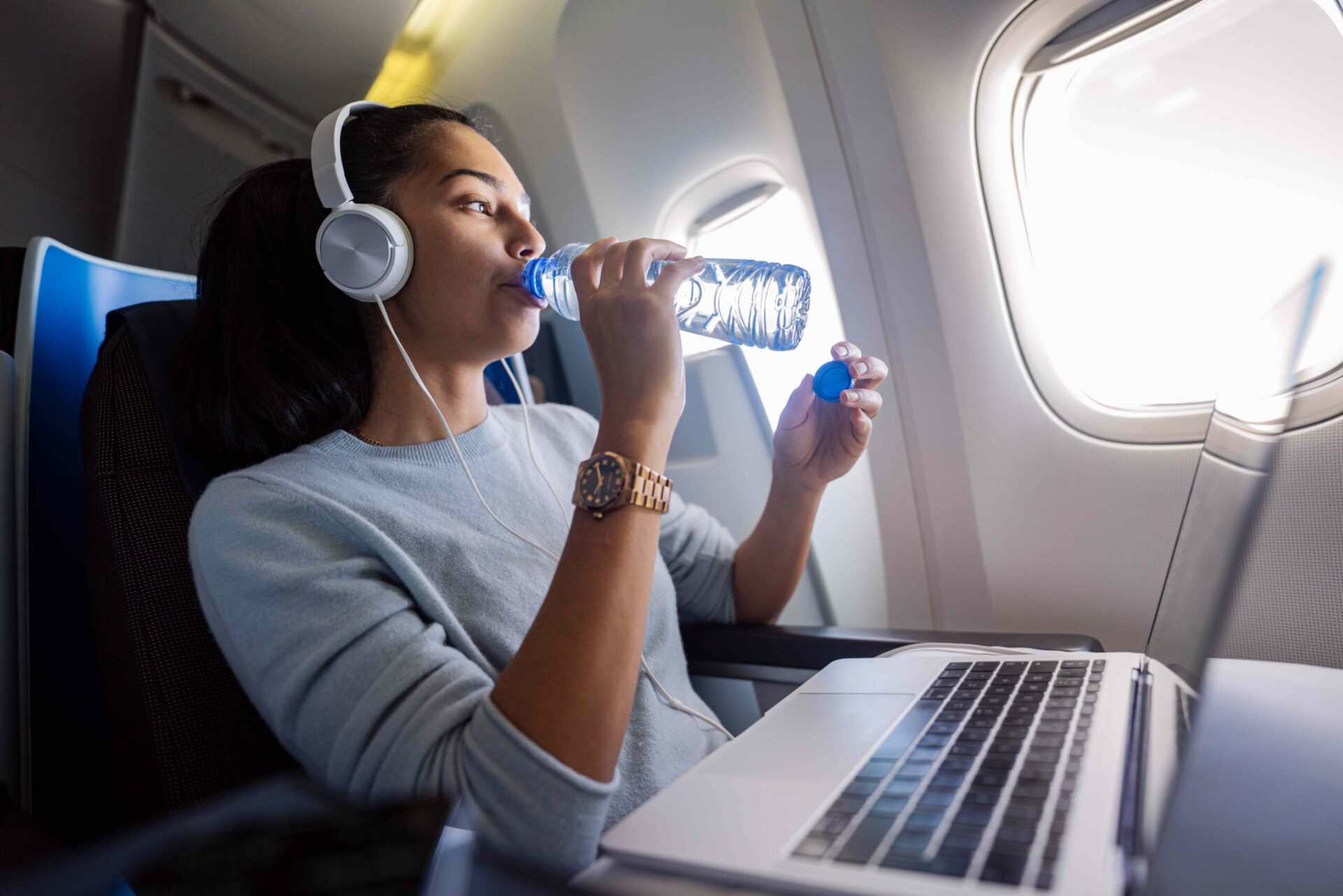
:max_bytes(150000):strip_icc():format(jpeg)/Health-GettyImages-2257803229-991f257f5f2e47129bfdcfbff4283245.jpg "Person with headphones drinking water while using a laptop on an airplane.")
Credit: Danilo Andjus / Getty Images
- Airplanes have very low humidity levels, which means your body loses more water through your skin and breath.
- It’s important to drink fluids before, during, and after your trip to stay hydrated.
- While on board, limiting alcohol and caffeine, eating fruits and vegetables, and other tips can help with hydration.
There's a reason why flying can leave you feeling off—airplane cabins have significantly lower humidity levels (or less moisture in the air) than most people are used to. As a result, during a flight, your body loses a greater amount of water through your skin and with every breath you take. This can spur dry mouth, headaches, thirst, dizziness, or other dehydration symptoms.
Luckily, when you're taking a cross-country flight or traveling overseas, there are simple measures you can take to stay hydrated and feel your best.
1. Start Hydrating Well Before You Board
If you're feeling a bit thirsty before you get on the plane, you may already be falling behind on your hydration. A feeling of thirst is a sign that your body needs more fluids, but it's a delayed signal—you may already be mildly dehydrated.
To avoid playing catch-up once you're in the air (or chugging water at the gate), start gradually drinking more fluids in the hours leading up to your flight.
2. Bring Your Own Water Bottle
A reusable water bottle is one of the easiest ways to stay hydrated while traveling. Most airports have refill stations available near gates, so you can fill your bottle with filtered water before boarding.
This helps you avoid purchasing an expensive plastic water bottle at the airport, plus it allows you to drink water regularly throughout your flight—no need to wait for beverage service.
3. Sip Consistently During Your Flight
Drinking lots of water at once is more likely to make you pee and less likely to hydrate you effectively. That means it's best to take small sips throughout your flight to avoid dehydration.
The actual amount of fluids you need during your flight, or in general, may depend on factors such as your activity level, sex, or overall health. However, some research suggests people should consume roughly 100–300 milliliters (3.4–10.1 ounces) of fluid per hour during long-haul flights.
4. Eat Hydrating Foods
Beverages aren't your only source of hydration—in the United States, food accounts for around 20% of people's daily water intake, though this varies depending on your diet.
While you're on a long-haul flight, consider packing a few foods that are high in water to supplement what you're drinking, such as:
- Cucumbers
- Celery
- Cantaloupe
- Strawberries
- Watermelon
- Tomatoes
These water-rich fruits and vegetables are also healthy alternatives to ultraprocessed snacks while traveling.
5. Skip the Alcohol
A cocktail may seem like a fun way to kick off your vacation, but alcohol can make it harder to stay hydrated during a flight.
Alcohol is a diuretic, meaning it often causes a short-term increase in your body's urine production. Combined with the dry cabin air, this may add to dehydration symptoms.
If you choose to drink, try alternating each alcoholic beverage with a glass of water.
6. Be Mindful of Caffeine
Coffee and tea have a reputation for being dehydrating, but for people who drink caffeine often, moderate quantities can actually contribute toward your hydration goals.
That said, long flights might not be the best time to try coffee or tea if they're not a normal part of your routine—people who don't normally drink caffeine or who are sensitive to it may experience increased urine output and more trips to the bathroom.
If you regularly drink caffeine, you can still enjoy your cup of coffee or tea during a flight, but researchers suggest keeping intake below 250–300 milligrams to maintain hydration.
7. Think Beyond Plain Water
If you're getting sick of plain water on your long flight, there are other healthy options to help you stay hydrated, including:
- Sparkling water
- Herbal teas
- Coconut water
- Healthy add-ins such as sliced fruits, vegetables, or herbs
For an even greater hydration boost, electrolyte beverages are another option. These drinks usually contain minerals such as sodium and potassium to replace electrolytes lost through sweat and to support fluid balance in the body.
Though not everyone needs an electrolyte drink, they can be especially helpful if you're an athlete, if you're traveling to a hot climate, or if you struggle to get yourself to drink plain water. If you do choose to drink an electrolyte drink, just be sure to look for an option with minimal added sugar.
8. Limit Salty Snacks
Flight attendants usually offer salty snacks while you're in the air—including pretzels, chips, and salted nuts—but these snacks may make it more difficult to stay properly hydrated.
Research suggests that a higher intake of sodium (salt) can increase thirst, which may be especially noticeable in the dry airplane cabin.
You don't need to avoid salty snacks altogether; however, try sticking to one serving and pairing them with a glass of water or other hydrating foods when possible.
9. Keep Hydrating Once You Land
Even with the best intentions, you still might find yourself slightly dehydrated while you're in the air—especially if you're flying overnight or traveling for an extended period of time.
That means your hydration efforts should continue even after you get off the plane. Once you've arrived at your destination, keep drinking water and prioritizing water-rich foods in your meals, including fruit, vegetables, and soup.