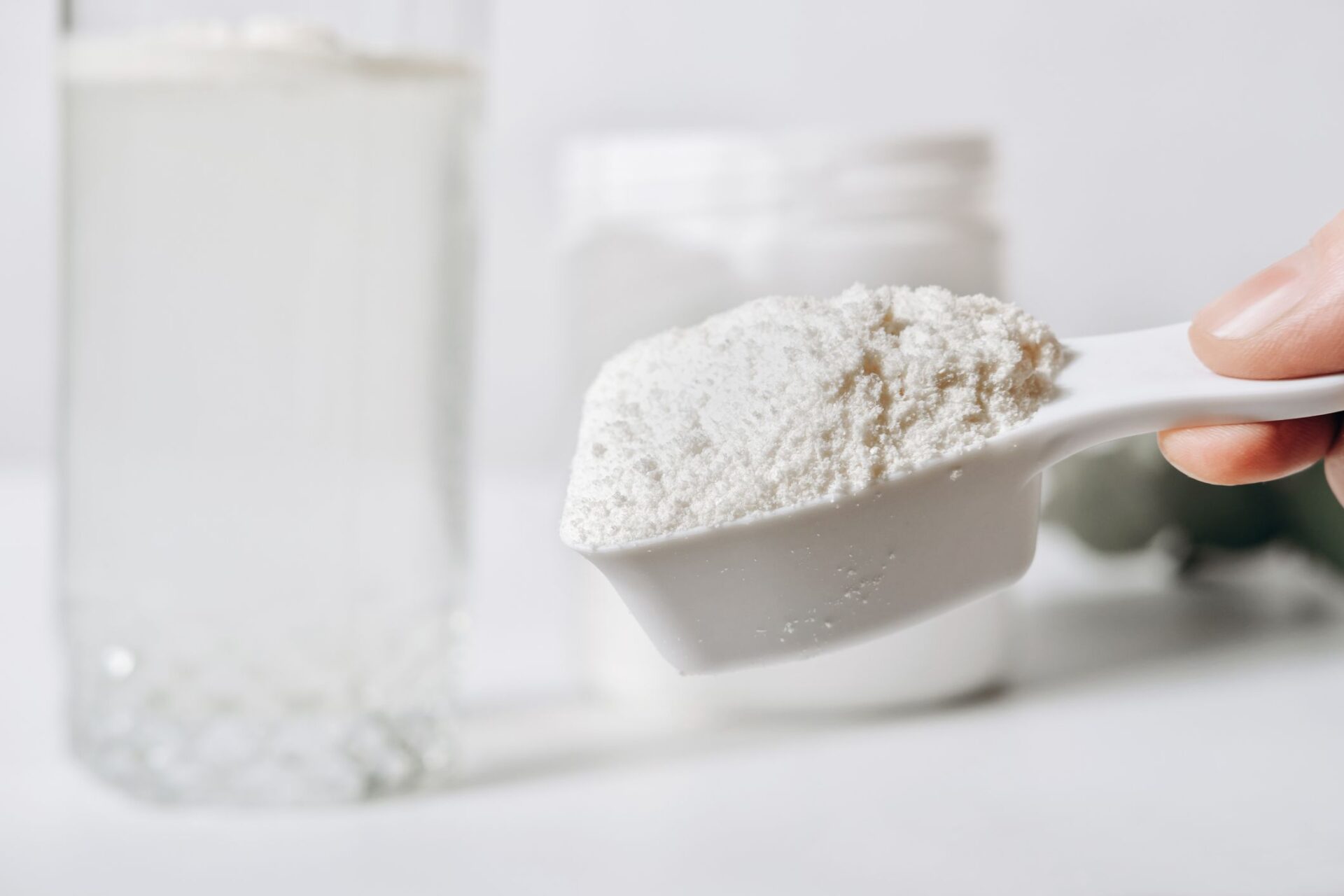
:max_bytes(150000):strip_icc():format(jpeg)/Health-GettyImages-ClearProteinVsWhey-6e778276b14546ce8a2bbeee29272479.jpg "Hand holding scoop of fish collagen")
- Both clear protein and traditional whey support muscle growth.
- Clear protein is lighter, often easier to digest, and lower in calories, making it ideal for those sensitive to lactose or who prefer a refreshing drink.
- Traditional whey is creamier, more filling, and slightly higher in calories, which can be helpful for satiety, bulking, or a budget-friendly option.
Clear protein and whey protein can both support muscle growth and daily protein intake, but differences in digestion, texture, and calories may influence which is best for you. Clear protein is often lighter and easier to digest, while traditional whey generally contains more calories and carbohydrates, which may support satiety and higher calorie needs.
Clear Protein Is Better for Digestion
If creamy protein shakes cause stomach discomfort, clear protein may be a better choice. This is because clear protein typically uses whey protein isolate, which is the most refined form of whey protein. The filtering process removes most of the fat, carbohydrates, and lactose, leaving a product that is about 90–95% protein.
Regular whey may contain small amounts of lactose and fat. Fat can slow digestion, and lactose may trigger symptoms in people sensitive to it, such as those with lactose intolerance or irritable bowel syndrome (IBS). However, whey protein is considered a fast-digesting protein overall and is well tolerated by many people.
If digestion is a top concern, here are some tips to keep in mind:
- Choose a clear protein without added sugars, sugar alcohols, or artificial sweeteners
- Read the label to check that the product contains whey protein isolate
- Start with a smaller serving to see how your body tolerates it before using a full scoop
Both Can Support Muscle Growth
Clear protein and traditional whey protein can support muscle growth. Both often contain whey, a high-quality protein that has been well studied and shown to support muscle repair and growth.
All types of whey provide essential amino acids, including leucine. Leucine helps trigger muscle protein synthesis. This is the process your body uses to repair and build muscle.
Traditional whey may be a better choice if you are trying to gain weight or “bulk up.” It has a creamy texture and slightly more calories. It also blends well with milk, nut butter, or other high-calorie ingredients.
Overall, total daily protein intake matters more than the type you choose. The best option is the one you enjoy and will use consistently.
Nutritional Comparison
Clear protein is usually made from whey protein isolate and is formulated to mix clear. Traditional whey protein is often made from whey protein concentrate, whey protein isolate, or a blend.
On average, here is how unflavored clear protein and traditional whey protein concentrate compare per scoop (30 grams).
| Nutrient | Clear Protein | Regular Whey |
| Calories | 100 | 120 |
| Fat | 0 grams (g) | 2 g |
| Protein | 30 g | 25 g |
| Carbohydrates | 0 g | 3 g |
The nutrition differences between clear protein and traditional whey protein are usually small and can vary a lot by brand.
Clear protein often has a little more protein per scoop and contains no fat or carbohydrates. Traditional whey usually has slightly more calories and small amounts of fat and carbs. However, for most people, these differences are minimal.
Taste, Texture, and Uses
Clear protein has a light, juice-like texture and typically comes in fruitier flavors. It mixes easily with water and feels refreshing, especially after workouts or being in hot weather. Many people prefer clear protein when they want something light that won’t feel heavy in their stomach.
Clear protein without added sugar can also be a good option for people who need to follow a clear liquid diet, such as in the days following weight loss surgery or before certain medical procedures.
Traditional whey protein has a thicker, creamier texture and a milkier taste. It is often used in smoothies, shakes, or recipes and can feel more filling. Whey protein works well as a snack or mini meal, especially when mixed with milk, nut butter, or fruit.
Whey protein isolate, including clear protein, is often more expensive than whey protein concentrate due to the additional processing required.
Who Each Protein Is Best For
Clear protein and whey protein have benefits. The best option depends on how your body tolerates them and your health goals.
Clear protein may be best for people who:
- Prefer a light, juice-like drink
- Experience stomach discomfort with creamy protein shakes
- Are sensitive to lactose
- Are monitoring their fat or carbohydrate intake
- Are temporarily following a clear liquid diet
Traditional whey protein may be best for people who:
- Prefer a creamy texture and milk-based flavors
- Want a more filling protein shake
- Prefer a budget-friendly option
- Are trying to gain weight or increase calorie intake
Keep in mind that many clear protein powders are made from whey isolate and still contain milk proteins. If you have a dairy allergy, you should avoid both clear protein and whey protein. Some clear protein products use plant-based protein isolates, so always check the label if you need to avoid dairy.