Fact checked by Nick Blackmer
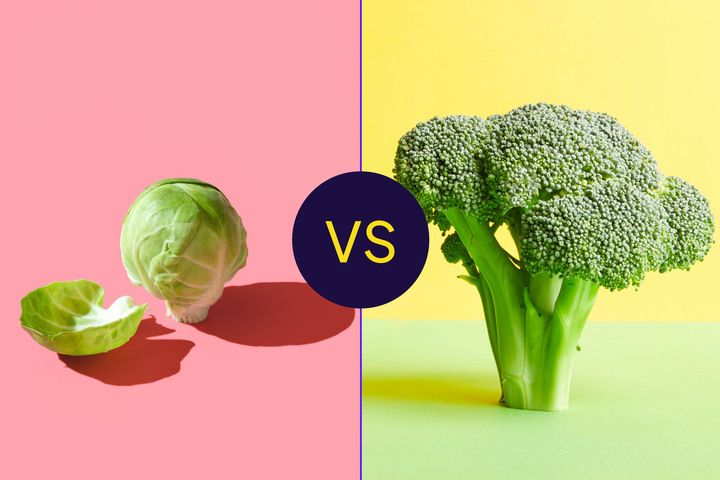
:max_bytes(150000):strip_icc():format(jpeg)/health-broccoli-vs-brussel-sprouts-template-1_720-c310b4225b194326b0f2e80f1478c02b.jpg "Comparison of a Brussels sprout and a broccoli on a split color background,")
Credit: Design by Health; Getty Images
- Broccoli and Brussels sprouts are cruciferous vegetables, meaning they offer antioxidants.
- Antioxidants eliminate free radicals in the body and may protect against cancer and heart disease.
- Eating both broccoli and Brussels sprouts can be part of a healthy, balanced diet.
Rich in antioxidants, both Broccoli and Brussels sprouts are great additions to your diet. However, does one pack more of a nutritional punch with these health-boosting compounds?
What Are Antioxidants?
Antioxidants are found in fruits, vegetables (including broccoli and Brussels sprouts), seeds, nuts, leaves, roots, and flours. They are crucial for your health.
Antioxidants’ job is to counteract free radicals, which are unstable molecules that build up from stress, poor diet, or a sedentary lifestyle.
However, when someone does not have enough antioxidants in their diet, the body can enter a state of oxidative stress, contributing to health issues.
“Antioxidants work by neutralizing these free radicals and reducing the damage that contributes to inflammation, accelerated aging, and chronic disease risk,” Cara Harbstreet, RD, LD, a Kansas City-based registered dietitian and the owner of Street Smart Nutrition, told Health.
There are lots of antioxidants out there. They are often sorted into two categories:
- Direct (exogenous) antioxidants such as vitamin C, vitamin E, carotenoids, and others step in right away to neutralize the free radicals in your body.
- Indirect (endogenous) antioxidants—including catalase and uric acid—work more behind the scenes by activating or inhibiting certain enzymes.
These categories are not always so neat. Curcumin (found in turmeric) is one example of an antioxidant that has both direct and indirect capabilities.
What Can Antioxidants Do for Your Health?
Science supports antioxidants as beneficial, but research is mixed on disease prevention.
Studies suggest antioxidants may decrease free radical damage linked to cancer. However, multiple randomized controlled trials have found antioxidant supplements had no protective effect on cancer risk.
Some trials suggest high doses of vitamin E and beta-carotene may increase cancer risk.
When it comes to heart disease, it’s a similar story. A 2022 study suggested antioxidants such as zinc and vitamins A, E, and C may “slow the development and progression” of heart disease.
A 2024 review concluded long-term heart benefits of antioxidants are "still lacking."
The Nutritional Breakdown: Broccoli vs. Brussels Sprouts
Both of these cruciferous vegetables have impressive antioxidant profiles.
One serving (85 grams) of raw broccoli contains:
- Vitamin C: 78 milligrams (mg)
- Vitamin E: 0.13 mg
- Niacin: 0.54 mg
- Beta-carotene: 79 micrograms (mcg)
- Lutein and zeaxanthin: 633 mcg
Meanwhile, one cup (88 grams) of raw Brussels sprouts has:
- Vitamin C: 75 mg
- Vitamin E: 0.77 mg
- Niacin: 0.66 mg
- Beta-carotene: 396 mcg
- Lutein and zeaxanthin: 1,400 mcg
Both vegetables contain other antioxidants, but the exact amounts are harder to pin down. These include antioxidants such as flavonoids and sulforaphane.
It’s Not Just Antioxidants
These vegetables contain other nutrients. In 88 grams of Brussels sprouts and 85 grams of broccoli, you will find:
- Fiber: About 3.3 g for Brussels sprouts, 2 g for broccoli
- Potassium: 342 mg for Brussels sprouts, 258 mg for broccoli
- Vitamin K: 156 mcg for Brussels sprouts, 87 mcg for broccoli
- Folate: 54 mcg for Brussels sprouts, 55 mcg for broccoli
“Fiber aids in digestion, improves satiety and blood glucose control, decreases cholesterol and heart disease risk, and promotes healthy gut bacteria,” Namrita Brooke, PhD, RDN, exercise physiologist, sports nutritionist, and cycling coach at BaseCamp, told Health.
“Potassium aids blood pressure and muscle contraction, and vitamin K supports bone and vascular health," said Brooke.
Folate is a B vitamin that helps the body make new cells.
Which Vegetable Comes Out on Top?
Choosing between broccoli and Brussels sprouts is not an easy task. Both are rich in antioxidants and are “excellent” additions to your diet.
Comparing Antioxidants Can Get Complicated
There’s no one vegetable that comes in first when it comes to antioxidant content—broccoli and Brussels sprouts have varying concentrations of each compound. Plus, each of these antioxidants does different things for the body.
For example, if you’re concerned about cardiovascular health, broccoli may be the better pick—it contains more heart-healthy antioxidants called flavonoids, specifically kaempferol and quercetin.
Brussels sprouts take the cake when it comes to beta-carotene and lutein and zeaxanthin concentrations—these antioxidants are known for supporting eye health.
Broccoli sprouts—very young broccoli plants—have the highest amount of sulforaphane, an antioxidant effective against carcinogens. It’s may also be a treatment for neurodegenerative diseases such as Alzheimer’s and Parkinson’s disease.
You can find sulforaphane in Brussels sprouts and broccoli. However, levels depend largely on how the vegetables are cooked.
The Best Choice? Have Them Both
All antioxidants are good for you. Rotating between both vegetables in your weekly meals could be the best way to cover all your nutritional bases. Your taste preferences, cooking style, and budget may also guide your choice.
Just make sure that some vegetable is ending up on your plate every day, whether it’s broccoli, Brussels sprouts, or something else. Adults need anywhere from 2-4 cups of vegetables daily, depending on age and sex.
“Since many of us struggle to eat enough servings of vegetables each day, try not to focus on the minutiae of optimizing every bite,” said Harbstreet.
Next Steps
- Learn more about antioxidants and their health effects by exploring credible sources.
- Add both broccoli and Brussels sprouts to your meals for antioxidants, vitamins, and minerals.
- Speak with a registered dietitian to determine which antioxidants are best for you.