DFL aims to yield wins in farm country now in GOP grip


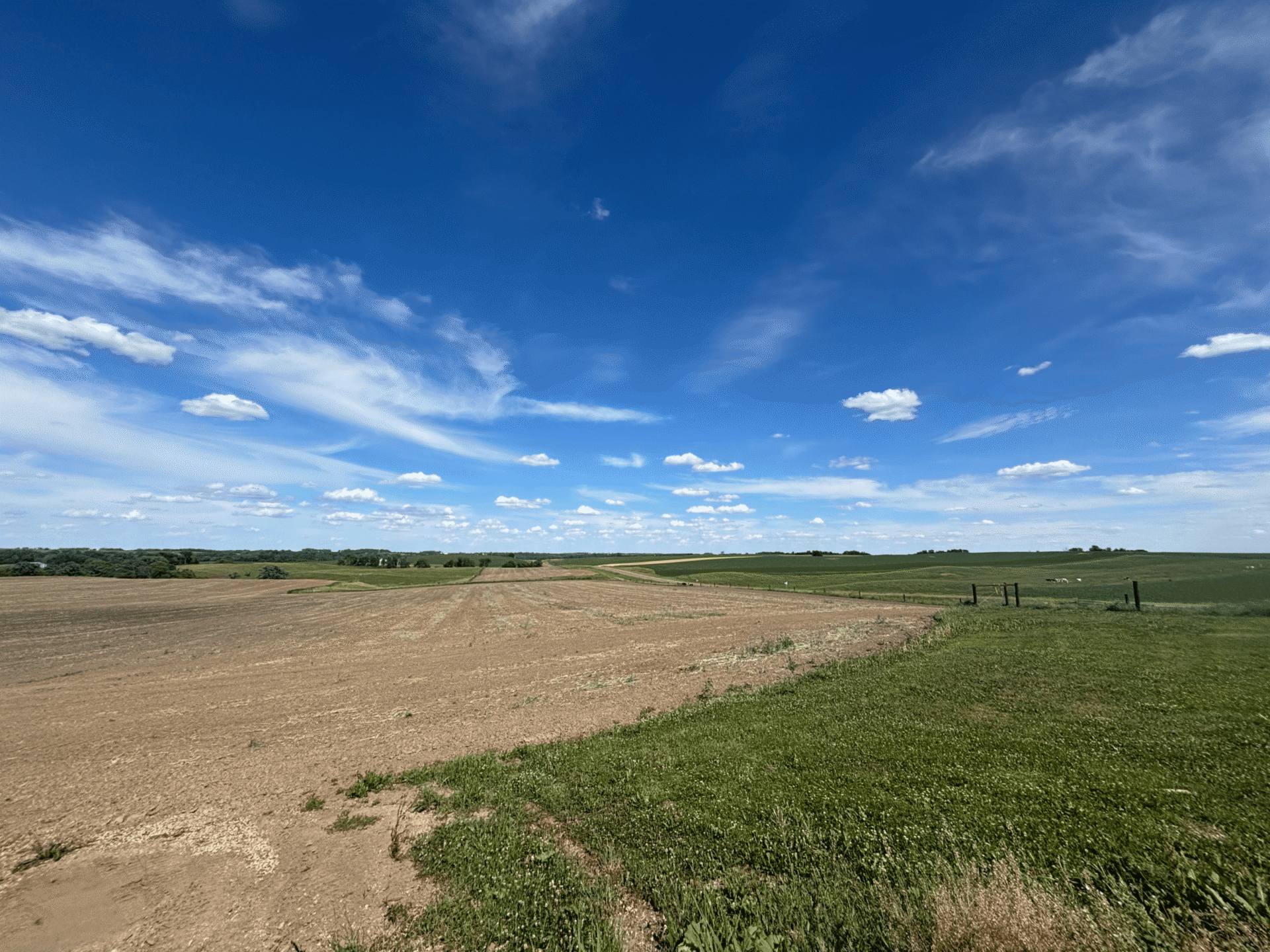
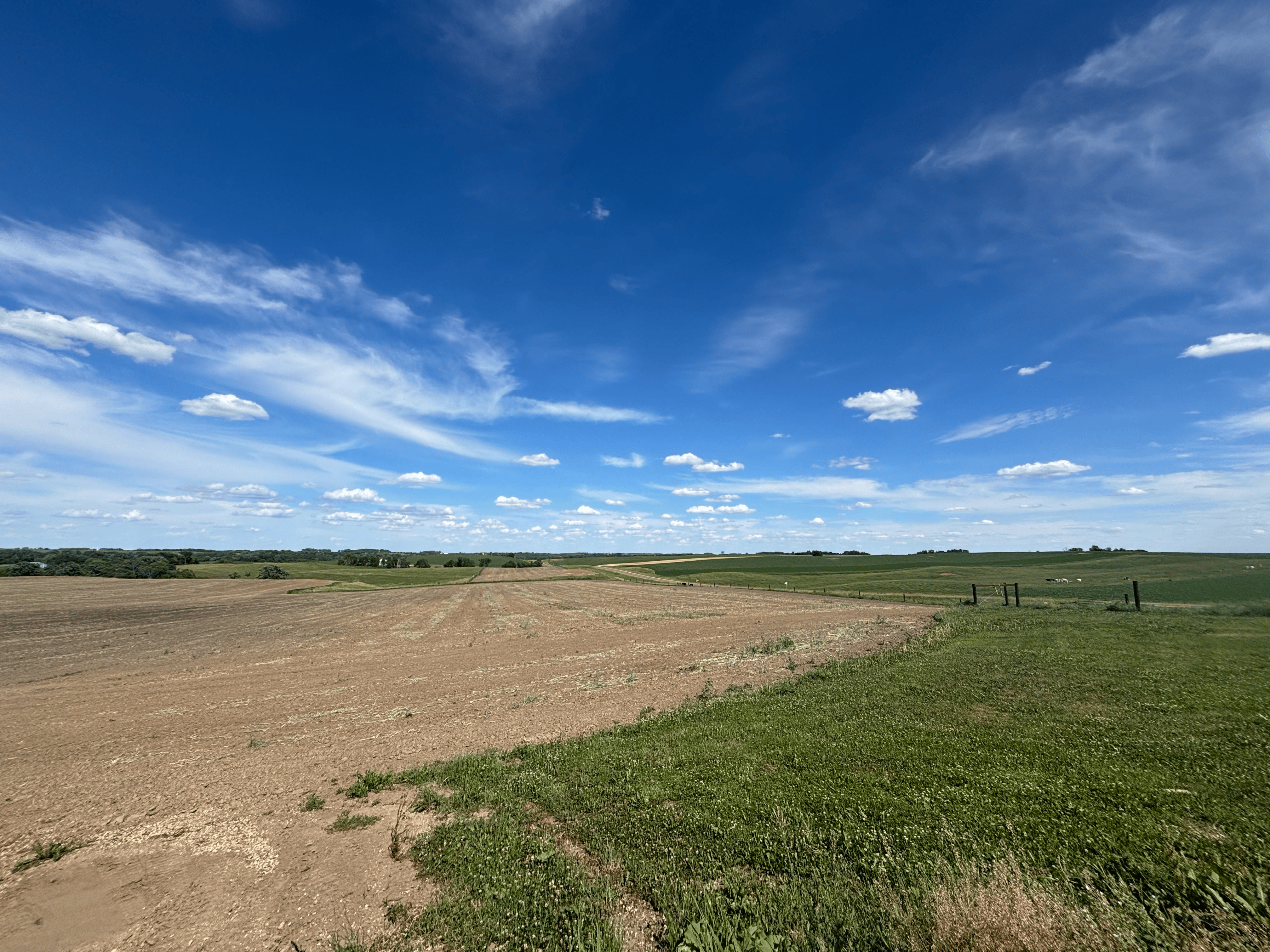
A farm in Zumbrota

Jason Lohmann had already worked a full day at the lumber yard, but his tasks for the day were hardly over.

“We're going to plant our sweet corn tonight, in that 42 acre field,” Lohmann said as he stood on the edge of his farm in Zumbrota.

Lohmann and his family have lived there for just six years, but he has been farming for a long time. He grew up doing it with his dad just down the road.

“I've been doing it for almost 40 years, some sort of farming,” he said. “I can't just give it up."

Lohmann is on the local school board. He’s served on the township and country education boards, too. And now, running as a Democrat, Lohmann is a first-time state Senate candidate in a district that's Republican territory. His farming background makes him a rarity in a party that isn't popular in rural Minnesota these days.

He’s among a handful of candidates Democratic-Farmer-Labor Party leaders are promoting this election cycle in a bid to court rural voters who once exemplified the "Farmer" in the party's name. With the Legislature closely divided, every race counts – even if it hasn’t been blue in decades.

Jason Lohmann stands inside his barn
DFL state Senate candidate Jason Lohmann stands inside his barn on his farm near Zumbrota on June 15.
Catharine Richert | MPR News

Lohmann said he's disappointed in the DFL because urban concerns have gotten the party's lopsided attention while voters in greater Minnesota have gravitated toward conservative candidates.

“They literally have ‘Farm-Labor’ in the name, and they have literally forgotten about farmers for the last 20 years,” Lohmann said. “They've decided that they've had their vote, they don't need to talk to them. And you hear that from people in the rural areas: ‘You guys don't want to talk to us. Why should we vote for you?’"

Striking a moderate tone

At its convention in Rochester last month– one that nodded to the DFL’s historic ties to rural voters in videos and in speeches from the stage — party chair Richard Carlbom acknowledged the DFL’s rural struggles.

In an interview, Carlbom said the party is trying to course correct now in a moment when President Donald Trump's tariff policies and high oil prices are handicapping farmers.

“In June of 2025 we deployed 10 organizers, and we put them in the rural parts of this state to make sure that we're working with organizing units in rural areas that want to stand up and get their neighbors involved,” he said. “We have to prove to farmers that we're ready to stand up and fight for them."
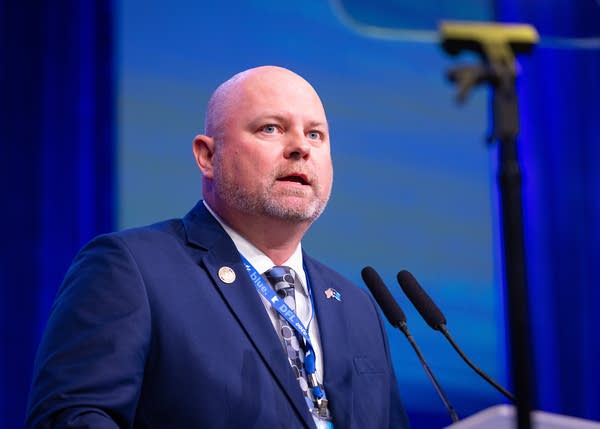
A man speaks into a microphone on stage.
Minnesota DFL Chairman Richard Carlbom speaks at the state DFL convention at the Mayo Civic Center Arena in Rochester Friday, May 29.
Ken Klotzbach for MPR News

It has been a hard fall for the DFL, with its legislative ranks now occupied mostly by lawmakers from urban and suburban areas as well regional centers like Duluth, Rochester and St. Cloud. Farmers are even more scarce in the party’s ranks.

Fifty years ago, the DFL had plenty of state lawmakers who identified themselves as having farm occupations — 25 of them, according to the Minnesota Legislative Reference Library. That same legislative session, 17 Republicans identified as farmers. The high-water mark in the past half-century was 28 for DFLers and 28 for Republicans during different sessions.

The library’s data show the complement of farmers in the Legislature has steadily dwindled in recent decades for both parties but more dramatically for DFLers. In the current Legislature, there are 11 lawmakers who list an agricultural occupation. All are Republican.

Pinched family farmers

Mark Legvold is a retired military veteran and farms corn and soybeans near Northfield. He’s also a first time state Senate candidate running as a Democrat, and said he deeply understands the financial pressures facing farmers because he’s living them, too.

“There’s been a 30 percent increase in the price of fertilizer. That alone is enough to crush most family farms,” he said. “And then we start buying diesel fuel to put into our tractors and our equipment; that also is up about 30 percent because of an unnecessary war in the Middle East. This is pinching family farmers but it's also pinching every single person in Minnesota's economy, whether they're in ag or not.”
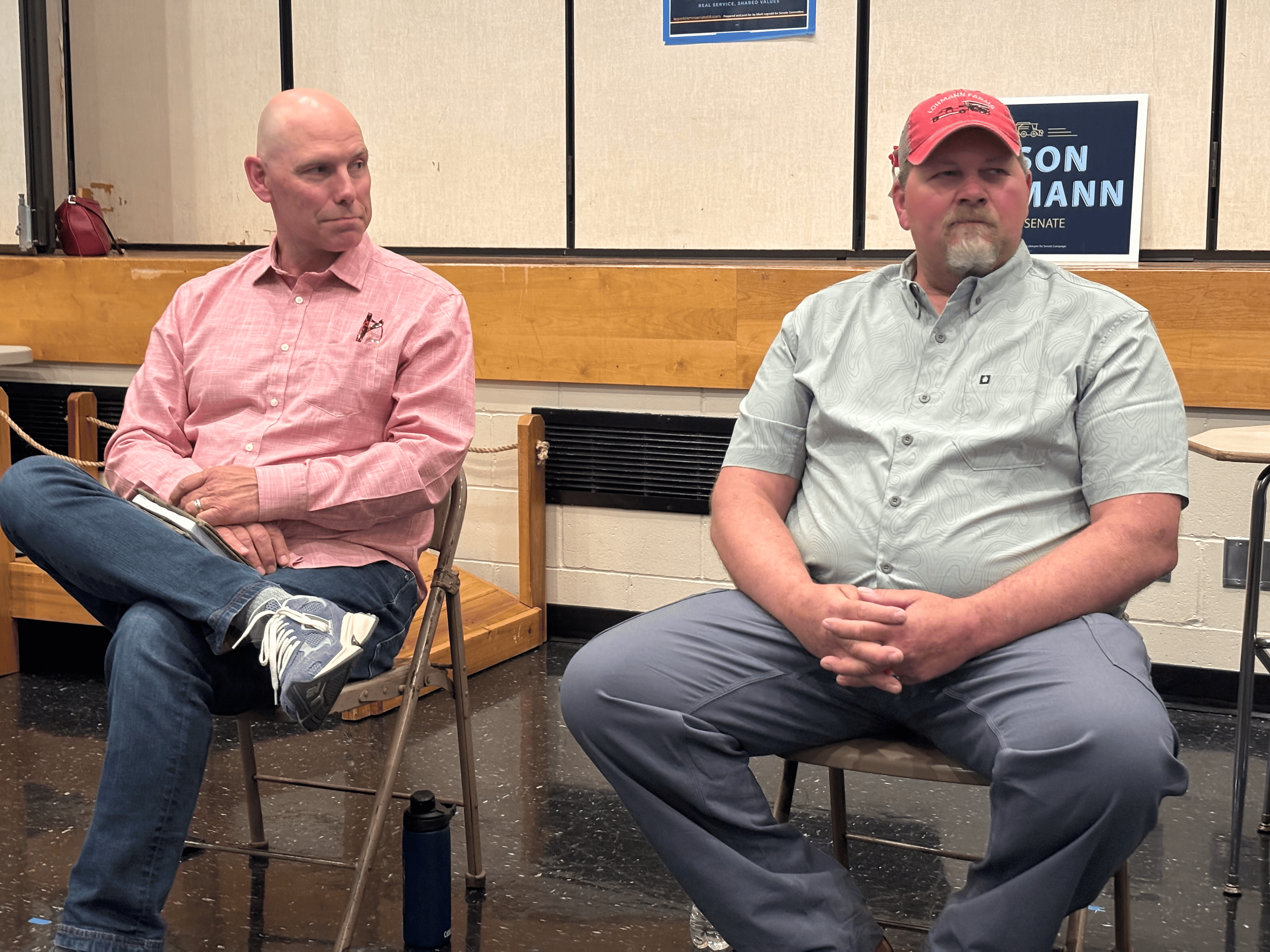
Mark Legvold and Jason Lohmann sitting down
Left to right: DFL state Senate candidates Mark Legvold and Jason Lohmann, both farmers, listen to voters at a rural issues listening session on Monday, May 20, in Cannon Falls. The DFL is touting candidates like Legvold and Lohmann this election cycle in an effort to win back rural voters.
Catharine Richert | MPR News

Legvold is striking the same moderate tone as Lohmann on the campaign trail, and is promising voters he will work to build bridges in a very polarized Legislature.

"What we need to do is get away from legislation from the extremes on either end of the party. That's where most people reside in Minnesota,” he said. “It’s one of those things that getting up to St. Paul, bringing those voices. Compromising can be rewarded."

Out of touch

Republican Jeremy Munson of Lake Crystal is running for the state Senate in the area not far from Mankato. He has long argued that Democrats are out of touch with rural voters. He farms, too, and during a prior stint in the Minnesota House, he co-founded the RFL — short for Republican Farmer Labor caucus.

"The DFL really hasn't represented farmers in generations,” he said. He said Democrats have supported too many operational regulations and impediments to pass farms down to future generations.

Munson said that DFLers who pledge moderation on the campaign trail often don’t deliver on that promise once they arrive in St. Paul.

First Congressional candidate Jeremy Munson
Candidate Jeremy Munson stands to deliver his closing remarks at Farm Fest in rural Morgan, Minn., Tuesday, August 2, 2022.
Jackson Forderer for MPR News file

"These candidates believe they can work across the aisle, and they can say, "I'm going to be an independent voice.’ But they get up to St. Paul and it [is] a party line vote on everything,” he said.

Back on his farm, Lohmann admitted running as a Democrat in a reliably red district is hard.

When he’s talking to voters, he empathizes with the financial pressures they’re facing, whether they farm or not. Voters, he said, want their lawmakers to make life more affordable, to fund schools, to lower taxes and to stamp out fraud in public programs — all concerns that Lohmann shares.

While the Senate DFL caucus touts candidates like him, he said they haven't delivered much financial or logistical support yet. Their messaging also makes him uneasy because he’s worried it will lead to more political division.

“I hate them using farmers as a pawn,” he said. “It's 'Farmers are hurting, farmers this, farmers that.' Well, to me, everybody's hurting. This party needs to try and figure out how to get back to their roots and include everybody.”


Source link

Leave a Reply

Subscribe to Our Newsletter

Get our latest articles delivered straight to your inbox. No spam, we promise.

Recent Reviews


CyberArk Vault – Table of Content

Cyberark Vault

CyberArk has made significant investments in designing and incorporating security features directly into our products. Furthermore, CyberArk has published a Digital Vault Security Standard that defines policies and configurations to assist customers in reducing attack surfaces.CyberArk customers can greatly boost the safety of ones Privileged Account Security Solution by utilizing built-in network security and complying to the CyberArk Digital Vault Security Standard. This workable alternative brief focuses on the security features and functionality placed directly into the CyberArk Privileged Account Security Solution.

Cyberark Vault Security Measures

Data at Rest Encryption in a Hierarchical Structure:

The CyberArk Digital Vault, which contains a highly secure database that stores privileged account credentials, access control policies, credential management policies, and audit information, is at the heart of the CyberArk Privileged Account Security Solution.CyberArk has engineered a multi-layered encryption hierarchy which uses FIPS 140-2 compliant encryption to protect both the Digital Vault database and the data stored within it. AES-256 keys are used for symmetric encryption, and an RSA-2048 key pair is used for asymmetric encryption.

     Become a CyberArk Certified professional  by learning this HKR CyberArk Training!

Each file and safe in the Digital Vault database is encrypted uniquely with a truly random encryption key. CyberArk uses a unique server key and a unique recovery key at the top of the key hierarchy. The server key is needed to initiate the Digital Vault, so this encryption key must be saved inside a hardware security module in full compliance with CyberArk Digital Vault Security Standard (HSM).The recovery best approach is a one-of-a-kind private key that is only needed in the event of a system recovery. This key must be kept in a physical safe.

Any PKCS #11-compliant HSM, such as Thales nShield, SafeNet Hardware Security Modules, and Utimaco CryptoServer, can be integrated with CyberArk solutions.

Data in Transit Session Encryption:

When sensitive data is transmitted between systems, it may be exposed to attackers eavesdropping on the network.CyberArk ensures that all data to and from the Digital Vault is encrypted in transit to prevent these attackers from capturing privileged account credentials from intercepted traffic.To implement security privileged account information because it is communicated among CyberArk components, Digital Vault employs a proprietary protocol. The proprietary session encryption mechanism is FIPS 140-2 compliant and uses a unique AES-256 session key.With such a level of encryption, intruders within the network could be allowed to see traffic moving between CyberArk elements, but the traffic will be unintelligible and therefore meaningless to the attacker.

[ Related Article: cyberark training in Hyderabad ]

CyberArk Training

  • Master Your Craft
  • Lifetime LMS & Faculty Access
  • 24/7 online expert support
  • Real-world & Project Based Learning

Hardening the Digital Vault Server:

To reduce the attack surface of the server on which the Digital Vault software will run, it must be hardened as much as possible. CyberArk has conducted extensive security research and testing on the potential attack vectors of the Digital Vault, as well as the potential functionality implications associated with hardening the Digital Vault server.

Based on this research, CyberArk has created a set of configurations that harden the Digital Vault server in such a way that the attack surface is reduced while the software’s functionality is not jeopardized. The Digital Vault software is designed to automatically harden its host server to CyberArk to ensure that all customers apply these configurations correctly and eliminate the risk of human error.The Digital Vault software installation program contains tightening processes for the operating system (OS) that are based on Microsoft Security Compliance Manager (SCM) server hardening recommendations. The Digital Vault software then applies extra system configurations which further thicken the operating system in order to meet the CyberArk Digital Vault Server Security Standard.

These settings deactivate all unneeded facilities, limit server access, and limit access to the Digital Vault operating system. These OS hardfacing procedures and system setups, when combined, help decrease the security risks of the Digital Vault server, which serves to preserve the extremely sensitive privileged account details hidden on this machine.

In addition to a Digital Vault server tightening setups, CyberArk offers hardening configurations for Privileged Account Security Solutions other less major elements. These configurations aid in reducing the attack surface of CyberArk elements which have established mutual trust with Digital Vault. These element processes contribute to further lowering the attack of the surfaces.

Firewall Configuration:

Along with securing the server OS, it is critical to limit traffic from and to the Digital Vault server. Malicious actors frequently look for any probable way to gain access to a target site and exfiltrate information, and unneeded open ports just boost the Digital Vault server’s security risks.To deal with this problem, the Digital Vault technology allows use of the sponsor machine’s designed Security Settings and preconfigure its initiatives instantly.

The Digital Vault software manually configures the Windows Firewall on it’s own host to confirm and allow only traffic sent for Digital Vault service, that also pays attention to TCP port 1858 (by default), and to restrict all the other traffic. All traffic to / from this provider is encoded using just an open source CyberArk protocol, maintaining the security of all authorized traffic.

This firewall policy is purposefully constrictive, decreases the Digital Vault server’s security risks, and has been shown to remove numerous attack vectors. Particularly, the CyberArk research & design teams constantly watch Microsoft Security Press releases to keep informed on potential new threats and vulnerabilities, and they routinely evaluate the Digital Vault server against such new threats.Most dangers revealed in the monthly Microsoft Security Bulletin boards have no effect on the Digital Vault server, owing in major measure to the stringent firewall configurations, as the current firewall setups now also prevent several of the security holes.

Want to know more about CyberArk , visit here CyberArk Tutorial.

Cyber Security & SIEM Tools, cyberark-vault-description-0, Cyber Security & SIEM Tools, cyberark-vault-description-1

Subscribe to our YouTube channel to get new updates..!

Mechanisms of Access Control

Some clients tend to completely separate duties among those responsible for keeping the Digital Vault server and those accountable for the processes for whom the bank details are protected inside the Digital Vault for security reasons.Customers are advised by CyberArk to separate administrative tasks. Customers, on the other hand, have the authority to determine whether these stringent policies are ideal and reasonable for their specific organizations.

During the implementation of the Privileged Account Security Solution, administrators can install their user access model that meets the security and/or security requirements of their company.

Whenever the solution is installed to purely isolate administrative tasks, vault administrators that handle the Digital Vault server do not have direct exposure to the vault safes’ credentials or system logs. Extra configurable access control systems inside the vault itself assist vault administrators in segregating duties among safe proprietors and application developers, reducing the possibility of illegal users.

One of the most significant advantages of safeguarding and tracking privileged accounts was its willingness to see who accessed how these accounts and what has been done mostly during privileged sessions. However, this data is only useful if companies can guarantee the audit trail’s integrity.

Privileged account audit logs and session recordings are stored in the built-in database of the Digital Vault, which is designed with strict controls in place to limit both access and actions. Information stored in the Digital Vault’s database can only be accessed by specific, authorized users, and it cannot be changed or deleted, even by a CyberArk administrator.For these control system, when an IT admin removes or interferes with just an audit trail on the a target network, the CyberArk solution can keep a correct and comprehensive record of events.

Authentication Technology Support:

When storing the keys to the IT kingdom in a single central repository, access to that repository must be tightly controlled. Each Digital Vault user must be authenticated, and CyberArk strongly advises that all access to the Digital Vault be protected by multi-factor authentication.The CyberArk Privileged Account Security Plan is intended to work with a range of security features out of the box, such as LDAP, RADIUS, PKI, RSA SecurID, Duo Security 2FA, and SecureAuth IdP.

By securing the CyberArk solution to multi-factor authentication, companies can not only safeguard access to classified information contained inside the Digital Vault, but also efficiently broaden authentication methods to all account holders for whom the credentials were also stored inside the Digital Vault – on-premises, in the cloud, or in DevOps ecosystems.

Server Monitoring for Digital Vaults:

Like with any mission-critical facilities, companies must check the situation for overall health as well as suspicious behaviour. CyberArk advised clients not to use third-party tracking software on the Digital Vault server in conformance with the Digital Vault Server Security Standard.Third-party software installation frequently necessitates loosening security policies on the Digital Vault server, and loosening security policies can increase the system’s attack surface.

To empower monitoring without modifying the Digital Vault server’s security measures, CyberArk offers its very own robust monitoring system based on SNMP alerts, and a command prompt utility which allows users to ask the Digital Vault server to find the information necessary to measure the system.

The Digital Vault is proposed to facilitate security incident tracking by allowing the production of audit logs via the syslog procedure and integrating out of the box with largest SIEM solutions such as HPE ArcSight SIEM Platform, RSA Security Analytics, and Splunk.

Furthermore, CyberArk’s privileged data analysis and vulnerability management skills could be used to measure access to sensitive accounts on the Digital Vault server, such as organisational OS accounts and vault administrator account holders, in order to identify and alert to possible threats rapidly.

Prepare for CyberArk  Interview? Here Are Top CyberArk Interview Questions and Answers!

CyberArk Training

Weekday / Weekend Batches

Conclusion

As a security firm first and probably most important, CyberArk designs its products with a “security-first” mentality. The Digital Vault software is specifically engineered with a number of business characteristics and setups which help to reduce the security risks of its server computer, thereby enhancing the safety of privileged account information.

CyberArk has indeed generated the Digital Vault server Provides Security document to serve consumers in keeping a large overall security continuing to follow setup, that also describes what regulations and setups are necessary to keep a tiny attack surface.

In addition to current verification and evaluating, CyberArk publishes its goods to autonomous testing and safety verification institutions. As a consequence the CyberArk Privileged Account Security System has received ISO 9001, Common Criteria, and United States Department of Defense UC APL certifications as well.

Related Articles: 


Source link