DFL aims to yield wins in farm country now in GOP grip


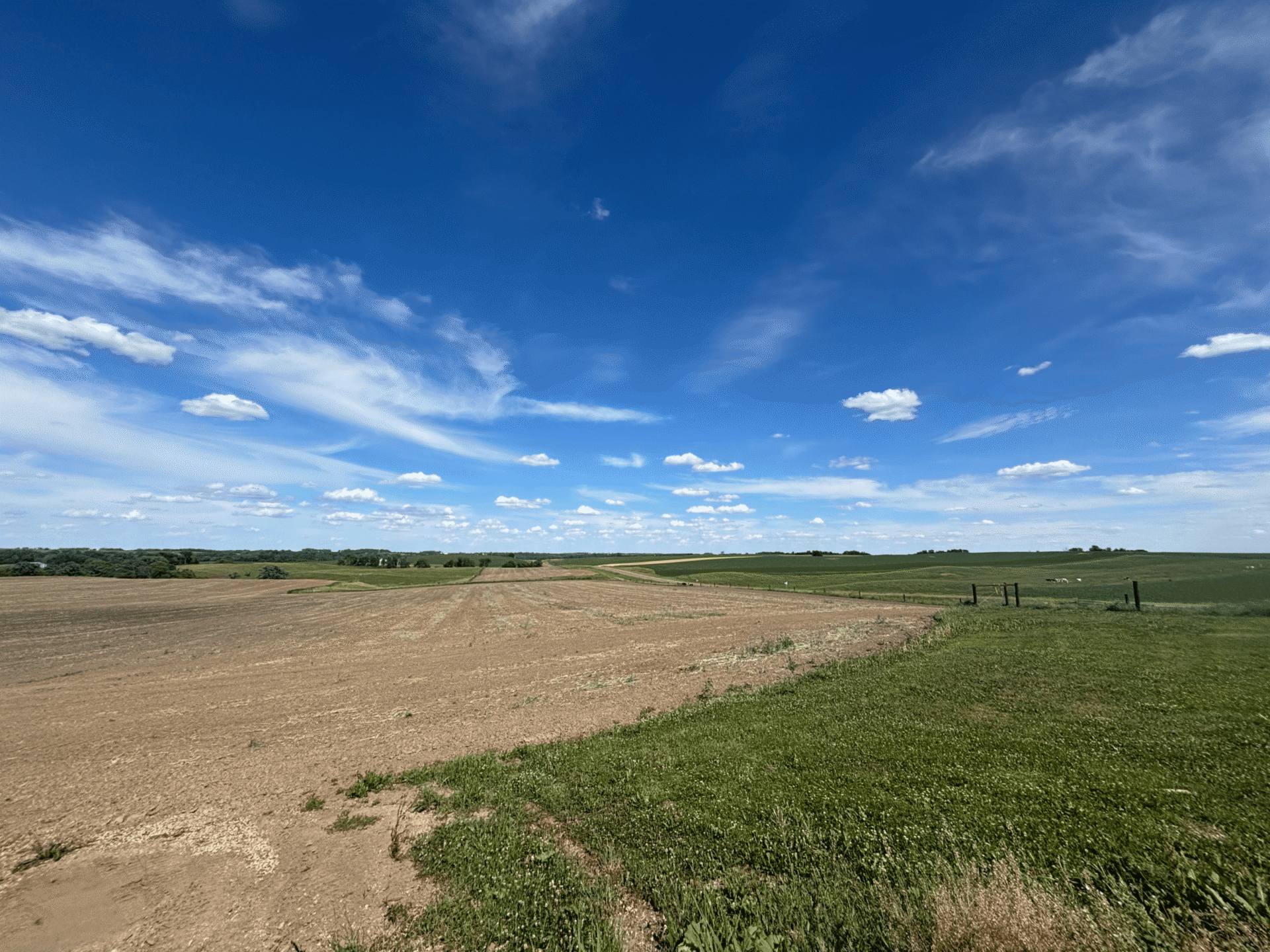
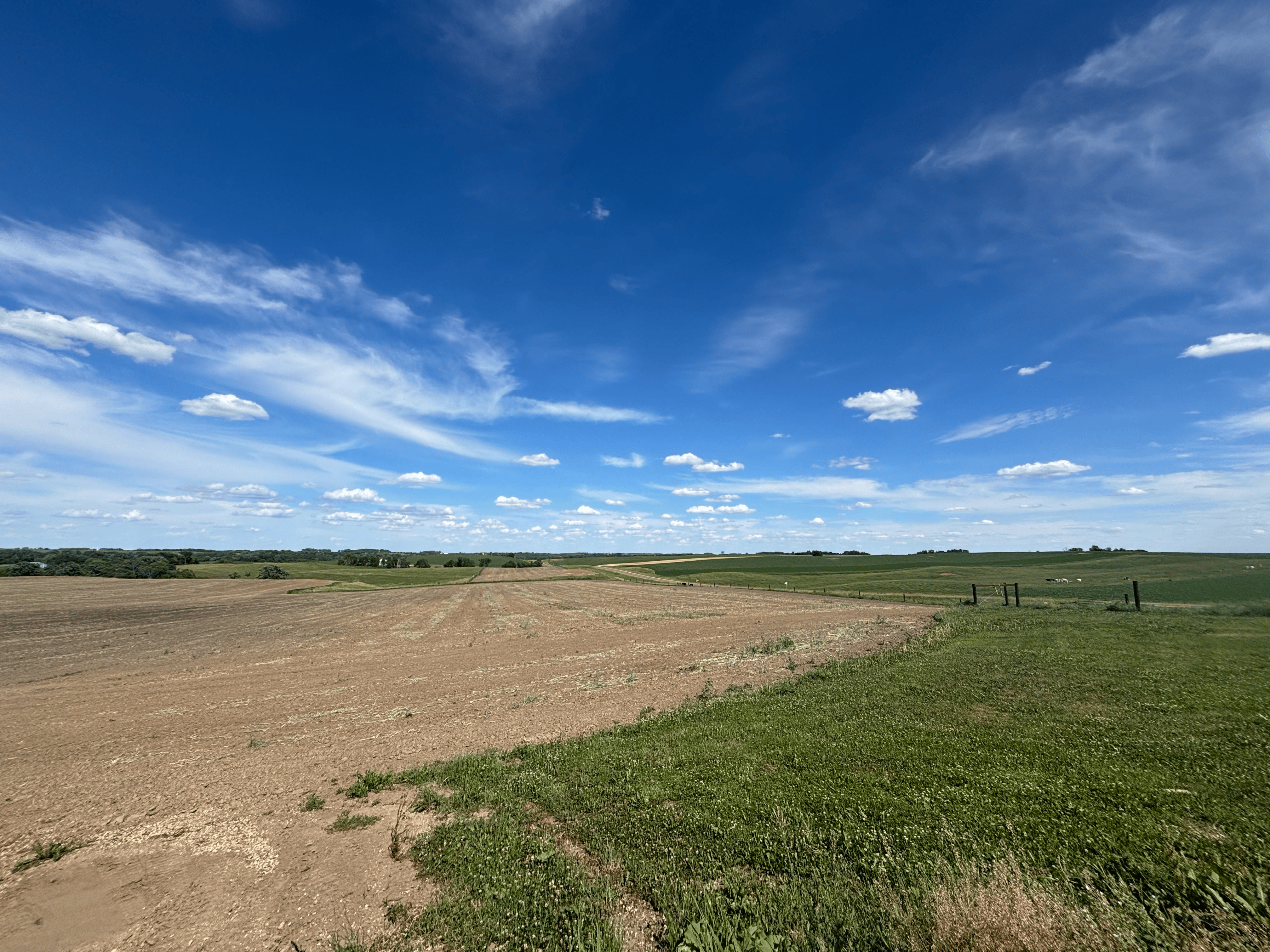
A farm in Zumbrota

Jason Lohmann had already worked a full day at the lumber yard, but his tasks for the day were hardly over.

“We're going to plant our sweet corn tonight, in that 42 acre field,” Lohmann said as he stood on the edge of his farm in Zumbrota.

Lohmann and his family have lived there for just six years, but he has been farming for a long time. He grew up doing it with his dad just down the road.

“I've been doing it for almost 40 years, some sort of farming,” he said. “I can't just give it up."

Lohmann is on the local school board. He’s served on the township and country education boards, too. And now, running as a Democrat, Lohmann is a first-time state Senate candidate in a district that's Republican territory. His farming background makes him a rarity in a party that isn't popular in rural Minnesota these days.

He’s among a handful of candidates Democratic-Farmer-Labor Party leaders are promoting this election cycle in a bid to court rural voters who once exemplified the "Farmer" in the party's name. With the Legislature closely divided, every race counts – even if it hasn’t been blue in decades.

Jason Lohmann stands inside his barn
DFL state Senate candidate Jason Lohmann stands inside his barn on his farm near Zumbrota on June 15.
Catharine Richert | MPR News

Lohmann said he's disappointed in the DFL because urban concerns have gotten the party's lopsided attention while voters in greater Minnesota have gravitated toward conservative candidates.

“They literally have ‘Farm-Labor’ in the name, and they have literally forgotten about farmers for the last 20 years,” Lohmann said. “They've decided that they've had their vote, they don't need to talk to them. And you hear that from people in the rural areas: ‘You guys don't want to talk to us. Why should we vote for you?’"

Striking a moderate tone

At its convention in Rochester last month– one that nodded to the DFL’s historic ties to rural voters in videos and in speeches from the stage — party chair Richard Carlbom acknowledged the DFL’s rural struggles.

In an interview, Carlbom said the party is trying to course correct now in a moment when President Donald Trump's tariff policies and high oil prices are handicapping farmers.

“In June of 2025 we deployed 10 organizers, and we put them in the rural parts of this state to make sure that we're working with organizing units in rural areas that want to stand up and get their neighbors involved,” he said. “We have to prove to farmers that we're ready to stand up and fight for them."

A man speaks into a microphone on stage.
Minnesota DFL Chairman Richard Carlbom speaks at the state DFL convention at the Mayo Civic Center Arena in Rochester Friday, May 29.
Ken Klotzbach for MPR News

It has been a hard fall for the DFL, with its legislative ranks now occupied mostly by lawmakers from urban and suburban areas as well regional centers like Duluth, Rochester and St. Cloud. Farmers are even more scarce in the party’s ranks.

Fifty years ago, the DFL had plenty of state lawmakers who identified themselves as having farm occupations — 25 of them, according to the Minnesota Legislative Reference Library. That same legislative session, 17 Republicans identified as farmers. The high-water mark in the past half-century was 28 for DFLers and 28 for Republicans during different sessions.

The library’s data show the complement of farmers in the Legislature has steadily dwindled in recent decades for both parties but more dramatically for DFLers. In the current Legislature, there are 11 lawmakers who list an agricultural occupation. All are Republican.

Pinched family farmers

Mark Legvold is a retired military veteran and farms corn and soybeans near Northfield. He’s also a first time state Senate candidate running as a Democrat, and said he deeply understands the financial pressures facing farmers because he’s living them, too.

“There’s been a 30 percent increase in the price of fertilizer. That alone is enough to crush most family farms,” he said. “And then we start buying diesel fuel to put into our tractors and our equipment; that also is up about 30 percent because of an unnecessary war in the Middle East. This is pinching family farmers but it's also pinching every single person in Minnesota's economy, whether they're in ag or not.”
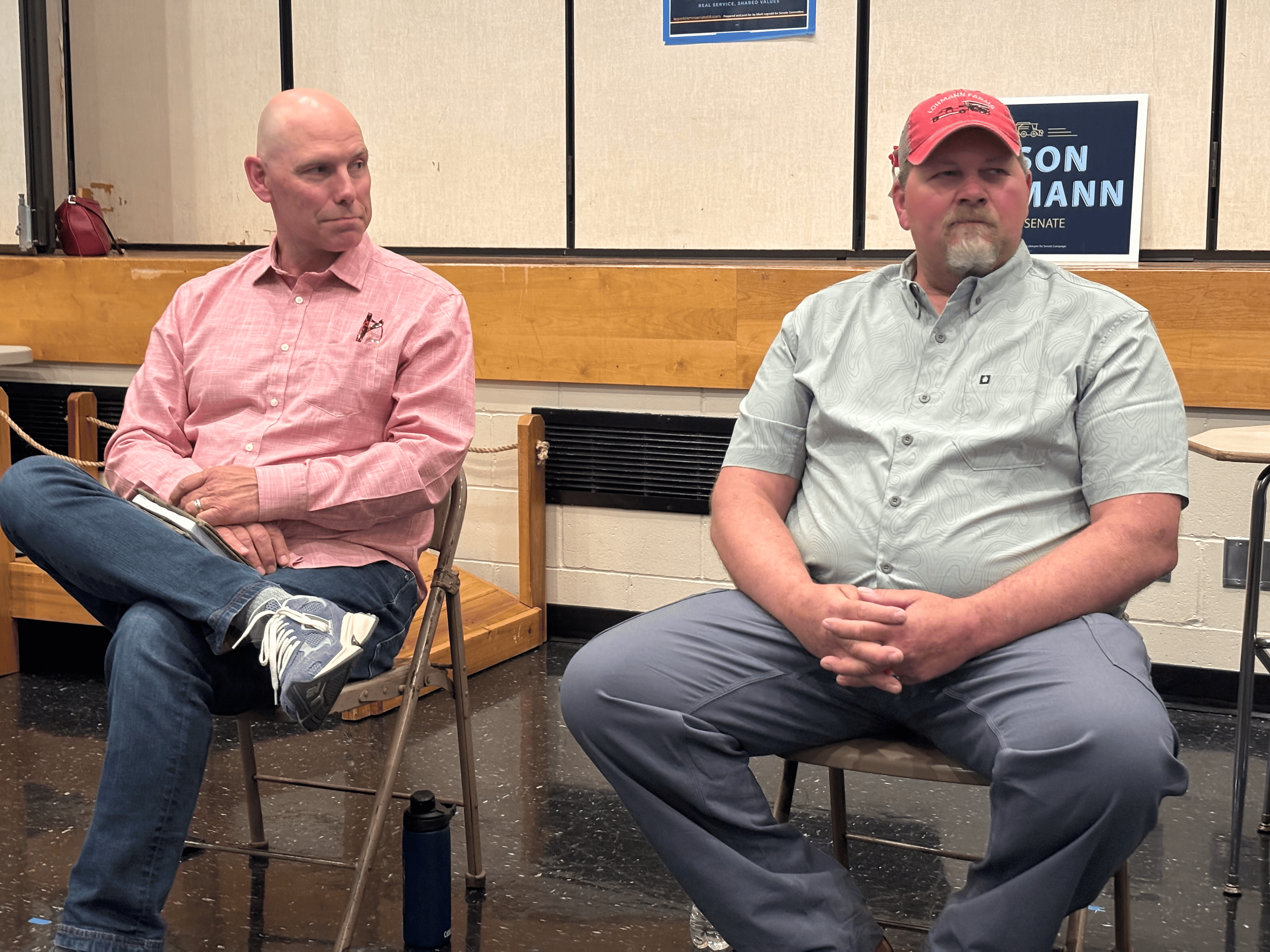
Mark Legvold and Jason Lohmann sitting down
Left to right: DFL state Senate candidates Mark Legvold and Jason Lohmann, both farmers, listen to voters at a rural issues listening session on Monday, May 20, in Cannon Falls. The DFL is touting candidates like Legvold and Lohmann this election cycle in an effort to win back rural voters.
Catharine Richert | MPR News

Legvold is striking the same moderate tone as Lohmann on the campaign trail, and is promising voters he will work to build bridges in a very polarized Legislature.

"What we need to do is get away from legislation from the extremes on either end of the party. That's where most people reside in Minnesota,” he said. “It’s one of those things that getting up to St. Paul, bringing those voices. Compromising can be rewarded."

Out of touch

Republican Jeremy Munson of Lake Crystal is running for the state Senate in the area not far from Mankato. He has long argued that Democrats are out of touch with rural voters. He farms, too, and during a prior stint in the Minnesota House, he co-founded the RFL — short for Republican Farmer Labor caucus.

"The DFL really hasn't represented farmers in generations,” he said. He said Democrats have supported too many operational regulations and impediments to pass farms down to future generations.

Munson said that DFLers who pledge moderation on the campaign trail often don’t deliver on that promise once they arrive in St. Paul.

First Congressional candidate Jeremy Munson
Candidate Jeremy Munson stands to deliver his closing remarks at Farm Fest in rural Morgan, Minn., Tuesday, August 2, 2022.
Jackson Forderer for MPR News file

"These candidates believe they can work across the aisle, and they can say, "I'm going to be an independent voice.’ But they get up to St. Paul and it [is] a party line vote on everything,” he said.

Back on his farm, Lohmann admitted running as a Democrat in a reliably red district is hard.

When he’s talking to voters, he empathizes with the financial pressures they’re facing, whether they farm or not. Voters, he said, want their lawmakers to make life more affordable, to fund schools, to lower taxes and to stamp out fraud in public programs — all concerns that Lohmann shares.

While the Senate DFL caucus touts candidates like him, he said they haven't delivered much financial or logistical support yet. Their messaging also makes him uneasy because he’s worried it will lead to more political division.

“I hate them using farmers as a pawn,” he said. “It's 'Farmers are hurting, farmers this, farmers that.' Well, to me, everybody's hurting. This party needs to try and figure out how to get back to their roots and include everybody.”



Source link

Leave a Reply

Subscribe to Our Newsletter

Get our latest articles delivered straight to your inbox. No spam, we promise.

Recent Reviews


CyberArk Documentation – Table of Content

Introduction to CyberArk

Everyone will agree that cybersecurity is a critical issue in enterprises because cyberattacks are continually wreaking havoc and generating massive losses. In the case of privileged accounts, the requirement for cybersecurity is considerably greater. The reason for this is that the majority of advanced cyber-attacks target privileged accounts. Most businesses, however, are unable to safeguard their privileged accounts due to their insufficient infrastructure and unskilled workforce. Many businesses don’t even have a cyber-security preparation strategy in place to protect their credentials, privileged accounts, and secrets, among other things.

CyberArk is a security product with a significant capability to address an organization’s cybersecurity needs. Enterprises don’t need any more infrastructure resources or administration with CyberArk. Rather, the CyberArk technology enables businesses to protect their privileged accounts and credentials in a cost-effective manner.

Become a CyberArk Certified professional  by learning this HKR  CyberArk Training

CyberArk is primarily a security tool for password management and the protection of privileged accounts. It secures privileged accounts in businesses by automatically keeping track of passwords. You may keep and manage data using the CyberArk tool by rotating the credentials of all critical accounts so that you can effectively guard against malware and hacking threats. CyberArk is employed in areas such as energy, healthcare, financial services, and retail, among others because it is a highly protective instrument. CyberArk has such a good reputation that it is employed by almost half of the Fortune 500 firms throughout the world.

What is meant by a Privileged Account?

A privileged account is one that has access to information such as  PHI information, credit card numbers, and social security numbers, among other things. However, the definition of a privileged account in a larger sense is determined by the type of privileged data in the business. Domain admin accounts, privileged user accounts, Local admin accounts, application accounts, service accounts, and emergency accounts are examples of privileged accounts in businesses.

Become a CyberArk Certified professional  by learning this HKR  CyberArk Training In Hyderabad  !

CyberArk Training

  • Master Your Craft
  • Lifetime LMS & Faculty Access
  • 24/7 online expert support
  • Real-world & Project Based Learning

CyberArk History

CyberArk is an Israeli corporation with headquarters in Petah. It has offices in EMEA, Asia Pacific, and Japan, and also a US headquarters in Newton. Udi Mokady, a graduate of Boston University’s Metropolitan College, created it in 1999.

The company has concentrated on assisting corporations in protecting themselves from cyber-attacks since its start, and it is today one of the most well-known cybersecurity firms in the world. Cyber-Ark grew from a start-up to a public limited corporation that was listed on the NASDAQ stock exchange.

Want to know more about CyberArk , visit here CyberArk Tutorial.

It has gone on an acquisition binge in the previous six years, purchasing companies including Vaultive, Conjur Inc, and Viewfinity. Viewfinity and Conjur Inc, both situated in Massachusetts, have interests in privilege management and application control technologies, and also cloud services. As of Q4 2019, CyberArk had revenue of $343 million and a headcount of 1,380.

Business using CyberArk
When it comes to which industries use CyberArk the most, the computer software business is at the top, while human resources are at the bottom. A comprehensive list of industries that use the CyberArk tool may be found here.

  • Computer Software
  • IT & Services
  • Financial Services
  • Banking
  • Insurance
  • Hospital and Health Care
  • Retail
  • Utilities
  • Computer Hardware
  • Human Resources

Benefits of CyberArk

CyberArk, as a leader in cybersecurity solutions, offers tremendous value to businesses. The following are some of the advantages:

  • Simple credential tracking: You don’t need to manually keep track of passwords with CyberArk Privileged Account Security Solution. Instead, you should simply keep track of CyberArk credentials. That should be enough. CyberArk will handle everything else.
  • Increased time consumption: As CyberArk is equipped with automated password management features, password management will consume less time.
  • Insufficient redundancy in policy updates: There will be no redundancy in updating policies because CyberArk allows administrators to manage and update privilege policies for users centrally.
  • Password updates are propagated across applications: CyberArk centralizes database password management and ensures that password changes are propagated to all dependent applications and services. As a result, the possibility of faulty processes is eliminated. Every password change also eliminates the risk of revenue loss.

Aside from the aforementioned features, CyberArk also provides management and protection of all privileged accounts and SSH keys, and also controlling access to privileged accounts, initiating and monitoring privileged sessions, managing application and service credentials, enabling compliance with audit and regulatory requirements, and seamless integration with enterprise systems.

HKR Trainings Logo

Subscribe to our YouTube channel to get new updates..!

Architecture of CyberArk 
At its core, the CyberArk Privileged Access Security system is made up of numerous layers that provide extremely secure solutions for storing and sharing passwords in businesses. Authentication, Access Control, Firewall, Encryption, and VPN are examples of these levels.

The following are the primary components of the architecture:

  • Storage Engine: The data is stored in the storage engine, which is sometimes known as a server or vault. It also guarantees that data is secure and that access is validated and regulated.
  • Interface: The interface’s job is to communicate with the storage engine while also granting access to applications and users. The vault protocol, which is a secure CyberArk protocol, is used to communicate between the storage engine and the interface.

Components in CyberArk

CyberArk is made up of the following components:

Digital Vault: The Digital Vault is the most secure location on the network for storing sensitive information. It is easy to use because it is pre-configured.

  • Web Access to Password Vault: This is a web interface that allows privileged credentials to be managed. You can use this Cyberark components to establish new privileged passwords as part of password management. The interface includes a dashboard that allows you to monitor the security solution’s operation. It also shows the passwords that have been managed in a graphical format.
  • Manager of Central Policy: This component replaces old passwords with new ones, changing the old ones automatically. It also performs reconciliation and password verification on remote systems.
  • Session Manager with Privileges: The Privileged Session Manager component allows privileged accounts to be accessed from a single location. It also allows you to launch privileged sessions from a control point.
  • Web Privileged Session Manager: This component allows businesses to take a unified approach to secure access to a variety of applications, services, and cloud platforms.
  • Privileged Threat Analytics: The Privileged Threat Analytics component of the CyberArk Privileged Access Security (PAS) platform continuously monitors how privileged accounts are used. It also keeps an eye on accounts that aren’t maintained by CyberArk to see if there are any signs of a threat.
  • Utility to Upload Passwords: By uploading several passwords to the Privileged Access Security system, speeds up and automates the vault setup process.
  • SDK Interfaces: Application Server Credential Provider, Application Password Provider, and Application Password SDK are the SDK interfaces. The Application Password SDK, for instance, eliminates the requirement for password storage in applications by keeping them centrally in the Privileged Access Security solution. On the other hand, the Application Password Provider is a local service that accepts credentials from the Cyberark vault and provides instant access to them. The Application Server Credential Provider interface automates and secures the management of application server credentials stored in XML files.

Implementation of CyberArk 
CyberArk implementation can be done in phases. Security and business need analysis, scope definition, solution launch and execution, risk mitigation plan, and companywide execution are some of the suggested processes. The following provides a basic overview of these phases:

  • Analysis of business and security requirements: You must first establish the unique security requirements, and also analyze the risks and outline the controls, in this initial phase. You must also identify and prioritize privileged accounts, identify and prioritize high-value and important assets, and describe timelines and controls. 
  • Definition of scope: You must establish the scope, and also the stakeholders and their roles, as part of the second phase.
  • Solution execution and launch: Following the project kick-off meeting,  solution execution, solution design, and architectural design should take place in the third phase.
  • Plan for Risk Mitigation: As a pilot, a small group of accounts must be created, and concerns must be detected.
  • Execution at a company level: After successfully implementing all of the essential factors in the initial deployment, you can scale the privileged account security program across the enterprise using the same procedure. You can also formalize the success measures as part of this phase.

CyberArk Training

Weekday / Weekend Batches

Conclusion

In this tutorial, we have covered all the topics from the basic understanding of CyberArk and Private accounts to the CyberArk architecture, components, and implementation. We have also discussed the benefits of using CyberArk and the list of business which use CyberArk.

Related Articles: 

1.CyberArk Vault

2.CyberArk IAM

3. CyberArk Training in Chennai


Source link