Fact checked by Nick Blackmer
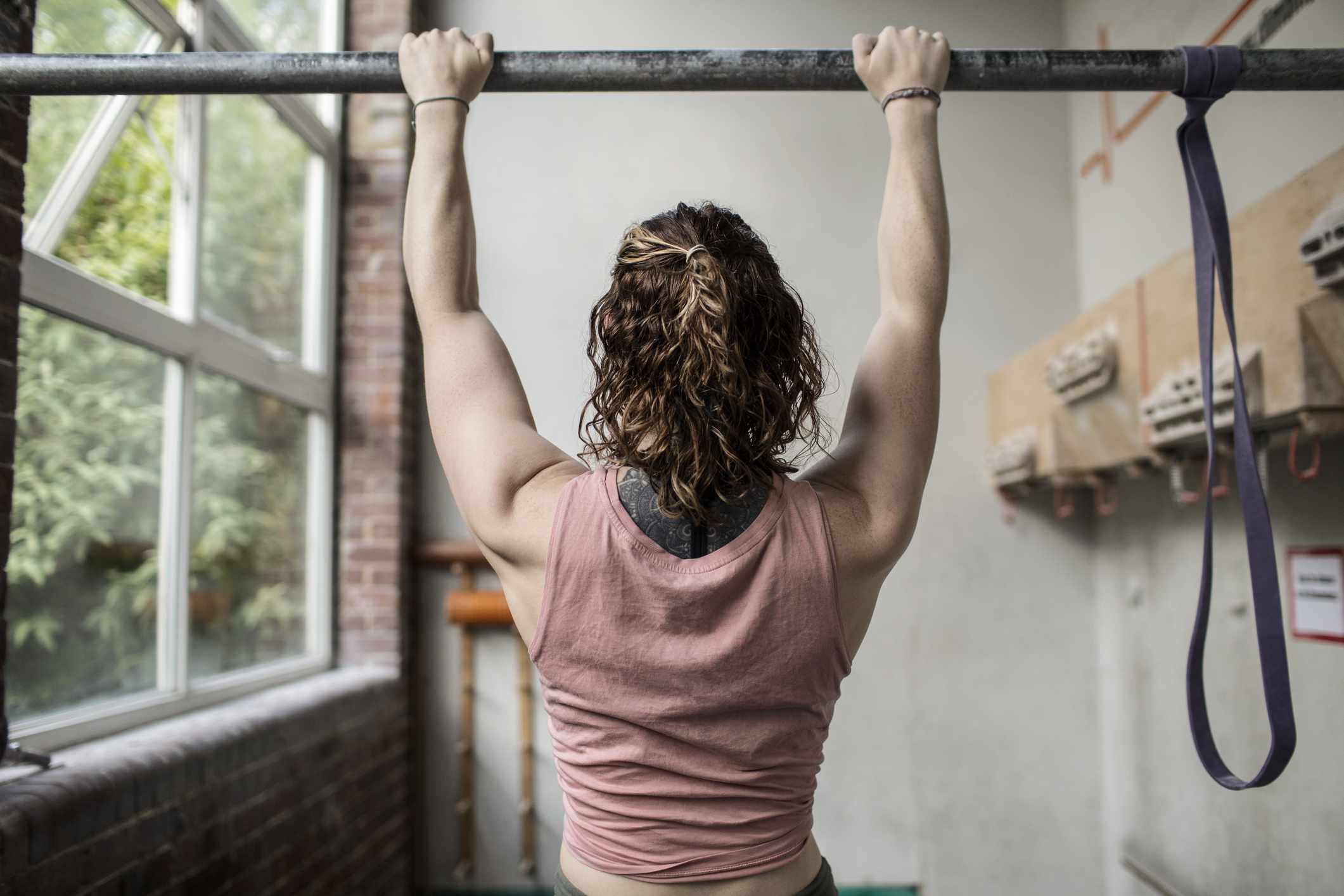
:max_bytes(150000):strip_icc():format(jpeg)/Health-GettyImages-DeadHang-999ad6ccfdc64f9794f45533421e040a.jpg "Muscular young woman in pink tank top working out at bar in gym")
- Dead hangs build grip strength, shoulder mobility, and core endurance, which can support posture, daily function, and healthy aging.
- Most adults can hold a dead hang for 30 to 60 seconds.
- Improving dead hang time requires consistent practice, gradual progression, and complementary strength exercises.
The dead hang—hanging from a bar—is a tough fitness challenge, particularly for your shoulders, core, and even your hands. But hanging on the regular can bring body-wide benefits. So, how long should you hold a dead hang for? And how does your duration stack up against others?
What Does a Dead Hang Actually Measure?
To perform a dead hang exercise, you should hold on to a bar with a pronated grip—palms facing away from your body—with your arms fully extended. Your core has to fire up to keep you still and prevent swinging. It’s a full-body exercise that relies on your back, core, and grip strength for good execution.
“Dead hangs help build grip strength and shoulder mobility, as well as endurance in your shoulder girdle, back, and abdominal wall,” Francine Delgado-Lugo, CPT, co-founder of FORM Fitness in Brooklyn, told Health.
Building upper-body and core strength and endurance is important at any age, but grip strength can be particularly helpful as you get older. In fact, good grip strength has been linked to a longer lifespan, improved daily functioning, and lower chances of hospital admission.
The muscular endurance and shoulder stability benefits of dead hangs also have direct carryover in everyday life, according to Delgado-Lugo. It helps you maintain good posture when sitting, walking, or running, hold and carry heavy objects, and even breathe better.
How Long Can Most People Hold a Dead Hang?
Unlike more common exercises like crunches or push-ups, there’s not much standardized data on dead hangs regarding "normal" hold times.
Still, according to Delgado-Lugo’s experience training clients, the following ranges can be considered benchmarks for folks 20-50:
- Beginner: 30 seconds
- Intermediate: 30–60 seconds
- Advanced: 60+ seconds
And the following ranges can apply to people 50+:
- Beginner: 10–20 seconds
- Intermediate: 20–45 seconds
- Advanced: 45+ seconds
How long you can hold a dead hang depends on lots of factors, including grip strength, body weight, shoulder mobility, and familiarity with the movement. Other factors, like bar diameter or even how much your hands sweat, can also affect the result.
What If You Can’t Hang for Very Long?
If you’re not used to holding or lifting your own body, this can be a hard exercise to do. These are some of the limiting factors:
- Grip fatigue
- Less back strength or the ability to pull
- Lack of shoulder mobility
- Sweaty hands
Mental toughness also comes into play with this exercise: “It’s a great exercise for stamina—it can be incredibly uncomfortable, so it requires the capacity to work past that discomfort,” Delgado-Lugo said.
How To Improve Your Hang Time
If you want to improve your dead hang time, the best way is to practice more frequently, aiming to gradually add a few extra seconds. “This is a strength endurance exercise, so the way to build it is cumulatively,” she said.
- Step 1: After a warm-up, test yourself to see how long you can hold your hang. That’ll be your beginning time.
- Step 2: Work on dead hangs at least twice a week. Aim to hold your tested duration in all three sets of that workout. When you’re able to do that, increase your hold time by 5–10 seconds the following week, said Delgado-Lugo. Then keep building from there.
- Step 3: Continue building grip and upper-body strength in other parts of your workout, too. Farmer carries and heavy pulling exercises like rows and row variations, barbell deadlifts, and Romanian deadlifts are great choices.
If you can’t hold a dead hang with proper form—no swinging—or without your hands or forearms giving out, try an assisted hang: Grab a bar low enough that your feet can touch the ground while your heels remain elevated. Once you can comfortably hold from there, you can start to implement the protocol above.
Are Dead Hangs Actually Good for You?
Dead hangs have lots of carryover into everyday life: Grip strength helps you carry heavy things, open jars, and brace your body to absorb a fall, said Delgado-Lugo. Grip strength is linked to lots of aspects of healthy aging, so dead hangs may help keep you functional and independent for the long haul. Plus, improving the endurance of the muscles worked in dead hangs can help better your posture for everything from sitting to walking to running.
Hanging from a bar can also simply feel good. It can loosen tight upper-body muscles, which can improve shoulder mobility.
However, dead hangs might not be a good choice for everyone. If you have pre-existing injuries to your hands, wrists, or shoulders, dead hangs might exacerbate them.
If you can’t hold a hang with proper form, you may be better off working on farmer carries to improve your grip and abs exercises to strengthen your core before trying to hang, according to Delgado-Lugo.