the future of finance and accounting will be built on trust, innovation, and opportunity


Alfred Ramosedi, FCMA, CGMA, elected as CIMA President and Co-Chair of the Association of International Certified Professional Accountants

25 June 2026, Kuala Lumpur – Alfred Ramosedi, FCMA, CGMA, has been elected as the 93rd President of The Chartered Institute of Management Accountants (CIMA) at the Institute’s Annual General Meeting on 24 June 2026. He will also serve as the 11th Co-Chair of the Association of International Certified Professional Accountants (the Association), the global alliance formed by CIMA and the American Institute of CPAs (AICPA).

During his presidential year, Alfred will focus on shaping the future of finance and accounting, elevating trust as the profession’s most valuable currency, building an AI-enabled profession, and championing opportunity for the next generation of talent. He will work alongside Association Chair Jan Lewis, CPA, CGMA, to lead the profession worldwide through a period of rapid change and redefine its role in business and society.

Dr Matthew Hansard, FCMA, CGMA, was elected CIMA Deputy President at the same meeting.

On taking up the role, Alfred Ramosedi, FCMA, CGMA, CIMA President and Co-Chair of the Association, said: “The choices we make today – how we earn trust, embrace technology, lead through uncertainty and complexity, and invest in the next generation – will shape the future of finance and accounting. If we get those choices right, we will not simply keep pace with change; we will define it.”

“I take on this role with humility and a strong sense of responsibility,” he continued. “I am committed to serving our members, students, and the wider profession, and working with them to create a future grounded in trust, innovation, and opportunity.”

Venkkat Ramanan, FCMA, CGMA, Regional Vice President, Asia Pacific, at AICPA & CIMA said: “Alfred’s leadership comes at an important time for Asia Pacific, where businesses and finance professionals are navigating rapid transformation. We look forward to welcoming him to Singapore and Kuala Lumpur in August, where he will engage with members, including CIMA’s Regional Engagement Groups (REG) in this region, and stakeholders as we work together to build a future grounded in trust, innovation and opportunity.”

Alfred is a business leader with over three decades of experience across South Africa’s financial and professional services sector. He began his career at Nedbank Limited in 1995, where he held senior and executive roles over a 15-year period. In 2008, Alfred was appointed Managing Executive of Nedbank Private Bank, before moving to ABSA Bank in 2010 and African Bank in 2012. In 2017, he became CEO of Bayport Financial Services – South Africa, part of a leading financial services company specialising in responsible consumer lending and financial wellness programmes in developing markets.

A long-standing CIMA volunteer, Alfred joined the CIMA Gauteng Branch as Secretary in 1998 and was appointed President of the South Africa Area Committee in 1999. He played a key role in establishing the Southern Africa Regional Board in 2000 and served as its inaugural Chairman from 2002 to 2009.

In 2009, Alfred was co-opted onto CIMA Council and served on the Global Markets, Marketing, and Professional Standards Committees until he stepped down in 2011. In recognition of his leadership and contributions to the Institute, Alfred was awarded the CIMA Silver Medal in 2013.

He rejoined CIMA Council in 2023 and joined the Board of Directors of the Association of International Certified Professional Accountants. For the past year, Alfred served as CIMA Deputy President and is currently a member of CIMA’s Appointments Committee and the CGMA Exam Board.

Alfred lives in Johannesburg, South Africa, with his wife, and has three adult children. He enjoys reading, cycling, and running.

– ENDS –

About The Chartered Institute of Management Accountants

Founded in 1919, The Chartered Institute of Management Accountants® (CIMA®) is the world’s leading and largest professional body of management accountants. CIMA is a founding body of the Association of International Certified Professional Accountants; its members and candidates operate in more than 150 countries and territories, working at the heart of business — in industry, commerce, the public sector, and not-for-profit organisations. CIMA works closely with employers and sponsors leading-edge research, constantly updating its professional qualification and professional experience requirements to ensure it remains the employer’s choice when recruiting financially trained business leaders.

About the Association of International Certified Professional Accountants, AICPA, and CIMA

The Association of International Certified Professional Accountants (the Association) advances the reputation, employability, and quality of CPAs, CGMA designation holders, and accounting and financial professionals globally. Founded in 2017 by the AICPA and CIMA, it represents 574,000 AICPA and CIMA members, candidates, and registrants in more than 150 countries and territories, advocating for the public interest and business sustainability on current and emerging issues.


Source link

Leave a Reply

Subscribe to Our Newsletter

Get our latest articles delivered straight to your inbox. No spam, we promise.

Recent Reviews


SD Tables in SAP:

The SAP SD module is built on tables and uses them to store data. We’ll go through SAP SD tables and their relationships in this tutorial. SAP SD tables are critical storage for corporate data connected to SAP ERP software’s sales and distribution activities. The SD tables are basically divided into three parts:

These are the SD module’s building blocks, and it’s only natural to address tables in this sequence. Please look at the slides to see how the tables from different blocks were connected. Being an expert in SAP SD necessitates an understanding of these relationships. 

 Become a SAP SD Certified professional by learning this HKR SAP SD Training !

1) Sales

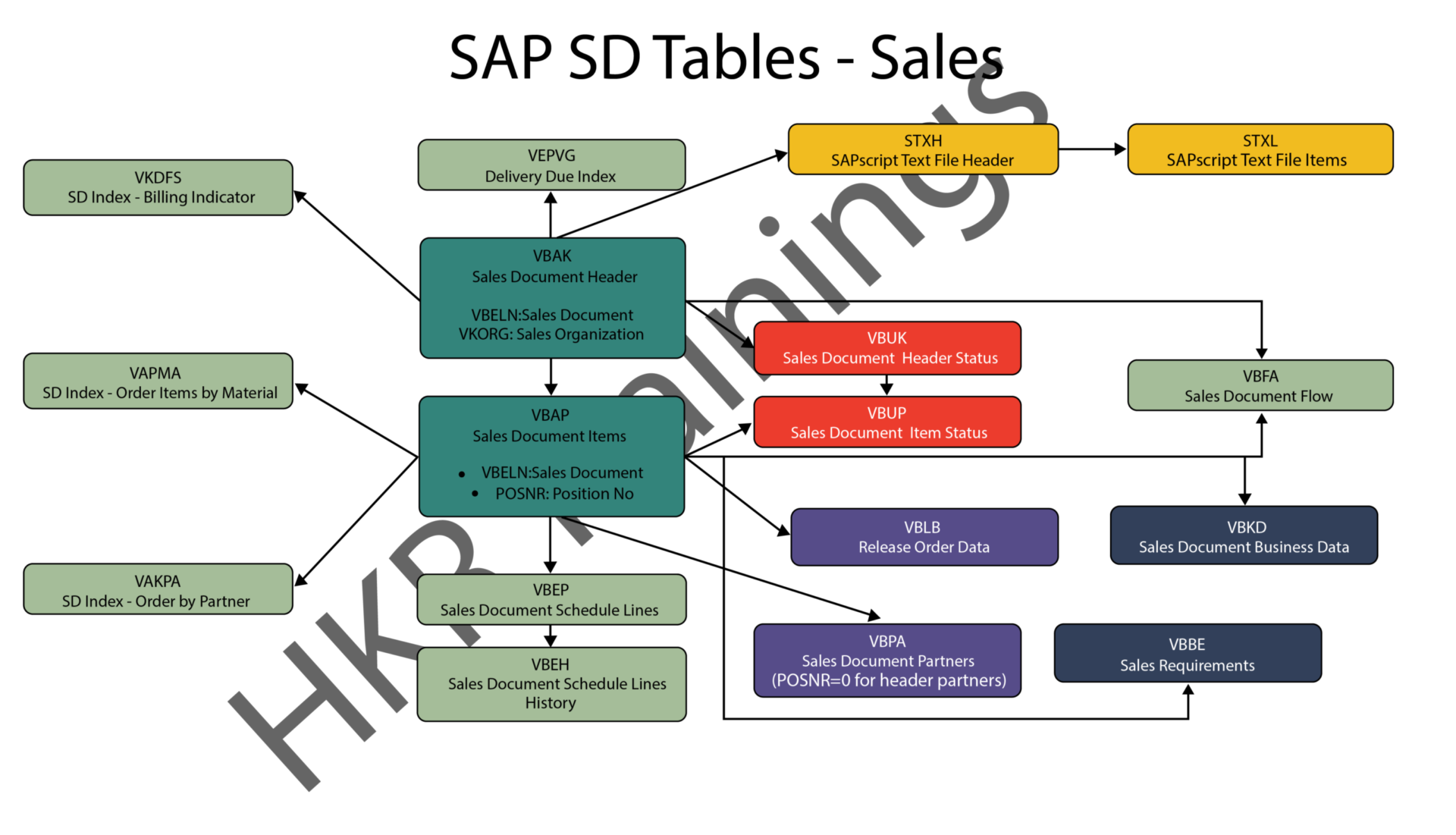
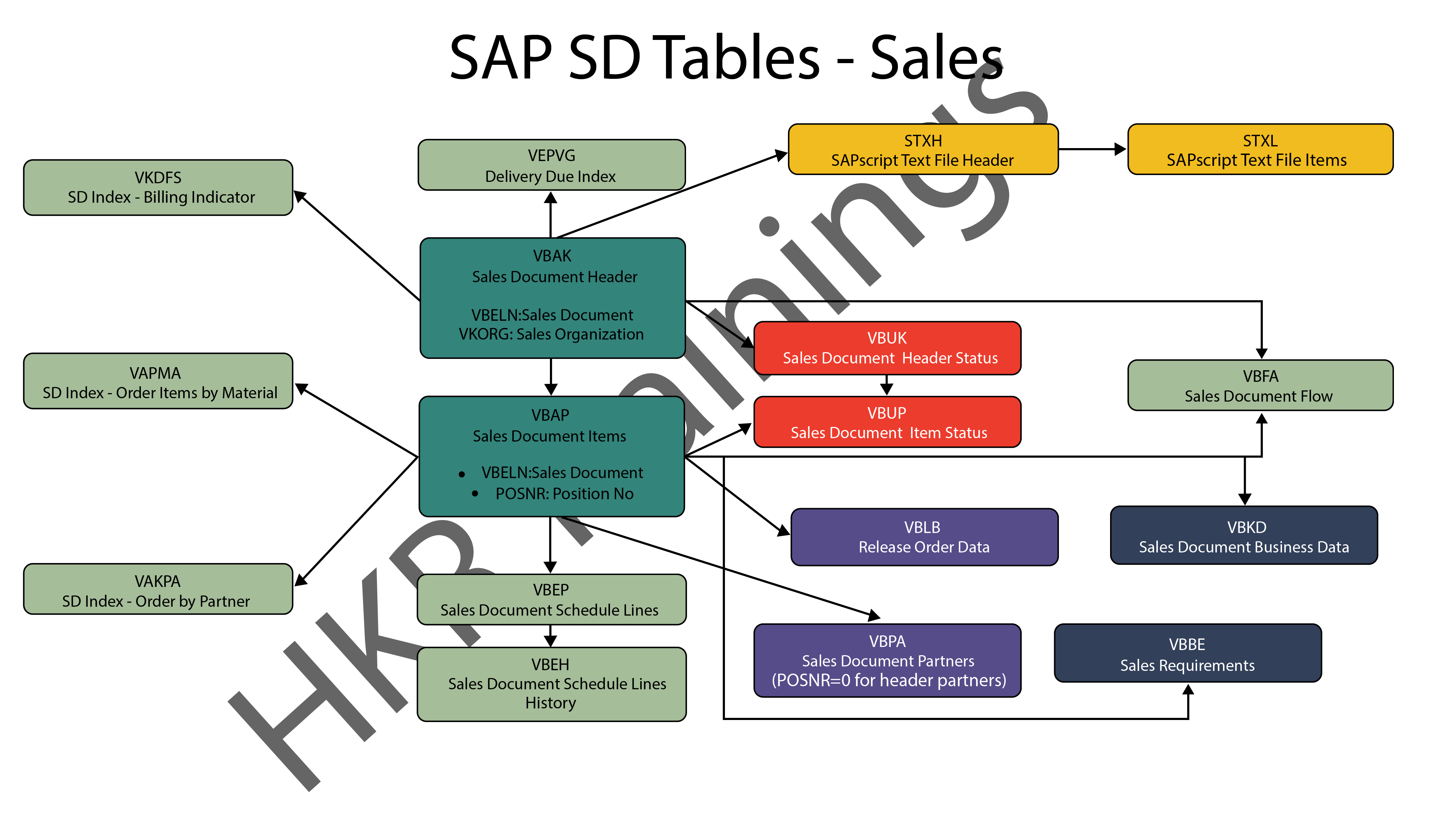
In SAP SD, the first block is about sales procedures.This indicates that the SAP SD tables in this block would be related to sales orders, quotations, and other similar transactions. We designed a visual slide that lists all of the tables and their relationships. 

SAP SD Sales

2) Shipping

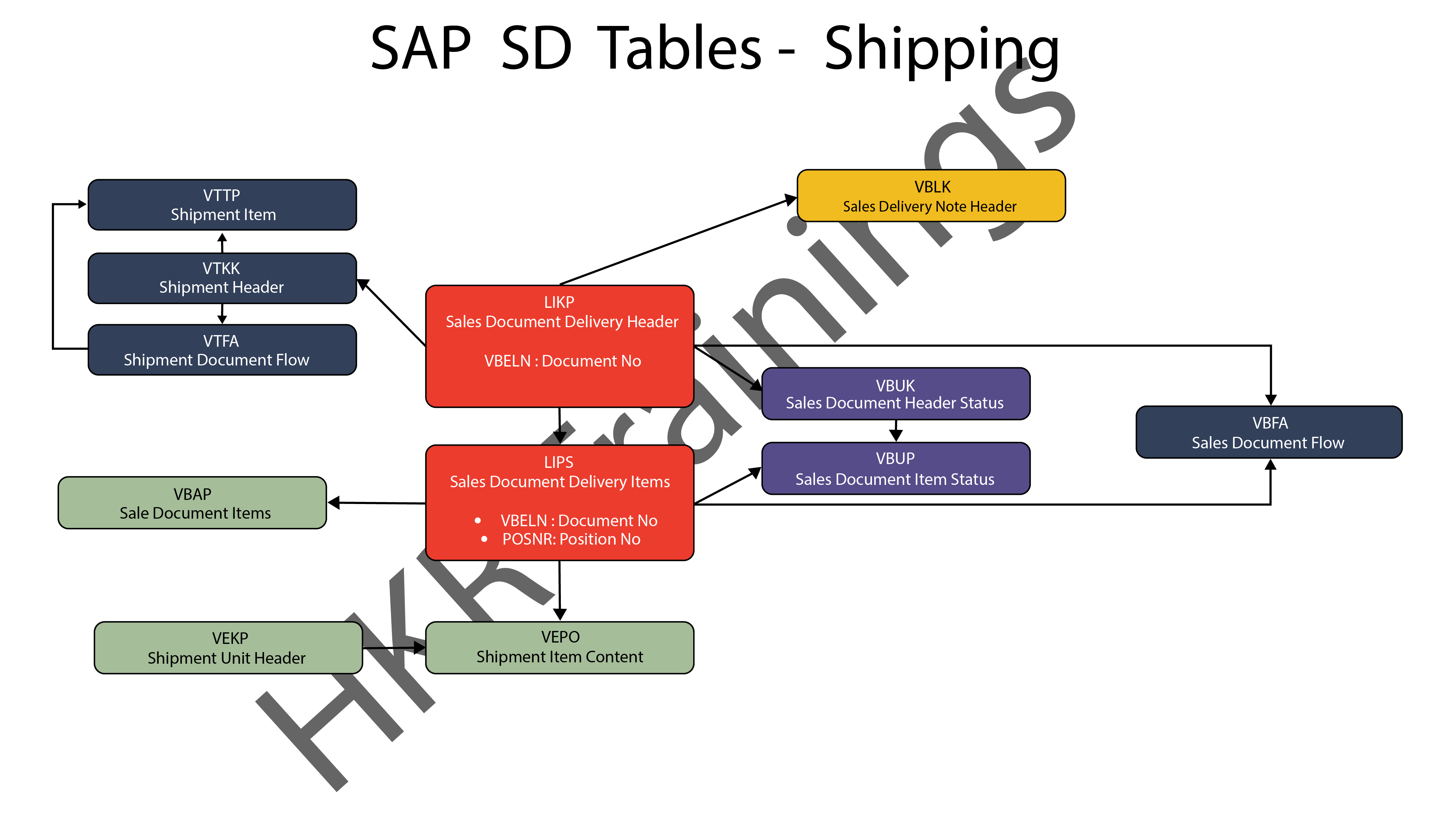
ThIs section is about SAP SD’s shipping processes. In this section, SAP SD tables deal with inbound and outbound deliveries, as well as shipments. Likewise, we’ve created a visual slide with links illustrating table relationships. 

SAP SD Shipping

SAP SD Training

  • Master Your Craft
  • Lifetime LMS & Faculty Access
  • 24/7 online expert support
  • Real-world & Project Based Learning
3) Billing

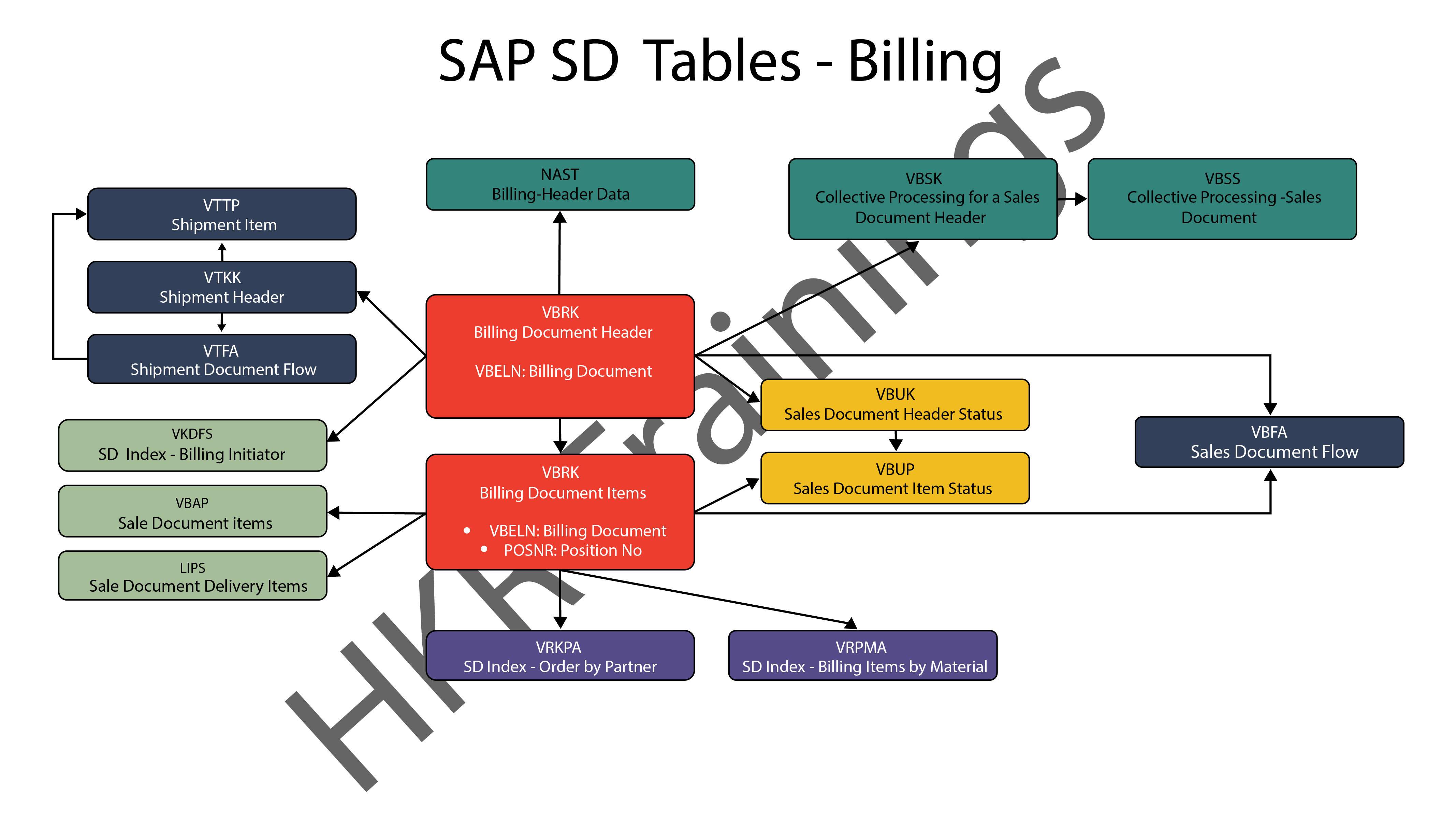
The billing feature of SAP SD is the last but not least. SAP has a variety of tables which are used to support a company’s billing procedures. Billing documents, as well as other related data, such as output conditions, are saved in these tables by SAP. 

SAP SD Billing

Want to know more about SAP SD,visit here SAP SD Tutorial !

SAP SD Significant Tables for Sales and Distribution

The following are the SAP SD tables for customers, sales documents, delivery documents, billing documents, shipping unit.

1) Customers

KNA1: General Data

KNB1: Customer Master – Co. Code Data (payment method, reconciliation acct)

KNB4: Customer Payment History

KNB5: Customer Master – Dunning info 

KNBK: Customer Master Bank Data

KNKA: Customer Master Credit Mgmt.

KNKK: Customer Master Credit Control Area Data (credit limits)

KNVV: Sales Area Data (terms, order probability)

KNVI: Customer Master Tax Indicator

KNVP: Partner Function key

KNVD: Output type

KNVS: Customer Master Ship Data

KLPA: Customer/Vendor Link

2) Sales Documents

VBAKUK: VBAK + VBUK

VBUK: Header Status and Administrative Data

VBAK: Sales Document – Header Data

VBKD: Sales Document – Business Data

VBUP: Item Status

VBAP: Sales Document – Item Data

VBPA: Partners

VBFA: Document Flow

VBEP: Sales Document Schedule Line

VBBE: Sales Requirements: Individual Records

Top 30 frequently asked SAP SD Interview Questions !

3) SD Delivery Document

LIPS: Delivery Document item data, includes referencing PO

LIKP: Delivery Document Header data

4) Billing Document

VBRK: Billing Document Header

VBRP: Billing Document Item

5) SD Shipping Unit

VEKP: Shipping Unit Item (Content)

VEPO: Shipping Unit Header

Acquire SAP Basis certification by enrolling in the HKR SAP Basis Training in Pune!

SAPS, sap-sd-tables-description-2, SAPS, sap-sd-tables-description-4

Subscribe to our YouTube channel to get new updates..!

The most significant SAP Sales and Distribution (SD) tables for Alteryx users

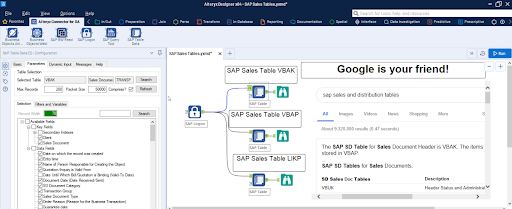
For users of Alteryx and the DVW Alteryx Connector for SAP, we’ll now look at the most significant SAP Sales and Distribution (SD) tables 

SAP Sales and Distribution table

Related Articles SAP SD Modules !

The following SAP systems contain SAP Sales and Distribution tables:

  • SAP ECC 
  • SAP ERP
  • SAP S/4HANA

SAP Transaction Tables for Sales and Distribution (SD)

The SAP SD transaction tables for sales, delivery and billing process is as follows: 

1) Sales Document Tables

The documents of SAP Sales include:

  • Inquiries
  • Quotations
  • (Sales) Orders
  • Contracts
  • Credit Memo Requests
  • Debit Memo Requests 

The following are the most important tables in a sales document:

  • VBAK – Sales Document: Header Data
  • VBAP – Sales Document: Item Data 

SAP SD Training

Weekday / Weekend Batches


2) Delivery Document Tables

The documents of SAP Delivery include:

  • Delivery / Shipping Notifications
  • Deliveries

The key Delivery Document tables are:

  • LIKP – SD Document: Delivery Header Data
  • LIPS – SD document: Delivery: Item data 

Related Articles SAP SD Flow ! 

3) Billing Document Tables

The documents of SAP Billing include:

  • Invoices
  • Credit Memos
  • Debit Memos
  • Intercompany Invoices

The key Billing Document tables are:

  • VBRK – Billing Document: Header Data
  • VBRP – Billing Document: Item Data

Master Data Tables for SAP Sales and Distribution (SD)

  • KNA1 – General Data in Customer Master
  • KNB1 – Customer Master (Company Code)
  • KNKK – Customer master credit management: Control area data
  • KNVV – Customer Master Sales Data 

Data Tables for SAP Sales and Distribution (SD) Configuration

  • TVFK – Billing: Document Types
  • TVFKT – Billing: Document Types: Texts
  • TVKO – Organizational Unit: Sales Organizations
  • TVZB – Customers: Terms of payment 
  • TVZBT – Customers: Terms of Payment Texts

Conclusion:

We hope this blog is very helpful in knowing various tables discussed on SAP SD.   


Source link