8 Meats and Seafood That Are Highest in Magnesium


Medically reviewed by Suzanne Fisher, RD

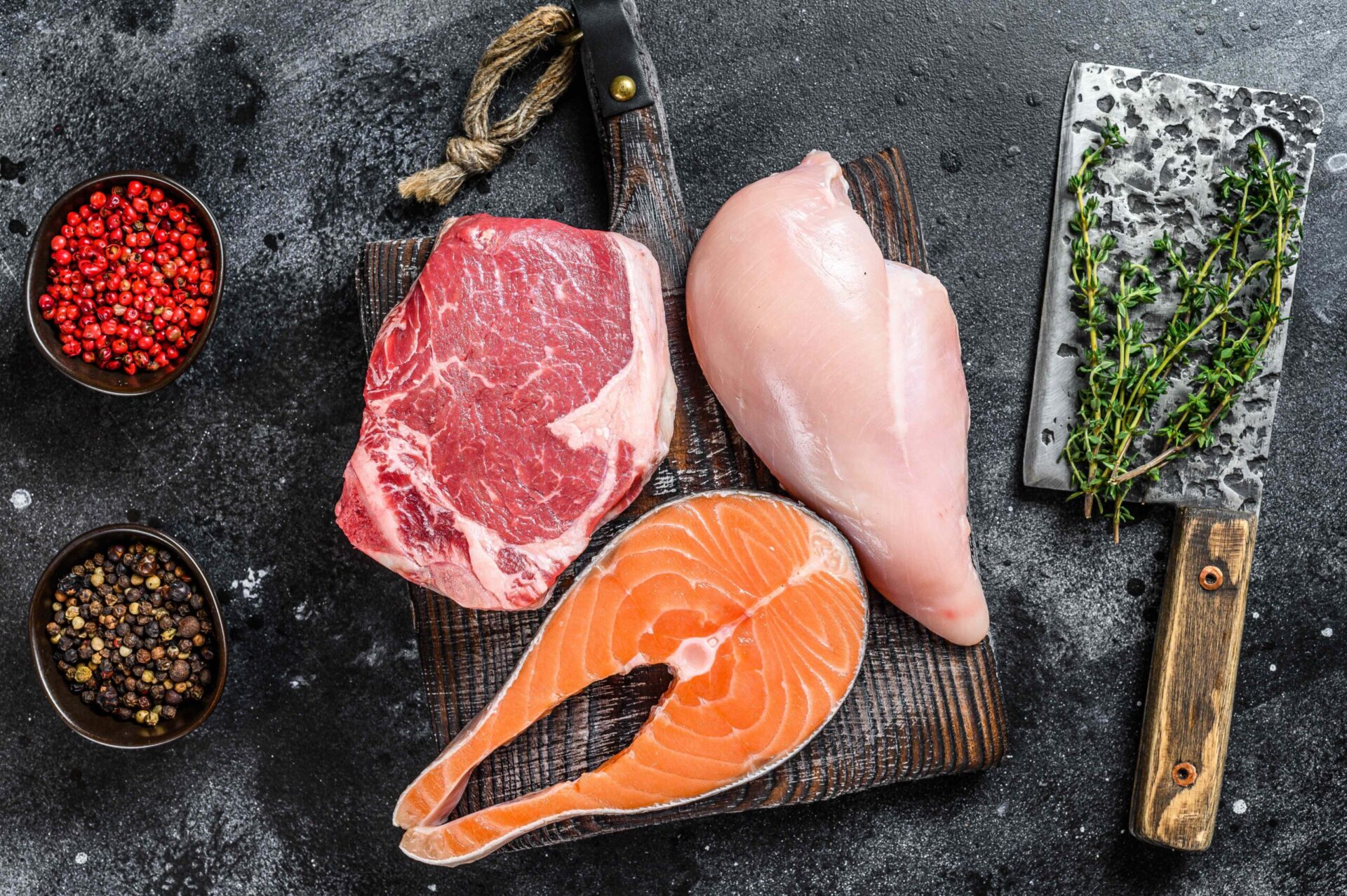
Salmon, chicken breast, and other types of meat and seafood can help increase your magnesium intake.Credit: Vladimir Mironov / Getty Images
Salmon, chicken breast, and other types of meat and seafood can help increase your magnesium intake.
Credit: Vladimir Mironov / Getty Images
  • Meat usually isn’t considered a top source of magnesium, though certain cuts and types can provide meaningful amounts.
  • Salmon, pork loin, mackerel, halibut, and more are among the top meat-based sources of magnesium.
  • Magnesium is an essential mineral that supports muscle and nerve function, healthy blood pressure, and more.

Seeds, nuts, whole grains, and leafy greens are considered the best dietary sources of magnesium. Meat usually isn't included in that list; however, there are certain types of meat and seafood that can meaningfully contribute toward your daily magnesium goals, from chicken breast to oysters.

1. Salmon 

Credit: Roxiller / Getty Images
  • Magnesium content: 25.5 milligrams (mg)
  • Serving size: 3 ounces (85 grams [g])

Like other fatty fish, salmon is rich in protein, omega-3 fatty acids, vitamin B12, and selenium, among other nutrients. It’s also one of the best meat-based sources of magnesium, offering about 6% of the recommended Daily Value (DV) per serving.

2.  Mussels and Oysters 

Credit: d0minius / Getty Images
  • Magnesium content: 28.9 mg in mussels; 22 mg in oysters
  • Serving size: 3 ounces (85 g) of mussels; two medium oysters (100 g)

Mollusks, such as mussels and oysters, have some of the highest magnesium concentrations among meat and fish. A 3-ounce serving of mussels provides nearly 7% of the DV, and two medium oysters have about 5% DV.

In addition, mussels and oysters are both great sources of protein, omega-3s, selenium, and vitamin B-12.

3. Squid and Octopus

Credit: Arsty / Getty Images
  • Magnesium content: 51 g in cooked octopus; 32.3 g in fried squid
  • Serving size: 3 ounces (85 g)

Though they're not necessarily staples in most people's diets, cephalopods—squid and octopus—are another top meat source of magnesium. A standard serving of squid provides 8% DV of magnesium, while the same serving of octopus provides 12% DV.

Eating squid and octopus can also help boost your levels of vitamin A and vitamin B12.

4. Halibut

Credit: Vladimir Mironov / Getty Images
  • Magnesium content: 23.8 mg
  • Serving size: 3 ounces (85 g)

This common white fish packs a substantial amount of protein, healthy fats, vitamin B12, selenium, and phosphorus. Halibut is also very high in magnesium—one 3-ounce serving (about one-fourth of a fillet) has about 5.6% DV.

5. Mackerel 

Credit: Ilia Nesolenyi / Getty Images
  • Magnesium content: 64.6 mg
  • Serving size: 3 ounces (85 g)

Mackerel is a popular, sustainable saltwater fish that's another excellent source of healthy fats, as well as critical nutrients such as selenium and vitamin B12. Atlantic mackerel, which has an off-white color when cooked, provides over 15% DV for magnesium per serving. The red-hued Pacific mackerel has less magnesium.

6. Pork Loin

Credit: VeselovaElena / Getty Images
  • Magnesium content: 21.2 g
  • Serving size: 3 ounces (85 g)

Seafood isn't the only way to get more magnesium in your diet from meat—pork loin offers about 5% DV of magnesium per 3-ounce serving.

This specific cut of pork is the most magnesium-rich, plus it's the leanest, which means it has fewer unhealthy fats. Pork loin is also rich in protein, phosphorus, and selenium.

7. Chicken Breast

Credit: Dmytro Chernykov / Getty Images
  • Magnesium content: 28.9 mg
  • Serving size: 3 ounces (85 g)

Among meat options, chicken stands out as a solid source of magnesium, with a standard serving providing nearly 7% DV. Skinless chicken breast is also rich in protein, B vitamins, iron, phosphorus, and selenium.

However, the type of chicken you're eating matters. Magnesium content is highest in chicken breast, followed by drumsticks and other chicken products like deli meats.

8. Lean Ground Beef 

Credit: Dmytro Chernykov / Getty Images
  • Magnesium content: 24.9 mg
  • Serving size: 4 ounces (113 g)

Beef isn't as rich in magnesium as fatty fish or some other sources, but it's still a solid choice. One 4-ounce patty of 97% lean ground beef has about 6% DV of magnesium. Along with protein, ground beef also provides B vitamins, potassium, selenium, and many other nutrients.

Though lean ground beef can be a nutritious addition to your diet, it's best to enjoy it in moderation. Red meat—especially when it's processed—can be high in sodium, unhealthy saturated fats, and other potentially harmful compounds. Research has linked diets high in red and processed meats with an increased risk of heart disease, certain types of cancer, and more.

How Much Magnesium Do You Need? 

Magnesium is an essential mineral that helps create proteins, supports muscle and nerve function, controls blood pressure, and more. Some evidence suggests that not getting enough magnesium over time could raise your risk of conditions such as type 2 diabetes, osteoporosis, and high blood pressure.

The magnesium Daily Value, or the general recommended intake, is 420 milligrams per day for adults. However, there are more specific recommendations based on age and sex:

  • Men: 400 mg for ages 19–30; 420 mg for ages 30+
  • Women: 310 mg for ages 19–30; 320 mg for ages 30+
  • Pregnant people: 400 mg for ages 14–18; 350 mg for ages 19–30; 360 mg for ages 30+

If you aren’t sure whether you’re getting enough magnesium, talk to your doctor about ways to boost your intake, whether it's through supplements or diet.



Source link

Leave a Reply

Subscribe to Our Newsletter

Get our latest articles delivered straight to your inbox. No spam, we promise.

Recent Reviews


Last updated on
Jun 12, 2024

What is VPC in AWS – Table of Content

What is Amazon VPC?

Amazon Virtual Private Cloud or Amazon VPC is an AWS service that provides you with a separate area of the cloud. Having this separate area, you can launch your own defined AWS services in a virtual network.

Here, in VPC you have complete control of your virtual environment which includes IP address range, the configuration of route tables, the creation of subnets, and network gateways. Also, the network configurations can be easily customised for the Amazon VPC. 

Like all the other AWS services, Amazon VPC provides top-notch security. It has multiple layers of security which include network access control lists and security groups to manage the Amazon EC2 instances’ access in each subnet.

We have the perfect professional AWS Training course for you. Enroll now!

Now to understand the entire scenario of VPC, even better, let’s have a look at the architecture of VPC.

Architecture of VPC

Architecture of VPC

  • The above picture shows the architecture of VPC, so there’s an outer region and inside that outer region there’s an Internet Gateway and Virtual Private Gateway.
  • Internet Gateway and Virtual Private Gateway are what help in the connection with the VPC. These connections pass through the router which directs the coming traffic to the router table.
  • The two Router Tables then direct the traffic to Network ACL, which is like a firewall for security purposes. 
  • The Network ACLs can either accept or deny the roles. Also, the IP Address can be blocked on the Network ACL. 
  • The respective Network ACL signals to their respective security groups to access lines against the EC2 Instance. 
  • Now, there are two subnets – Public Subnet and Private Subnet. 
    As the name suggests, in the public subnet internet can be accessed by the EC2, while in the private subnet EC2 instance cannot be accessed through the internet. 
  • There’s also a process called “Jump Boxes” which enables you to connect the EC2 Instances (the public subnet can be connected to the private subnet’s instance).

Now, when we know about the architecture of VPC, it’s time to understand the different elements of VPC. 

Top 50+ Frequently Asked AWS Interview Questions !

AWS Training

  • Master Your Craft
  • Lifetime LMS & Faculty Access
  • 24/7 online expert support
  • Real-world & Project Based Learning

Elements of Amazon VPC.

The elements included in the Amazon VPC are:

IPv6 and IPv4 address blocks

VPC IP addresses use CIDR (Classless Interdomain Routing) IPv6 and IPv4 blocks to define their ranges. Primary and secondary CIDR blocks can be added to the VPC if the secondary Classless Interdomain Routing block comes from a similar address range as the primary block.

Subnet Creation

The EC2 Instance that is launched runs inside a specific VPC subnet. And, each subnet’s CIDR as a subset of the VPC Classless Interdomain Routing block. Every subnet separates its respective traffic from all the other VPC subnet traffic. It must be noted that a subnet can only have one CIDR block and different subnets are to be designated to handle diverse traffic types. 

Route Tables

Route Tables are actually the rule book that decides how much network traffic must be directed inside the VPC and subnets. A default route table is created by the VPC called the main route table. And, this main route table has an automatic association with other VPC subnets. 

There are two options – either the main route table can be updated and used to direct network traffic OR a new route table can be created for individual subnet traffic.

Internet Connectivity

Each VPC configuration is able to host one Internet Gateway and hence provide NAT or the Network Address Translation services using a NAT Gateway or NAT instances.

Elastic IP Addresses (EIPs)

Elastic IP Addresses or EIPs are IPv4 addresses permanently allocated to the user’s AWS account. The EIPs enable public internet access to the following:

  • An instance
  • Elastic Network Interface or ENI
  • Miscellaneous services that require a public IP address.
Network/Subnet Security

In the VPC architecture, you had seen there’s something called the “security group,” so VPCs use those security groups to give protection for instances. These security groups are referred to as firewalls by AWS.  

Additional Networking Services

There are several more services provided by a VPC. The VPC can also be used to configure the following: 

  • Virtual Private Networks or VPNs
  • Direct connectivity between VPCs or VPC peering
  • Gateways
  • Mirror sessions

Now, when you are well versed with the basics of Amazon VPC, let’s have a look at what you can do with a VPC.

HKR Trainings Logo

Subscribe to our YouTube channel to get new updates..!

What can you do with a VPC?

  • Instances can be launched in a subnet that you choose. 
  • Custom IP address ranges can be assigned in each subnet
  • Route Tables can be configured between subnets.
  • An internet gateway can be created and attached to your VPC. 
  • You get excellent security over your AWS resources.
  • Security groups can be assigned to individual instances.

Conclusion 
By now you would be well versed with everything you need to begin with Amazon Virtual Cloud. In the beginning, we learnt the basics of Amazon VPC and continued to learn its architecture. While at the architecture of VPC, we saw different parts of it and saw each of them briefly. 

Once you knew all the architectural parts, you saw the elements of VPC and studied them in brief. Finally, after learning about different elements and several other basics of Amazon Virtual Cloud, we saw the applicability of the same.

AWS Training

Weekday / Weekend Batches

 Related Articles:


Source link