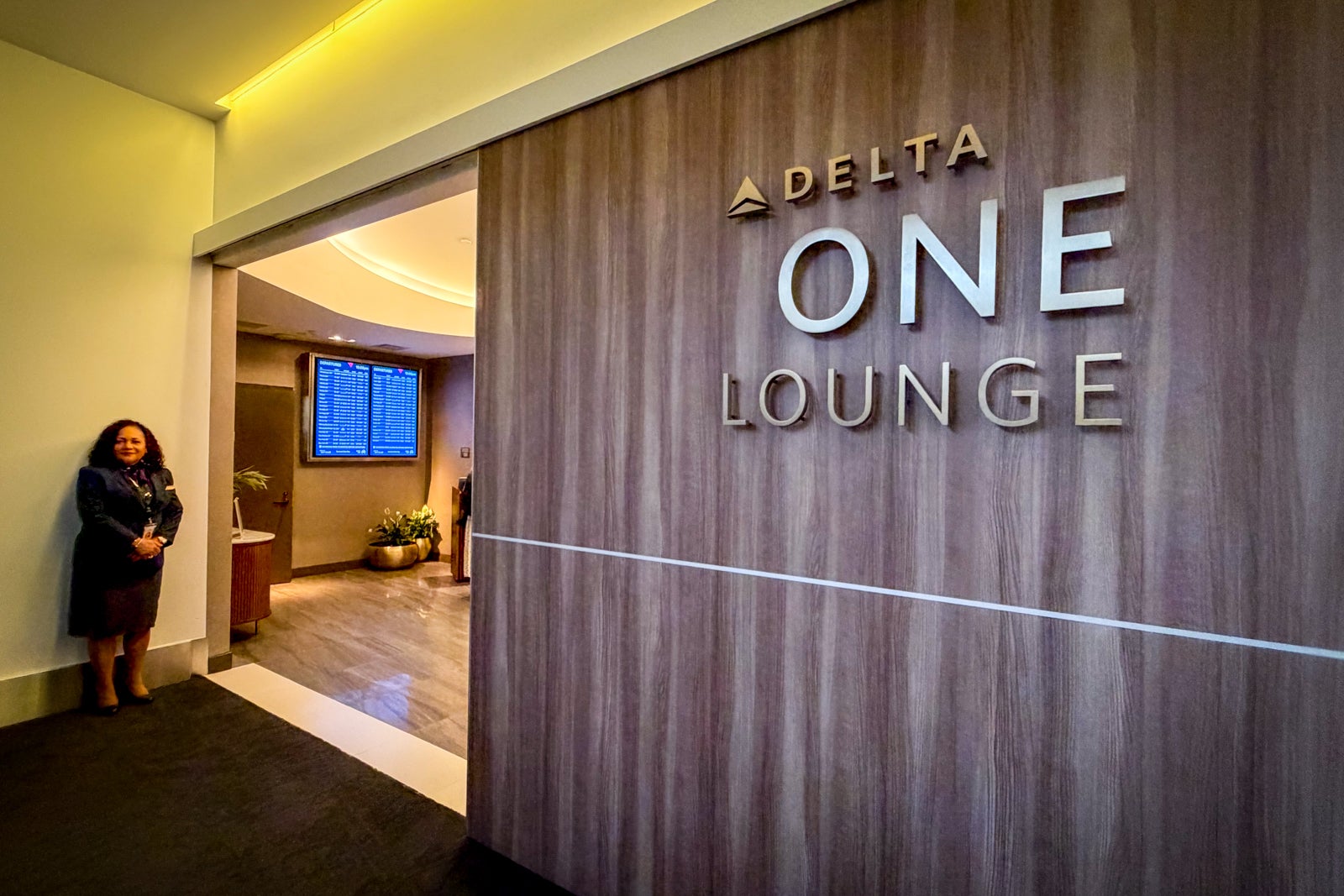

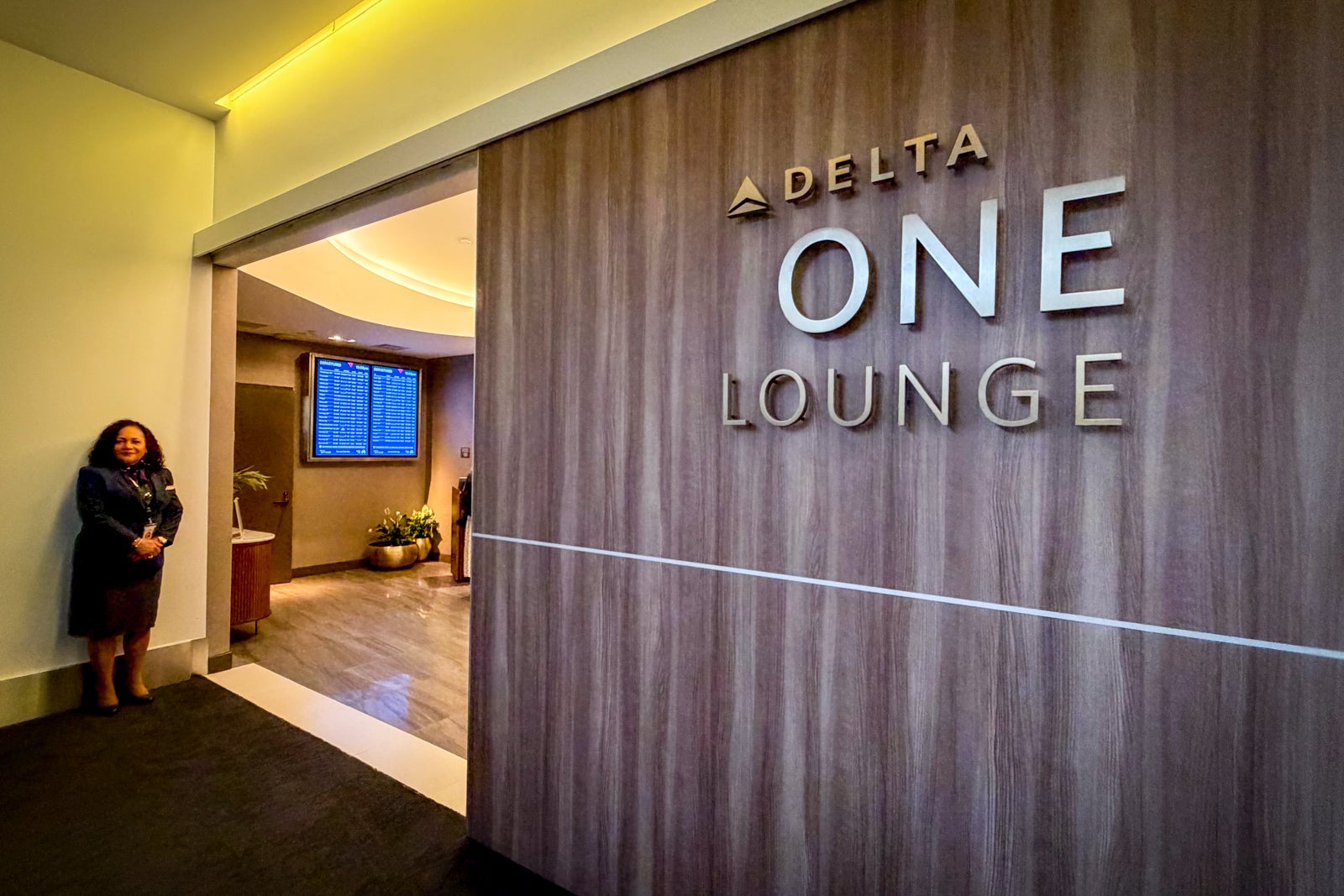
Earlier this month, Delta announced it would bring a second Delta One Lounge to Los Angeles International Airport (LAX) — making LAX the first airport where the airline would field two of its most exclusive clubs. On Monday, TPG got a sneak peek at the swanky new space awaiting travelers in the airport’s Terminal 2.
First, though, there’s perhaps one obvious question: Why open a second Delta One Lounge at LAX?
“The popularity of our Delta One product; people are enjoying it and our capacity is getting up there, and we need to make more space for additional guests,” said Tim Genovese, Delta Sky Club and Delta One Lounge director of operations, experience and design. To wit, the airline now operates up to 151 flights to 50 destinations daily out of LAX.
“Delta has been making big investments in LAX and our network of flights is growing, and we want to make sure we can handle that demand,” Genovese said.
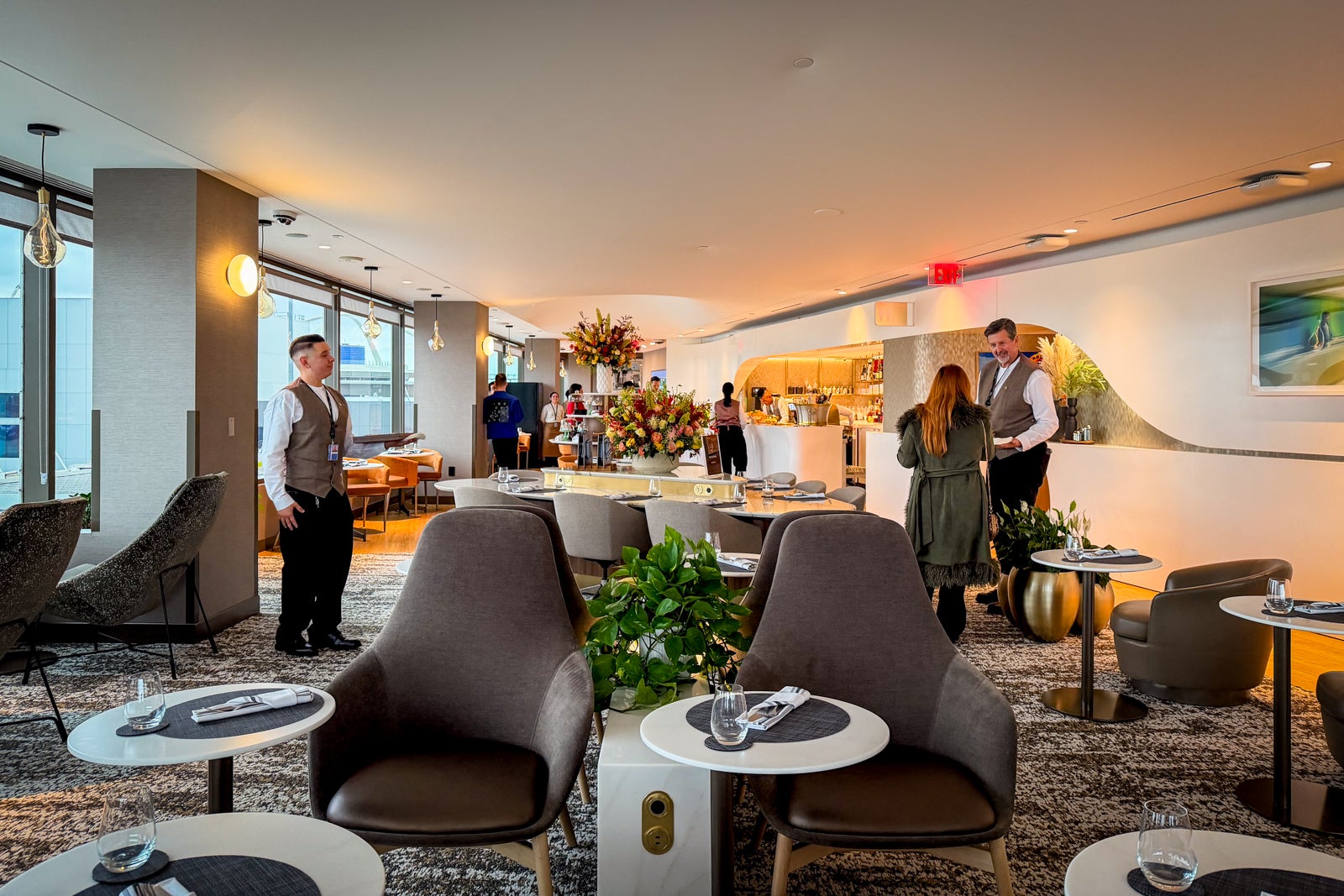
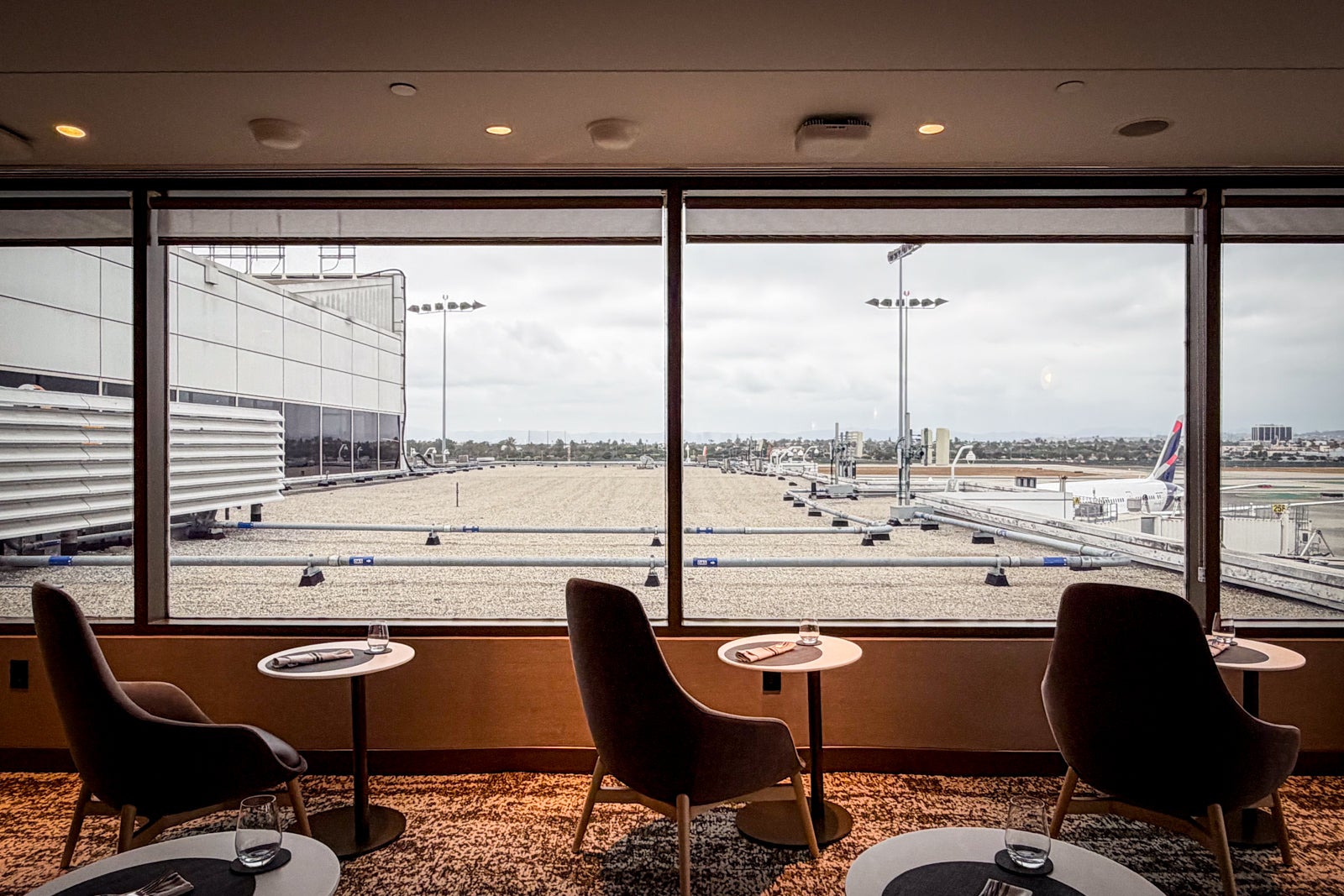
Like the airline’s other exclusive Delta One Lounges, this one is open to passengers flying in Delta One and select partner airlines’ eligible first- and business-class (sorry, your credit card won’t get you in). However, this is more like a private dining room than a multifaceted lounge. That said, the space is still impressive and chic, with great views of the runway and the Hollywood Hills beyond.
The top floor of Terminal 2 will also host an 11,000-square-foot Sky Club, opening sometime in 2027, in a space that was previously a Delta Sky Club, which closed for renovation in 2024.
We didn’t get to peek inside there, but here is what we saw and tasted during our visit to the new Delta One Lounge — and what flyers can expect once the lounge officially opens its doors Tuesday morning.
Where is the new Delta One Lounge at LAX Terminal 2?
The new lounge is on the upper level of Terminal 2 near gate 23A. Travelers can access it via a staircase to the upper floor or by using an elevator near the midpoint of the terminal. For folks with long memories, this bolthole used to be a tiny Virgin Atlantic Clubhouse that opened in 2015 before becoming a sort of satellite Delta Sky Club in 2021.
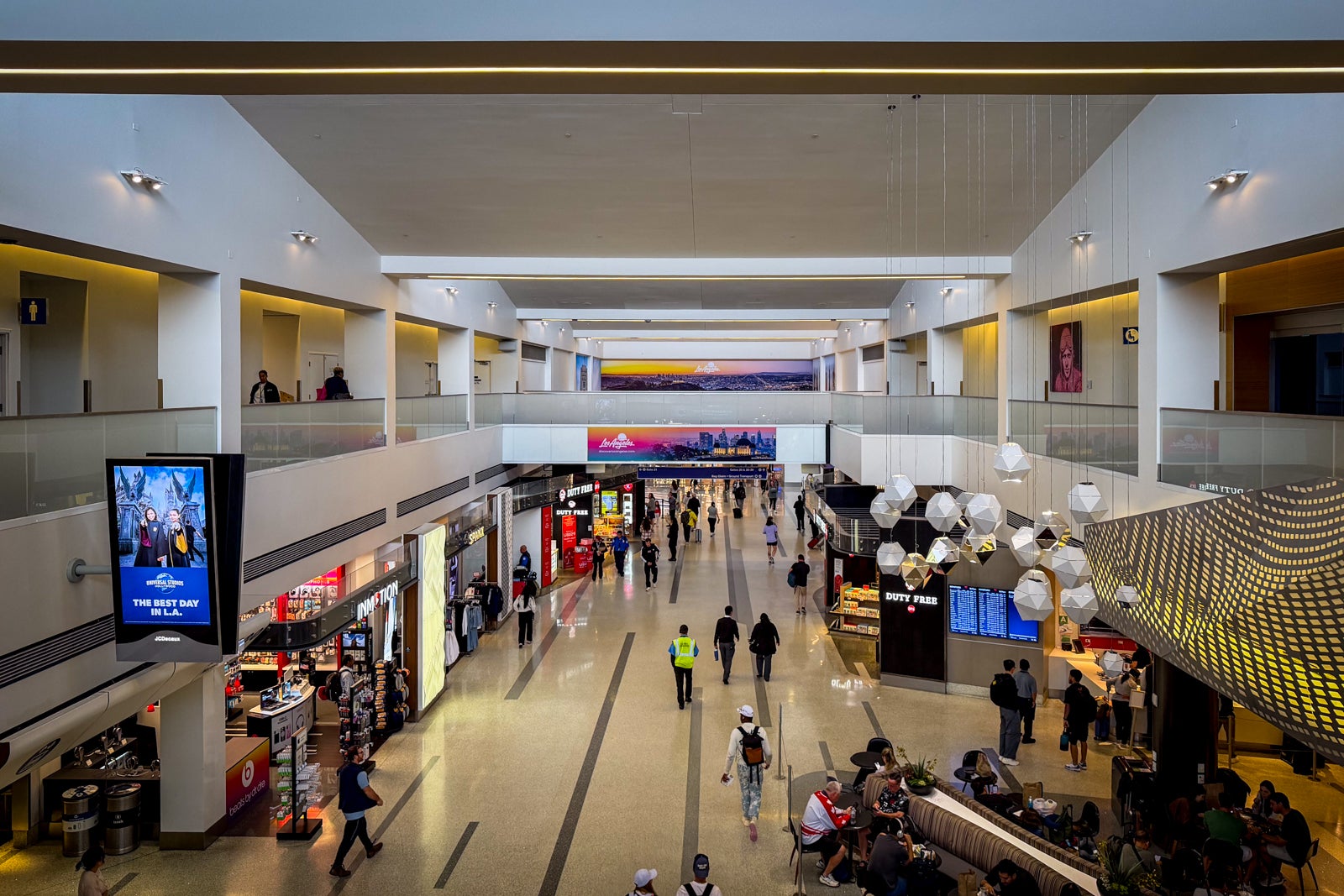
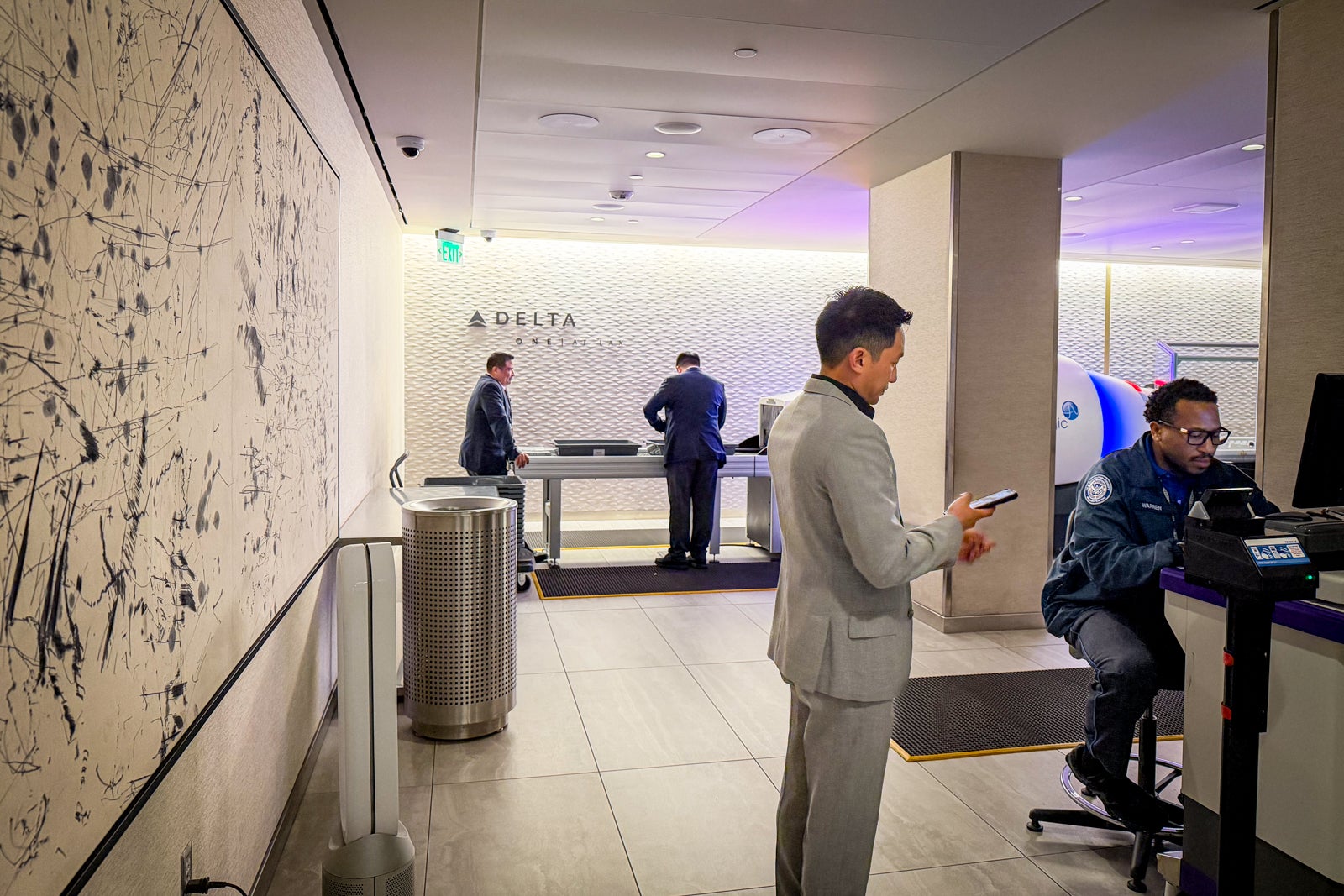
Delta One passengers can utilize the airline’s private Delta One check-in area on the arrivals (ground) level of the airport, where there is a private security screening checkpoint and an elevator that transports them directly to the entrance of the existing Terminal 3 Delta One Lounge, or into the concourse between terminals 2 and 3.

Reward your inbox with the TPG Daily newsletter
Join over 700,000 readers for breaking news, in-depth guides and exclusive deals from TPG’s experts
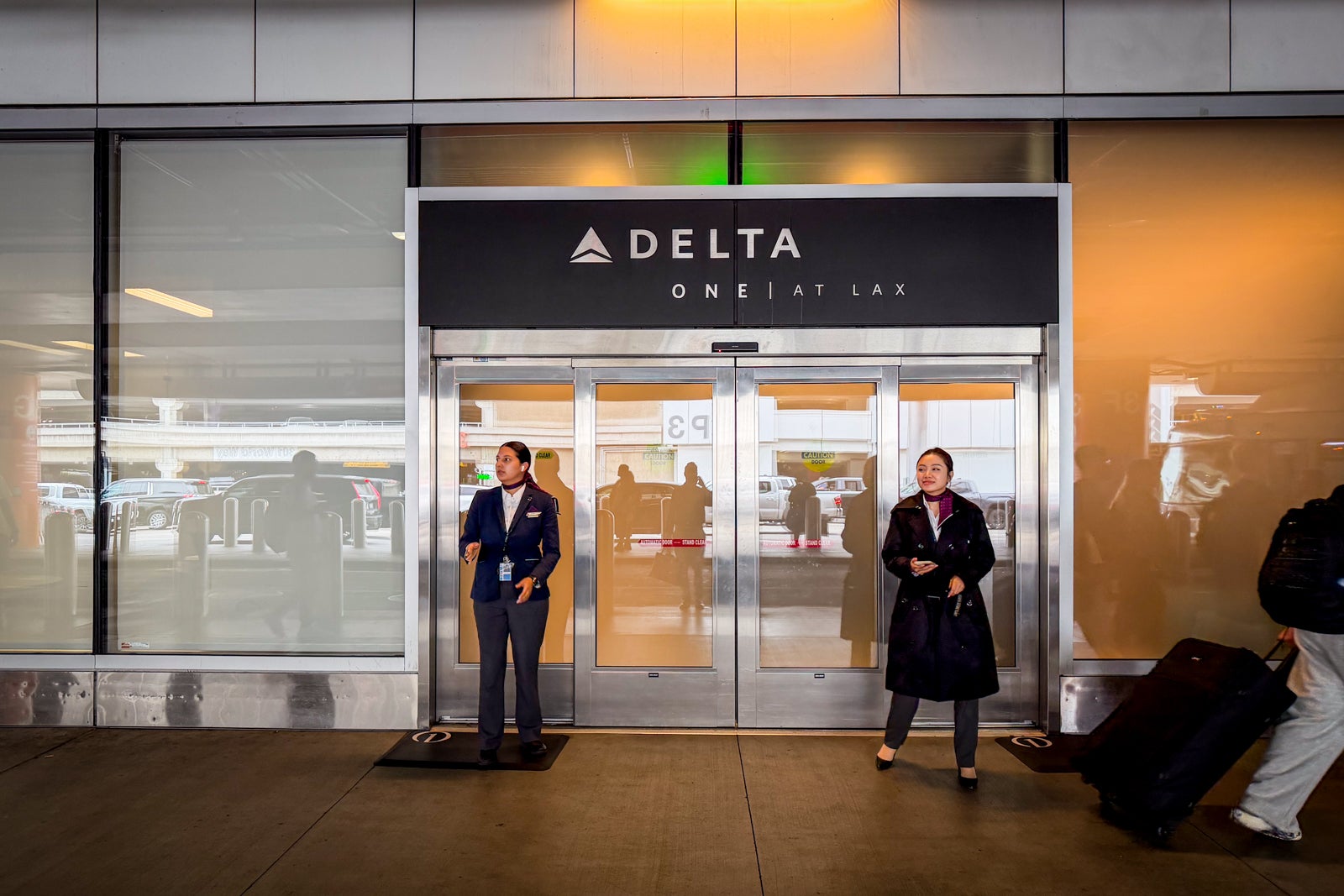
Those wishing to head to the Terminal 2 Delta One Lounge will just get out in the terminal’s main concourse, which sits between terminals 2 and 3, and then head toward 2. They can either walk or take one of the airline’s golf carts to the new lounge.
1 of 2
ERIC ROSEN/THE POINTS GUY
Delta One Lounge at LAX Terminal 2 layout
The new Terminal 2 Delta One Lounge is a diminutive 4,000 square feet with seating for just 75 guests at a time.
Compare that to the Terminal 3 Delta One Lounge, which clocks in at 10,000 square feet, or the one at John F. Kennedy International Airport (JFK) that measures up at a whopping 40,000 square feet. The Delta One Lounges at Seattle-Tacoma International Airport (SEA) and Boston Logan International Airport (BOS) are 10,000 and 6,700 square feet, respectively.
Those are big differences, but this lounge is intended to be more like a rarefied a la carte dining room.
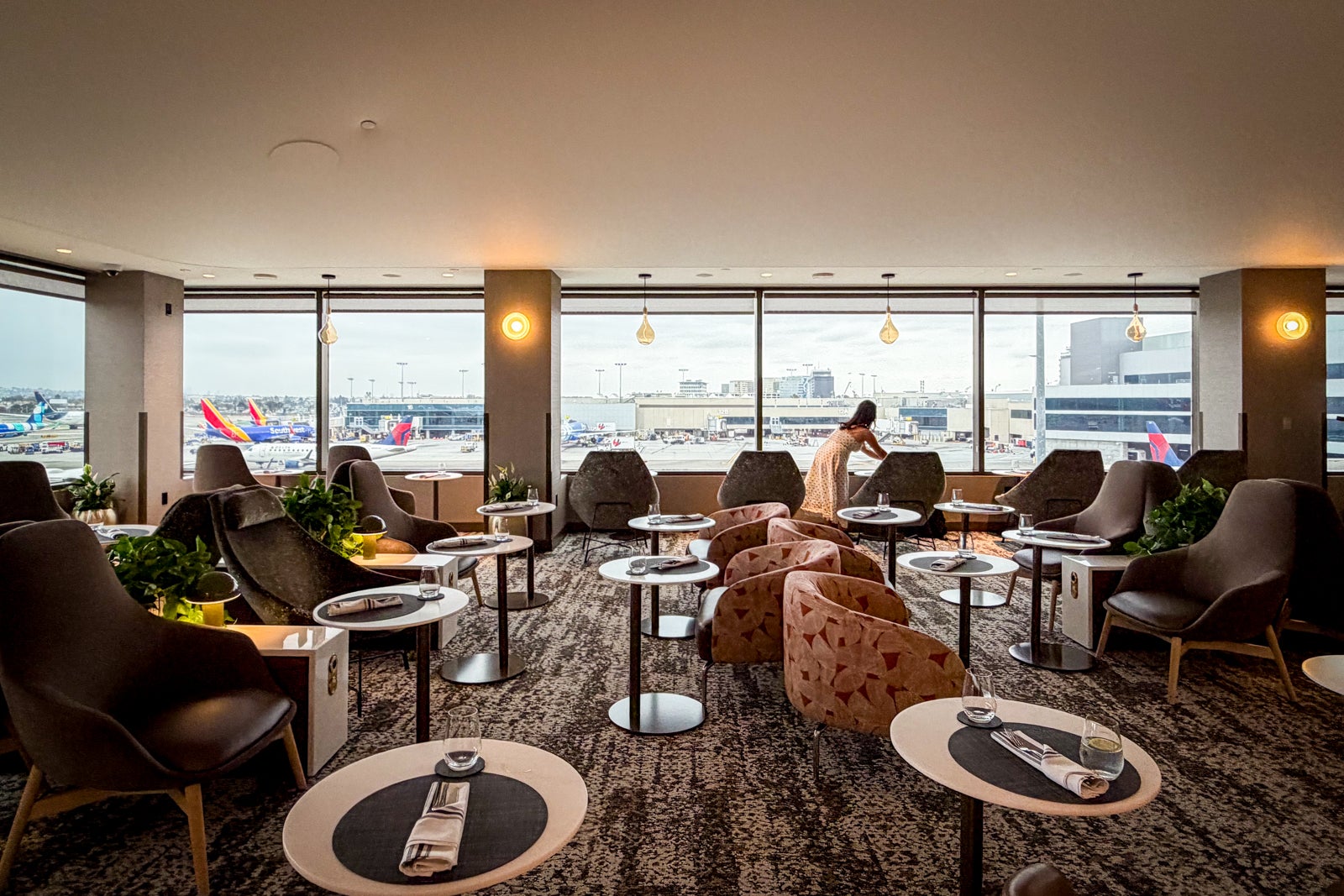
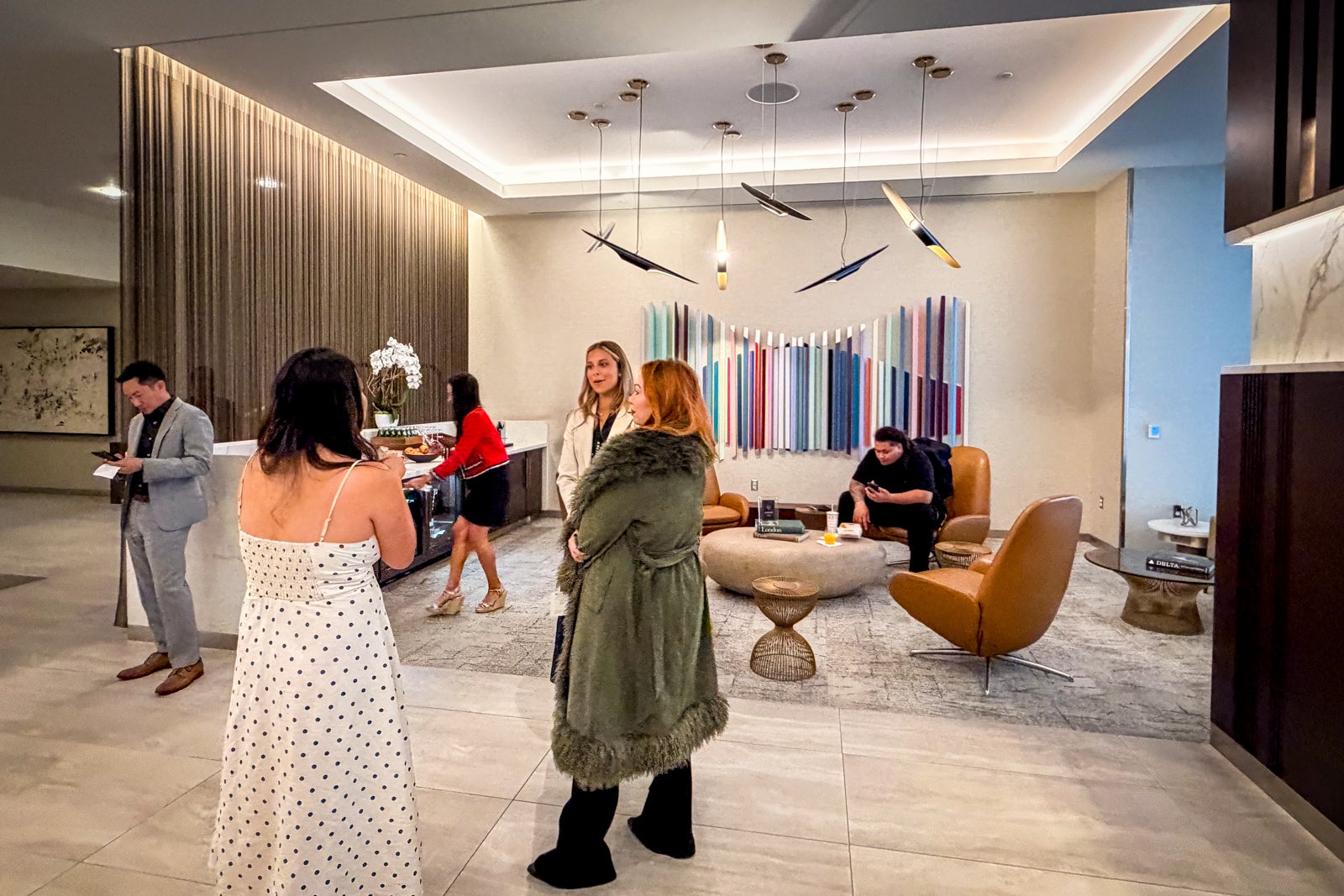
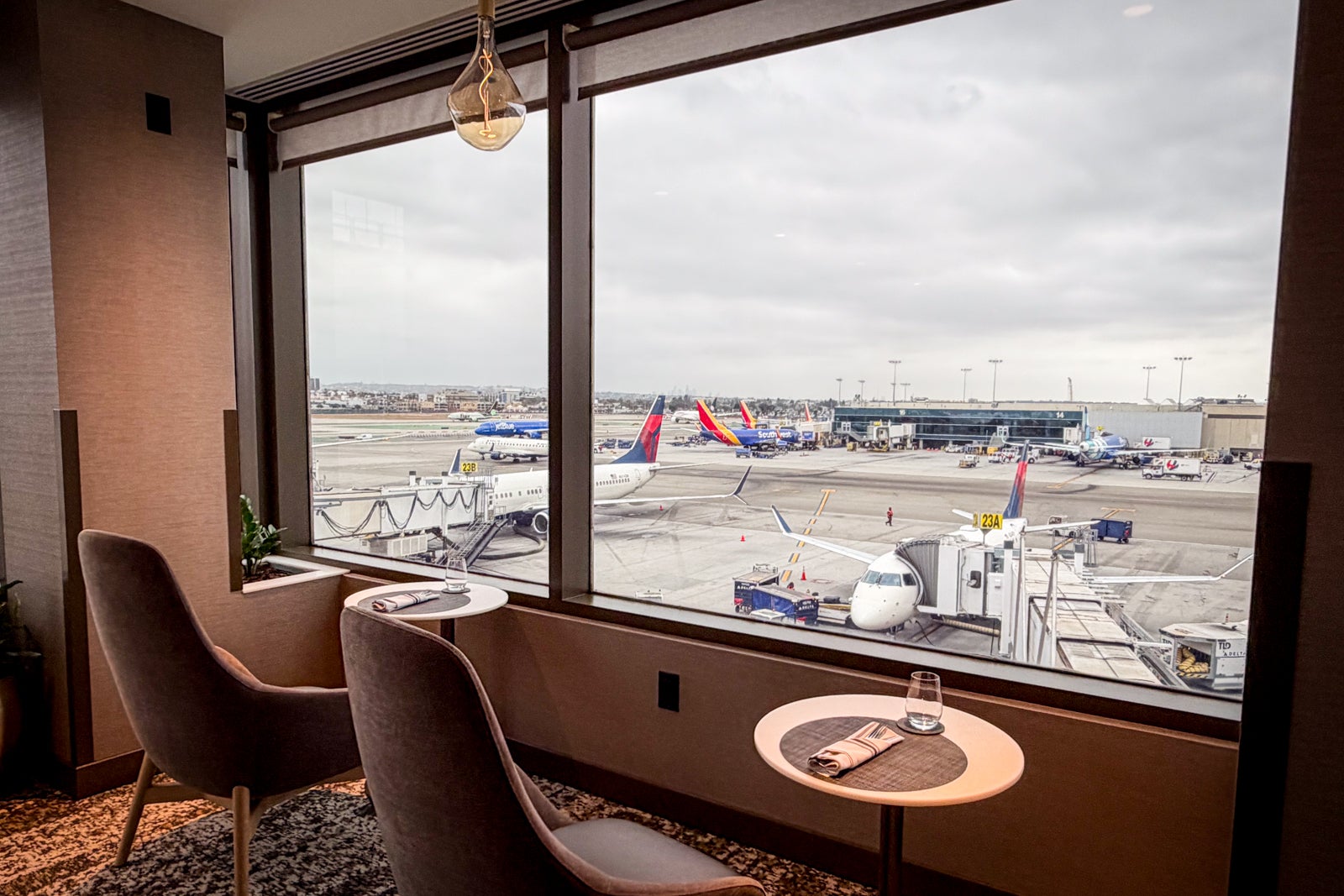
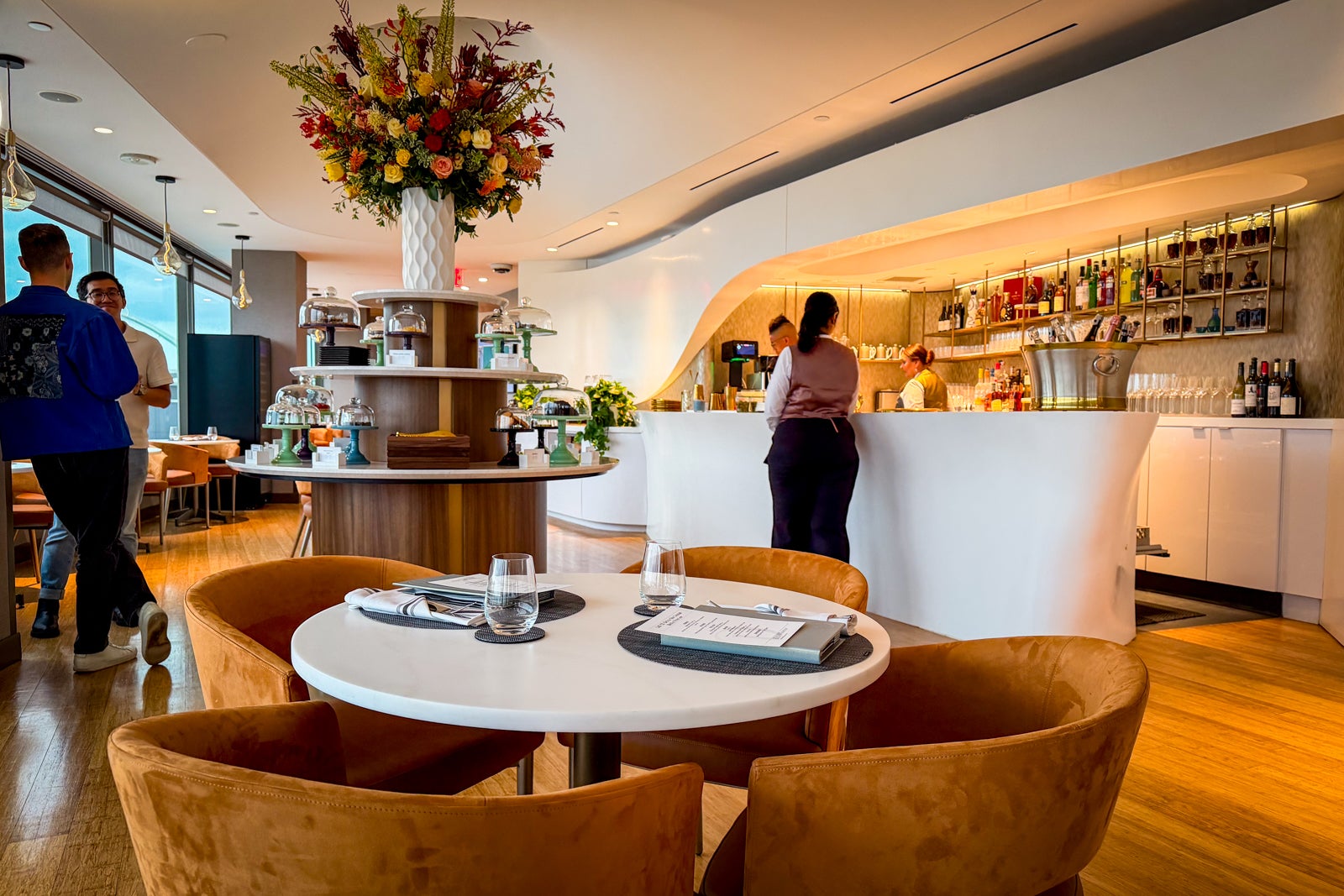
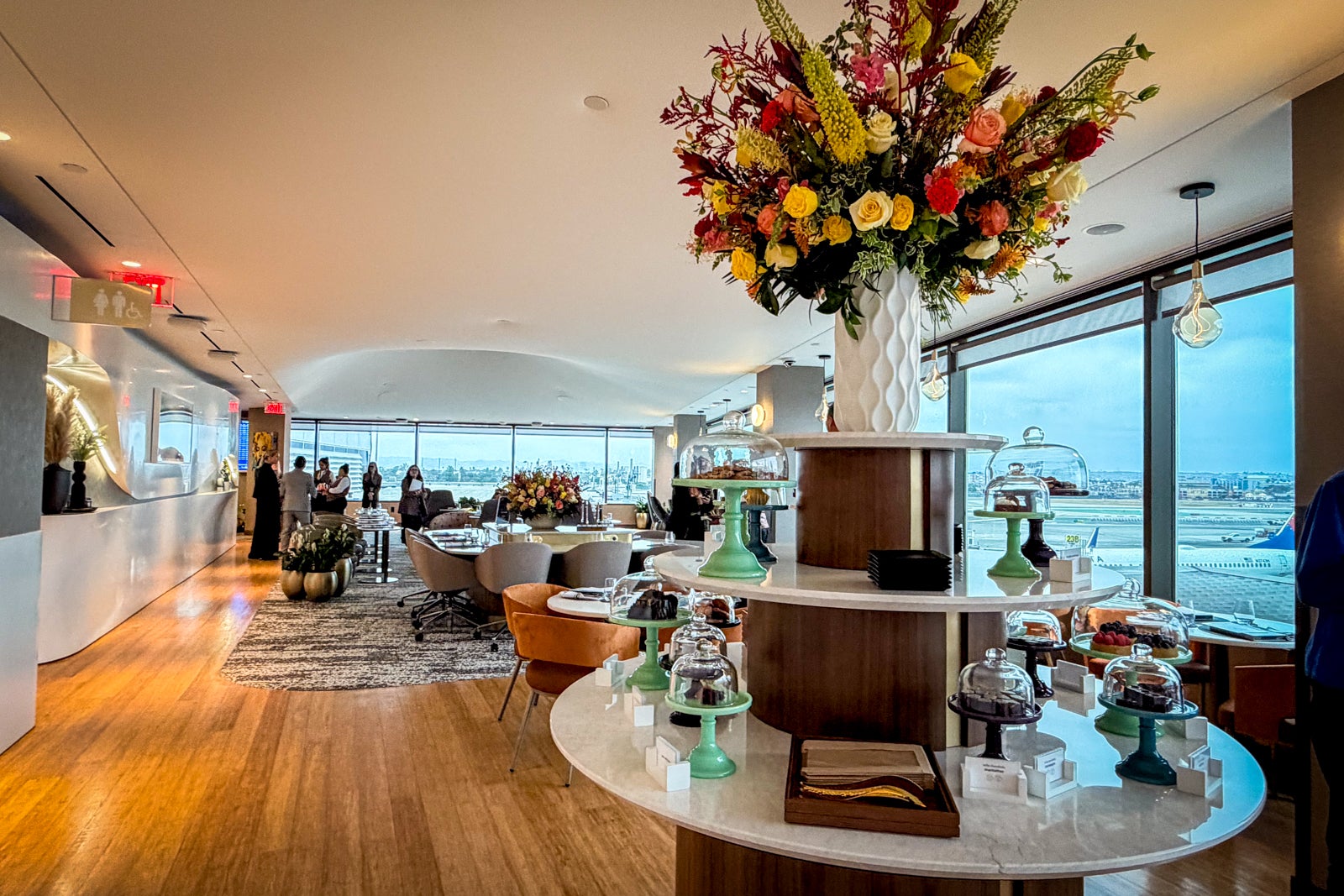
Guests enter through a small reception area, and then the rest of the lounge is an open floor plan, with low-slung individual chairs and tables lined up along the windows.
1 of 2
ERIC ROSEN/THE POINTS GUY
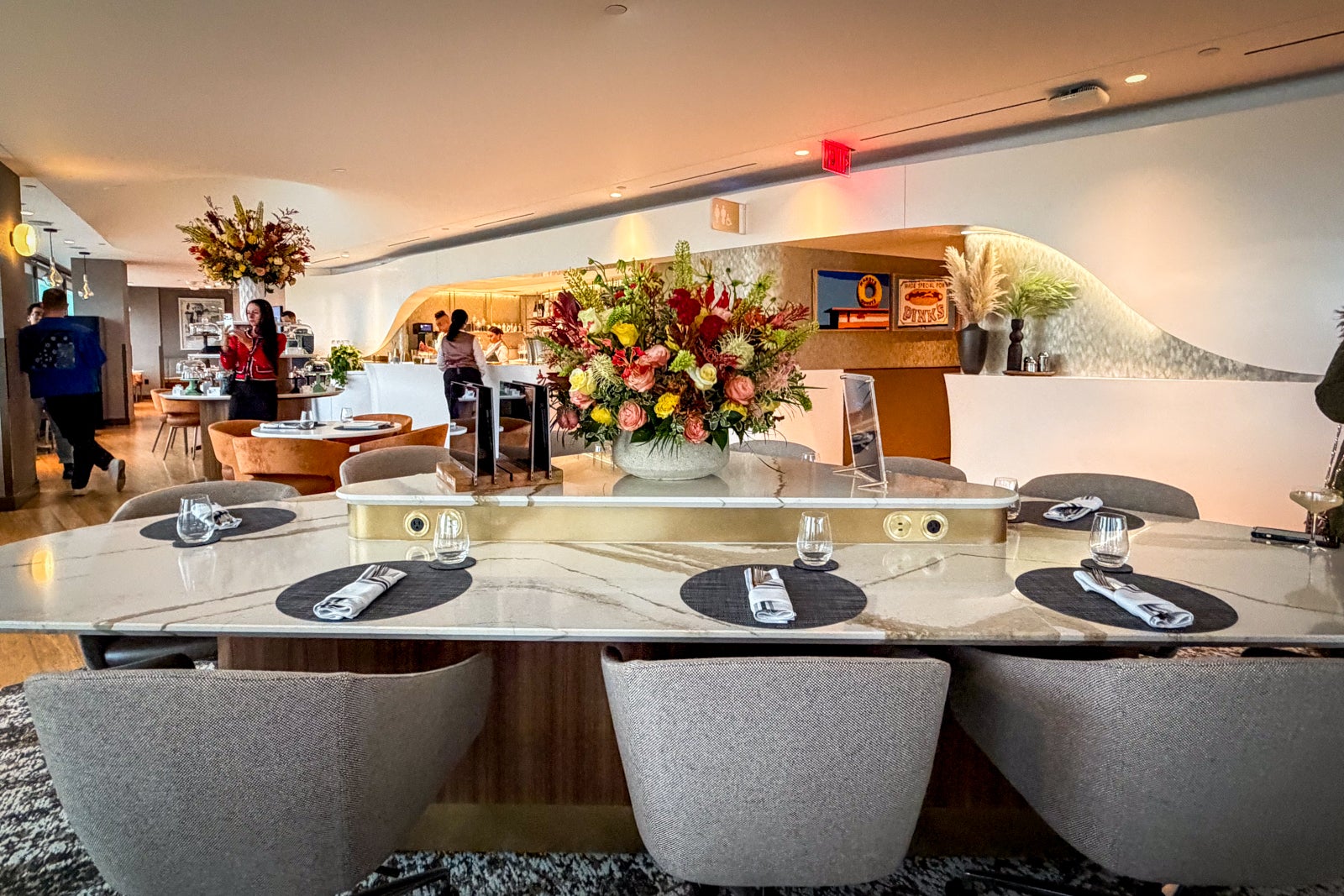
There are more restaurant-style tables and chairs toward the center and back of the lounge, which feels private, as well as a triangular countertop.
1 of 2
ERIC ROSEN/THE POINTS GUY
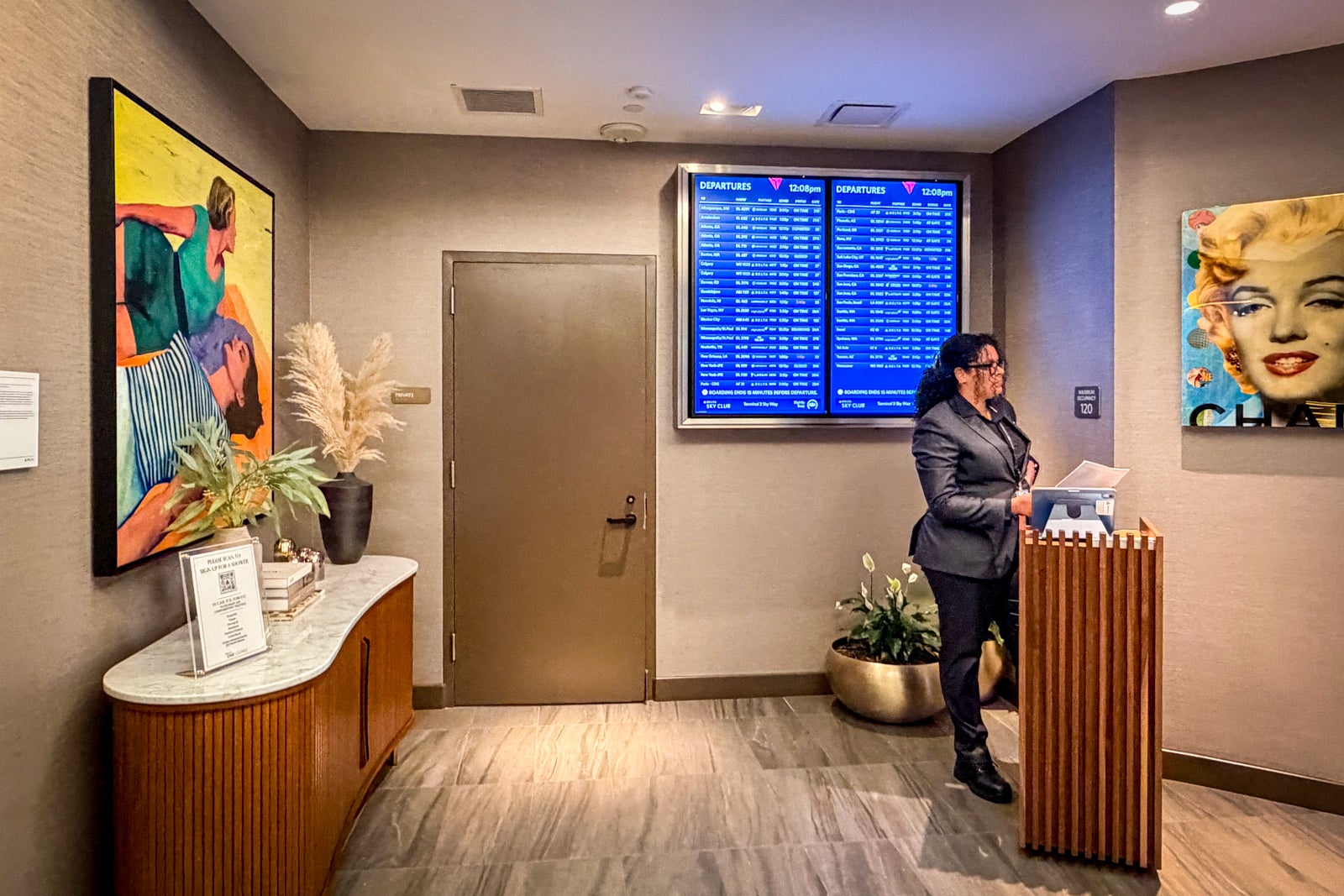
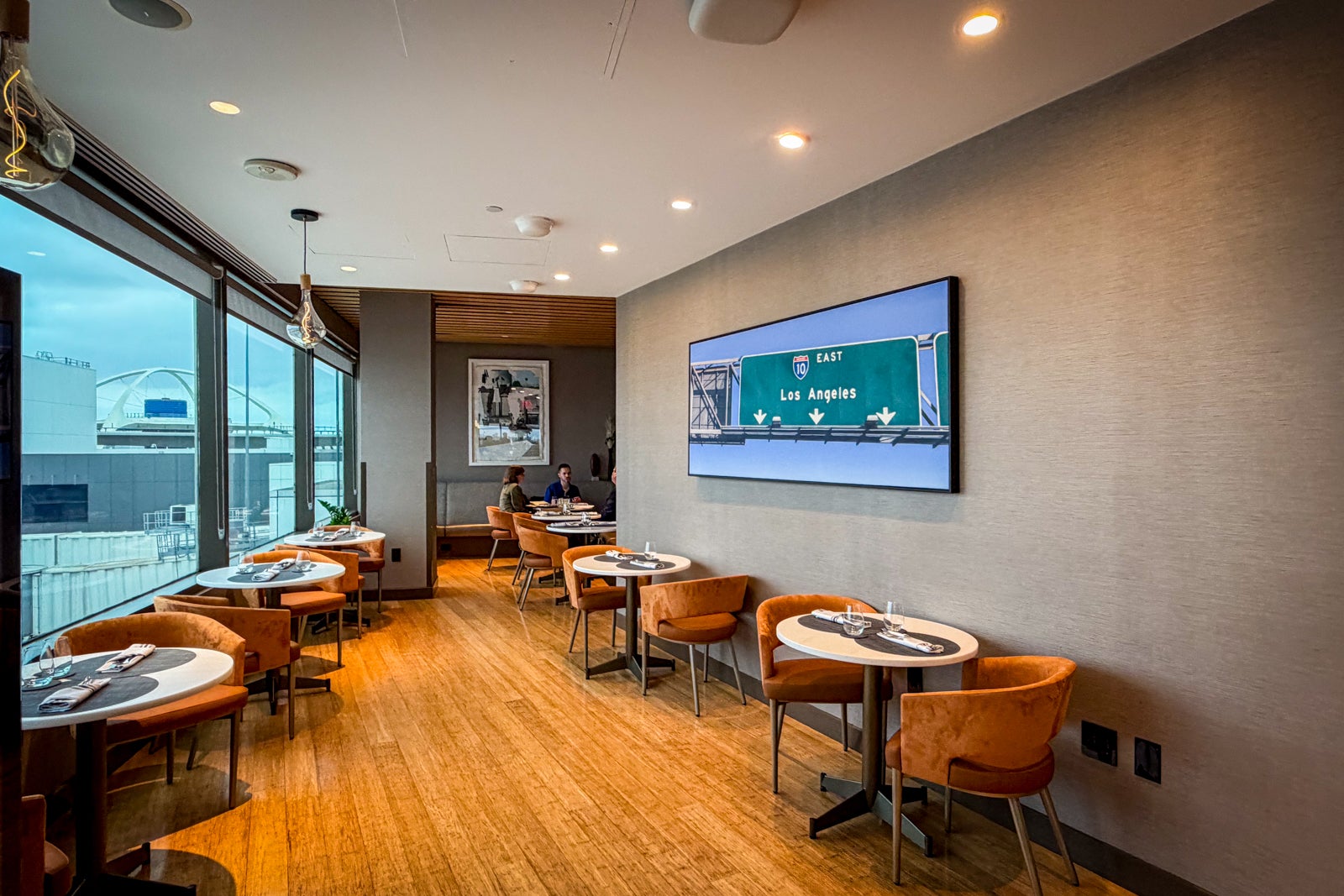
There are power plugs and USB ports, and various works of art by California-based artists hang along the walls.
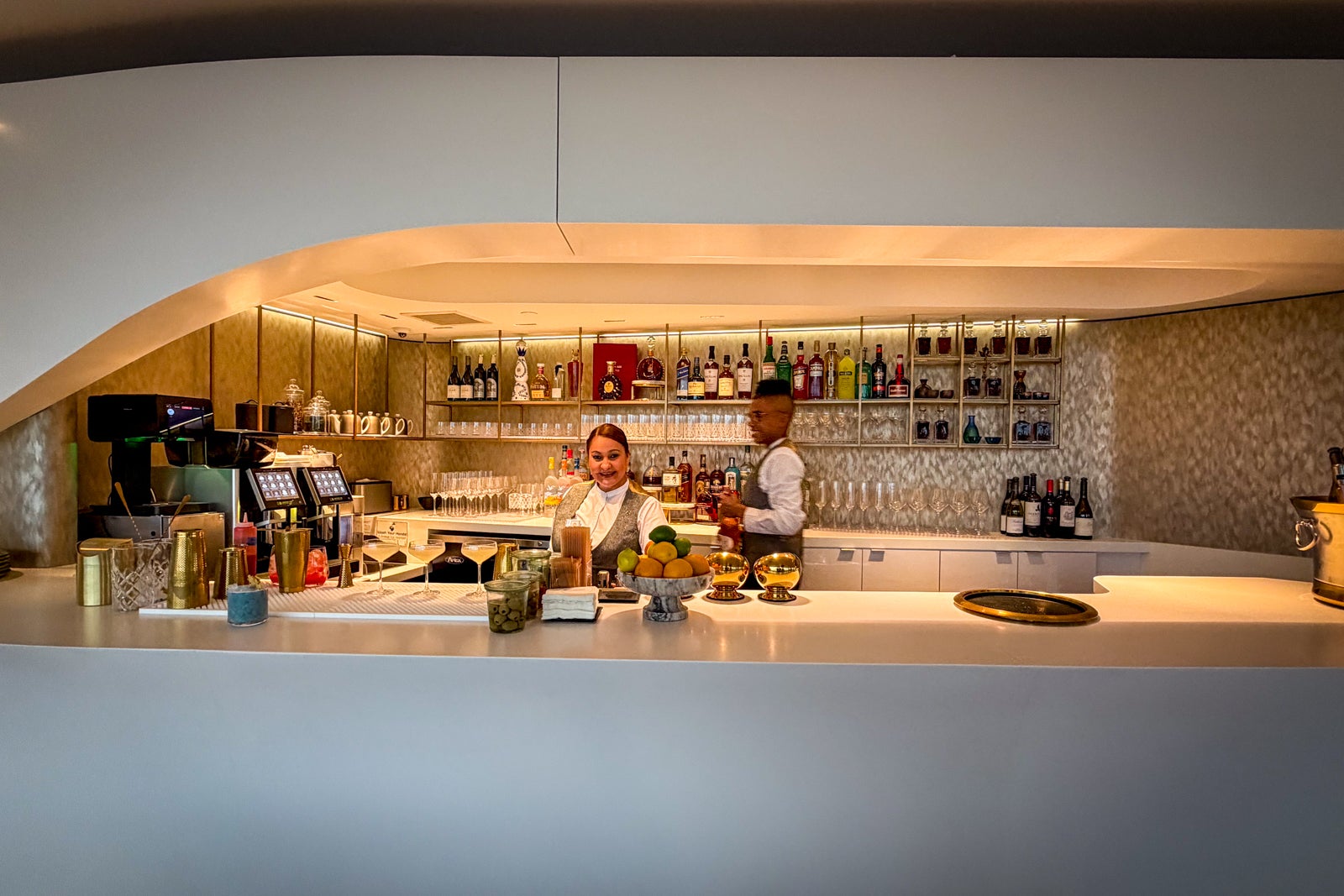
Along one side of the main dining area is a futuristic-looking bar, where servers mix specialty cocktails and coffee drinks, complete with fun foam stenciling.
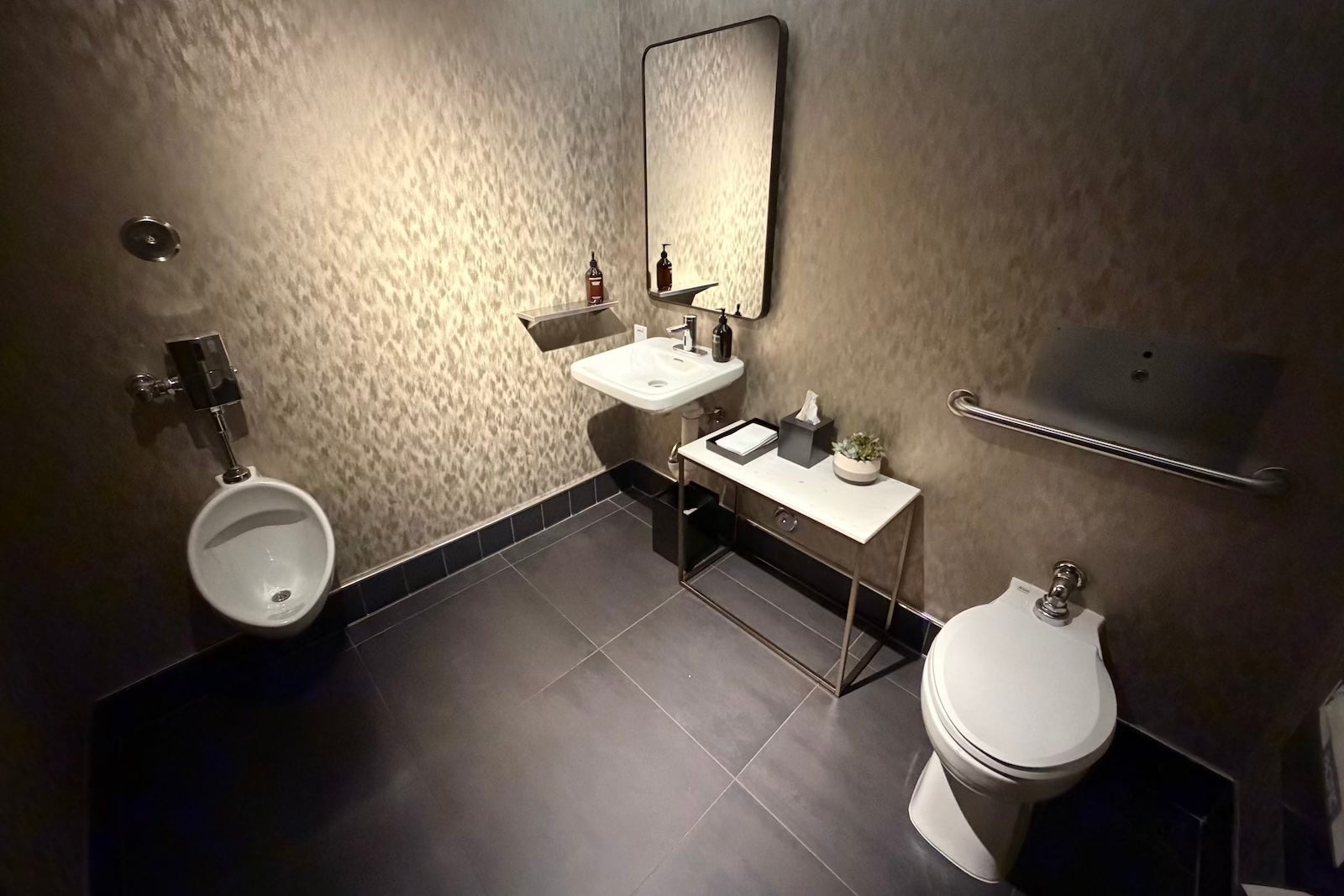
Down a short hallway beyond that, there are four individual bathrooms.
Stepping back out of the lounge and across the terminal to the new Sky Club, there is a special entrance to an area with three individual shower suites; guests can sign up for a shower via a QR code. Inside, we found soft robes and Missoni slippers, plus Grown Alchemist bath and body products.
1 of 3
ERIC ROSEN/THE POINTS GUY
Delta One Lounge at LAX Terminal 2 amenities and food
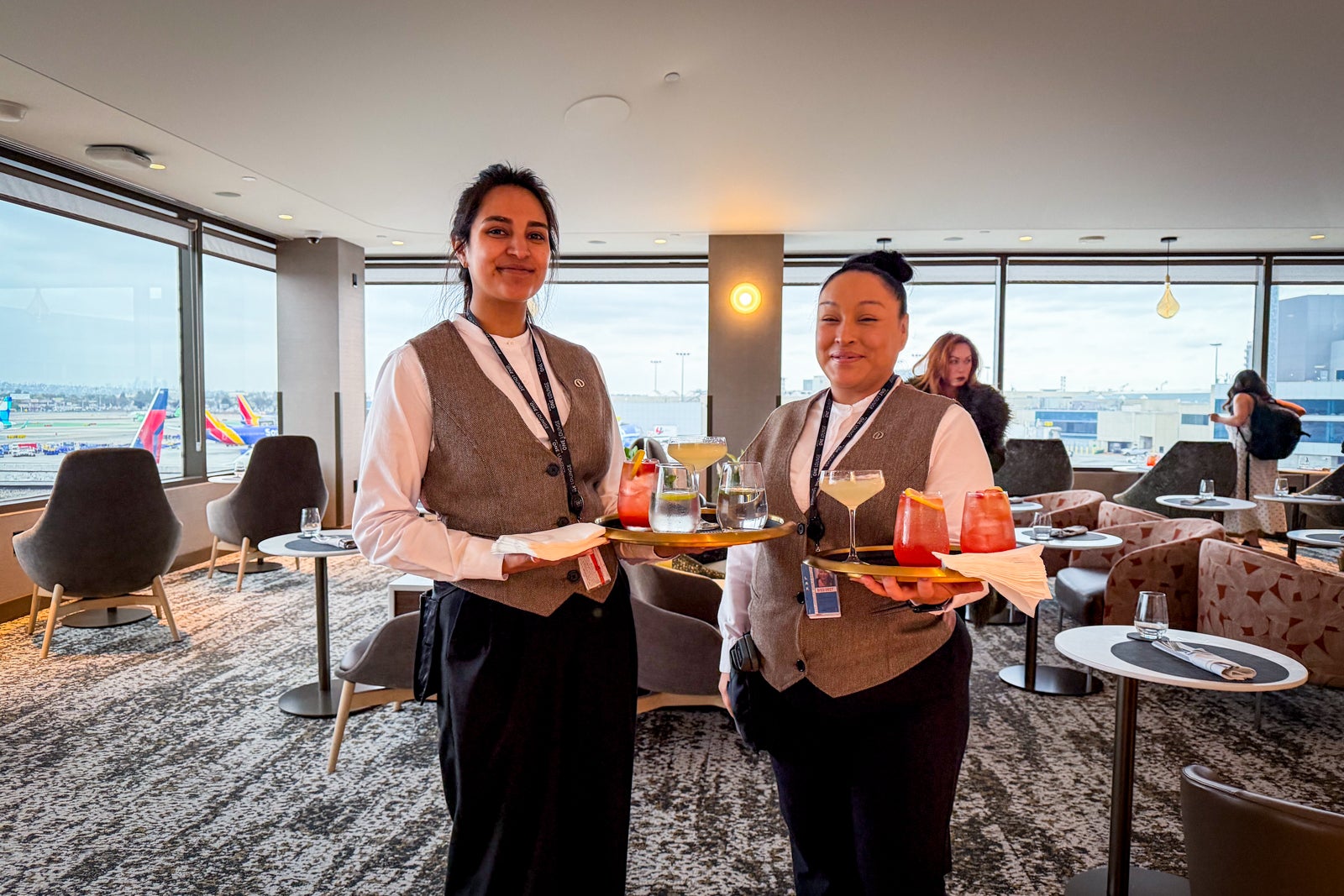
Food and drink are the main amenities here. You won’t find spa services or dedicated quiet rooms and workspaces. Instead, this lounge is intended to be a relaxing respite for a quick meal before you take a transcontinental flight or a long-haul journey across the ocean. Servers will circulate with menus and take orders, then deliver meals right to guests’ seats.
Diners can expect signature dishes that are also served in the Terminal 3 location, like hamachi crudo with avocado, cara cara oranges, lime and mint in a citrus vinaigrette; hand-rolled sushi (another favorite option served from a counter in the T3 Delta One Lounge); and one of the most popular dishes — steak frites in a cognac-peppercorn sauce.
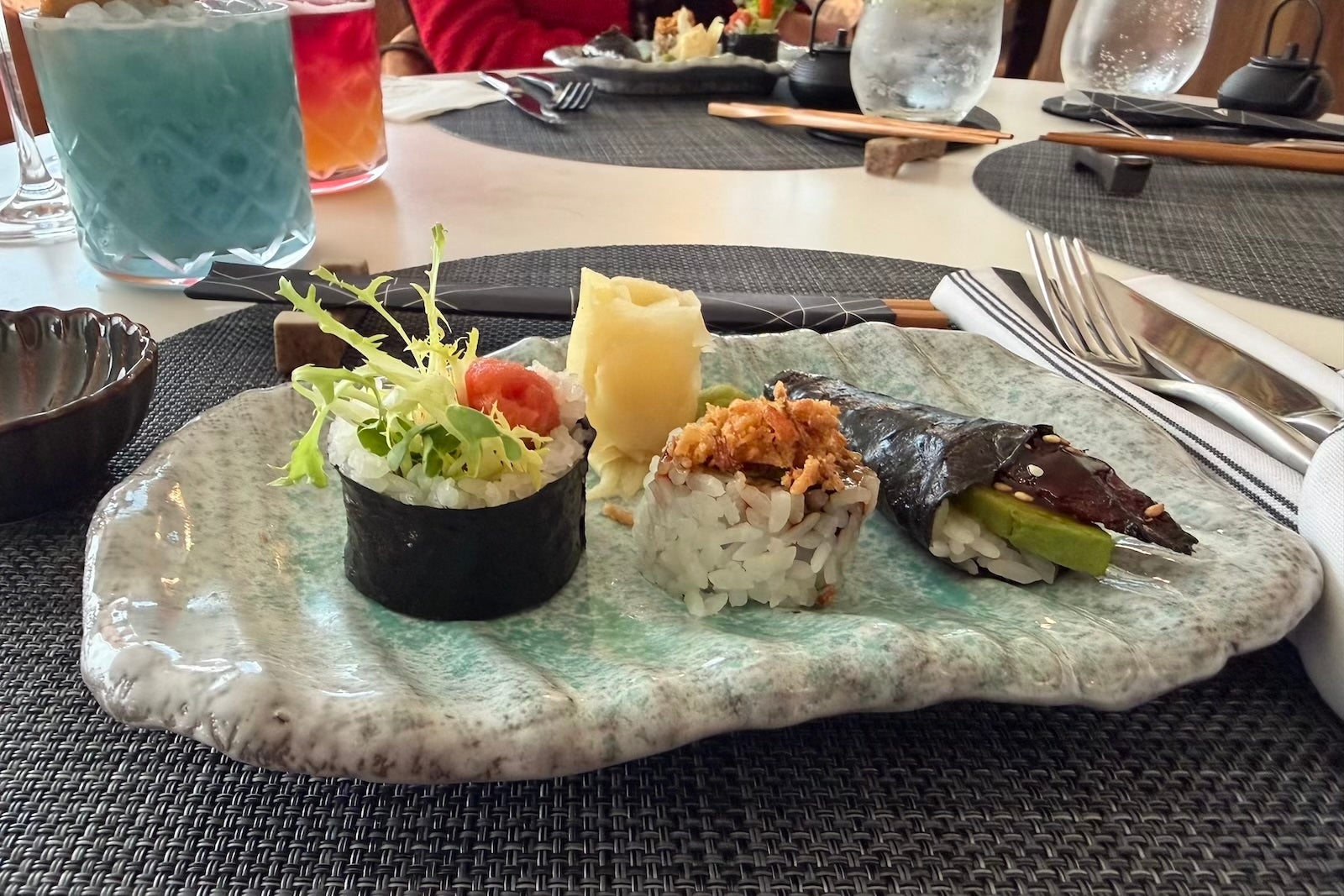
The airline boasts that its dishes are made with ingredients sourced from 10 California farms listed on the menu. The lounge will also serve copper-pot jams and pastries from LA mainstay Sqirl, baked in-house. For a sweet treat to end your meal, you can grab hand-crafted chocolates from Culver City-based Milla Chocolates from the confection table near the bar.
During our lunch with other media and airline executives, we also sampled familiar plates including roasted Jidori chicken with coconut corn soubise, squash and Jimmy Nardello peppers; lamb bolognese with house-made lumache, ras el hangout spices and whipped ricotta; and branzino served with Manila clams, braised fennel and bouillabaisse. There will also be a Delta One burger on offer, which isn’t even available at the Terminal 3 Delta One Lounge, according to Genovese. “Yet,” he said with an arched eyebrow.
1 of 3
Delta One Lounge LAX Terminal 2. ERIC ROSEN / THE POINTS GUY
The cocktail menu, with “Destination Libations” inspired by the cities Delta visits from its LA hub, is the same as that served in the Terminal 3 lounge. Among the popular entries are the Technicolor-pink Sakura Shuhai alluding to Tokyo, with shochu, Luxardo cherry, lemon, hibiscus, rose water and soda; and the ocean-blue Island Sapphire, a taste of Honolulu, with rum, pineapple, coconut, lime and spirulina.

There are also plenty of complimentary wines by the glass, including Taittinger Champagne and Oberon cabernet sauvignon from Paso Robles, California, among others; plus, there’s a list of reserve wines that you can purchase a la carte by the glass or bottle.
There’s a Terminal 2 Sky Club coming
The new Delta One Lounge is a single component of Delta’s 2028 LAX masterplan, which will see Los Angeles host the Summer Olympics. In the lead-up to that, Delta will open the new Sky Club in Terminal 2 by the end of 2027. That will be in addition to the massive 30,000-square-foot Sky Club it already operates in Terminal 3, which opened back in 2022.
The 11,000-square-foot space will be in the airline’s former Sky Club on the upper level of Terminal 2 across from the new Delta One Lounge. It was closed for renovation in November 2024. Genovese did not give many details since it is still under wraps, but said the design choices for the Terminal 3 Sky Club were so popular that guests are likely to see similar hallmarks in the new space.
Prior to it being a Sky Club, the lounge had been operated by Air New Zealand and then Air Canada; its spacious footprint, extensive dining area, shower suites and architectural features like huge windows overlooking the tarmac and runway made it one of my favorite lounge spaces at the airport for many years.
Once the Sky Club opens, the new Terminal 2 Delta One Lounge will temporarily close for renovations. Genovese explained that the airline opened the Delta One Lounge in short order to capitalize on crowds in town for the World Cup, which is currently underway, but it’s just the first step.
“This is opening in two phases and the first phase is what you’re seeing right now,” Genovese said. “We moved rather rapidly to address the capacity needs and the growing demand that’s happening in Los Angeles.”
“Once we open the Sky Club,” he continued, “we will be able to shut this [Delta One Lounge] down quickly and put some of the finishing treatments in that we didn’t have time to do and then reopen.”
Who can access the new Delta One Lounge at LAX Terminal 2?
Unlike Delta’s Sky Clubs, you can’t get into Delta One Lounges just by carrying the right premium credit cards or by purchasing a club membership.
Instead, you’ll have to qualify in one of the following ways:
- Flying on a same-day departing or arriving Delta One flight
- Being an invitation-only member of Delta 360, departing or arriving on a same-day ticket in Delta first class
- Departing on a same-day or connecting flight on select partners in the following cabins: Air France La Premiere, Air France long-haul business class, LATAM Premium business class, KLM long-haul business class, Korean Air First Class and Prestige Class, and Virgin Atlantic Upper Class
Other than that, you’ll be out of luck.
Bottom line
Delta has opened its second Delta One Lounge location at Los Angeles International Airport, making LAX the first airport with two Delta One Lounges. The new space is more like a cozy dining room rather than a multifunctional space like the T3 Delta One Lounge, which has a wellness area with relaxation pods and massage chairs, not to mention a fantastic outdoor deck for planespotting.
Still, the T2 lounge has three dedicated showers (folks visiting the T3 Delta One Lounge need to go to the adjacent Sky Club for a shower), so that’s a selling point in its favor.
The space should make for a tranquil alternative to the busy terminal, reduce crowding in the larger Terminal 3 Delta One Lounge and be more convenient for flyers departing out of a Terminal 2 gate since the walk to their flight will be much shorter.
Here’s hoping there are more exciting things in store as Delta prepares to open a new Sky Club in Terminal 2 late next year and then the fully renovated new Delta One Lounge in Terminal 2 in 2028.
Related reading:

Stacie Harris is a local resident and reporter of the Maple Grove area. Stacie reports on medicine and science for the Maple Grove Report.