The Best Times to Drink Coffee for Energy, According to Experts


Fact checked by Nick Blackmer

Drinking coffee in line with your sleep-wake cycle can optimize its energy-boosting abilities.Credit: yipengge / Getty Images
Drinking coffee in line with your sleep-wake cycle can optimize its energy-boosting abilities.
Credit: yipengge / Getty Images
  • The best times to drink coffee are mid-morning and early afternoon, when your energy naturally dips.
  • Delaying you first cup or having one in after lunch helps maximize caffeine’s effect, and keeps your energy steadier throughout the day.
  • Experts advise against drinking coffee too late in the day or when you’re feeling especially stressed.

Drinking your cup of joe at certain times throughout the day—not just immediately after you wake up—can have substantial effects on your energy levels and health. So if you’re looking to maximize coffee’s impact on your alertness and focus, here’s when experts recommend you brew your next cup.

When Coffee Has Its Biggest Impact

The best time to indulge in that creamy latte or espresso shot often depends on your natural energy levels, your circadian rhythm, and how sensitive your body is to caffeine. But generally speaking, these two times of day may be good opportunities to grab a coffee.

Mid-to-Late Morning (About 9:30 to 11:30 a.m.)

Studies show that cortisol—a hormone responsible for alertness—begins increasing naturally in the early hours of the morning, peaking right around the time when you wake up.

But those cortisol levels eventually decline as the morning goes on, and people may feel less alert. That could be a good time to grab a cup of something caffeinated.

“There isn’t any specific guidance around waiting to drink caffeine until cortisol levels decrease, as everyone’s sensitivity is different,” Kourtney Johnson, RD, LD, registered dietitian, medical reviewer at Within Health, and owner of Intuitively Nourished, told Health.

However, letting your body wake up naturally before drinking coffee could provide more sustained energy over the course of the morning.

“If you wait even 90 minutes after you open your eyes to drink your morning cup of java, you’ll have a much bigger bang for your buck,” Michael Breus, PhD, clinical psychologist, sleep specialist, and founder of Sleep Doctor, told Health.

Delaying your coffee consumption until after breakfast could also be a smart move, as some people can experience gastrointestinal discomfort when they drink coffee on an empty stomach.

However, experts aren’t completely in agreement. For one, research has shown that delaying coffee intake doesn't help you avoid an afternoon “crash” in energy—in fact, it may make people more likely to reach for a second cup too late in the day.

Plus, every person responds to caffeine differently, Deepak Vivek, MD, an interventional cardiologist at the Orlando Health Heart and Vascular Institute, emphasized. For people who aren’t as sensitive to the effects of caffeine, “the best time of day to drink coffee would be in the early morning hours,” he told Health.

The Early Afternoon Slump (About Noon to 3 p.m.)

Many people experience a dip in their energy in the hours after they eat a meal—this "post-lunch slump" is a common phenomenon also known as postprandial sleepiness.

So a mid-afternoon cup of coffee might be just the thing to “increase alertness and mental focus” as you finish out your workday, Johnson said.

That’s because “caffeine blocks adenosine, a chemical that builds up in your brain and makes you feel sleepy,” Angela Holliday-Bell, MD, sleep medicine specialist and founder of The Solution Is Sleep, told Health.

But again, an afternoon cup of joe may not work for everyone. “If you have a low [caffeine] tolerance, it might have a bigger impact on sleep,” Johnson said. “However, some people can tolerate drinking caffeine later in the day, so it really is individualized.”

When To Avoid Drinking Coffee

Mid-morning and early afternoon are considered more ideal times to enjoy your daily brew—so for some people, drinking coffee at other times of day could have the opposite of your desired effect.

Late Afternoon or Evening (After 3 p.m.)

Caffeine can linger in the body long after you drink coffee, so having a cup too late in the day could disrupt your sleep. Specifically, afternoon caffeine could lead to:

  • Trouble falling asleep
  • Less deep sleep
  • Symptoms of sleep deprivation the next day, such as mood changes, tiredness, and trouble focusing or completing tasks

“The average individual takes between six and eight hours to metabolize caffeine,” said Breus. So cutting off your caffeine intake around 3 p.m. should set you up nicely for an 11 p.m. bedtime.

However, everyone metabolizes caffeine differently—some people have genetic variations that make the body process the stimulant more slowly, Johnson explained.

That means they may feel the effects of coffee more acutely, or those effects could take longer to wear off. For this group, it may be best to stop drinking coffee after noon.

During Times of Stress

If your nervous system is in overdrive from stress, coffee’s stimulating effect may make things worse.

Caffeine briefly increases blood pressure and heart rate, which can lead to increased physical symptoms of stress and anxiety, Johnson said.

“Those who are sensitive to caffeine may have symptoms including heart palpitations, nausea, anxiety, and a sensation of jitteriness,” Vivek added. “Other symptoms may include insomnia, elevated blood pressure, and headaches.”

So if you already feel wired or anxious, take it easy on the cold brew until you can de-stress.

Keep in mind: Some studies have found that moderate caffeine consumption has a beneficial effect on the heart, but people “who experience frequent palpitations or skipped beats should probably avoid or reduce their coffee consumption,” said Vivek. Reach out to your doctor if you’re ever unsure.

Other Factors That Affect Caffeine Timing

Coffee may negatively interact with certain medications, reducing their effectiveness. So, according to Johnson and Vivek, be mindful of your caffeine consumption if you take any of the following:

  • Blood thinners
  • Decongestants
  • Antidepressants
  • Blood pressure medications
  • Thyroid medications
  • Antibiotics
  • Supplements such as iron, zinc, or magnesium

If you’re on any of these medications, try spacing your dosage timing apart from when you drink coffee.

Pregnant people should also limit or avoid caffeine consumption to no more than 200 milligrams (about one 12-ounce cup) per day, Vivek added. That means they may want to play around with their caffeine timing, as drinking multiple cups throughout the day to sustain energy isn’t recommended.

Talk to your doctor about any other times you should limit caffeine consumption.


Source link

Leave a Reply

Subscribe to Our Newsletter

Get our latest articles delivered straight to your inbox. No spam, we promise.

Recent Reviews


What is SAP Ariba – Table of Content

What is SAP Ariba?

SAP Ariba is a cloud-based procuration solution to perform business-related transactions on a single platform. SAP Ariba module easily integrates with other SAP ERP modules without using any middleware or is easy to customize as per the business requirements. The benefit of the SAP Ariba module as it offers out-of-the-box functionalities to buyers and suppliers to perform business-related operations and offers effective benefits to procurement management. In today’s world, we need a tool that controls supply chain management and enables us to collaborate with suppliers in an effective way. SAP Ariba digitally transfers your supply chain and helps the organization to grow its business globally. The Ariba solution was first developed in 1996, and in 2012 the SAP was acquired at a total cost of 4.3 billion USD, thus we call it SAP Ariba. 

Want to Become a Master in SAP Success Factors? Then visit here to learn SAP Ariba Training  from hkrtrainings

Overview On SAP Arbia :

SAP Ariba defines how companies connect to get business done, using the marketing leading solutions for the collaborative commerce and Ariba network. Ariba application also helps buyers and suppliers from more than 2 million businesses and 190 countries discover new opportunities, collaborate on transactions, and grow their relationships. Selecting an Ariba implementation partner is perhaps the most important thing about jumping on the Ariba ship. With several Ariba partners out there it becomes difficult in choosing the right one that suits your business. 

What is SAP Ariba is used for?

We said it in the beginning, SAP Ariba is a cloud-based solution that helps to perform business transactions (buy, sell or purchase) efficiently. It also maintains the supply chain management solutions and integrates with other SAP ERP functions. 

We would like to list a few advantages of SAP Ariba;

  • Ariba is how companies connect to get business done, using the marketing leading solutions for collaborative commerce and Ariba network.
  • Ariba helps buyers and suppliers from more than 2 million businesses and 190 countries discover new opportunities, collaborate on transactions, grow their businesses.
  • Selecting an Ariba implementation partner is perhaps the most important thing about jumping on the Ariba partners out there, it becomes difficult choosing the right one that suits your businesses.
  • SAP Ariba helps to manage the project for the implementations in the organizations.
  • Responsible for project schedule, development, testing, execution, and delivery.
  • Helps users to utilize the features included in your subscription and functional tips on how to optimize features and reporting tools.
    Responsible for a successful Go live.

Related Article: What is SAP IBP

Types of SAP Ariba :

The following are the types of SAP Ariba:

  • Ariba collaborative sourcing : sourcing and contracts in the cloud.
  • Ariba spends visibility : Data enrichments and spends visibility in the cloud.
  • Ariba procurement on demand : On-demand requisitions to invoice solutions.
  • Ariba collaborative finance : Network efficiency for finance.
  • Ariba collaborative commerce : Extending network efficiencies to all B2B trading partners.

SAP Ariba Training

  • Master Your Craft
  • Lifetime LMS & Faculty Access
  • 24/7 online expert support
  • Real-world & Project Based Learning

What makes SAP Ariba is different from SAP on-premise applications?

The following are the major differences between the SAP Ariba and SAP on-premise solution.

Before beginning with explaining the differences between these two functional modules, we would like to explain a few things about SAP on-premise solution;

Note :

SAP On-premise : 

  • On-premise is an Enterprise business planning suite that is based on in-memory database management.
  • On-premise is an internal platform so that it will run from the company’s servers when users access it.
  • Most of the large companies prefer to implement on-premise SAP ERP edition this is because offers a full range of functionalities and highly monitoring customer applications.
  • The industries which use on-premise SAP ERP applications are financing, accounting, material management, supply chain management, marketing, and sales industries.
  • The features of on-premise editions include are;
  1. Database-driven 
  2. Networking 
  3. Customization.

Let’s know the differences between SAP Ariba and SAP on-premise solution based on the few features;

Spend Analysis:

  • The on-premise solution offers SAP spend performance management.
  • Whereas SAP Ariba spends visibility.

Sourcing : 

  • SAP on-premise solution performs SAP sourcing and SAP SRM.
  • SAP Ariba performs Ariba sourcing and Ariba discovery.

Contract management : 

  • The on-premise solution provides SAP contract lifecycle management and SAP SRM.
  • Whereas SAP Ariba provides contract management too.

Operational procurements : 

  • SAP on-premise solution offers operational procurement services to the modules like MM (material management), SRM, and SAP commodity procurements.
  • SAP Ariba procure-to-pay, service procurements, and procurement contents.

Invoice management :

  • SAP on-premise solution performs invoice management by open text.
  • Ariba offers invoice management, payment management, and discount management.

Supplier information management : 

  • SAP on-premise solution offers entire Supplier information lifecycle management.
  • Ariba also provides supplier information and performance management.

Salient features of SAP Ariba :

Below are a few key features of the SAP Ariba;

Fast time-to-value : 

  • Get underway quickly in the cloud, enjoying lower TCO and anyways current versions with minimal demands on IT.
Easy-to-use : 
  • Creates contracts quickly and easily using Microsoft Word and Pre-approved templates and legal clauses. 
Controlled processes : 
  • You will be alerted if the pre-approved format or language is modified, helping you control non-standard agreements.
Efficient Collaboration :
  • Work quickly and effectively with all stakeholders via a shared workspace on a multi-tenant, and web-based platform.
Complete visibility : 
  • Stay informed throughout the contract cycle with automatic alerts handy dashboards, and configurable reports.  
Central repository : 
  • Never lose track of a contract with secure, electronic storage, and powerful search tools for access on demand.
On-time renewal : 
  • Receive notification well in advance of the key milestone dates, and make the most of your business opportunities. 
E-signature savings :   
  • Eliminate the time and expense of shipping and signing the multiple contracts copies by adding e-signature capability.
Stronger compliance : 
  • Stay informed about any off-contract activity with controlled processes, automated tracking, and a full audit trail. 
End-to-end commerce : 
  • Integrate your contract processes with additional SAP Ariba solutions, your ERP, or other third-party systems for unrivaled compliance and control.

Frequently Asked Questions SAP Ariba Interview Questions 

HKR Trainings Logo

Subscribe to our YouTube channel to get new updates..!

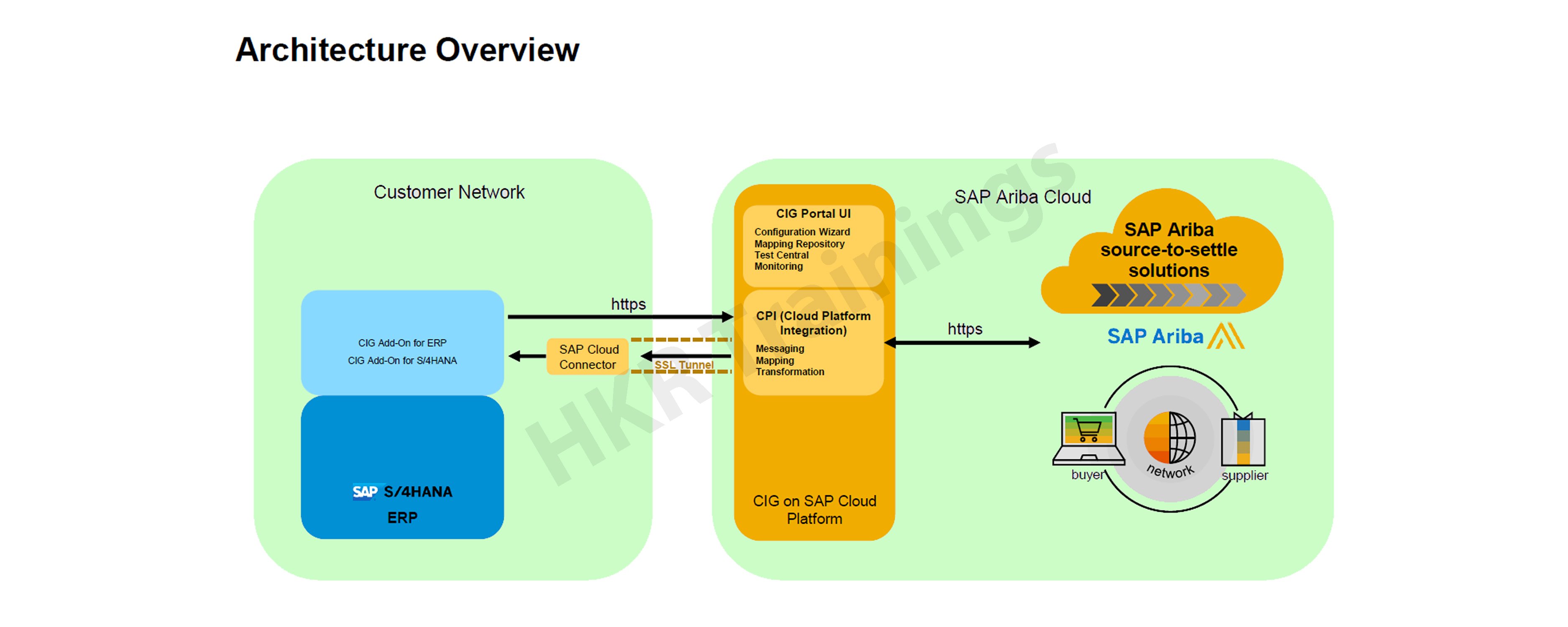
SAP Ariba architecture : 

In this section, we are going to explain the overall architectural overview, its work nature, and the data connectivity. SAP Ariba is the world’s leading B2B solution, this architecture is designed to perform world-class procurement business transactions.

SAP Ariba architecture

SAP Ariba delivers intelligent solutions that enable users to combine data with the latest technologies to improve the procurements and also SCM (supply chain management) services. SAP Ariba architecture is a suite of spend management solutions that is a key component of SAP’s strategy to help organizations to become intelligent enterprises.

 The core infrastructure of the SAP Ariba architecture:

  • Semantic search : the semantic search approaches enhance the user experience by applying the latest machine learning technologies to analyze each query, deliver higher results, and higher quality results.
  • Security : SAP Ariba provides everything from multi-factor authentication to data encryption with numerous security standards and audits. So SAP Ariba offers a high degree of protection for your business.
  • Microservices : the SAP Ariba platform evolving to a microservices-based architecture that simplifies the building tasks and maintains the applications to meet business requirements with greater productivity, and flexibility.
  • Master data service : SAP Ariba integrates with various ERP modules, with respect to that SAP HANA helps to manage master data easily with a centralized data store.

Get ahead in your career with our  SAP Ariba Tutorial !

SAP Ariba Training

Weekday / Weekend Batches

Final words :

We believe that after reading this SAP Ariba post, you might have gained knowledge and skillsets. SAP Ariba is considered to be one of the primary cloud applications that we can see in today’s ERP. application. With the help of this post, you would have become a master with respect to the SAP Ariba fundamental concepts. We have been trying our best to develop all the posts under the experts’ guidance to keep you updated with the recent developments.

Related Article


Source link