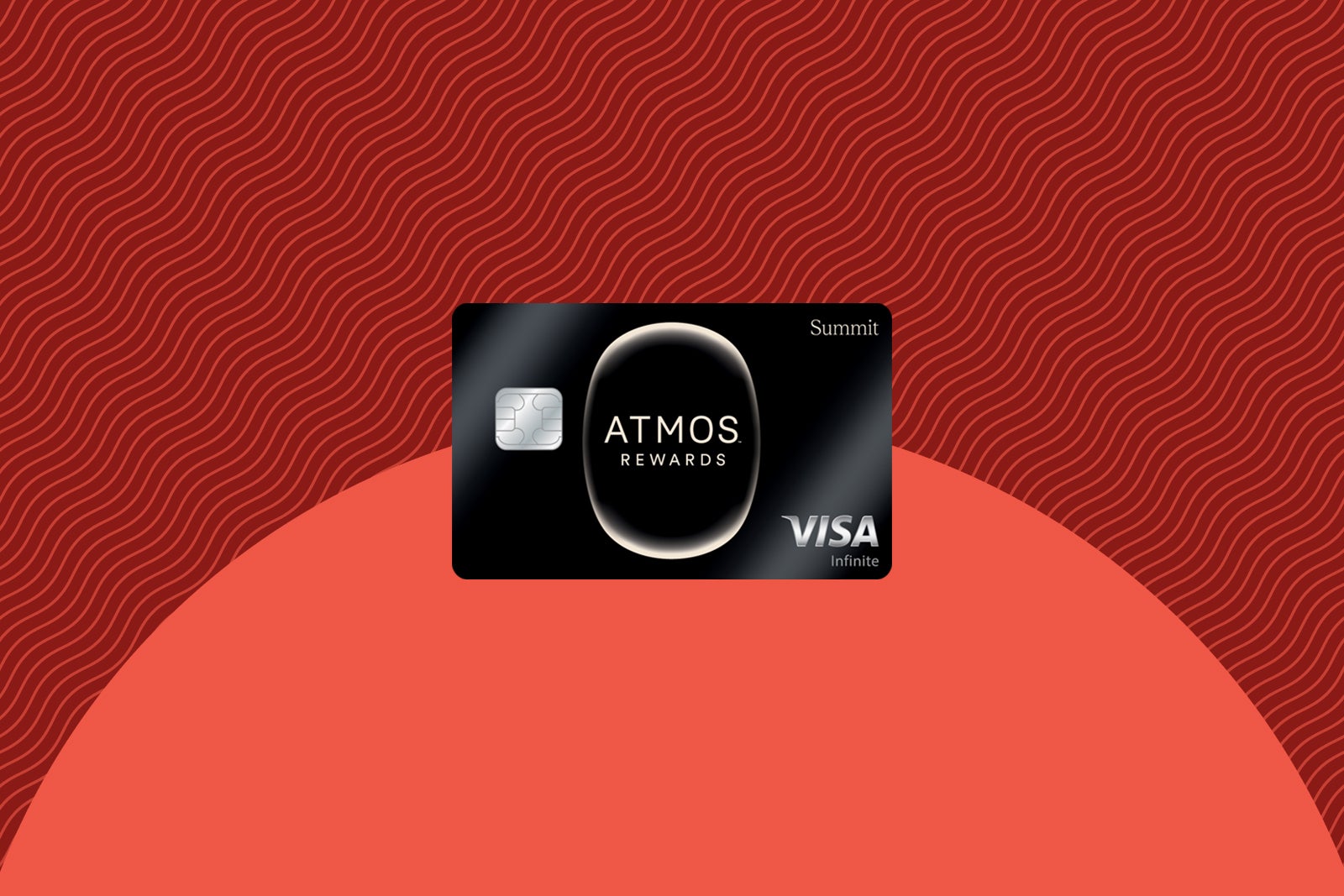
Atmos Rewards card offers: Up to 80,000 bonus points


Atmos Rewards is the loyalty program for Alaska Airlines and Hawaiian Airlines, allowing members to earn and redeem points across both carriers. Atmos Rewards points can be used for flights on Alaska and Hawaiian, as well as a range of partner airlines, making it easier to turn everyday spending and travel into award trips around the world.

The program offers three cobranded credit cards: one business and two personal cards.

The current offers on some of these cards provide solid value for lower spending requirements, so now could be a good time to take a look if you’ve been considering Atmos Rewards as part of your strategy.

Let’s dig deeper into the bonuses available right now and whether they’re worth applying for.

Atmos Rewards Summit Visa Infinite credit card

The Atmos™ Rewards Summit Visa Infinite® credit card features a valuable welcome bonus, useful earning rates and a solid suite of benefits.

Welcome offer: Earn 80,000 bonus points and a 25,000-point Global Companion Award after spending $4,000 on purchases in the first 90 days from account opening.

Based on TPG’s July 2026 valuations, this bonus is worth up to $1,628 when you include the value of the 25,000-point Global Companion Award. This isn’t the highest bonus we’ve seen in the card’s history, but it does have the lowest spending requirement we’ve seen. For certain cardholders, this could be a key factor.

Annual fee: $395
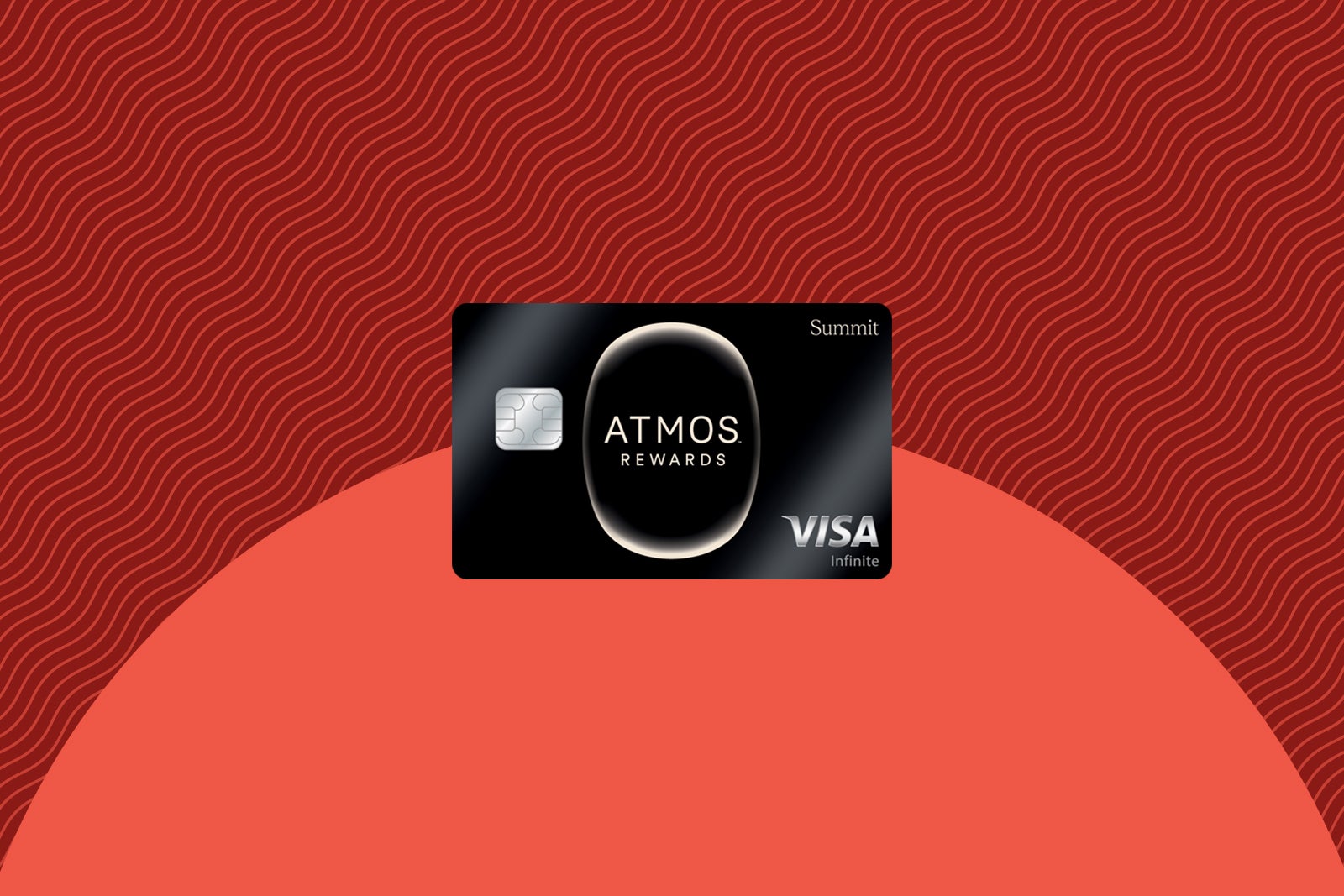
Atmos Rewards Summit card art
THE POINTS GUY

Earning rates:

Reward your inbox with the TPG Daily newsletter

Join over 700,000 readers for breaking news, in-depth guides and exclusive deals from TPG’s experts

  • 3 points per dollar spent on eligible Alaska Airlines and Hawaiian Airlines purchases, eligible dining and foreign transaction purchases
  • 1 point per dollar spent on all other purchases

Key benefits:

  • 10,000 status points every year upon account anniversary, plus 1 status point for every $2 spent on the card
  • A 10% rewards bonus on all points earned if you have an eligible Bank of America account
  • A free checked bag on Alaska Airlines and Hawaiian Airlines for the cardholder and up to six guests on the same reservation (when you pay for your flight with your card)
  • No foreign transaction fees
  • Priority boarding on Alaska Airlines and Hawaiian Airlines for the cardholder and up to six guests on the same reservation (when you pay for your flight with your card)
  • Two Alaska Lounge and two Wi-Fi passes each calendar quarter
  • Up to $120 in statement credits for TSA PreCheck or Global Entry every four years

Why we like it: This welcome offer includes a Global Companion Award, with points redeemable for travel on Alaska, Hawaiian or a partner airline (including Oneworld members) for an award ticket in any class. The 25,000-point award is earned upon account opening and after each card anniversary.

Cardholders can earn a 100,000-point Global Companion Award after spending $60,000 or more in a card anniversary year.

For frequent international travelers, earning 3 points per dollar spent on foreign transaction purchases is an industry first and can help quickly accrue Atmos Rewards points. Matt Moffitt, TPG’s contributing editor for credit cards, is based in Spain and uses this card for most of his everyday spending there since those purchases are charged in euros.

To learn more, read our full review of the Atmos Rewards Summit.


Apply here: Atmos Rewards Summit Visa Infinite credit card


Atmos Rewards Ascent Visa Signature credit card

Semifrequent Alaska Airlines and Hawaiian Airlines flyers who want to pay an affordable annual fee are the target audience for the Atmos™ Rewards Ascent Visa Signature® credit card, a mid-tier option with its own useful perks.

Welcome offer: Earn 70,000 bonus points and a $99 Companion Fare (plus taxes and fees from $23) after spending $2,500 on purchases in the first 90 days from account opening.

TPG’s valuations value this offer at $1,085. While the Companion Fare adds value, this offer is less compelling than other bonuses we’ve seen in the card’s history. However, like the Summit’s offer, it does come with a lower minimum spending requirement, which is worth noting.

Annual fee: $95
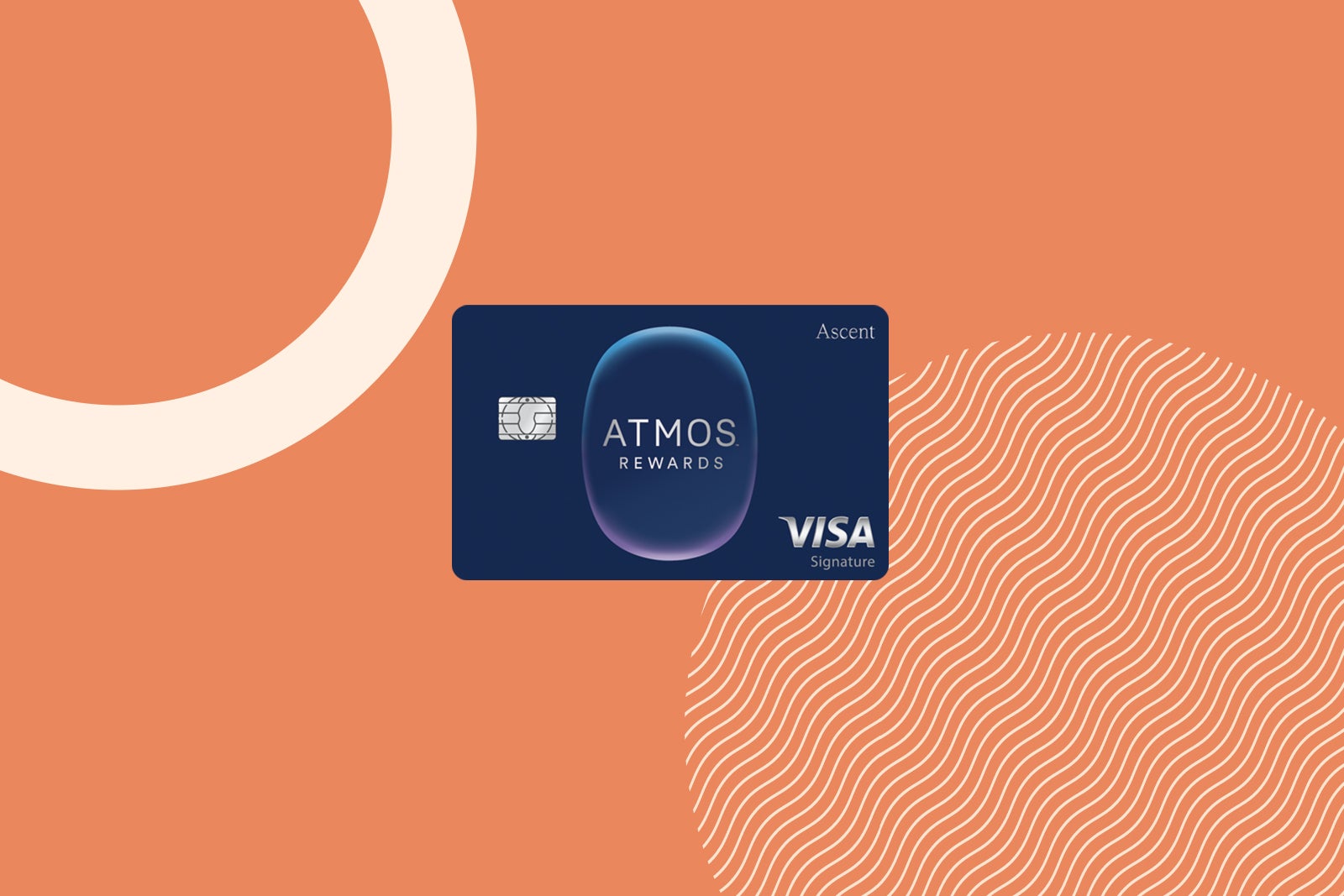
Atmos Rewards Ascent card art
THE POINTS GUY

Earning rates:

  • 3 points per dollar spent on eligible Alaska Airlines and Hawaiian Airlines purchases
  • 2 points per dollar spent on gas, electric vehicle charging stations, cable, streaming services and local transit (including ride-hailing services)
  • 1 point per dollar spent on all other purchases

Key benefits:

  • A 10% rewards bonus on all points earned if you have an eligible Bank of America account
  • A free checked bag on Alaska Airlines and Hawaiian Airlines for the cardholder and up to six guests on the same reservation (when you pay for your flight with your card)
  • Ability to earn an annual $99 Companion Fare (plus taxes and fees from $23) after spending $6,000 on purchases within the prior card anniversary year
  • No foreign transaction fees
  • Priority boarding on Alaska Airlines and Hawaiian Airlines for the cardholder and up to six guests on the same reservation (when you pay for your flight with your card)

Why we like it: The Atmos Rewards Ascent is an excellent choice for anyone who flies Alaska or Hawaiian at least a couple of times each year and can find value in the card’s perks.

To learn more, read our full review of the Atmos Rewards Ascent.


Apply here: Atmos Rewards Ascent Visa Signature credit card


Atmos Rewards Visa Signature Business Card

Small-business owners who fly Alaska Airlines or Hawaiian Airlines regularly, this one’s for you. The Atmos™ Rewards Visa Signature® Business Card provides perks when you fly with Alaska or Hawaiian, good rewards-earning opportunities and a solid welcome offer for a reasonable annual fee.

Welcome offer: Earn 70,000 bonus points and a $99 Companion Fare (plus taxes and fees from $23) after spending $4,000 on purchases in the first 90 days from account opening.

The points in this bonus are worth $1,085, per TPG’s valuations. Like the personal cards, this isn’t the highest offer we’ve seen in the card’s history, but it does match the lowest spending requirement to earn the bonus.

Annual fee: $70 for the company and $25 per card
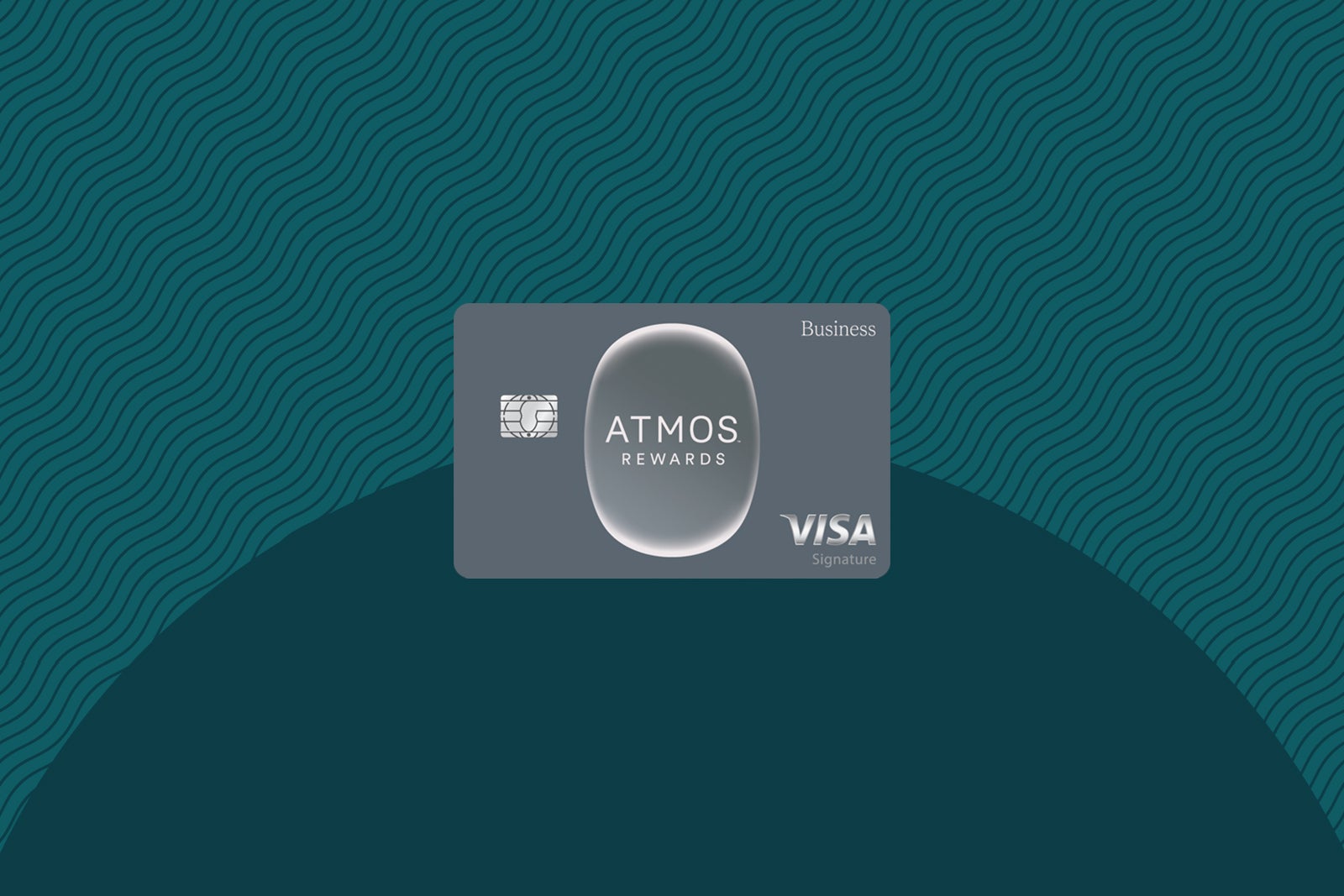
Atmos Rewards Business card art
THE POINTS GUY

Earning rates:

  • 3 points per dollar spent on eligible Alaska Airlines and Hawaiian Airlines purchases
  • 2 points per dollar spent on gas, EV charging stations, shipping and local transit (including ride-hailing services)
  • 1 point per dollar spent on all other purchases

Key benefits:

  • $100 off an annual Alaska Lounge+ membership purchased with your card
  • A 10% rewards bonus on all points earned if you have an eligible Bank of America business account
  • A free checked bag on Alaska Airlines and Hawaiian Airlines for the cardholder and up to six guests on the same reservation (when you pay for your flight with your card)
  • Ability to earn an annual $99 Companion Fare (plus taxes and fees from $23) after spending $6,000 on purchases within the prior card anniversary year
  • No foreign transaction fees
  • Priority boarding on Alaska Airlines and Hawaiian Airlines for the cardholder and up to six guests on the same reservation (when you pay for your flight with your card)

Why we like it: The Atmos Rewards Visa Signature Business is a great option for business owners who would benefit from the perks related to flying on Alaska and Hawaiian.

The Lounge+ membership discount is only available on the business card, so keep that in mind if lounge access matters to you. However, the Summit includes two lounge passes per quarter, providing occasional access without a full membership.

With a long list of bonus categories and the opportunity to earn an annual Companion Fare, this is a strong option for a relatively low annual fee.

To learn more, read our full review of the Atmos Rewards Business.


Apply here: Atmos Rewards Visa Signature Business Card


Bottom line

The Atmos Rewards cards are offering new bonuses that allow new cardholders to add a haul of points to their accounts.

  • The Summit suits frequent flyers who want premium perks and faster status earning.
  • The Ascent is ideal for casual Alaska Airlines or Hawaiian Airlines travelers who value free bags and a lower annual fee.
  • The Business delivers solid rewards and travel benefits for small-business owners at a competitive price point.

If you’re ready to maximize this program and collect Atmos Rewards points, earning one of these offers is a fantastic way to start.

These are solid bonuses with lower minimum spending requirements than we’ve seen in the past, so now could be a good time for many types of spenders to apply.


Apply here: Atmos Rewards Summit Visa Infinite credit card
Apply here: Atmos Rewards Ascent Visa Signature credit card
Apply here: Atmos Rewards Visa Signature Business Card


Source link

Leave a Reply

Subscribe to Our Newsletter

Get our latest articles delivered straight to your inbox. No spam, we promise.

Recent Reviews


What is Lean?

Lean Management is a governance and task organization strategy based on Toyota’s production process that aims to improve a firm’s productivity, particularly the quality and value of its output. 

Lean Management improves processes by minimizing time consumed on value-less tasks (unneeded activities or transportation, waiting, overproduction, and so on), as well as quality issues and complexities. The two major goals of lean management are Maximum satisfaction of customers and Employee success. 

What is Lean Methodology?

Lean methodology is a corporate strategy that emphasizes continuous improvements and appreciation of people in order to increase the stream of value to consumers. The lean methodology paradigm is guided by these two basic notions in the following way:

  • Continuous Improvements: Leaders who use the lean model, think that there is always room for improvement. They might use software to monitor their company’s continuous improvement by planning, measuring, and documenting the lean initiatives and operations. These leaders frequently design their processes using an integrated reform cycle like DMAIC (Define, Measure, Analyze, Improve, and Control), PDSA (Plan, Do, Study, & Act), etc.
  • Appreciating People: According to corporations that use lean philosophy, individuals who are responsible for making the goods or services frequently have the best ideas. They cherish the opinions of their staff equally to the opinions of their consumers. Lean firms can more effectively find opportunities for improvement by enabling employees to contribute their observations and suggestions. 

As industry, technologies, and consumer demands change, the lean methodology evolves, but at its heart, it continues to foster sensible decisions, better access to knowledge, and a heavy focus on giving value to customers.

Agile Online Training

  • Master Your Craft
  • Lifetime LMS & Faculty Access
  • 24/7 online expert support
  • Real-world & Project Based Learning

What is Agile?

Agile is a cyclical technique used for project management & software design processes that enable teams to deliver value to clients efficiently with minimal hassles. A corporation that is agile adapts rapidly to changing markets as well as workplace conditions.  Such businesses recognize that change is unavoidable, so they assess their systems and practices on a regular basis to ensure that they have been favorable to optimal work engagement, satisfaction, and productivity.

  Become a Agile Certified professional by learning this HKR Agile Training !

What is Agile methodology?

The Agile methodology is a style of project management that divides a project into segments. It necessitates ongoing engagement with stakeholders as well as continual development at each stage. Teams revolve through a sequence of planning, implementing, and assessing once the job begins. Collaboration is essential among team members as well as project stakeholders.

In recent times, the usage of Agile as a project management methodology has skyrocketed. Agile development approaches will soon be adopted in 85% of any and all software creation projects, according to Gartner. It has evolved into a blanket term encompassing a number of planning, administration, and technological approaches and processes for iteratively managing projects, software development, and additional products and services. Some such examples are Scrum, by far, the most common and popular software development approach, Kanban, and XP (eXtreme Programming or Paired Programming).

Technical approaches that facilitate Automated Tests, Continuous Integration/ Seamless Delivery/ Distribution (CI/ CD), and an ever-shortening release cycle for software as well as other goods, are also included in Agile methodology. Most of these activities belong under the blanket term  – DevOps.

Similarities between Lean and Agile

Although different concepts, several similarities exist between the two methodologies, some of which are:

  • According to the Lean methodology, each activity should be examined and improved on a regular basis. As a result, this strategy places a strong emphasis on continual improvement or Kaizen. Regular inspections of the outcomes and the work design are also part of the Agile approach, which allows for the evaluation of potential improvements.
  • Both methodologies place higher importance on the people responsible for the project execution than the tools that are used.
  • Lean as well as Agile, strive to provide more value to customers by proactively responding to client feedback or paying attention to excellence. 
Project Management & Methodologies, lean-vs-agile-description-0, Project Management & Methodologies, lean-vs-agile-description-1

Subscribe to our YouTube channel to get new updates..!

Differences between Lean and Agile

Let us now look at how these two concepts differ.

1. Methodology

Persistent improvement and customer satisfaction are prioritized in agile development. The Agile method uses a cyclical development process and active client involvement from beginning to end by the Agile team. The Agile method uses a cyclical development process and active client involvement from beginning to end by the Agile team.

The goal of the Lean Methodology is to reduce risk and eliminate waste. The production time reduces and increases efficiency when you eliminate everything that isn’t helping the project achieve its final aim.

2. Area of Focus

The scope of the project and the utility to the client are at the heart of agile projects. You prioritize the value proposition at the conclusion of each sprint and make improvements in the next cycle.

Lean methodology, however, is mostly about increasing process efficacy and quality. The importance of process development and quality is highlighted, with a strong emphasis on the absence of faults.

3. Structure of Teams

A team following the Agile methodology consists of a group with limited members who, generally, are:

  • Self-organized: Teams decide on their own how to complete the assignment. 
  • Interdisciplinary: Team members have a variety of tasks and talents, but they all work toward the same goal. 

In Lean methodology, on the other hand, several Lean teams are created, which are made up of employees from various essential areas. A ‘Team Leader’ oversees the group and solo initiatives in each group. The  Lean team participants should be competent, but they don’t require to be self-organized or interdisciplinary all of the time.

4. User-friendliness

When the needs change frequently, the Agile methodology provides better flexibility and hence may prove to be more efficient to use.

In the midst of continuous change in requirements, Lean methodology is relatively rigid and may present complexities.

5. Timeline of Projects

To accomplish tasks more rapidly, agile teams operate in short development cycles. Loops and sprints are usually 2-4 weeks long.

By optimizing process flow, lean teams can minimize the duration of the project timetable. They usually limit their labor in procedures, which reduces the project’s overall time frame. There is no predetermined timeline, unlike Agile.

6. Approach

An Agile environment enables the construction of a project in brief iterative and cumulative cycles, known as sprints. It’s a strategy of dividing any project, down into segments, each of which includes planning, execution, testing, and assessment. This is accomplished by going a single step at a time till the goal is met.

By making small, continual adjustments all through the production process, the Lean approach strives to enhance efficiency. This can result in quicker development cycles, although it is not Lean’s main objective.

Top 30 frequently asked Agile Interview Questions !

Advantages of Lean

Here are some of the key benefits that you can avail by following the Lean Methodology:

  • Reduced waste: Lean methodology aids businesses in determining better resource allocations in order to reduce waste, give greater value to customers, and boost profit margins.
  • Better Productivity: It can help you increase the operational efficiency of your company by removing distractions and giving employees instructions that enable them to concentrate on critical tasks.
  • Increased Process Efficiency: Companies that use lean methodologies can optimize their procedures by embracing the concept of pull, which involves only creating things whenever there is a market demand for them. This enables businesses to guarantee that each stage of their value chain is running well.
  • Better Focus: By decreasing unproductive operations like downtime, extra inventory, and needless duties, lean methods can assist an entire organization to improve its focus. This frees up staff’s time to focus on tasks that add value to their clients.
  • Reduction in Costs: The paradigm of the lean technique focuses on maximizing profits by minimizing waste and determining the greatest price consumers can justify spending for an item.
  • Better Quality: Companies can increase the general value of their offerings by focusing solely on what delivers benefits to clients. They can also better satisfy the demands of their clients and provide them with fresh, inventive solutions. 

Agile Online Training

Weekday / Weekend Batches

 Advantages of Agile

Many benefits are accrued by those who follow the Agile methodology:

  • Better Quality Products: Testing is an integral aspect of the project implementation stage in Agile methodology, which implies the total grade of the finished product is higher. The client is kept informed throughout the development cycle and has the ability to request changes based on market conditions. 
  • Increased Customer Satisfaction: Customers are always included in the judgment cycle in Agile, which leads to higher customer loyalty.  You provide greater benefits to the customer and guarantee that the finished product is actually suited to their expectations by keeping them in the fold and making adjustments based on their input.
  • Improved control: Because of its openness, feedback inclusion, and quality aspects, Agile enables managers to have more influence over the process. All through the project’s execution phase, quality is assured, and all participants are kept informed with daily status reports using robust reporting instruments and processes.
  • Greater adaptability: When Agile is properly applied in a development team, it allows for unprecedented flexibility. Teams operate in shorter bursts, with the product owner providing frequent feedback and interaction.
  • Lower risks: Any project that follows the Agile technique should never fail, in theory. Agile operates in tiny sprints with the goal of delivering value continually. Even if a certain technique does not go as anticipated, there must be a small element that can be retrieved and utilized in the future. 

Disadvantages of Lean Methodology

While a valuable approach, Lean is not without its own sets of disadvantages:

  • Inventory Issues: Inventory is deemed inefficient in a lean organization, thus only a small amount of stock is maintained on hand to reduce carrying costs. While this seems beneficial, it also places greater reliance on suppliers, who must hope that they will be able to handle the necessary adjustments in order to produce swiftly and efficiently. A company’s success could be jeopardized if the inventory system is disrupted.
  • Costs of Implementation: Lean management is sometimes applied to an organization that has seldom utilized it before. All systems and manufacturing processes will very certainly have to come to a close in their present state. Companies that are not equipped for the additional costs of introducing new hardware will be hit hard by this event.
  • Difficult Transition: Owing to the facility’s complete transformation, transitioning from the previous method is difficult. This will necessitate a significant amount of patience and overhead, as well as a full revamp of work methods. As a result, it is critical for leaders to be open about future changes in the organization. 

Disadvantages of Agile

Some of the disadvantages of Agile are:

  • Inadequate resource planning: Since Agile is predicated on the premise that teams simply don’t know what their ultimate outcome (or perhaps even a few iterations of deliverables down the track) will be like from the start, it’s difficult to anticipate project costs, time, and resources from the outset.
  • Scarcity of documentation: Documentation occurs across an Agile project, and is frequently “just in time” for generating the output, rather than from the start. As a result, it gets less detailed and frequently falls to the bottom of the priority list. 
Conclusion

Both Lean, as well as, Agile provide a set of guidelines that can be used in application development to ensure that the appropriate product is provided as soon and efficiently as feasible. While the basic principles of Lean and Agile have been compared in this piece, it’s crucial to recognize that they are not mutually incompatible. When it comes to project management, companies could be both, Lean as well as Agile.


Source link