DevOps Architecture | Overview & Benefits of DevOps Architecture


Devops Architecture – Table of Content

A Quick Introduction to DevOps

As I said earlier, DevOps is a combination of two services such as development and operations. With the help of the DevOps application, a single team in the business organization can handle the entire software development application lifecycle. The main tasks included are testing, operations, and deployment. The DevOps application will reduce any disconnection between any software developers, QA or quality assurance engineers, and system administrators. DevOps also helps to promote any collaboration between code development and operations to deploy software codes to produce faster, automated, and repeatable software products. DevOps also change the IT culture with a complete focus to deliver effective IT service that is based on agile practice in a system-oriented approach.

Become a Devops Certified professional by learning this HKR DevopsTraining !

Advantages of DevOps

  • The following are the few advantages of using DevOps:
  • DevOps is an effective approach to get quick development and deployment of software applications.
  • This DevOps responds faster to the technical market to improve your business growth.
  • DevOps also escalate the business organization’s profit to decrease software delivery time and overall cost.
  • DevOps process helps to clear the descriptive process and gives us clear clarity about product development and delivery.
  • DevOps also improve customer satisfaction and experience.
  • This also simplifies the multiple software product collaboration and tools used in the cloud to access them.
  • In other words, DevOps is nothing but collective responsibility; this also leads to increased productivity and better team engagements.

DevOps features

The below are the key features of DevOps tools;

Automation process:

The automation process helps to reduce the development time, during the time of testing and software deployment stage. Automation also helps to increase productivity and catch the bugs quickly. To get contiguous product delivery, each code will be defined through this automation test process, cloud-based automation service, and component builds.

Collaboration process:

As I said earlier DevOps means the development and operations team collaborated to form a DevOps application tool. This collaboration improves the cultural team model and a team becomes more productive. The collaboration strengthens ownership and accountability. So this makes team share their responsibilities and work closely in full sync and you can also perform deployment in a faster way.

Integration process:

In any software environment set up, applications need to be integrated with other components. The integration process helps to combine the existing code with the new functionality. Both continuous integration and testing produce continuous development. The frequency in the microservices leads to perform significant operations, to overcome this hustle, both the continuous integration and delivery help to deliver the product in a quicker, reliable, and safer way.

Configuration Management Process

This process ensures the application interacts with the resources that are concerned with the software development environment. The configuration files will not be created where the external application configuration separates from the source code.This type of configuration file can be written during the time of deployment or they can be loaded to the application at the run time, this depends on the software environment in which you are working on.

Become a Devops Certified professional by learning this HKR  Devops Training in Hyderabad!

DevOps Training

  • Master Your Craft
  • Lifetime LMS & Faculty Access
  • 24/7 online expert support
  • Real-world & Project Based Learning

DevOps Architecture Overview

DevOps architecture explains the overall functionalities of both software development and operations. The below diagram will explain the DevOps architecture in brief;
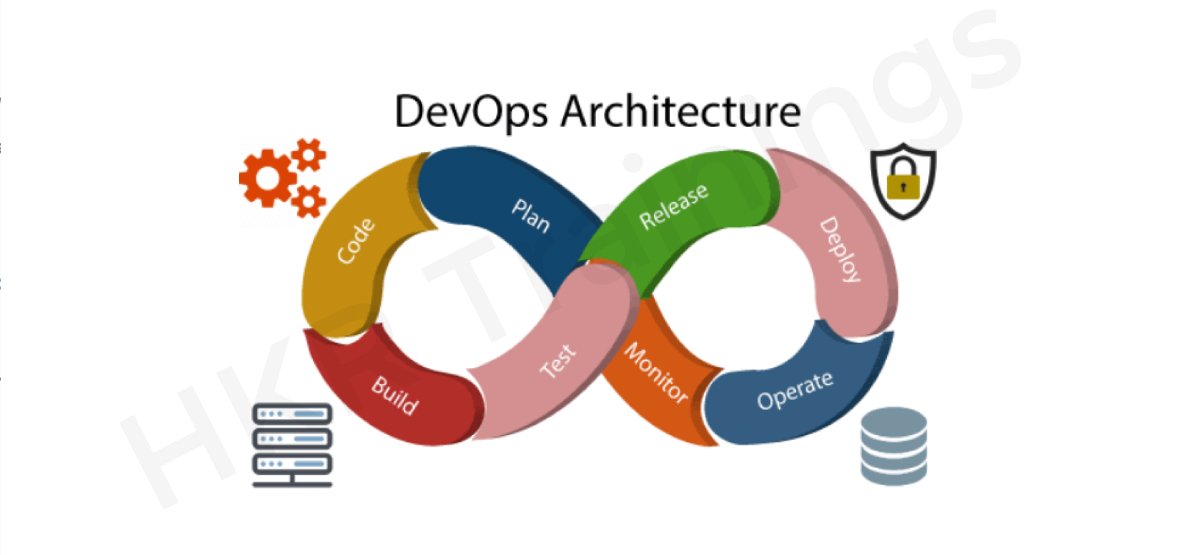
DevOps Architecture

Below are the key Components of DevOps Application

Build:

Suppose without the DevOps application, the cost of the resources was calculated based on the pre-defined software usage with fixed hardware resource allocations. And by using DevOps, we can get a complete picture of cloud usage, resource sharing, and build software applications. This is one of the important mechanisms used to control resource usage and capacity.

Code:

DevOps applications included are Git, Ansible, and Kubernetes, which consist of programming codes. With the help of software codes you can build the software product, helps to modify the software product as per customer requirements, and you will also know the reason behind actual and expected output. Usually, the codes will be arranged in files and folders, etc.

Test:

The final product will be ready for production after the testing process. For example, in the case of manual testing, this process consumes more time to test the software codes and moving the codes to the output. In the case of automation testing, the time will be consumed for testing so that developers can consume the time required for the code deployment and also automates the script running.

Plan:

DevOps uses the agile methodology to plan the software development process. With the help of operations and development teams will be in sync, and also help to organize the work to increase productivity.

Become a Devops tool Certified professional by learning this HKR Build and Release Engineer Training  !

Monitor:

Here the Continuous monitoring will reduce the risk of software failure. Also, this process helps to track the system accurately so that the overall application health can also be checked. The system monitoring becomes more comfortable with various services and the log data may get monitored through third-party software tools like Splunk.

Deploy:

Many software systems can schedule the time for automated deployment. Here the cloud management platform also enables users to capture accurate data insights and also view the scenarios.

Operate:

DevOps applications can change the way of the traditional approaching process to develop and test the application separately. The software team will operate in a collaborative way where the teams can actively participate throughout the service lifecycle process.The operational team also interacts with developers and comes up with various monitoring plans to monitor the business and IT services.

Release:

Deploying software products to the environment can be done with the help of the automation process. But when you deploy the software product to the environment, this process is done by the manual testing process. The important process included is release management to release the product that impacts on the customers.

Want to know more about Devops,visit here DevopsTutorial !

Cloud Computings, devops-architecture-description-0, Cloud Computings, devops-architecture-description-2

Subscribe to our YouTube channel to get new updates..!

DevOps Architecture Lifecycle Management

DevOps lifecycle defines the agile methodology relationship between the development and operations. This is a kind of process that is practiced by software developers and operational engineers together starting from the beginning stage to the last stage of the software development life cycle.

Devops lifecycle

Continuous development:

This phase of the lifecycle involves the planning and software coding stage. Here the vision of the project will be decided during the time of the planning phase. The developers begin to develop the codes at this stage. One important point to be noted, no DevOps tools required for the planning process, but several tools are there to maintain the software codes.

Continuous integration:

This stage is considered the heart of the DevOps lifecycle. Continuous integration is nothing but a software development practice in which developers are needed to commit any changes related to source code. This is done on a weekly or daily basis. Continuous integration also helps to detect any problems or bugs in the early stage of source code development.In this Continuous integration stage, you need to perform many testing techniques such as unit testing, code review, packaging, and integration testing.

Continuous testing:

In this phase, software testing experts are needed to perform continuous testing for detection, and bugs. There are lots of tools available such as TestNG, Selenium, and Junit, etc. These tools allow Quality assurance professionals to test multiple code-bases to ensure that there is no flow in the functionality. Here the Docker containers can also be used for stimulating the test environment.

Continuous monitoring:

Monitoring is an important phase that involves all the major operational factors that can be carried in the entire DevOps lifecycle process. In this stage, important software development information will be recorded and processed carefully processed. The monitoring process will be integrated within the operational capabilities of the software development applications.

Continuous feedback:

The application development process is consistently improved by analyzing the results from the software operations. This continuous feedback process is carried out by critical phase information and constant feedback related to operations and the development of the next version of the software application.

Top 30 frequently asked Devops Interview Questions !

Continuous deployment:

In this phase of the DevOps lifecycle, the entire software code is deployed to the production server. Also, this is an essential stage to ensure the code is correctly used on all the server layers. Here the new codes are continuously deployed and also configuration management tools play a vital role while executing the tasks quickly and frequently. Here are some popular tools that are used : Chef, Ansible, SaltStack, and Puppet.

Continuous operations:

All DevOps operations are done on the basis of the continuity with a fully automated release process and allow any organization to accelerate the overall time to market continuity.It is also clear that continuity is a critical factor in the Developments and operations. This process takes a long time to detect any issues and produce a better version of the final product. With the help of Aws DevOps, We can create any software product more efficiently and improve customer satisfaction. 

Acquire Gitlab certification by enrolling in the HKR Gitlab Training program in Hyderabad!

DevOps Training

Weekday / Weekend Batches

Insight

As we already explained that DevOps is just a part of the development and operation process.From this DevOps architecture blog,you can master the concepts like components used, features, and life cycle of the DevOps. If you are an AWS expert, then learning the DevOps architecture overview is an important thing in your professional career.

Related Articles:


Source link

Leave a Reply

Subscribe to Our Newsletter

Get our latest articles delivered straight to your inbox. No spam, we promise.

Recent Reviews


Isolation Levels in SQL Server – Table of Content

Introduction to Isolation levels in SQL server:

Isolation in database servers is specifically defined at the database levels,which will help the user to manage many database operations.One important thing about isolation in the database servers is that others can also see the changes made by database experts. Before in the legacy system (older system) of the database, this type of functionality had been implemented systematically and with the latest version, you will get this option by default. In the n-tier system architectures, a combination of both stored procedures and data transaction management system is required to send and receive the information from multiple sources. 

 To gain in-depth knowledge with practical experience in SQL server, then explore  SQL server Training !

Different types of isolation levels:

There are 5 types of isolation levels are available such as;

1. Read committed

2. Read uncommitted

3. Repeatable Read

4. Serializable

5. Snapshot

Let’s discuss them in brief;

The syntax is as follows

SET TRANSACTION1 ISOLATION LEVEL
{
READ Uncommitted
I READ Committed
I REPEATABLE READ
I SNAPSHOT
I SERIALIZABLE
}

To select the options choose the following navigation is as follows,

Go to SSMS tools menu -> under the Query execution -> select advanced, -> then user need to drop-down the dialog box to set the transaction isolation levels-> now it’s time for modification.

IMAGE

Prerequisites’:

 1. Scripted needed to write the sample table creation

 2. Data population details.

The following simple program explains the complete prerequisites:

CREATE TABLE Dept

(

   DeptId1 INTR Primary key,

   DeptName Varchar (200),

   DeptDesc   varchar (400),

)

INSERT INTO Dept

(deptId, deptName, deptDesc)

VALUES

(201, ‘information science and Engineering’, ‘Undergraduate and Postgraduate courses in information science and Engineering’),

(202, ‘Computer science and Engineering’, ‘Undergraduate and Postgraduate courses in computer and science engineering’),

CREATE Table1 Exam

(

   ExamID INTG PRIMARY KEY,

   ExamName VARCHAR (200),

  ExamName VARCHAR (400)

)

INSERT INTO Exam

(examId, examname, examDesc)

VALUES

(301, ‘PYTHON’, ‘Theory paper and Lab assignment in Python’),

(302, ‘Data Structure management’, ‘Theory paper and Lab assignment in Data structure management system’),

CREATE TABLE1 StudentMarks

(

StudentID INTG IDENTITY (1, 2) PRIMARY key,

   DeptId INTG,

  ExamId INTG,

   MarksObtained INT

)

SELECT COUNT (1) FROM StudentMarks

…….2387516

…….Insert the records in StudentMarks repeatedly

INSERT INTO StudentMarks (deptId, examId, marksObtained)

VALUES

 (105, 205, 95)

…..duplicate the record number to increase the count

INSERT INTO StudentMarks (deptId, examId, marksObtained)

SELECT deptId, examId, marksObtained FROM StudentMarks

Isolation Levels in detail:

Here I am going to discuss the features and limitations of Isolation levels. We can execute these different levels of isolations with the help of two concurrent data transactions by executing them with two different scripts from any two different database users’ sessions, where they can access the same resources. The important thing is that the output will be different for different concurrent data transactions.

The code and examples for each isolation levels are as follows,

1. Read Uncommitted:

Here the data transaction running in this level will not share any kind of issues and locks being used to prevent error transactions. With the help of the Read uncommitted isolation level,users can also perform any data modification operations.

Let us consider the two transaction examples,

Transaction1 (query1.sql) will be started like this,

BEGIN TRANSACTION1

UPDATE StudentMarks

SET marksObtained = 100

WHERE deptId = 105 AND examId = 205

In this case, the Transaction1 execution continues, now we are going to start the Transaction2 (query2. Sql),

The following code explains the Transaction2,

BEGIN TRANSACTION2

SELECT marksObtained

FROM StudentMarks

WHERE deptId = 105 AND examId = 205 AND studentId = 2

COMMIT TRANSACTION2

Now the TRANSACTION1(query1.Sql) is committed and executed.

Output:

…….

UPDATE Exam

SET examDesc = ‘theory papers and lab assignment exam in Python’

WHERE examId = 205

UPDATE StudentMarks

SET marksObtained = 90

WHERE deptId = 105 AND ExamId = 205

COMMIT TRANSACTION

SQL Server Certification Training

  • Master Your Craft
  • Lifetime LMS & Faculty Access
  • 24/7 online expert support
  • Real-world & Project Based Learning

2.READ Committed:

In this READ committed isolation level, the data transactions issues will be locked at the time of data modification, and also it will not allow the other transactions to read/ write the modified data which is not yet committed. One more important thing is that the Read Committed level of Isolation level will prevent the Dirty Data Read issue. The behavior of the READ COMMITTED level depends on the full set of the READ_COMMITTED_SNAPSHOT option. If the READ_COMMITTED_SNAPSHOT is set to OFF, and it will prevent the other data transactions from modifying the data rows until the other transaction is completed. If the READ_COMMITTED_SNAPSHOT is set to ON, the modified row version will be used to represent each transactional statement by allowing consistent data.

To understand this level of Isolation, the query2.Sql data script will be executed once the starting of query1. Sql. In Query1.Sql, the MarksObtained data column will be set to 72 at the starting of the first updated statement. Then the second MarkObtained data column will be set to 82 in their third updated statements. At the end of the first query transaction 1, the value 82 will be committed.

Query transaction 2 will start once the first transaction updates statement is executed. Query Transaction 2 reads Value 72. But this MarksObtainbed data value is not the committed one. Now it’s time to read the uncommitted modified data they are also known as dirty read. Once the execution of the first Query1.sql script finished, then the second Query2. Sql will be executed again. This time, this query2.sql will produce the output as 82, which will be the least committed data values by transaction 1.

Programming Example:

Start with Transaction (qusery1. sql) , this transaction will be started as below,

BEGIN TRANSACTION

UPDATE StudentMarks

SET marksObtained = 72

WHERE deptId = 105 AND examId = 205

…..

Here the Transaction 1 (Query1. Sql) execution continues and transaction 2 (Query2.Sql) will be started, and committed as well.

The programming code is as follows,

BEGIN TRANSACTION

SELECT marksObtained

FROM StudentMarks

WHERE deptId = 105 AND examId = 205 AND studentId = 1

COMMIT TRANSACTION

Here the Transaction 1 (Query1. Sql) is finished.

…….

UPDATE Exam

SET examDesc = ‘Theory paper and Lab Assignment in Python’

WHERE examId = 205

UPDATE StudentMarks

SET marksObtained = 72 ….. 92

WHERE deptId = 105 AND examId = 205

COMMIT TRANSACTION

Example 2:

In this example, the option READ_COMMITTED_SNAPSHOT will be SET to ON. The ALTER command statement needs to be executed to set the SNAPSHOT property with this READ COMMITTED isolation level.

ALTER DATABASE

SET READ_Committed_SNAPSHOT  ON

Here query2.Sql transaction script commands will be executed, once after the Query1.Sql is finished. In the Query1, the marksobtained column will be set to 72 in the first UPDATE command statement. In the next execution, the column value will be set to 82 in the third UPDATE command statement. At the end of transaction 1, the marks value82 will be committed.

In the next step, we are going to use the SELECT statement in query TRANSACTION 2, where this transaction will not wait for the TRANSACTION1 to be committed or executed. The SELECT statement will return the last committed data instant where Query1. Sql is still running. The final output you will get is 72.

BEGIN TRANSACTION

UPDATE StudentMarks

SET marksObtained = 72

WHERE deptId = 105 AND examId = 205 Here the TRANSACTION1 (query1. Sql) execution continues until the TRANSCATION2 (query2.sql) get started and committed.

BEGIN TRANSACTION

SELECT marksObtained

FROM StudentMarks

WHERE deptId = 105 AND examId = 205 AND studentId = 2

COMMIT TRANSACTION

Now TRANSACTION 1 (query1.sql) is finished.

….

Update Exam

SET examDesc = ‘theory paper and Lab Assignments in Python’

WHERE examId = 205

UPDATE StudentMarks

SET marksObtained = 72……82

WHERE deptId = 105 AND examId = 205

COMMIT TRANSACTION

Example 3:

In this example, TRANSACTION 1 will retrieve the column values for examId 205 from the Exam table. After this statement gets executed, it will execute the two UPDATE statements for the StudentMarks columns.

The first execution of the SELECT statement will give the examDesc value as follows,

ExamDesc = ‘Corrected: Theory paper and Lab Assignment in Python ‘.

Here the TRANSACTION 4 (query4.Sql) command script will be executed, once after the TRANSACTION 3 (query3.Sql). When the previous StudentMarks update statements being executed by TRANSACTION 1(query1.Sql) and TRANSACTION 2 (query2.Sql).

The Query is as follows;

BEGIN TRANSACTION

SELECT examId, examName, examDesc

FROM Exam

WHERE examId = 205

……….

The above program indicates that the transaction1 execution continues. Now TRANSACTION2 started and committed,

BEGIN TRANSACTION

UPDATE Exam

SET examDesc = ‘Corrected: Theory paper and LAB Assignment in PYTHON’

WHERE examID = 205

COMMIT TRANSACTION

The TRANSACTION2 is committed and completed.

OUTPUT:

UPDATE StudentMarks

SET marksObtained = 72

WHERE deptId = 105 AND examId = 205

UPDATE StudentMarks

SET marksObtained = 82

WHERE deptId = 105 AND examID = 205

SELECT examId, examName, examDesc

FROM Exam

Where examID = 205

COMMIT TRANSACTION

 To gain in-depth knowledge with practical experience in MS SQL server, then explore  MS-SQL Training!

Business Intelligence & Analytics, isolation-levels-in-sql-server-description-0, Business Intelligence & Analytics, isolation-levels-in-sql-server-description-1

Subscribe to our YouTube channel to get new updates..!

3.Repeatable Read:

In this level of isolation, statements never read the data which has been modified but not yet committed. One important thing is that, no any other transaction can modify the data that will be read by the current transaction until it completes. Here user can make use of the shared locks to place all the data read by each and every statement in the transaction. This also helps to prevent the other transactions from modifying or changing any data rows that have been read by the transaction.

This level of isolation starts from the beginning, takes all the previous transactions and their commitments. Now let’s start with our actual code example, in this case, TRANSACTION 1 retrieves the data column from examId from the Exam table. After this statement has been executed, the batch command executes the two UPDATES statements for the StudentMarks table. Again the same SELECT statement will be executed. The following examples will explain the scenario,

BEGIN TRANSACTION

SELECT examId, examName, examDesc

FROM Exam

WHERE examId = 205

In this example, TRANSACTION 1(query3. Sql) will continue its execution and TRANSACTION 2 (query4.Sql) will be started and tries to modify the command examDesc. But the TRANSACTION 1 is used for reading purposes and the data record will be locked for updating until the next transaction 1 committed.

BEGIN TRANSACTION

Update Exam

SET examDesc = ‘corrected: theory paper and Lab assignment in Python’

WHERE examId = 205

COMMIT TRANSACTION

Now the TRANSACTION1 (Query3. Sql) will be completed.

UPDATE StudentMarks

SET marksObtained = 82

WHERE deptId = 105 AND examId = 205

UPDATE StudentMarks

SET marksObtained = 83

WHERE deptID = 101 AND examID = 205

SELECT examId, examName, examDesc

FROM Exam

WHERE examId = 205

COMMIT TRANSACTION

The next example shows the second occurrence of the SELECT statement in any Transactions which will now retrieve the extra record.

BEGIN TRANSACTION

SELECT examId, examName, examDesc

FROM Exam

WHERE examName = ‘PYTHON’

Here the TRANSACTION 1 execution continues and TRANSACTION 2 (query6. Sql) will be started and committed.

BEGIN TRANSACTION

SELECT examId, examName, examDesc

FROM Exam

WHERE examName = ‘Python’

Now start with transaction6,

BEGIN TRANSACTION

INSERT INTO Exam

(examId, examName, examDesc)

VALUES

(201, ‘Python’, ‘Duplicate_value: Corrected: theory paper and Lab Assignment in Python’)

COMMIT TRANSACTION

TRANSACTION 1 (Query5. Sql) is completed

OUTPUT:

UPDATE StudentMarks

SET marksObtained = 61

WHERE deptId = 105 AND examId = 205

UPDATE StudentMarks

SET marksObtained = 72

WHERE deptId =105 AND examId = 205

SELECT examId, examName, examDesc

FROM EXAM

WHERE examName = ‘Python’

COMMIT TRANSACTION

4.SERIALIZABLE:

In the Serializable isolation level, the statement commands cannot read the data which has been modified but not yet committed by any other transaction. No, any other transactions can perform data modification that will only read by the current transaction. One important thing is that other transactions cannot add new rows with any new key values that will be read by any statements in the current Transaction levels.

In the following example, TRANSACTION 1 (query5. Sql) will retrieve the EXAM column values such as exam name = ‘Python’. Once this Transaction executes, the two UPDATE statements available for the StudentMarks table and finally make use of the SELECT statement to retrieve the EXAM column data for examName = ‘Python’ will be executed again.

Once the SELECT statement execution finishes, TRANSACTION 2 starts that is (query8. Sql). This TRANSACTION now tried to add new record into the ExamName = ‘Python’ and commit the change. Let’s see the programming example,

At first, the transaction 1 (Query5. Sql) is started as shown in the example,

BEGIN TRANSACTION

SELECT examId, examName, examDesc

FROM Exam

WHERE examName = ‘Python’

Here the Transaction 1 execution continues and TRANSACTION 2 (query8. Sql) now started. Transaction 2 or (query8. Sql) should wait until any changes made to the TRANSACTION 1 has been completes.

BEGIN TRANSACTION

INSERT INTO Exam

(examId, examName, examDesc)

VALUES

( 205, ‘Python’, ‘Duplicate: Corrected: Theory paper and Lab assignment in Python’)

COMMIT TRANSACTION

TRANSACTION 1 (Query5. Sql) is completed.

UPDATE StudentMarks

SET marksObtained = 72

WHERE deptId = 105 AND examId = 205

UPDATE StudentMarks

SET marksObtained = 82

WHERE deptId = 105 AND examId = 205

SELECT examId, examName, examDesc

FROM Exam

WHERE examName = ‘Python’

COMMIT TRANSACTION

SQL Server Certification Training

Weekday / Weekend Batches

5.Snapshot Isolation

In this isolation level, the data read by any transaction statement will be transferred to the Concurrent version of the data. Here the data modification will be made by other transactions only when the starts of the currently available transaction are not visible to any other current TRANSACTION. SNAPSHOT level of transactions will not request “lock” when reading or retrieving the data. SNAPSHOT transactions do not block reading any other transactions from writing the data.

The command ALLOW_SNAPSHOT_ISOLATION Sql database option should be set to “ON”,before starting any transaction with the SNAPSHOT isolation level.

ALTER DATABASE

SET ALLOW_SNAPSHOT_ISOLATION ON

Here the READ_COMMITTED_SNAPSHOT database option determines the behavior of any default READ COMMITTED isolation levels when the snapshot isolation level will be enabled in the Sql database.

If the READ_COMMITTED_SNAPSHOT Sql database option is set to ON, the in-built database engine uses the row versioning and snapshot isolation level as the default systems.

ALTER DATABASE

SET READ COMMITTED SNAPSHOT ON.

THE SIGNIFICANCE OF DIFFERENT ISOLATION LEVELS:

The following are the important significances of different isolation levels:

  • Only one type of isolation level can be set at a time, and it has remained unchanged until it is being changed or modified.
  • The lower isolation levels may increase the isolation ability of multiple users to access the different data at the same time and also increases the concurrency effects.
  • As per the latest research, the higher level isolation level reduces the concurrency effects and this stage of isolation level needs more system resources and increases the data transaction chances.
  • The lowest isolation level – READ uncommitted is one of the default isolation levels which prevents the dirty reads by specifying appropriate statements.
  • Repeatable read isolation level is more restrictive and it encompasses READ COMMITTED. This additionally specifies that no other transactions can modify or remove any kind of data that has been read by the current data transaction. One important thing is that the Concurrency level is lower for READ_COMMITTED statements.
  • The highest isolation level, SERIALIZABLE – guarantees that a transaction will retrieve the same accurate data each time it repeats the read operations.
  • SNAPSHOT isolation specifies that the readable data within the data transaction will never reflect changes made by other simultaneous transactions.

INSIGHT:

In this blog, I have tried my best to explain the important concepts of different isolation levels in SQL servers.As I have explained there are mainly 5 types of Isolation levels are available, these isolation levels will help to maintain the data concurrency and also maintain the accuracy level while performing data transactions. I hope this blog may help a few of you to gain valuable knowledge on isolation levels and also enables you to interact with many social community experts.

Related Articles:

1. Exception Handling in SQL Server

2. SQL Server Joins

3. SQL Server Data Tools

4. Normalization in SQL Server


Source link