

A Quick Introduction to DevOps
As I said earlier, DevOps is a combination of two services such as development and operations. With the help of the DevOps application, a single team in the business organization can handle the entire software development application lifecycle. The main tasks included are testing, operations, and deployment. The DevOps application will reduce any disconnection between any software developers, QA or quality assurance engineers, and system administrators. DevOps also helps to promote any collaboration between code development and operations to deploy software codes to produce faster, automated, and repeatable software products. DevOps also change the IT culture with a complete focus to deliver effective IT service that is based on agile practice in a system-oriented approach.
Become a Devops Certified professional by learning this HKR DevopsTraining !
Advantages of DevOps
- The following are the few advantages of using DevOps:
- DevOps is an effective approach to get quick development and deployment of software applications.
- This DevOps responds faster to the technical market to improve your business growth.
- DevOps also escalate the business organization’s profit to decrease software delivery time and overall cost.
- DevOps process helps to clear the descriptive process and gives us clear clarity about product development and delivery.
- DevOps also improve customer satisfaction and experience.
- This also simplifies the multiple software product collaboration and tools used in the cloud to access them.
- In other words, DevOps is nothing but collective responsibility; this also leads to increased productivity and better team engagements.
DevOps features
The below are the key features of DevOps tools;
Automation process:
The automation process helps to reduce the development time, during the time of testing and software deployment stage. Automation also helps to increase productivity and catch the bugs quickly. To get contiguous product delivery, each code will be defined through this automation test process, cloud-based automation service, and component builds.
Collaboration process:
As I said earlier DevOps means the development and operations team collaborated to form a DevOps application tool. This collaboration improves the cultural team model and a team becomes more productive. The collaboration strengthens ownership and accountability. So this makes team share their responsibilities and work closely in full sync and you can also perform deployment in a faster way.
Integration process:
In any software environment set up, applications need to be integrated with other components. The integration process helps to combine the existing code with the new functionality. Both continuous integration and testing produce continuous development. The frequency in the microservices leads to perform significant operations, to overcome this hustle, both the continuous integration and delivery help to deliver the product in a quicker, reliable, and safer way.
Configuration Management Process
This process ensures the application interacts with the resources that are concerned with the software development environment. The configuration files will not be created where the external application configuration separates from the source code.This type of configuration file can be written during the time of deployment or they can be loaded to the application at the run time, this depends on the software environment in which you are working on.
Become a Devops Certified professional by learning this HKR Devops Training in Hyderabad!

DevOps Training
- Master Your Craft
- Lifetime LMS & Faculty Access
- 24/7 online expert support
- Real-world & Project Based Learning
DevOps Architecture Overview
DevOps architecture explains the overall functionalities of both software development and operations. The below diagram will explain the DevOps architecture in brief;
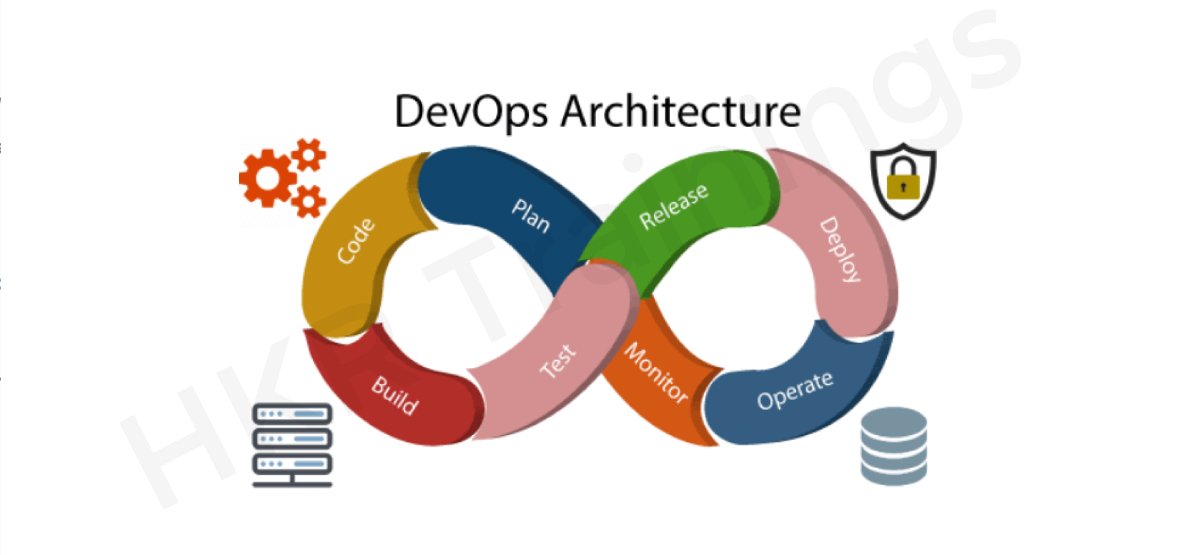
Below are the key Components of DevOps Application
Build:
Suppose without the DevOps application, the cost of the resources was calculated based on the pre-defined software usage with fixed hardware resource allocations. And by using DevOps, we can get a complete picture of cloud usage, resource sharing, and build software applications. This is one of the important mechanisms used to control resource usage and capacity.
Code:
DevOps applications included are Git, Ansible, and Kubernetes, which consist of programming codes. With the help of software codes you can build the software product, helps to modify the software product as per customer requirements, and you will also know the reason behind actual and expected output. Usually, the codes will be arranged in files and folders, etc.
Test:
The final product will be ready for production after the testing process. For example, in the case of manual testing, this process consumes more time to test the software codes and moving the codes to the output. In the case of automation testing, the time will be consumed for testing so that developers can consume the time required for the code deployment and also automates the script running.
Plan:
DevOps uses the agile methodology to plan the software development process. With the help of operations and development teams will be in sync, and also help to organize the work to increase productivity.
Become a Devops tool Certified professional by learning this HKR Build and Release Engineer Training !
Monitor:
Here the Continuous monitoring will reduce the risk of software failure. Also, this process helps to track the system accurately so that the overall application health can also be checked. The system monitoring becomes more comfortable with various services and the log data may get monitored through third-party software tools like Splunk.
Deploy:
Many software systems can schedule the time for automated deployment. Here the cloud management platform also enables users to capture accurate data insights and also view the scenarios.
Operate:
DevOps applications can change the way of the traditional approaching process to develop and test the application separately. The software team will operate in a collaborative way where the teams can actively participate throughout the service lifecycle process.The operational team also interacts with developers and comes up with various monitoring plans to monitor the business and IT services.
Release:
Deploying software products to the environment can be done with the help of the automation process. But when you deploy the software product to the environment, this process is done by the manual testing process. The important process included is release management to release the product that impacts on the customers.
Want to know more about Devops,visit here DevopsTutorial !

Subscribe to our YouTube channel to get new updates..!
DevOps Architecture Lifecycle Management
DevOps lifecycle defines the agile methodology relationship between the development and operations. This is a kind of process that is practiced by software developers and operational engineers together starting from the beginning stage to the last stage of the software development life cycle.

Continuous development:
This phase of the lifecycle involves the planning and software coding stage. Here the vision of the project will be decided during the time of the planning phase. The developers begin to develop the codes at this stage. One important point to be noted, no DevOps tools required for the planning process, but several tools are there to maintain the software codes.
Continuous integration:
This stage is considered the heart of the DevOps lifecycle. Continuous integration is nothing but a software development practice in which developers are needed to commit any changes related to source code. This is done on a weekly or daily basis. Continuous integration also helps to detect any problems or bugs in the early stage of source code development.In this Continuous integration stage, you need to perform many testing techniques such as unit testing, code review, packaging, and integration testing.
Continuous testing:
In this phase, software testing experts are needed to perform continuous testing for detection, and bugs. There are lots of tools available such as TestNG, Selenium, and Junit, etc. These tools allow Quality assurance professionals to test multiple code-bases to ensure that there is no flow in the functionality. Here the Docker containers can also be used for stimulating the test environment.
Continuous monitoring:
Monitoring is an important phase that involves all the major operational factors that can be carried in the entire DevOps lifecycle process. In this stage, important software development information will be recorded and processed carefully processed. The monitoring process will be integrated within the operational capabilities of the software development applications.
Continuous feedback:
The application development process is consistently improved by analyzing the results from the software operations. This continuous feedback process is carried out by critical phase information and constant feedback related to operations and the development of the next version of the software application.
Top 30 frequently asked Devops Interview Questions !
Continuous deployment:
In this phase of the DevOps lifecycle, the entire software code is deployed to the production server. Also, this is an essential stage to ensure the code is correctly used on all the server layers. Here the new codes are continuously deployed and also configuration management tools play a vital role while executing the tasks quickly and frequently. Here are some popular tools that are used : Chef, Ansible, SaltStack, and Puppet.
Continuous operations:
All DevOps operations are done on the basis of the continuity with a fully automated release process and allow any organization to accelerate the overall time to market continuity.It is also clear that continuity is a critical factor in the Developments and operations. This process takes a long time to detect any issues and produce a better version of the final product. With the help of Aws DevOps, We can create any software product more efficiently and improve customer satisfaction.
Acquire Gitlab certification by enrolling in the HKR Gitlab Training program in Hyderabad!
DevOps Training
Weekday / Weekend Batches
Insight
As we already explained that DevOps is just a part of the development and operation process.From this DevOps architecture blog,you can master the concepts like components used, features, and life cycle of the DevOps. If you are an AWS expert, then learning the DevOps architecture overview is an important thing in your professional career.
Related Articles:

Stephan is the sports journalist for the Maple Grove Report.