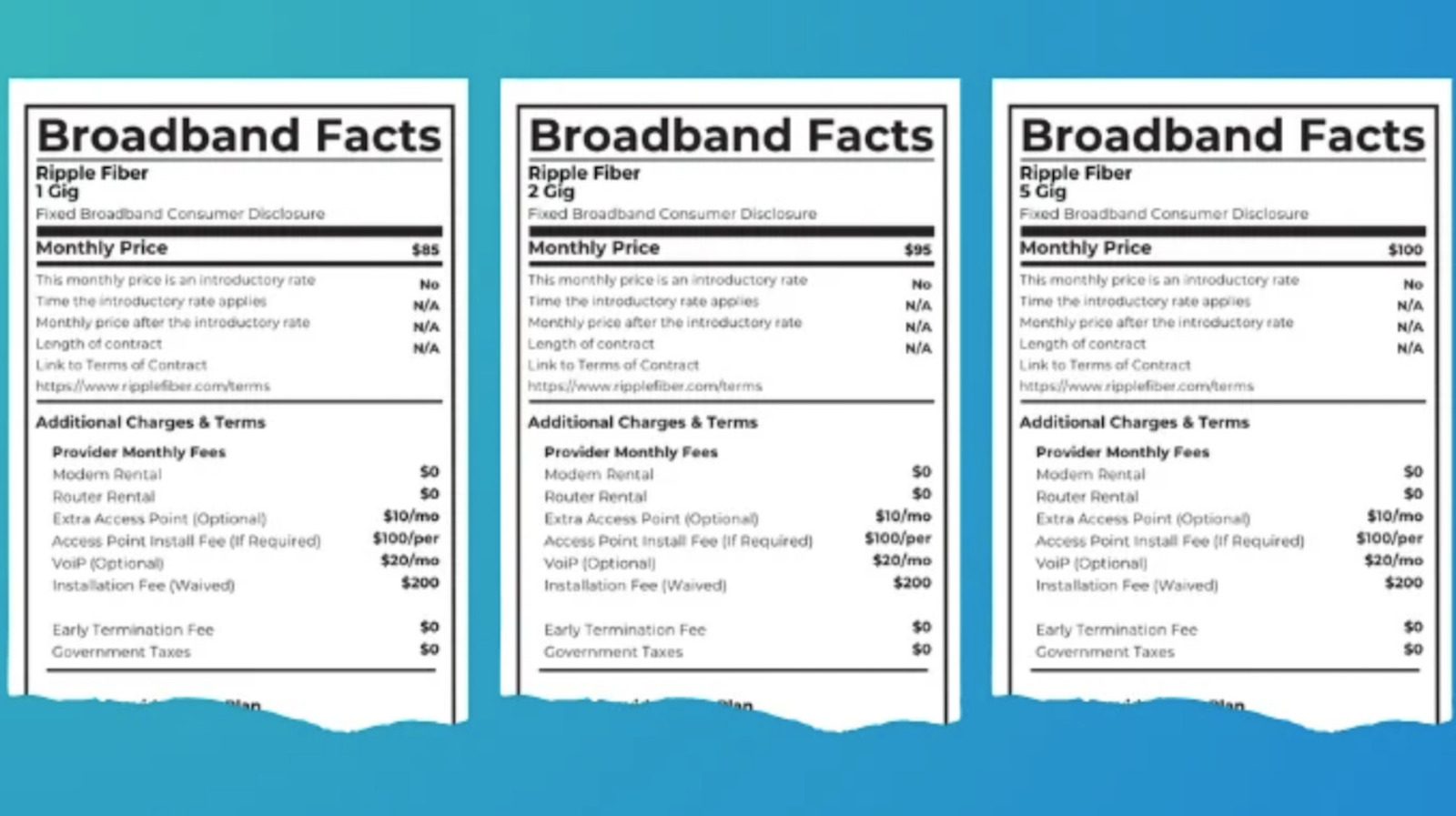

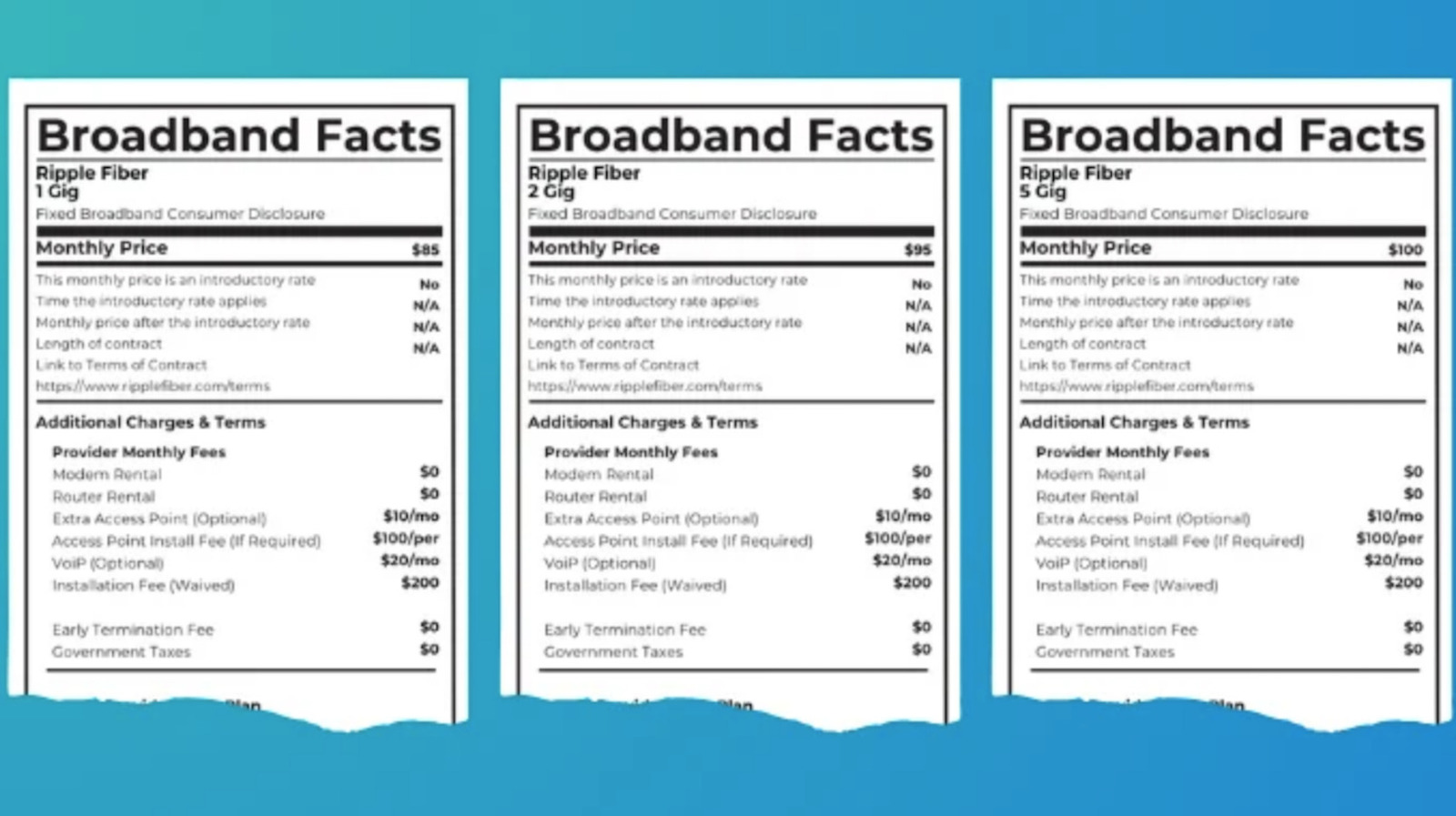
The Republican-led FCC is moving to modify a transparency rule that could make it much easier for internet service providers (ISPs) to charge hidden fees, according to a report by Ars Technica. The agency looks to defang the Biden-era nutrition labels by eliminating requirements by ISPs to list all “passthrough fees,” which are extra charges accrued from various sources like government agencies and third-party infrastructure suppliers.
The stated reason for this is that seeing an itemized list of charges ends up “frustrating or confusing consumers,” as these disclosures have “become overly complex.” Yes. The FCC is actually saying that these changes are for us, and not ISPs.
“Too much detail regarding fees could draw consumers’ attention away from more important label information, and research suggests that ‘excessive itemization creates cognitive burdens that reduce consumer welfare,” the FCC recently wrote. Incidentally, the telecom industry spent over $114 million on lobbyists in 2025, the third-highest amount on record, and this is pretty much exactly what the industry wants.
Once passed, ISPs will be allowed to show an aggregate of fees as a single line item, which doesn’t necessarily reflect the real bill. This information will be pulled from what other people have paid based on where they live. There will be no accurate itemized list. Wait a minute. Showing the actual fees was too confusing for our poor little brains but showing potential fees based on location data is not? Good to know.
“Rather than continuing to require providers to itemize ‘passthrough fees’ that can vary by location, we allow providers to display such fees in the aggregate, either as a maximum or ‘up to’ amount for the total fees applicable in any location where the service plan is offered, or as the exact total of such fees assessed in a particular location,” the FCC draft order stated.
That’s just one part of this proposal. There are other changes that cut into the efficacy of these broadband nutrition labels. There’s language in the draft order that will let phone sales representatives “present label information conversationally” instead of a verbatim recitation. ISPs will also no longer be required to show these labels on an order page, as long as there’s a hyperlink somewhere.
Broadband providers will no longer have to keep the contents of these price labels available in machine-readable spreadsheets, which will likely make it more difficult for third parties to collect this data. Finally, another planned change will eliminate a requirement for ISPs to archive all price labels for at least two years after a service plan is no longer available. This information is typically accessed by third parties to track how prices and services change over time.
The FCC will vote on these proposed changes on July 22. If the draft order is passed, changes will go into effect 30 days after it is published in the Federal Register.
Telecom companies have embraced this proposal. This is a bit odd because I thought it was intended for us perpetually-confused consumers.
“The Commission correctly highlights the complexity and burdens providers have had to undertake,” USTelecom wrote in a statement to the FCC. “Providers must create and update hundreds of different labels to account for geographic variability and to ensure that their systems properly queue the label specific to the proper location when the customer inputs their address.” Global telecom revenue reached $1.3 trillion in 2025, but making “hundreds” of digital labels is expensive I guess.
Public interest groups aren’t too keen on the proposed changes, for obvious reasons. The draft order would make “the problem of junk fees, hidden charges and difficult-to-understand billing worse, which could result in the widening of the digital divide. The Commission must not weaken oversight by allowing ISPs to operate without transparency, evade accountability and entrench abusive practices,” according to a joint FCC filing by various groups, including the National Digital Inclusion Alliance and the National Consumer Law Center, among others.

Stephan is the sports journalist for the Maple Grove Report.