Medically reviewed by Jamie Johnson, RDN
:max_bytes(150000):strip_icc():format(jpeg)/Strawberries-c5f434e7729e47c5b32c0deaa029386c.jpg "View from the top of a bowl of ripe strawberries")
- One cup of strawberries provides 100% of your daily vitamin C needs.
- High anthocyanin consumption from strawberries may reduce the risk of a heart attack.
- Strawberries are lower in natural sugar than some other fruits.
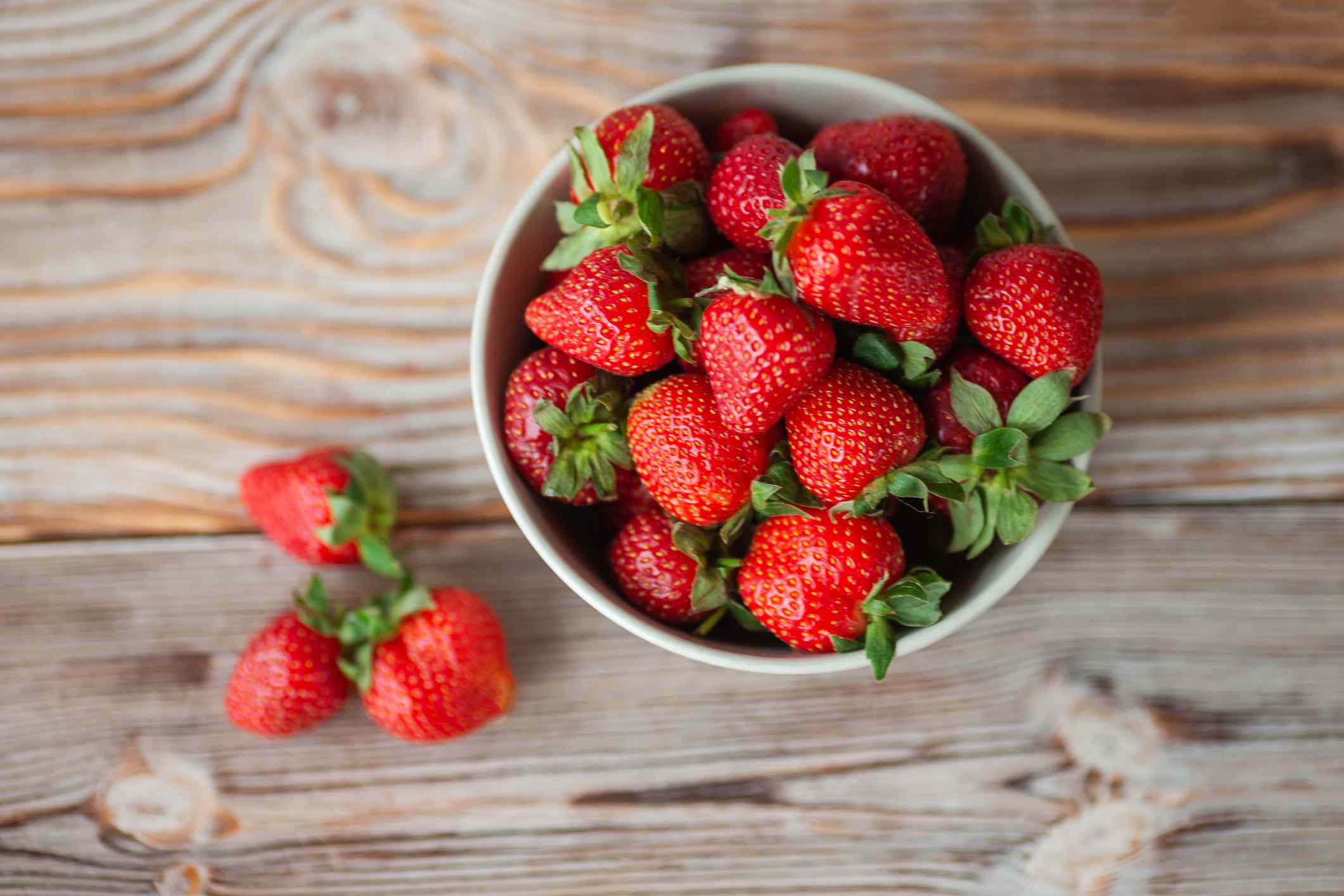
The health benefits of strawberries include supporting immune and heart health due to antioxidants, like vitamin C, and key nutrients like fiber and folate.
1. You Get a Boost of Antioxidants
Strawberries contain antioxidants, which are molecules that counteract oxidative stress, which can cause disease. Oxidative stress happens when there are more damaging free radicals in the body but fewer antioxidants available to remove them.
Strawberries contain multiple antioxidants, including anthocyanins and vitamin C.
2. Your Immune System Strengthens
One cup of strawberries provides 100% of your daily vitamin C needs.
Vitamin C is a potent antioxidant that supports immunity by promoting the growth of both T- and B-cells. T-cells and B-cells are white blood cells that help fight off disease-causing viruses, bacteria, and even cancers.
3. Your Heart Health Improves
The antioxidants found in strawberries support heart health. Specifically, high anthocyanin consumption may reduce the risk of a heart attack.
However, observational studies cannot establish a direct cause and effect, and people who consume higher amounts of antioxidant-rich foods, like strawberries, may also be more likely to lead healthier overall lifestyles.
4. You May Have a Lower Risk of Cancer
Strawberries’ high antioxidant content may help lower cancer risk. The fruits’ natural antioxidants may help reduce cancer-driven inflammation and inhibit the spread of cancer cells in the body.
5. Your Folate Levels Increase
Strawberries are a good source of folate, also known as vitamin B9. Folate is required for DNA synthesis and the breakdown of amino acids, the building blocks of proteins.
Just one cup of strawberries provides nearly 10% of your daily folate needs.
The B vitamin is also critical for healthy fetal development during early pregnancy, which is why it is included in prenatal vitamins.
The vitamin B9 that occurs naturally in foods is called folate, while the synthetic, or man-made, version of B9 (the type found in supplements) is called folic acid.
6. Your Sugar Intake Is Lower
Strawberries are relatively lower in the natural sugar fructose than other fruits.
For example, one cup of grapes can contain 23 grams (g) of natural sugar, while one cup of strawberries provides about 7 grams.
Lowering your sugar intake can improve insulin resistance, non-alcoholic fatty liver disease, and type 2 diabetes.
Nutritional Facts
Strawberries are a great source of nourishing vitamins and minerals. A one-cup serving of strawberries contains:
- Calories: 53
- Fat: 0.5 g
- Carbohydrates: 13 g
- Fiber: 3 g
- Protein: 1 g
- Vitamin C: 98 milligrams (mg)
- Folate: 40 micrograms (mcg)
What To Know Before Eating Strawberries
Strawberries are generally well-tolerated and safe to consume.
While fresh and frozen strawberries are equally nutritious, dried strawberries containing added sweeteners should be consumed in moderation.
People with strawberry allergies should avoid consuming them.
Tips for Consuming Strawberries
Fresh strawberries are best consumed when they’re in season, which is during the summer.
Buying frozen strawberries during the winter months is a helpful way to enjoy the nutrient-dense fruit all year, without spending much money.
Fresh berries of any kind can spoil quickly, so be sure to store your strawberries properly. Here are some storage tips:
- Don’t wash your strawberries until right before you plan to eat them. Exposing them to excess moisture can cause mold to develop more quickly.
- Make sure the container is large enough that the berries aren’t stacked on top of one another.
- Remove the berries from their plastic packaging and store them in the refrigerator in an airtight container lined with a paper towel.
Here are some ways to enjoy strawberries in meals and snacks:
- Add them to green salads.
- Add them to nourishing breakfasts like oatmeal and Greek yogurt.
- Add them to sweets, such as pancakes and muffins.
- Blend them into smoothies.
- Heat them on the stovetop with lemon juice and sugar, or with maple syrup, for a simple homemade jam.
- Use them on top of toasts, such as a slice of sourdough topped with ricotta cheese, sliced strawberries, and a drizzle of balsamic vinegar.