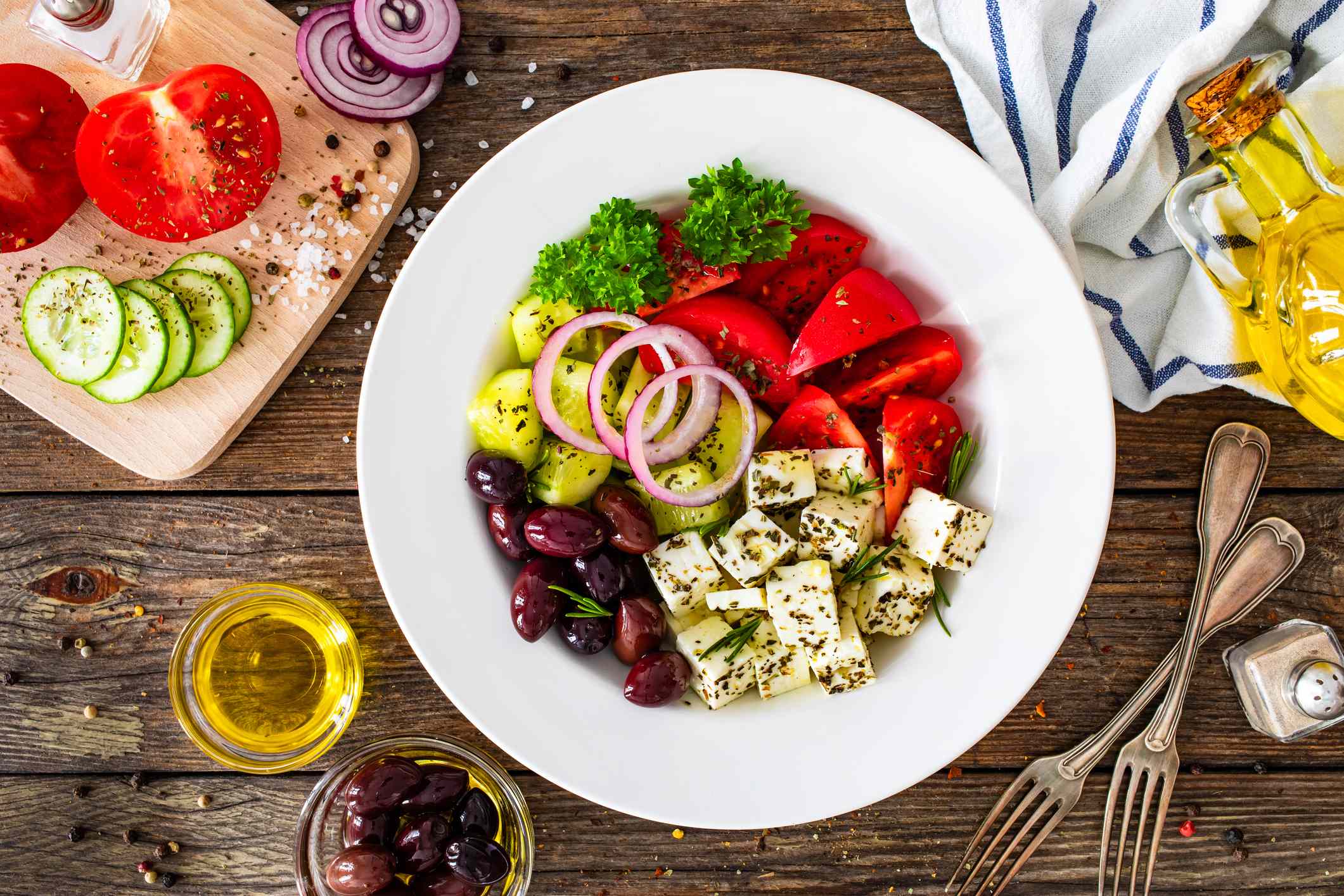
:max_bytes(150000):strip_icc():format(jpeg)/Health-GettyImages-2153781077-e54a2a3ccad54d1da42d0513391ee71f.jpg "A plate of salad with vegetables feta cheese olives and herbs")
Credit: gbh007 / Getty Images
- The Mediterranean diet includes vegetables, fruits, whole grains, legumes, nuts, seeds, and olive oil, with fish, poultry, and fermented dairy in moderation.
- The Mediterranean diet is a flexible eating pattern. It encourages a balanced diet most of the time. You can still enjoy your favorite foods in moderation.
- Choose whole foods, make small changes, and plan your meals ahead to ease your transition to the Mediterranean diet.
The Mediterranean diet supports heart, metabolic, gut, and brain health. However, when first starting the diet, there are a few common mistakes to avoid.
Eating Processed Foods Labeled as “Mediterranean”
Some products are labeled as “Mediterranean.” This is not a legally defined nutrition claim. Brands use the term mainly for marketing.
Some of these products are still highly processed and contain too much sodium, added sugar, or trans fats.
You can read the Nutrition Facts label and ingredient list when choosing packaged foods. Choose products with simple, whole-food ingredients and little or no added sugar, sodium, or trans fats.
Not Eating Enough Vegetables
Vegetables are an important part of the Mediterranean diet. They provide fiber, vitamins, minerals, and beneficial compounds called polyphenols.
Many Mediterranean meals are centered around vegetables. You can start with at least two servings of vegetables daily and gradually increase to three to nine servings as you adapt to the diet.
Eating Too Much Olive Oil
Olive oil is the main source of fat in the Mediterranean diet. However, some people misunderstand its role and go overboard by adding too much olive oil to everything.
Olive oil is rich in unsaturated fats. The American Heart Association recommends replacing saturated fats with unsaturated fats to help maintain healthy cholesterol levels and support heart health.
Olive oil is also rich in vitamin E and polyphenols. These compounds help protect your cells from damage, support your immune system, and help reduce inflammation.
However, using too much olive oil can still increase your daily calorie intake. Use olive oil in moderation by drizzling it over salads, vegetables, or whole grains. You can also use it to replace butter, lard, or other sources of saturated fat.
Avoiding All Carbohydrates
Complex carbohydrates from whole grains are part of the Mediterranean diet. They provide plenty of fiber, B vitamins, and other nutrients that support overall health.
Choose whole grains such as whole-wheat bread, barley, brown rice, quinoa, and oats instead of refined grains like white bread, white rice, many breakfast cereals, and pastries made with white flour.
Not Eating Enough Protein
A 2025 study showed that people who were able to stick to the Mediterranean diet long term also tended to have a higher protein intake.
The Mediterranean diet limits red and processed meats. However, you can get enough protein from plant sources like lentils, nuts, and seeds, as well as moderate amounts of poultry and dairy products.
Fish are also an important part of the Mediterranean diet. Aim to eat at least two to three servings of fish and seafood per week to get omega-3 fatty acids and high-quality protein.
Mistaking the Mediterranean Diet for a Strict Eating Pattern
The Mediterranean diet is a lifestyle, not a restrictive eating pattern. It focuses on balanced meals, physical activity, and enjoying food with others.
You can eat balanced meals while still enjoying other foods in moderation. Focusing on consistency rather than perfection can help you follow the Mediterranean diet long-term.
Simple Tips to Successfully Transition to the Mediterranean Diet
Here are simple ways to gradually transition to the Mediterranean diet:
- Choose whole or minimally processed foods.
- Build meals around vegetables.
- Choose whole grains instead of refined grains.
- Add beans and legumes to your meals.
- Use olive oil instead of butter or other solid fats like lard.
- Choose fish, poultry, eggs, and plant-based protein sources instead of red and processed meats.
- Include nuts and seeds in snacks and meals in moderation.
- Eat fish at least two to three times per week.
- Plan your meals ahead.
- Focus on consistency rather than perfection.