A Dietitian Reveals Which Is Healthier for You


Canned tuna and canned chicken are shelf-stable and affordable protein sources. While both are healthy, there are some important differences between the two. Here’s how they compare in terms of nutrition and potential health benefits, and which may be the better fit for your goals.

Canned chicken and canned tuna are both packed with protein, but chicken contains slightly more.

A three-ounce serving of canned chicken provides 21.5 grams of protein, while the same amount of canned tuna offers 20.1 grams. Although chicken contains a bit more protein, both are excellent sources that can help you meet your daily needs. 

Your body needs consistent protein intake, as it provides the amino acids needed for immune function, muscle building, hormone and neurotransmitter production, and many other essential processes.

Animal proteins, like tuna and chicken, are considered “complete” proteins because they contain all nine of the essential amino acids. Your body needs 20 amino acids to function, but only nine are classified as essential because your body can’t produce them on its own. Including complete proteins in your diet helps ensure you’re getting the full range of amino acids your body needs for muscle growth and repair and overall health.

Tuna is the better choice for heart health due to its high omega-3 fatty acid content. Tuna is rich in the omega-3 fatty acids docosahexaenoic acid (DHA) and eicosapentaenoic acid (EPA), which support heart health in several ways, including reducing inflammation and improving cholesterol and triglyceride levels.

Research shows that following a diet high in omega-3s could help reduce the risk of heart disease as well as other common health conditions, like colorectal cancer and cognitive decline.

Canned tuna is also generally lower in sodium than canned chicken. A 3-ounce serving of canned tuna contains 320 milligrams of sodium, while the same serving of canned chicken contains 410 milligrams. 

The American Heart Association recommends keeping sodium intake below 2,300 milligrams per day. Regularly consuming high-sodium foods, like some canned products, can increase blood pressure, which is a major risk factor for heart disease.

Some types of fish contain higher levels of mercury, a toxic heavy metal that can build up in the body over time. Regularly consuming fish high in mercury can lead to elevated mercury levels, increasing the risk of health conditions such as high blood pressure and heart attack.

Larger, longer-living fish, such as sharks, swordfish, and Bigeye tuna, tend to have higher mercury levels than smaller fish. Skipjack tuna, commonly used in canned tuna, contains much lower mercury levels, up to three times less, than albacore tuna.

Even though skipjack tuna, often labeled as “light tuna”, contains lower levels of mercury, the FDA still recommends eating it in moderation. Canned light tuna falls into the “Best Choices” category, and it’s considered safe to eat two to three servings per week, including during pregnancy. Albacore tuna, which is higher in mercury, should be limited to one serving per week.

Since canned chicken generally doesn’t contain mercury, it may be a better option for those particularly concerned with mercury contamination.

Tuna and chicken are both healthy choices that can help you meet your protein needs in an affordable way. 

The healthier choice depends on your health goals, dietary needs, and preferences.

Here’s how they stack up:

  • Best for heart health: Canned tuna due to its high omega-3 content.
  • Best during pregnancy: Canned chicken or light tuna eaten within FDA guidelines.
  • Best for high-protein goals: Either. Both provide over grams of protein per 3-ounce serving, making them protein-rich.
  • Best for lower-sodium diets: Both can fit into low-sodium diets, especially “low-sodium” or “no salt added” products.

Canned tuna and chicken can be part of a balanced diet, but it’s best to include a variety of protein sources, as well as other nutritious foods like fruits and vegetables, in your diet to support overall health. 

Below is how a 3-ounce serving of canned chicken and canned tuna compares:

Canned Tuna Canned Chicken
Calories 109 157
Protein 20.1 grams (g) 21.5 g
Fat 2.52 g 6.88 g
Carbs 0 g 1 g
B6  0.184 milligrams (mg), or 10.8% of the Daily Value (DV) 0.162 mg, or 9.5% of the Daily Value (DV)
Selenium 55.8 micrograms (mcg), or 101% of the DV 15.6 mcg, or 28% of the DV

In addition to protein, canned tuna and canned chicken also provide vitamins and minerals, like B6 and selenium. Tuna is higher in these nutrients, which are needed for energy metabolism, thyroid function, immune health, and more. Plus, they’re both virtually carb-free, making them an excellent option for those on low-carb diets

Health.com uses only high-quality sources, including peer-reviewed studies, to support the facts within our articles. Read our editorial process to learn more about how we fact-check and keep our content accurate, reliable, and trustworthy.
  1. U.S. Department of Agriculture: FoodData Central. Chicken, canned

  2. U.S. Department of Agriculture: FoodData Central. Fish, tuna, white, canned in water, drained solids.

  3. Espinosa-Salas S, Gonzalez-Arias M. Nutrition, macronutrient intake. In: StatPearls. StatPearls Publishing; 2023. 

  4. Berrazaga I, Micard V, Gueugneau M, Walrand S. The role of the anabolic properties of plant- versus animal-based protein sources in supporting muscle mass maintenance: a critical review. Nutrients. 2019;11(8). doi:10.3390/nu11081825

  5. Mendivil CO. Fish Consumption: A Review of Its Effects on Metabolic and Hormonal Health. Nutr Metab Insights. 2021;14:11786388211022378. doi:10.1177/11786388211022378 

  6. Zhao M, Xiao M, Tan Q, Ji J, Lu F. Association between dietary omega-3 intake and coronary heart disease among American adults: The NHANES, 1999–2018. PLoS One. 2023;18(12):e0294861. doi:10.1371/journal.pone.0294861

  7. American Heart Association. How Much Sodium Should I Eat Per Day?

  8. Ormaza-González FI, Ponce-Villao GE, Pin-Hidalgo GM. Low mercury, cadmium and lead concentrations in tuna products from the eastern Pacific. Heliyon. 2020;6(7):e04576. doi:10.1016/j.heliyon.2020.e04576

  9. U.S. Food and Drug Administration. Questions & Answers from the FDA/EPA Advice about Eating Fish for Those Who Might Become or Are Pregnant or Breastfeeding and Children Ages 1 to 11 Years


Source link

Leave a Reply

Subscribe to Our Newsletter

Get our latest articles delivered straight to your inbox. No spam, we promise.

Recent Reviews


Lost a crucial document because your system crashed before you could save it? Worry no more! Microsoft Word has introduced an automatic save option that regularly backs up your work, so you’ll never lose your progress again.

Users will now be able to manage their Word documents without thinking about saving them manually. The new Microsoft Word update allows users to automatically save their documents to the cloud as soon as they start documenting any content piece.

Raul Munoz, the Senior Product Manager at Microsoft, has stated about the new feature, “We are modernizing the way files are created and stored in Word for Windows! Now you don’t have to worry about saving your documents: Anything new you create will be saved automatically to OneDrive or your preferred cloud destination.

Microsoft additionally hints at introducing similar features for Windows Excel and PowerPoint, which are now live.

How Does the Auto-save Feature Work?

The auto-save option can be accessed and used effectively with the compatible Word for Windows version. Let’s understand how the process works-

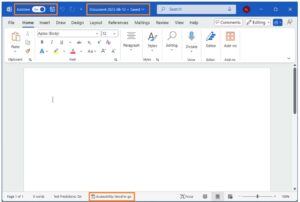
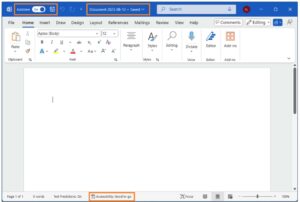
Primarily, users need to create a fresh document in Word and switch the AutoSave option on. Unlike the previous default document name- DocumentN, the autosave feature saves the files with the date.

Microsoft Word Update - Step 1

Source: Microsoft Tech Community

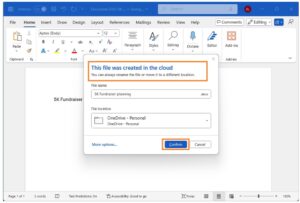
To change the name of the file and its location, users need to select Save or press Ctrl+S. After selecting the file name and location, press Confirm to save the changes.

Microsoft Word Update - Step 2

Source: Microsoft Tech Community

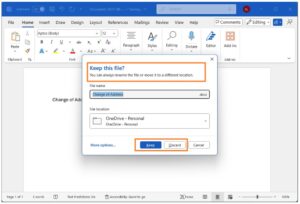
In case users try to close the file before it gets saved, a dialog displays on the screen asking whether they intend to Discard or Keep the file. If users try to close empty files, Word discards them without asking for confirmation.

Microsoft Word Update - Step 3

Source: Microsoft Tech Community

Availability of the Auto-Save Feature of Microsoft Word Update-

The AutoSave feature of Microsoft Word update is available to users with Version 2509 (Build 19221.20000) or newer. This advancement is set to enhance accessibility and address the challenge of lost files. Similar features have been introduced on Windows Excel and PowerPoint as well.

Advantages of the Latest Microsoft Word Update

Microsoft Word’s new auto-save feature will unlock several benefits for users. Alongside increased security, it offers flexible file management capabilities. Let us discuss other significant advantages-

Flexibility in File Storage and Control: Users can store and manage their files more flexibly than ever. As users are in charge of the documents, they can adjust file names and locations to save, organizing the files according to convenience.

Never Lose Your Files: The auto-save feature in Microsoft Word addresses the challenge of losing files due to not saving them manually. As soon as you start making progress in a file, it automatically gets saved.

Enhanced Security and Compliance: Files saved in your organization’s cloud servers already adhere to the set security guidelines and practices. Hence, users do not need to think about protecting the files separately.

Increased Accessibility: The auto-save feature enables enhanced accessibility of Word files. It can be accessed from diverse types of devices and platforms once shared, including Android, iOS, and web browsers. Changes made to the file will get synced on all devices and platforms.

Better Collaboration: The AutoSave feature has made collaboration within and across teams easier. Users can easily share the cloud file and initiate collaboration by making changes, adding comments, and resolving comments in real time.

Agentic AI Support: The Word files are now equipped with Copilot agentic AI support. Users can unlock AI-powered capabilities whenever they need to improve or update their documents. Nevertheless, to use Copilot in Word, a Microsoft 365 Copilot license is needed.

Additional Tips: 

  • Users will be able to easily change the location for new documents. Right-click on any cloud folder in the File section of Word, then select Set as Default Location to choose the location.
  • Users can manage how their files are created, whether in the traditional manner or automatically in the cloud, in the Save tab of Word Options, and opt in or opt out for Create new files in the cloud automatically.

Key Elements to Keep in Mind-

  • When a new Word session is started while another is running, the new file does not autosave. Hence, users need to close the previous file to enable the auto-save option for new files.
  • Users may sometimes encounter a delay in refreshing the recent files list while changing the name of a document.
  • If users disable the option for Show the Start screen when this application starts, remember that the first file they create will not autosave automatically.

Concluding Remarks!

Microsoft has been making significant advancements in its 365 Office platforms for better collaboration and enhanced productivity of diverse teams within an organization. With the integration of Copilot and flexible features, the firm is aiming to boost user experience and accessibility of the tools, including Word for Windows.

Learn about the major technological shifts and practices with KnowledgeNile!


FAQs:

1. What is the AutoSave feature in Microsoft Word?

Answer: The AutoSave feature in Microsoft Word lets users save their files automatically.

2. What is the purpose of AutoSave?

Answer: The AutoSave feature aims to reduce the challenges of data loss in unwanted circumstances, such as power shortages and device failures.

3. Where are AutoSave Word documents stored?

Answer: Automatically saved Word files are stored in cloud storage, like OneDrive.


Recommended For You:

Oracle identity cloud vs Microsoft Active Directory: Which to opt for and why?


Source link