Best eSIM Cards for World Cup 2026: Stay Connected Across Three Countries


Why you can trust
  • 15+ years of travel experience
  • 550+ products tested
  • 50+ countries visited

We hold ourselves to a rigorous editorial standard. Financial incentives don’t sway our recommendations—experience and data do.
Read Our Editorial Policy

The 2026 FIFA World Cup is the first in history to span three countries simultaneously.

Eleven host cities in the United States. Two in Canada. Three in Mexico. If you’re following your national team from the group stage into the knockouts, you may cross international borders multiple times – and every time you do, your phone carrier is waiting with a roaming charge.

Roaming fees on major carriers can exceed $10/day – and at a tournament where your phone runs everything (tickets, maps, rideshare, translation, messaging), that adds up fast across a multi-week trip. An eSIM eliminates the problem entirely.

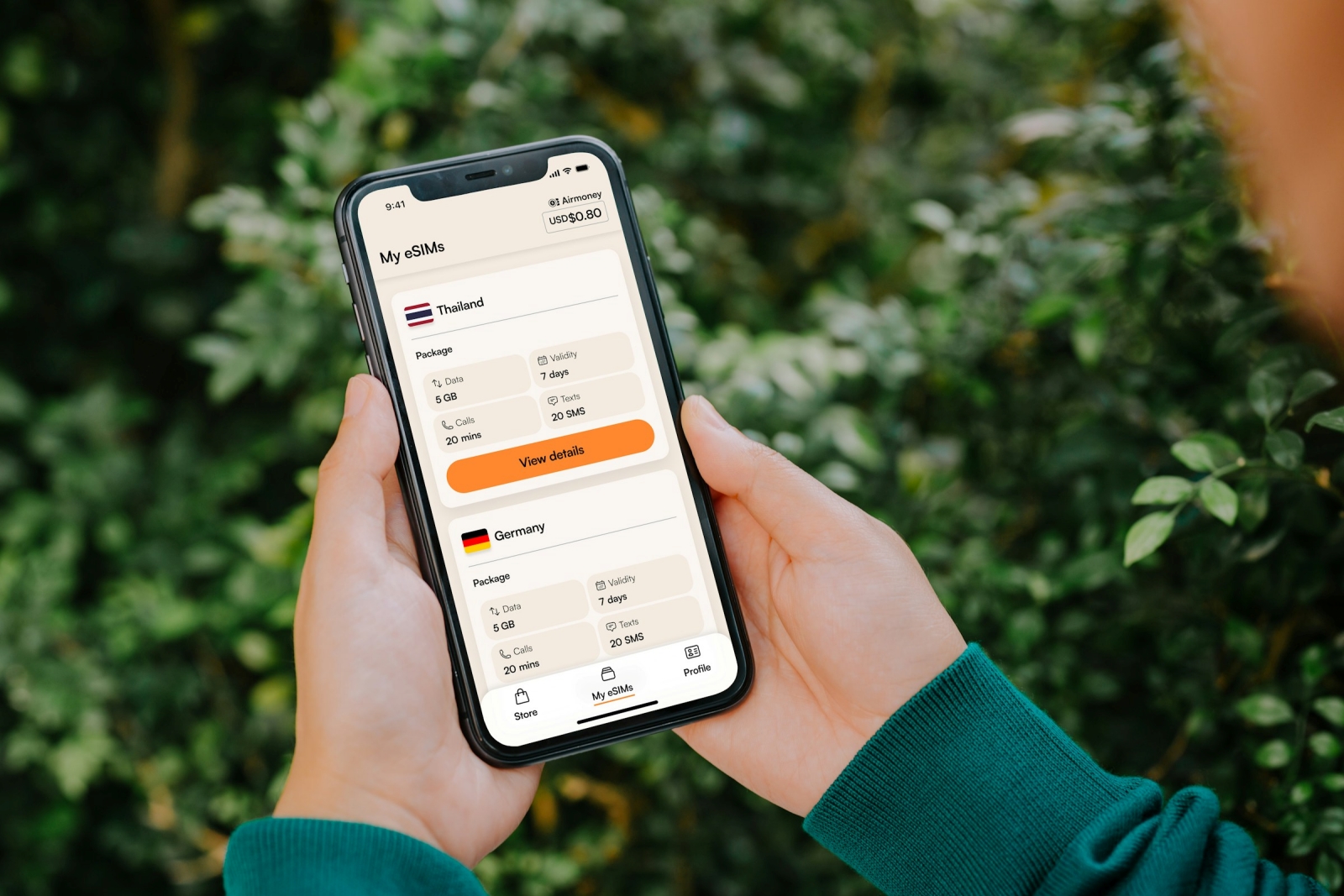
An eSIM is a built-in digital SIM. Install once. Works across all three countries. No swapping, no roaming alerts, no carrier stores at midnight in a foreign airport. Your phone just works.

This guide covers the best eSIM cards for World Cup 2026 travel, with specific focus on the North America multi-country question every international fan needs to answer: one regional plan or three separate ones?

Does Your Phone Support eSIM?

Before anything else, check compatibility. Most modern smartphones are eSIM-compatible, but not all.

eSIM-compatible devices include:

  • iPhone XS and later (iPhone 14 and later in the US are eSIM-only – no physical SIM slot)
  • Samsung Galaxy S20 and later
  • Google Pixel 3 and later
  • Most flagship Android devices from 2020 onward

To check on iPhone: Settings → General → About → scroll to “Available SIM” – if you see an EID number, your phone supports eSIM.

To check on Android: Settings → Network & Internet → SIM cards – if you see an “Add SIM” or “Download SIM” option, eSIM is supported.

Critical: Your phone must also be unlocked – not carrier-locked to your home provider. Check with your carrier before traveling. An unlocked phone is required to install any third-party eSIM plan.

One Regional Plan or Three Separate?

Regional Plan

This is the decision every international fan faces. The answer depends entirely on your itinerary.

Buy a North America regional plan (covers US + Canada + Mexico) if:

  • You’re attending matches in two or more of the three host countries
  • You’re road-tripping across borders (Houston → Monterrey, Seattle → Vancouver)
  • You want to set it once and not think about connectivity again

Buy per-country plans separately if:

  • You’re staying entirely in one country for your full trip
  • You’re only attending matches in the US, and the US plan is significantly cheaper
  • You’re flying home between legs and don’t need continuous coverage

The math: A North America regional plan from Nomad runs ~$26 for 10GB covering all three countries. Buying US, Canada, and Mexico separately across major providers runs $46-48 for the same total data. The regional plan saves $20+ and eliminates the need to manage and switch between three eSIM profiles.

For most World Cup travelers crossing between countries: one regional plan wins.

If You Just Want the Right Option

eSim Option  

Best eSIM Cards Reviews

1

Airalo North America eSIM (Americanmex Plan): Best Overall

Coverage: USA + Canada + Mexico

Type: Data-only

Airalo is the world’s most established eSIM marketplace – available in 200+ countries, used by over 5 million travelers, with 24/7 multilingual support and an app-based interface that makes installation genuinely simple.

The Americanmex regional plan covers all three World Cup host countries on a single eSIM, auto-switching between networks as you cross borders. No settings to change at the US-Mexico border or the US-Canada crossing. It just works.

Setup takes under 5 minutes: download the Airalo app, search North America, select data package, pay, install. Plan validity starts only when you first connect to a covered network – so you can install it at home before you travel and activate it the moment you land.

Data-only – Use WhatsApp, FaceTime, or any VoIP app for calls. Your home SIM stays active in the background for SMS verification codes.

Who it’s for: International fans traveling across multiple World Cup host countries who want the most reliable, well-supported eSIM option available.

2

Nomad North America: Best Value

Coverage: USA + Canada + Mexico

Type: Data-only

Nomad offers the best price for a true three-country North America plan. At $26 for 10GB with 30-day validity, it undercuts Airalo’s equivalent plan (~$46) by $20.

Coverage uses major US networks (T-Mobile/AT&T depending on roaming agreements), with dual-network access in the US for better rural coverage between cities. For fans doing a Houston-to-Dallas-to-Monterrey itinerary, Nomad delivers the full coverage at the lowest price we’ve found.

The tradeoff vs Airalo: Nomad’s app and customer support are less polished, and the loyalty/top-up ecosystem isn’t as developed. For a set-it-once World Cup trip, that’s fine. For frequent travelers who want a long-term eSIM partner, Airalo’s infrastructure is worth the premium.

Who it’s for: Budget-conscious travelers who want full US-Canada-Mexico coverage at the lowest possible price.

3

Holafly North America: Best for Heavy Data Users

Coverage: USA + Canada + Mexico

Type: “Unlimited” (read the fine print)

Holafly markets unlimited data plans across 160+ countries and has a strong reputation (4.6/5 on Trustpilot from 65,000+ reviews). Their North America plan covers all three host countries.

If you’re navigating unfamiliar cities all day, streaming live match coverage, video calling home, or running a hotspot for your travel partner, a fixed-data plan can feel stressful. Holafly removes that anxiety.

Critical fine print: Holafly’s “unlimited” plans throttle speeds after a daily usage cap (reported around 3–5GB/day). Above that limit, speeds drop significantly.

For typical World Cup use – maps, messaging, FIFA app, social media – you won’t hit the cap. If you’re a heavy video streamer or need a consistent hotspot, be aware the throttle exists. Hotspot sharing is capped at 2GB/day.

Who it’s for: Fans who want unlimited data peace of mind and won’t stress about a daily cap they’re unlikely to hit.

4

Airalo USA eSIM: Best US-Only Plan

Coverage: United States only

Type: Data-only

If you’re attending matches exclusively in the US – say, Los Angeles + San Francisco + Seattle – and flying back home without crossing into Canada or Mexico, a US-specific plan is cheaper and simpler than a regional plan.

Airalo’s US eSIM runs on major American networks with strong coverage across all 11 US host cities. Plans range from 1GB short stays to 20GB+ for extended visits.

Who it’s for: Fans attending US-only matches with no planned Canada or Mexico crossings.

5

Airalo Discover Global eSIM: Best For International Travelers

Coverage: 138 countries including USA, Canada, or Mexico

Type: Data-only

If you’re flying to the World Cup from Europe, South America, Asia, or Africa, the Discover Global eSIM eliminates the “new eSIM every country” problem entirely.

One plan, 138 countries, valid for up to a year. Install before you leave home. Works when you land in New York, when you cross into Mexico for Guadalajara, when you fly back through London. The 365-day validity makes it a genuine travel eSIM for the full year around the tournament, not just the match days.

Important note for international travelers: Saily (by Nord Security) is frequently recommended in generic eSIM guides and has competitive North America pricing. Their North America plan covers only the USA and Canada – Mexico is not included. For any World Cup itinerary that includes Guadalajara, Monterrey, or Mexico City, Saily’s North America plan will fail the moment you cross the border.

Who it’s for: International fans flying to North America from outside the region who want a single eSIM that covers their full journey, including stopovers.

How to Set Up Your eSIM Card Before the World Cup

eSim Setup

Setting up an eSIM takes under 10 minutes. Do it before you leave home – not at the airport, not after you land.

Step 1 – Check compatibility – Confirm your phone is eSIM-compatible and carrier-unlocked (see above).

Step 2 – Download the Airalo app – Available on iOS and Android. Create a free account.

Step 3 – Choose your plan – Search “North America” for the Americanmex regional plan. Select data amount and validity that matches your trip length. 5GB covers light use for 1–2 weeks. 10GB covers heavy use or 2–3 weeks. Add extra if you plan to use your phone as a hotspot.

Step 4 – Purchase and install Pay in-app – Tap “Install” when prompted. Follow the on-screen steps – it takes about 60 seconds. The eSIM profile is added to your phone automatically.

Step 5 – Configure your phone – Go to Settings → Cellular (iPhone) or Settings → Network & Internet → SIM cards (Android). Set Airalo as your data line. Keep your home SIM active for calls and SMS. Enable data roaming for the Airalo line – this is the most commonly forgotten step.

Step 6 – Activate when you land – Validity starts when you first connect to a covered network. No action needed – it activates automatically. Confirm you’re connected before leaving the airport.

Pro tip: Install the eSIM at home on WiFi, before you travel. Don’t wait until you’re at the airport with spotty connectivity trying to download a new SIM profile.

How Much Data Do You Actually Need?

Activity

Approximate Data Use

Google Maps navigation (1 hour)

~50MB

FIFA app + digital ticket

~20MB/day

WhatsApp messaging

~5MB/day

Instagram / social media (moderate)

~100-200MB/day

Google Translate (text)

Minimal

Rideshare (Uber/Lyft/DiDi)

~10MB/day

Streaming video (30 min)

~500MB-1GB

Hotspot sharing (1 hour)

~1GB+

Practical daily estimate for a typical World Cup fan: 500MB-1GB/day without streaming. 2-3GB/day with heavy social media and video.

Recommended eSIM data plans by trip length:

  • 5 days: 3-5GB
  • 10 days: 5-10GB
  • 15+ days or multi-city: 10-15GB, or top up as needed

Top-ups are available in-app on Airalo without buying a new eSIM. If you run low mid-trip, open the app and add data in under 2 minutes.

Biggest eSIM Mistakes for World Cup 2026

Forgetting to enable data roaming – This is the #1 reason eSIMs “don’t work” – the plan is installed correctly but data roaming isn’t enabled for the eSIM line. Check Settings, Cellular before leaving the hotel.

Buying a plan that doesn’t cover Mexico – Saily’s North America plan covers only the US and Canada. If you’re attending matches in Guadalajara, Monterrey, or Mexico City, it fails at the border. Verify country coverage before buying any plan.

Waiting until you land to set up the eSIM – Airport WiFi is unreliable. Install at home on a stable connection, then activate when you land. The whole process takes 10 minutes at home and can take 45 minutes of frustration at LAX.

Choosing an “unlimited” plan without reading the fine print – Several providers limit speeds after a daily cap of 3-5GB. For typical World Cup use this isn’t a problem. For hotspot-heavy use or video streaming, fixed-data plans are more predictable.

Not keeping your home SIM active – Your home carrier SIM should stay active alongside your travel eSIM. This keeps your regular phone number available for bank SMS verification, WhatsApp codes, and any two-factor authentication that requires SMS. Travel eSIMs are data-only – your regular number still needs to work.

Installing an eSIM on a carrier-locked phone – A carrier-locked phone won’t accept third-party eSIM profiles. Contact your home carrier before traveling to confirm your phone is unlocked. Most carriers unlock phones after a contract period or upon request.

Conclusion

The World Cup moves fast – cities, countries, matches, borders. Your connection should move with you.

The best eSIM World Cup 2026 plans cost $26-$46 for the whole tournament. International roaming charges without an eSIM cost that much in a single day. Install it at home, set your data line, enable roaming. Then you’re connected for your entire World Cup experience.

Read More:

FIFA World Cup 2026 Packing List

What to Wear to a World Cup Game

Kansas City World Cup 2026 Guide: Everything You Need To Know

Best eSIM Cards for World Cup 2026 FAQ

What is an eSIM and how is it different from a regular SIM?

An eSIM is a digital SIM card built into your phone’s hardware. Instead of inserting a physical plastic card, you download a plan over the internet and install it digitally. You can store multiple eSIM profiles on one phone and switch between them. Most modern smartphones (iPhone XS and later, Samsung S20 and later) support eSIM.

Can I keep my regular phone number while using a travel eSIM?

Yes. Your home carrier SIM and travel eSIM run simultaneously. Set the travel eSIM as your data line, your home SIM stays active for calls and SMS. You’ll receive messages and calls on your regular number throughout the trip.

Does Airalo work in Mexico?

Yes. Airalo’s Americanmex regional plan specifically covers Mexico, Canada, and the United States. Airalo also has dedicated Mexico country plans starting from ~$4 for short stays.

How much does roaming cost without an eSIM?

International roaming charges from major US carriers typically run $5-$10/day for a day pass, or $0.25+ per MB without a plan. For a 10-day World Cup trip with heavy phone use, roaming without a plan can cost $100-$200+. A 10GB eSIM plan costs $26-$46.

Can I install an eSIM before I travel?

Yes – and you should. Install the eSIM at home on WiFi before your trip. Validity starts only when you first connect to a covered network, so installing in advance doesn’t waste your plan time.

Do eSIMs work in all 16 World Cup host cities?

Yes, across all major providers in this guide. Coverage is strongest in major metro areas. Rural coverage between cities varies by provider – Nomad’s dual-network US access (T-Mobile + AT&T) provides the best rural performance in the US.

About the Author

Nick Reed

As a Manchester City fan, he made it his mission to catch matches at legendary stadiums from Camp Nou to the Etihad. But Nick’s travels go beyond football. He’s explored 20+ countries across Europe, Africa, and the Caribbean, always chasing authentic experiences over tourist traps. Nick lives by a simple rule: the best stories come from saying yes to the unexpected. And TravelFreak is his biggest yes yet.

More Articles »


Source link

Leave a Reply

Subscribe to Our Newsletter

Get our latest articles delivered straight to your inbox. No spam, we promise.

Recent Reviews


Why you can trust
  • 15+ years of travel experience
  • 550+ products tested
  • 50+ countries visited

We hold ourselves to a rigorous editorial standard. Financial incentives don’t sway our recommendations—experience and data do.

Read Our Editorial Policy

This tournament is a real trip, which requires smart decisions, and your luggage will either help you move or slow you down at every step.

3 countires, 16 host cities, 39 days. You’re not taking a vacation – you’re moving through a tournament.

With that in mind, this guide is built specifically to help you decide which will be the best carry-on luggage for World Cup 2026, whether that’s multi-city travel, border hopping, and everything in between.

You might fly into San Francisco and take the train to Los Angeles before crossing into Mexico for Guadalajara. Drive Houston to Dallas. Fly Vancouver to Toronto. In heat that ranges from 68°F on the Pacific Coast to 113°F in Monterrey. Across airports, train stations, border crossings, and post-match transit corridors – all of it with a bag in tow. Let’s dive into it!

Determine What You Actually Need

Before picking, make sure you know what kind of luggage you need. The choice can be narrowed down with a by picking one of the few scenarios:

Scenario A – Single City: You fly in, spend 5–10 days in one city, attend your matches, fly home. A quality carry-on handles everything. You skip checked bag fees, move faster through airports, and never wait at baggage claim.

Scenario B – Two or Three Cities: You’re moving between host cities – LA to San Francisco, Mexico City to Monterrey, Toronto to Vancouver. A carry-on bag still works if you pack efficiently. Add one packing cube system and you’re sorted.

Scenario C – Full Tournament Follow: You’re tracking your national team from group stage to knockout. Three or more cities across the US, Canada, and Mexico. Multiple border crossings. Varying climates. This is the scenario that demands proper luggage investment – a quality carry-on plus a small personal item, or a quality checked bag if you’re packing for weather extremes.

The universal principle: Pack as light as your scenario allows. Every extra bag is a potential border crossing complication, a taxi surcharge, or a missed train because you couldn’t move fast enough. The World Cup rewards mobility. Luggage that weighs you down costs you more than convenience.

Key Considerations for World Cup Travel Specifically

Multiple border crossings: You’re crossing between the US, Mexico, and Canada. TSA PreCheck doesn’t apply at Mexican or Canadian borders. Pack your bag so it can be fully inspected and repacked quickly. Hard-sided bags with organized interiors are easier to repack under inspection pressure than soft-sided bags that have been stuffed.

International airline size restrictions: If any leg of your trip involves a non-US carrier, carry-on size limits shrink. The US standard is 22″ x 14″ x 9″. Many international carriers enforce 21″ x 15″ x 9″ or smaller, and most enforce carry-on weight limits of 7–10kg (15–22 lbs) that US carriers don’t. Checked bag fees on international routes typically run $30–$75 per flight, per bag. Don’t buy a bag marketed as a “carry-on” without confirming it meets international restrictions at its base dimensions.

Destination variability: Your luggage needs to handle cobblestones in Guadalajara, smooth marble in Mexico City hotels, stadium transit in Atlanta, and Pacific Coast winds in Vancouver. Spinner wheels (four wheels, 360-degree rotation) handle this range better than two-wheel rollers.

Stadium transit: On match days you’ll be using public transit, rideshare, and walking corridors. A carry-on that extends to full height when rolling and collapses quickly when lifting is better than a large checked bag you’re hauling through crowded post-match transit.

Quick Snapshot: Just Tell Me What to Buy

Carry-On Luggage Reviews

1

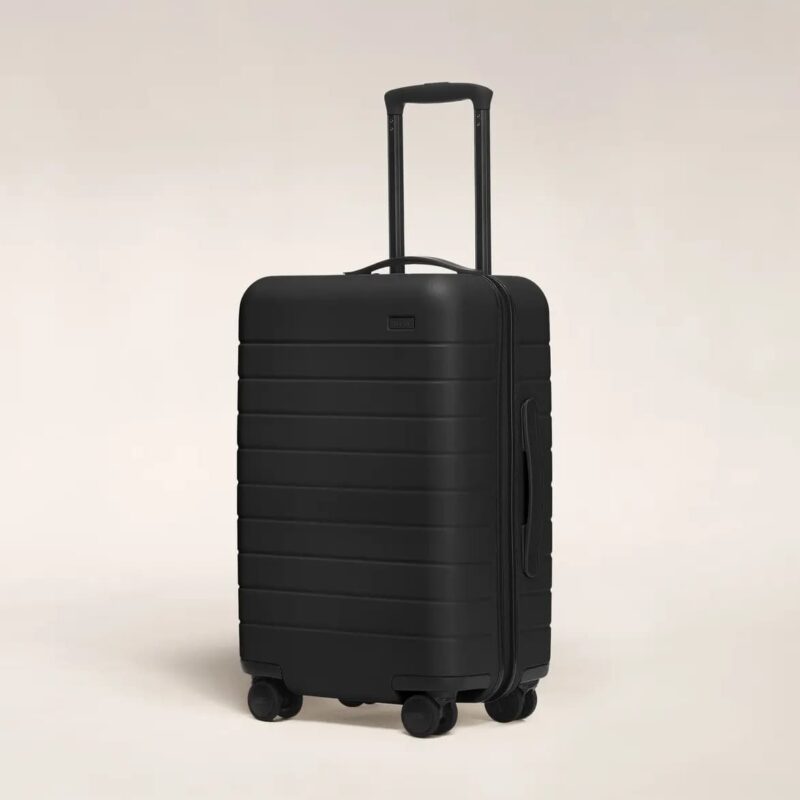
Away The Carry-On: Best Carry-On Overall

Away The Carry-On

Away built their reputation on this bag and it still earns it.

The Away Carry-On is a high-performance hardshell suitcase constructed from a dense, injection-molded polycarbonate. This material provides a high strength-to-weight ratio, ensuring the internal contents remain protected against the physical impacts common in transit.

Internally, the bag features a dual-compartment system. One side is secured by a zippered mesh divider, while the other utilizes a compression pad with adjustable straps to maximize volume for apparel. This configuration is particularly effective for organizing gear for multi-city stadium tours.

It has smooth spinner wheels that work equally well on carpet and cobblestone, a 3-stop telescopic handle, a compression system that actually gives you more space, a dual-compartment system, and a built-in TSA lock. Meets international airline carry-on restrictions at base dimensions.

Best for: Most World Cup travelers, single and multi-city trips

2

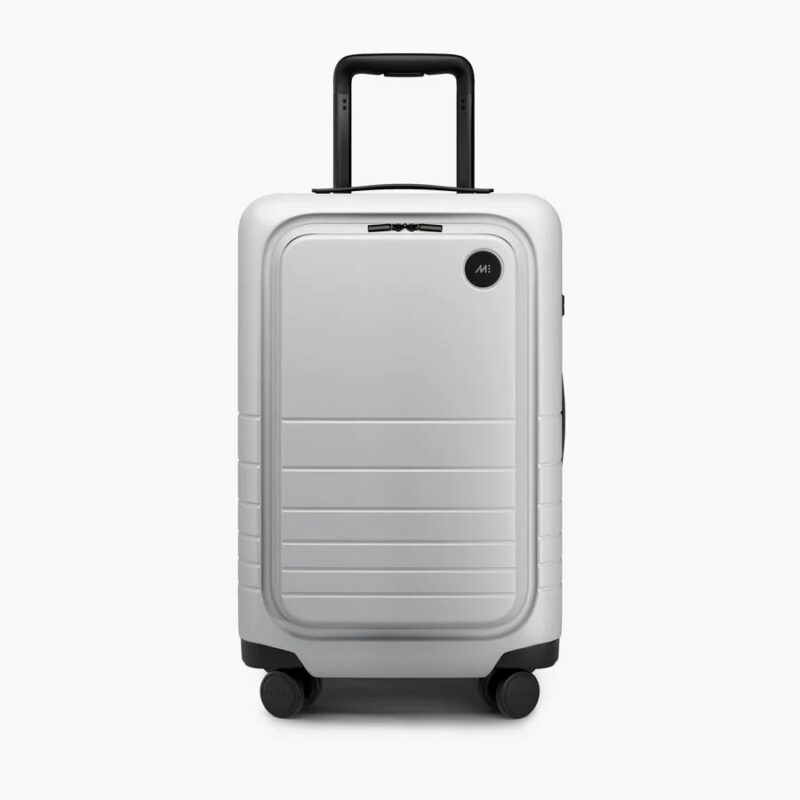
Monos Carry-On Pro: Best Carry-On for Multi-City Travel

Monos Carry-on Pro

Monos competes directly with Away on quality and beats it on one specific feature: organization. Dedicated laptop sleeve, front-zip document pocket, antimicrobial lining, magnetic spinner wheels, and a compression system that makes repacking between cities fast.

While the front pocket adds significant utility, it does displace a small amount of internal volume compared to the standard model. The telescoping handle is reinforced with high-grade aluminum and features four height settings for ergonomic adjustment.

When you’re back in a Houston hotel at midnight before a 6am flight to Dallas, the interior earns its price. Slightly more prone to exterior scuffing than Away – grab a luggage cover if that matters to you.

Best for: Fans moving between 3+ cities, following their national team

3

Samsonite Freeform Carry-On: Best Budget Carry-On

Samsonite Freeform Carry-on Spinner

Samsonite has been making dependable luggage for decades. The Freeform doesn’t have the aesthetic appeal of Away or Monos, but it has a polycarbonate hardshell, 360-degree spinners, and interior organization that punches above its price.

Besides the price tag, Samsonite Freeform Carry-On is an ultra-lightweight luggage solution engineered from high-strength polypropylene. This material choice allows the suitcase to remain exceptionally light, weighing approximately 6.5 lbs.

For fans who need a reliable bag without spending $300, this gets the job done for the full tournament without drama.

Best for: First-time tournament travelers, budget-conscious fans

4

Briggs & Riley Baseline Carry-On: Best Luxury Carry-On

Briggs & Riley Baseline Global 21

Briggs & Riley’s claim to fame is their unconditional lifetime guarantee – they fix or replace the bag, no questions asked, even if an airline damages it. The engineering is legitimate! The patented CX compression-expansion system increases packing capacity for about 25% without adding bulk.

A key structural differentiator is the “Outsider” handle system, which mounts the telescoping rails on the exterior of the bag. This creates a completely flat interior packing surface, preventing the “ribbed” floor found in most luggage and reducing garment wrinkling.

While the bag’s 10 lb base weight is higher than hardshell competitors, its reinforced corner guards, self-repairing YKK zippers, and shock-absorbing spinner wheels provide a level of structural longevity backed by a lifetime functional guarantee.

If you travel several times per year and want luggage you buy once, this is the investment.

Best for: Frequent travelers who want lifetime performance

5

July Carry-On Light: Best Lightweight Option

July Carry-On Light

Many international carriers enforce carry-on weight limits of 7-10kg. At just over 4 pounds, roughly half the weight of most hardshell carry-ons, the July Carry-On Light gives you the maximum packing weight within any airline’s limit.

While the shell is engineered to be crush-proof, its thin-walled construction means it offers less impact absorption for fragile internal items compared to denser polycarbonate bags.

If you’re flying into Canada or Mexico on a non-US carrier, every pound your bag weighs is a pound you can’t pack. The trade-off is volume: at 32 liters it holds less than deeper bags. Pack efficiently and it covers 5-7 days without checked fees.

Best for: Fans on international flights with strict weight limits

Other Luggage & Accessories

1

Travelpro Platinum Elite 29″: Best Checked Bag

Travelpro Platinum Elite Large Check-in Spinner

If your World Cup trip involves cold-weather Vancouver and hot-weather Miami in the same journey, you’re packing for temperature ranges that don’t fit in a carry-on. The Travelpro Platinum Elite 29″ is the most consistently recommended checked bag.

Self-aligning spinner wheels, organized interior with multiple compartments, soft-sided construction that gives slightly at the edges for overpacking, and a durability record that holds up across hard travel. At 29″, it fits an extended trip’s worth of gear without requiring checked bag gymnastics.

Best for: Fans traveling to multiple climate zones, families, extended stays

2

Away The Everywhere Bag: Best Personal Item

Away The Everywhere Bag

Many airlines allow one carry-on plus one personal item (bag that fits under the seat). The Away Everywhere Bag is the best personal item for World Cup travel – it’s a structured 27L tote that collapses flat for under-seat storage, has a back sleeve that slides over suitcase handles, and works as a day bag for exploring the city between matches.

Critically, it’s not a clear bag, so don’t try to bring it into the stadium. This is your city bag. Your clear stadium bag handles match day.

Best for: Fans who want stadium-to-hotel carry in one bag

3

Away Clear Stadium Bag: Best Stadium Bag

Away Stadium Bag

This is an essential accessory for the 2026 World Cup because it is specifically designed to meet the strict security protocols of FIFA and North American stadiums while offering a level of durability most clear bags lack.

Most stadium bags are made of cheap, thin PVC that tends to cloud or crack in extreme heat. Away uses 100% polycarbonate for this bag, the same high-grade material used in their full-sized suitcases. The bag also comes with a removable and adjustable crossbody strap.

4

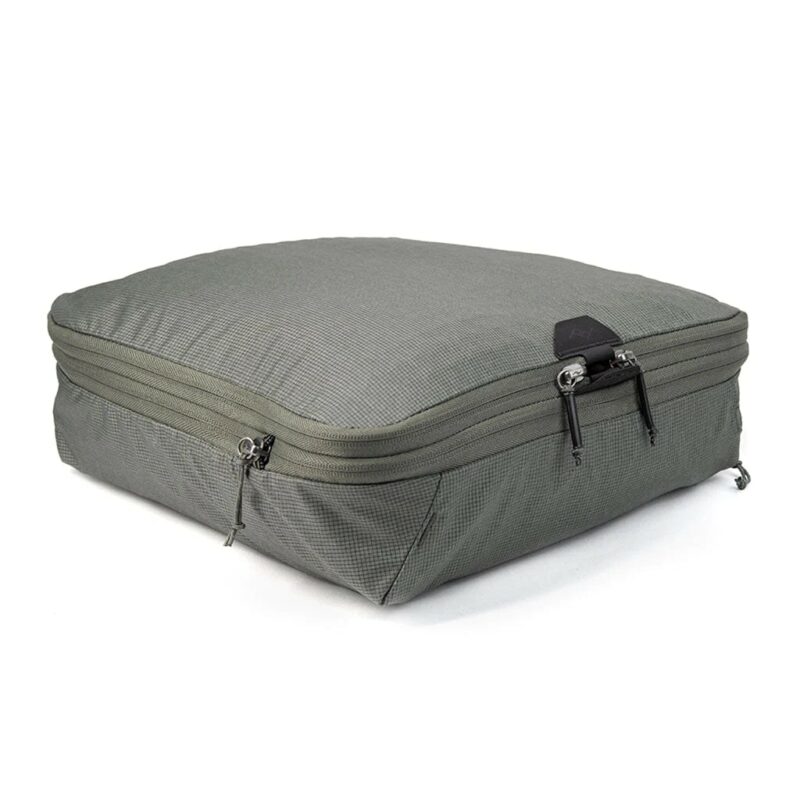
Peak Design Packing Cubes: Best Packing Cubes

Peak Design Packing Cubes

What sets these apart is their unique ultra-fast tear-away opening. Instead of fumbling with standard zippers when you’re in a hurry to catch a train to the next stadium, you simply pull the tab and the cube pops open instantly. This is a massive advantage when navigating the tight schedules of a 48-team tournament spread across three countries.

They feature a dedicated internal divider that separates clean and dirty clothes. As the tournament progresses, you can shift your used jerseys into the “dirty” side, which expands as the “clean” side shrinks. The secondary compression zipper can reduce the volume of your clothes by nearly 50%. This is essential if you plan to pack for multiple climates.

They are available in Small (9L), Medium (18L), and Large (30L) sizes, allowing you to modularize your luggage perfectly for the 2026 World Cup journey.

Best for: Travelers who appreciate organization, efficiency and versatility

5

REI Co-op Stuff Travel Pack 18L: Best Packable Daypack

REI Co-op Stuff Travel Pack

This amazing packable daypack serves as a “backup” bag that solves the specific logistical challenges of a multi-city tournament. This pack weighs only 6 ounces and folds into its own internal pocket the size of a sandwich. You can keep it tucked away in your main carry-on until the final match, then deploy it as a second bag for the flight home.’

While it is not transparent (meaning it likely won’t pass the “clear bag” rule for entering the stadium seats), it is perfect for the Fan Zones and watch parties where bag rules are often more relaxed. Also worth mentioning that the material has a water repellent finish (DWR). Something worth considering for the trip.

Best for: Minimalist day-trippers and souvenir hunters

Hardside vs Softside: What’s Right for World Cup Travel

The etermal dillema – hardside vs. softside. Here are some key points to help you pick one:

Choose hardside if:

  • You’re checking bags and want impact protection
  • You’re crossing multiple borders (easier to repack under inspection)
  • You’re carrying fragile items (electronics, souvenirs)
  • You want a TSA lock built in

Choose softside if:

  • You’re always carrying on and need flexibility to squeeze into overhead bins
  • You’re packing for one climate and don’t need weather protection
  • You want exterior pockets for quick access on the move
  • Weight is your primary concern

For most World Cup travelers: Hardside carry-on. The combination of international border durability, TSA lock, and impact protection outweighs the softside flexibility benefits for this specific type of travel.

Carry-On Size: What You Need to Know for World Cup Travel

The US standard carry-on limit is 22″ x 14″ x 9″ including wheels and handles. This matters: many brands list “body dimensions” that exclude the 1–2 inches added by wheel housings. A bag marketed as “21 inches” with 2-inch wheels is actually 23 inches – and that fails the sizer at strict airports. If you are still uncertain, read the Ultimate Carry-On Luggage Size Guide.

Brands with reliably accurate overall dimensions: Travelpro, Briggs & Riley, Away, Monos.

International airline restrictions are often smaller – 21″ x 15″ x 9″ or stricter. If any leg of your World Cup trip involves Air Canada, Aeromexico, or any European carrier for international connections, buy a bag that meets the stricter international standard at its base (non-expanded) dimensions.

Never expand your carry-on before boarding! Expansion zippers push most “carry-on” bags over the overhead bin size limit. Expand at the hotel for repacking. Compress before heading to the airport.

Luggage Tips By Host Cities

City

Key Luggage Consideration

Miami

Hardshell handles the humidity. Hard Rock Stadium security is strict – keep your clear stadium bag accessible in your personal item, not buried in your main bag.

Houston

NRG Stadium has a retractable roof but you’re walking to it in 95°F heat. Lightest carry-on you can manage. Spinner wheels handle the flat Texas terrain well.

Dallas

AT&T Stadium is indoors but Dallas streets are car-dependent. If you’re renting a car between cities, a hard shell protects against trunk bumps better than softside.

Atlanta

Mercedes-Benz Stadium is indoor and downtown. Atlanta is a transit hub – if you’re flying in and out, carry-on only makes every connection faster.

Kansas City

One of the most comfortable packing situations on the list. Arrowhead is manageable, and the climate is moderate for June. Standard carry-on, no special considerations.

Los Angeles

Sprawling city, lots of driving or rideshare. Keep your bag compact – SoFi Stadium rideshare queues post-match are long and you’ll be standing with your bag.

San Francisco

Pack a packable rain layer regardless of forecast. Levi’s Stadium is open air and Bay Area evenings drop fast. Soft-sided bags with DWR coating handle fog and mist better.

Seattle

Rain is real even in June. Hardshell keeps contents dry. Lumen Field is a 20-minute walk from Downtown – spinner wheels on Seattle’s mild inclines beat a two-wheel roller.

New York/NJ

MetLife is in New Jersey – you’re taking NJ Transit from Penn Station. Carry-on sized bags navigate Penn Station crowds far better than checked-size luggage. Keep it manageable.

Philadelphia

Lincoln Financial Field is reachable by subway. Philadelphia’s compact core is walkable. A carry-on you can move quickly through the Broad Street Line at match capacity is essential.

Boston

Gillette Stadium is 30 miles south in Foxborough with limited transit. Most fans drive or rideshare. Hardshell protects your belongings in car trunks across multiple trips.

Vancouver

Pack for rain – always. BC Place has a retractable roof so you’re dry inside, but you’re walking to and from in Pacific Northwest weather. Pack a genuine warm layer – Vancouver evenings are cool even in June.

Toronto

BMO Field is on the waterfront – Lake Ontario wind is real. Pack a light wind layer even for June matches. Toronto is walkable so spinner wheels on pavement are ideal.

Mexico City

Cobblestone streets in historic areas will destroy cheap spinner wheels within a day. Sealed-bearing spinners are non-negotiable here. Altitude is 7,350 feet – you may feel it carrying heavy bags up stairs. Pack light.

Guadalajara

More cobblestone. Same wheel quality advice as Mexico City. June heat reaches 84°F+ – lightest bag you can manage. A compact carry-on navigates the historic center streets far better than a large checked bag.

Monterrey

The most demanding luggage environment on the entire host city list. 100–113°F heat. Every pound your bag weighs is felt on every step outside. Absolute minimum carry – lightest bag, ruthlessly edited packing list. The July Carry On Light was built for exactly this scenario.

Packing For World Cup 2026

Packing For World Cup 2026

Your luggage for the World Cup 2026 is only half the equation. How you pack it determines whether multi-city travel feels manageable or chaotic. These strategies make packing and unpacking a breeze.

Packing cubes: The single most important World Cup travel upgrade. One cube per category (tops, bottoms, underwear/socks, layers). When you’re repacking at 11pm before a 6am flight, cubes mean you’re lifting and transferring blocks of clothing, not repacking individual items.

Keep your stadium bag separate: Your clear stadium bag stays accessible. Don’t bury it in your carry-on – put it in your personal item or a front pocket so you can grab it without opening your main bag.

Match day kit on top: Whoever you’re supporting, keep your match day outfit (jersey, comfortable shoes, clear bag packed) accessible. Don’t unpack your entire suitcase on match morning looking for your kit.

Leave room for the return: Every World Cup city guide recommends buying local – Jalisco tequila, Houston hot sauce, Dallas barbecue rubs. Leave 15–20% of your bag capacity on the way out. You’ll fill it on the way back.

Don’t Make These Mistakes

Buying a carry-on that’s “usually fine” but doesn’t meet international restrictions: If any leg involves a non-US airline, verify dimensions against that airline’s specific policy. “Usually fine” becomes an expensive gate-check on an international carrier.

Expanding before you board: Expansion zippers push most carry-ons over the overhead bin limit. Expand at the hotel, compress before the airport.

Ignoring wheel quality: Cheap spinner wheels that wobble or snap are unbearable across cobblestone streets in Guadalajara or the marble floors of Mexico City’s airport. Spend the extra $50 on sealed-bearing wheels. You’ll feel the difference within an hour.

Packing for worst-case weather in every city: If you’re going from Miami to Vancouver, you’ll need layers for Vancouver. But you don’t need your full Vancouver kit in Miami. Ship, buy, or wear bulky items – don’t haul them between cities unnecessarily.

Checking a bag when you could carry on: Every checked bag is 20–30 minutes of waiting at the baggage claim, an additional cost per flight, and a potential lost bag risk. For most World Cup itineraries, a quality carry-on handles the trip. The mobility advantage of carry-on travel at a major international tournament is significant.

Forgetting packing cubes: Multi-city travel without packing cubes is chaos. Multi-city travel with packing cubes is manageable. They cost $20–40 and change everything.

Conclusion

In this year’s World Cup, you’re going to move through airports, cities, border crossings, and stadium crowds for weeks. The best luggage makes travel seamless. The wrong one reminds you every hour – at the gate, on the cobblestones, in the taxi queue after a match at midnight.

The World Cup rewards movement. Get a bag that moves with you.

Read More:

FIFA World Cup 2026 Packing List

What to Wear to a World Cup Game

Best Carry-On Luggage for World Cup 2026 FAQ

Can I use a carry-on for the whole World Cup trip?

For most travelers attending matches in one or two cities over 5–10 days, yes. For fans following their national team across 3+ cities over 2+ weeks, a checked bag adds meaningful flexibility – but a well-packed carry-on with packing cubes handles more than you’d expect.

What size carry-on is safe for all World Cup flights?

Aim for dimensions of 21″ x 15″ x 9″ or smaller including wheels and handles. This meets the strictest international carrier requirements. The Away, Monos, and Briggs & Riley all meet this standard.

Do I need a TSA lock?

Yes – specifically if you’re checking bags. TSA and equivalent authorities in Canada and Mexico can open TSA-approved locks without damaging them. Non-TSA locks will be cut. All the bags in this guide include TSA-approved locks.

Hardside or softside for checked baggage?

Hardshell offers better impact protection for checked bags. Soft shell offers slightly more flexibility and typically exterior pockets. For World Cup travel involving multiple climate zones and border crossings, hard shell is the safer choice.

About the Author

Nick Reed

As a Manchester City fan, he made it his mission to catch matches at legendary stadiums from Camp Nou to the Etihad. But Nick’s travels go beyond football. He’s explored 20+ countries across Europe, Africa, and the Caribbean, always chasing authentic experiences over tourist traps. Nick lives by a simple rule: the best stories come from saying yes to the unexpected. And TravelFreak is his biggest yes yet.

More Articles »


Source link