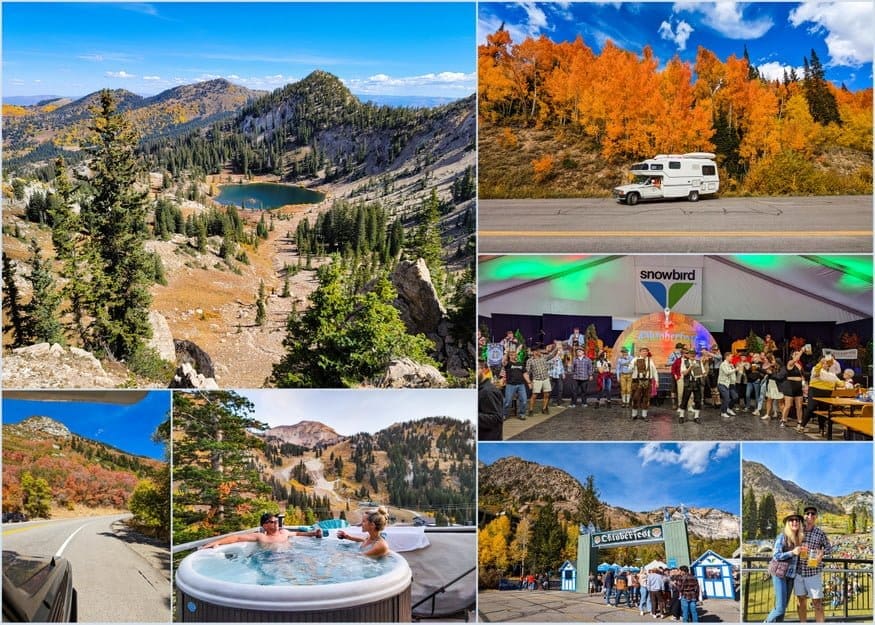

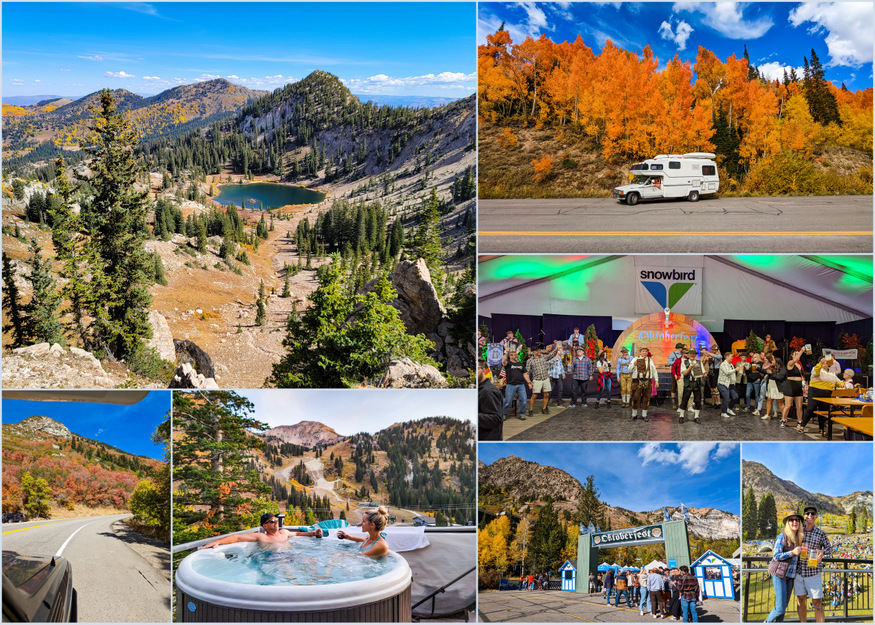
We love fall for the foliage it brings, but even in places that don’t get the classic autumn colors, traveling in this season brings tons of other benefits: lower prices, fewer crowds, pleasant temperatures, and more. Find out the best fall travel destinations from our National Geographic book, Ultimate Journeys for Two: Extraordinary Destinations on Every Continent. Of the seven continents, 91 countries, and 900+ regions of the world we’ve explored, these are their top destinations for an unforgettable trip this fall.
EUROPE: Norwegian Fjords (northern lights + sunshine)
Norway is a dynamic destination with over 15,000 miles of coastline, medieval cities, profound fjords, abundant wildlife, and unbelievable Northern Lights. Everyone wants to see the rainbow auroras dance across the sky, but many think you have to go in the most frigid and darkest months to view them. Head to this Scandinavian nation in late October and early November, and you’ll hit the sweet spot for both the auroras, ample daylight, and vibrant fall foliage! To easily experience the best of Norway (and do as Vikings do), sailing is the way to go.
The route from the medieval capital of Bergen to the Russian border at Kirkenes is said to be the most beautiful sea voyage in the world, and we’d agree. The Atlantic Ocean flows between glaciated mountains and along fishing villages happily existing without roads to the outside world. Weathered men in knit caps tend racks of drying codfish, before their brightly colored houses. As you sail deeper into the Arctic Circle, the northern lights grow stronger, with coronas bursting into nature’s pink, green, and purple fireworks…and your concept of autumn reaches new heights.
Where to Stay: Hurtigruten: The national ferry doubles as an expedition ship with year-round departures, and numerous embarkation ports and price points. G Adventures: This expedition outfitter offers one- or two-week all-inclusive trips with an active focus.
Get Romantic: Build excitement for your sea voyage with a funicular ride up Bergen’s Mount Fløyen for incredible views of the charming medieval city and fjords. Stay for an espresso at Fløien restaurant.
HoneyTrek Tip: Bring a sturdy tripod. Northern lights photography is best captured with a stable base and a long exposure.
ASIA: Railay, Thailand(beaches without the crowds)
To avoid monsoons and the throngs that fill one of Asia’s most popular tourist destinations, timing a trip to Thailand can be tricky. Though head to Railay Beach from late October to early December, and you’ll have temperatures in the 80s, clear skies, and serenity before the holiday rush. Only accessible by boat, this peninsula has the feel of a far-flung island, but it’s the thick jungle and sheer limestone cliffs that shelter this oasis from the mainland.
Karst mountains, dripping with stalactites and sculpted with caves, are a rock climber’s dream, though Railay isn’t just for adrenaline junkies. It has four Andaman Sea beaches to suit your style: Railay West (resortgoer), Railay East (flashpacker), Tonsai (devout climber), and Phra Nang (anyone seeking a “world’s best beach”). Try them all; the journey to get there— swimming, hiking, rock scrambling, or beachcombing—is half the fun. Take a boat to the surrounding islands, deep-water solo climb, night snorkel in the bioluminescent waters, and do what those in Railay do best—hang out and enjoy life.
Where to Stay: Phutawan Resort: A serene and affordable retreat tucked into the cliffs of Railay East. Rayavadee Resort: This Small Luxury Hotels of the World property offers villas, private pools, butler service, and a restaurant set in a natural grotto.
Get Romantic: Take a cooking class in Tew Lay Bar’s beachfront kitchen. Dine on the fruits of your labor, then linger for sunset cocktails in their treehouse terraces.
HoneyTrek Tip: Pay attention to the tide schedule to maximize your time and experience. Plan your visit for Phra Nang Beach and the Lagoon Hike at high tide, and your walk to Tonsai at low tide.
AFRICA: Kruger, South Africa (Prime wildlife viewing without the chill)
In the southern hemisphere, South Africa is just coming out of winter, which means temperatures are warming up, but the vegetation is still thin, and water is sparse enough for maximum animal sightings. Safari destinations, filled with lions, elephants, rhinos, and other aggressive animals, rarely let tourists drive around on their own. Kruger National Park, on the other hand, has such incredible roads, rangers, and overall infrastructure that even two urbanites in a 2WD rental can safely take a game drive. You’ll be astonished by how many of Kruger’s 800 animal species you can see without leaving your car (they love the warmth of the blacktop and easy access to vegetation).
Though if you trek along the animal paths with a ranger, spend the night in a bird hide shelter, and off-road with safari experts in the Sabi Sand Game Reserve, you’ll see why this is truly one of Africa’s most impressive parks. Kruger not only boasts the “big five” (rhino, elephant, African buffalo, lion, and leopard) but also more large mammals than virtually any other park on the continent. Combine the rare opportunity of a DIY game drive with a classic luxury safari camp for the best of both worlds.
Where to Stay: Earth Lodge: Sculpted into the hills of the Sabi Sabi Game Reserve, this ecolodge offers crème de la crème accommodations and safari excursions. Mvuradona Safari Lodge: At the foot of Kruger National Park and Lionspruit Game Reserve, it’s a steal for couples wanting to combine a self-drive safari with a romantic retreat.
Get Romantic: Climb up a centuries-old leadwood tree to your open-air bedroom in Chalkley Treehouse. A flowing canopy bed and lounge area with views over Lion Sands Game Reserve make this a true love nest.
HoneyTrek Tip: If you plan on seeing more than one national park in South Africa, get the SANParks Wild Card to save on entrance fees.
NORTH AMERICA: Guanajuato, Mexico(The city of arts gets artsier)
A narrow valley lined with colorful houses, connected by winding stairwells, tunnels, and alleyways, Guanajuato is a maze of treasures. Rounding a bend can lead to a pocket plaza, colonial casas, or the most delicious tamale. Ambling downhill, you reach Plaza de la Paz and a boulevard wide enough for architects to spread their wings. Both the Aztec and Spanish were drawn here for the mountains full of silver and gold. During the 16th to 19th centuries (when Guanajuato accounted for two-thirds of the world’s silver production, the colonialists spared no expense.
Opulent churches, ornate theaters, and metropolis-like mines have collectively put it on the UNESCO map, while the University of Guanajuato and October’s Cervantino arts festival keep it young and lively. Running from October 11-29th, thousands of artists from around the world will descend upon the city to perform opera, ballet, theater, music, poetry, and street spectaculars. Can’t make those dates? Don’t worry, culture and creativity always abound in Guanajuato.
Where to Stay: Villa María Cristina: A 19th-century townhouse on an elegant boulevard, earning its Relais & Châteaux stripes. Alonso 10: An eight-room historic hotel with contemporary suites in the heart of town.
Get Romantic: Sneak a lucky kiss on Callejon del Beso. Legend has it that forbidden lovers lived across the street, but with balconies so close, their lips could still meet.
HoneyTrek Tip: Start your city exploration at the mountaintop monument of El Pipíla. It offers the best view of Guanajuato and gives insight into how this labyrinth comes together.
SOUTH AMERICA: Department of Potosí, Bolivia (warmest time for extreme conditions)
The perfect cocktail of volcanic conditions, high altitude, and a dash of rainfall turns southwest Bolivia’s Altiplano into one of South America’s most stunning landscapes. It’s never balmy above 11,000 feet, but September-November is your warmest window. Take a multi-day expedition from San Pedro de Atacama, Chile (also featured in Ultimate Journeys for Two and highly worth three days of your time) and enter the Eduardo Avaroa Andean Fauna National Reserve. Following faint tire tracks from previous 4x4s, you will pass neon-colored lakes, boiling mud pools, and smoking volcanoes.
A stop at the pink lake of Laguna Colorado promises hundreds of flamingos reflected in the water. Continue to the aptly named Salvador Dalí Desert, past surrealist gardens of rock spires, en route to the main event: Salar de Uyuni. The world’s largest salt flat is a land of optical illusions. If you’re lucky enough to arrive after a rain shower, it becomes a mirror for clouds, salt laborers, and Incahuasi Island with its cactus forest. Get ready; the beauty of the Andes is about to reach a new extreme.
Where to Stay: Kanoo Tours: Basic, small-group multi-day trips from San Pedro de Atacama to Uyuni (one-way or round-trip). Luna Salada: Made entirely of salt, this unique hotel at the edge of Salar de Uyuni perfectly positions you for sunrise and sunset, when the sea of white turns to pink.
Get Romantic: Explore Salar de Uyuni with the help of a private guide, driver, chef, and a luxury Airstream trailer. Spend the night in remote corners of the flats, surrounded by nothing but salt and stars.
HoneyTrek Tip: Before your 4×4 trip, acclimatize for a few days in San Pedro de Atacama, and sip plenty of coca tea. While in the Altiplano, drink lots of water, chew coca leaves, and take it nice and slow.
Hope you enjoyed our Best Fall Travel Destinations
For more great destinations for every season and continent, check out Ultimate Journeys for Two.

Stacie Harris is a local resident and reporter of the Maple Grove area. Stacie reports on medicine and science for the Maple Grove Report.