Can Using the Hypershell Exoskeleton on a Bike Replace an E-Bike? I Tested It to Find Out


A person wearing a red tee and black jeans standing in between a regular bike and e-bike. The person pictured also has a hypershell strapped to his back.

I conducted a test to see whether wearing a Hypershell exoskeleton while riding a regular bike can compare to using an e-bike.

Adam Doud/CNET

I recently received a review sample of the Hypershell X Ultra S exoskeleton for testing in the Grand Canyon. What I was particularly interested in was whether Hypershell could help me, a 50-year-old, 270-pound guy, keep up with my 15-year-old competitive athlete daughter.

The device uses a 5,000-mAh battery to power its motors. The motor attaches to arms that are strapped to the user’s thighs, which should help the user pump their legs so they can go farther than they would without its assistance.

But hiking is not the only tool in Hypershell’s bag of tricks. While testing the exoskeleton, I noticed there was a cycling capability.

Granted, a 50-year-old, large guy isn’t your typical stereotype for a cyclist, but as it happens, I’ve been one for the past 15 years — that is, until e-bikes ruined me. As a technology reviewer, I come across new forms of tech all the time, and I’ve been testing quite a few e-bikes over the past few years that have left my Trek 7.1 bike hanging, forgotten, from the rafters of my garage. The Hypershell afforded me the opportunity to dust off the cobwebs and get back to pedaling. So I did.

A close-up of the Hypershell X Ultra S on a person wearing a red tee and black jeans.

The Hypershell X Ultra S exoskeleton was developed with the aim to reduce fatigue and increase endurance.

Adam Doud/CNET

My three-ride test with the Hypershell and an e-bike

Since I have a lot of experience with e-bikes, I wanted to see if the Hypershell X Ultra S could give a normal bike an equivalent upgrade. This is not a small task, but if it can reasonably help, you can get a nice upgrade without having to replace your bike wholesale for a $1,999 price that sits below most midrange e-bikes and certainly below premium offerings in the category.

One particular feature of my neighborhood in the Chicago suburbs is that there is no flat ground anywhere around me. I don’t live among mountains, to be sure, but you can bet that if you’re biking around my area, you’re climbing or descending. I got used to that over the years of cycling, but I lost that ability quickly once I started letting e-bikes do the work for me. 

To test the effectiveness of the Hypershell X Ultra S, I hit the road on my regular bike with no assistance. I took off at a casual pace and tried to keep it casual as much as possible along the 6.5-mile route I had chosen. 

Once I arrived back home, I rested until my heart rate returned to something approaching normal, and then I strapped on the exoskeleton and hit the road again. 

Finally, after cooling off for a bit, I grabbed my favorite e-bike, the Engwe LE 20, and headed out one last time, letting the bike do some of the work.

The Engwe LE 20 e-bike on a sidewalk in a park.

My beloved Engwe LE 20 e-bike.

Adam Doud/CNET

Anecdotal evidence: Speed, time and heart rate

My first time out of the gate on the bike with no assistance… did not go well. I actually had to stop and rest for a couple of minutes in the home stretch before I was able to complete the ride. I was absolutely floored by the time I got home. Again, my neighborhood is no joke when it comes to hills, and there was a fair amount of wind resistance as well. But I made it home, and I didn’t die, so I’m putting it in the win column.

The second ride with the Hypershell X Ultra S seemed to go better. I felt the exoskeleton actively pushing my legs down, which is the desired effect after all. 

I had the exoskeleton in Hyper mode, which helps determine the level of assistance you get from the exoskeleton, at about 50% power. I found diminishing returns above that power because, rather than pushing my legs down, the unit itself rocked back and forth on my back, helping me pedal only as much as it hindered me, reducing the power I felt in my legs and creating discomfort.

A person wearing a red tee with the black Hypershell X Ultra S exoskeleton strapped to their back.

The Hypershell’s battery moved around on my back while I cycled and made for an uncomfortable ride.

Adam Doud/CNET

The third ride was far and away the easiest of the three. The Engwe LE20 has a torque sensor in the pedals, which senses the amount of resistance you’re feeling and then runs the motor to help you keep up. It’s also worth mentioning that while my Trek bike weighs around 25 to 30 pounds, the Engwe LE20 checks in at a beefy 120 pounds.

During all three rides, I wore my Pixel Watch 4 to track my heart rate (HR) and average speed. I also used the Asics Runkeeper app as a backup. Here’s what the data says about my three rides:

Trip

Avg speed (mph)

Active time

Avg heart rate

Peak heart rate

Light HR zone

Moderate HR zone

Vigorous HR zone

No help

9.5

43:33:00

131

145

1:27:00

11:43:00

30:21:00

Hypershell

9.6

42:04:00

132

144

0:06:00

7:52:00

33:40:00

E-bike

11.52

34:21:00

100

116

31:05:00

3:37:00

0:00:00

As you can see, Hypershell didn’t make much of a difference in overall speed or heart rate. I spent more time in the vigorous heart rate zone but less time in the moderate zone. Being as out of shape as I am, it’s very possible my heart hadn’t yet recovered after 90 minutes of rest. I felt OK, but perhaps my heart disagreed.

What I can say is that I felt better after the second ride than I did the first. Indeed, I did not have to take that break in the home stretch. Was that all Hypershell? I can’t be sure. I noticed my back felt a little sore after the second ride, which may be attributed to the Hypershell or to the fact that a large man rode 13 miles after a two-year break.

A person with a red tee and black jeans riding a bike while wearing a Hypershell exoskeleton.

Testing my Trek 7.1 bike with what should be added help from the Hypershell X Ultra S.

Adam Doud/CNET

My Hypershell vs. e-bike takeaway

I feel like there’s a good chance I’m just not the target audience for a device like this. This exoskeleton is designed to augment skills, not bestow them. If I were to repeat this test at the end of summer, after having trained for several months, it’s very possible the results would be different.

What seems clear is that, regardless of metrics or training, if you’re not an athlete and you want to bike more, an e-bike will be the path of least resistance. But if you’re a former cyclist with a great bike and want to get back into it, the Hypershell X Ultra S might be a good option. It can help you when you need it and get you back out on the bike. 

But either way — riding a bike with Hypershell or riding an e-bike — it’ll be a win.

Editors’ note: The author’s travel costs related to the launch of the Hypershell X Ultra S were covered by Hypershell and Finn Partners. The judgments and opinions of CNET are our own.


Source link

Leave a Reply

Subscribe to Our Newsletter

Get our latest articles delivered straight to your inbox. No spam, we promise.

Recent Reviews


Explain CAP

CAP theorem is also called Brewer’s theorem, which stands for Consistency, Availability, and Partition Tolerance.

Consistency: 

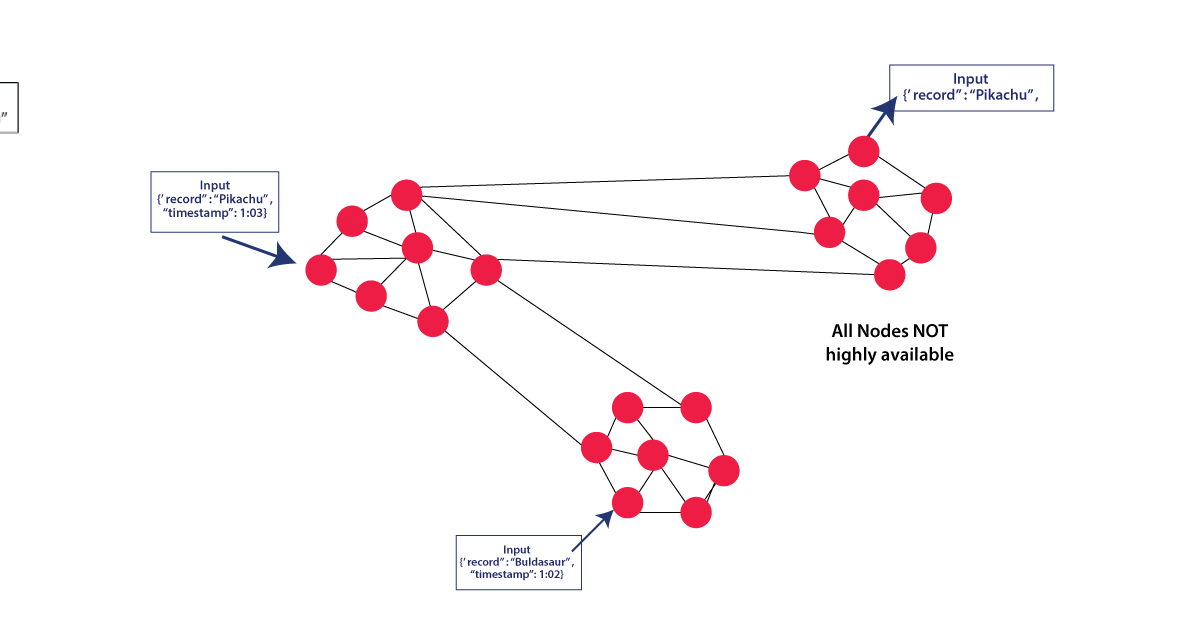
This situation expresses, all nodes have similar information simultaneously. Implementing a read function will return the estimation of the latest write function making all nodes provide similar information. A framework has consistency if an exchange begins with the framework in a reliable state, and finishes with the framework in a predictable state. A framework can (and does) move into a conflicting state during an exchange, however the whole transaction gets moved back if there is a mistake during any process all the while. We have 2 unique records (“Bulbasaur” and “Pikachu”) at various timestamps given in the picture below. The result on the third part is “Pikachu”, the most recent input. The nodes will require time to refresh and won’t be available on the organization as frequently.

Consistency

Availability:

This situation provides that each solicitation gets a reaction on success/failure. Accomplishing availability in an appropriated framework necessitates that the framework stays operational 100% of the time. Each customer gets a reaction, paying little heed to the condition of any individual node in the framework. This measurement is trifling to quantify: possibly you can submit the read/write commands, or you can’t. Thus, the databases are time autonomous as they should be accessible online consistently. In contrast to the past model, we couldn’t say whether “Pikachu” or “Bulbasaur” was included at first. The result could be any one among both. Consequently, high accessibility isn’t feasible when dissecting streaming information at high frequency.

Availability

Partition Tolerance: 

This situation expresses that the framework keeps on operating, in spite of the quantity of messages being deferred by the organization among nodes. A framework which is partition tolerant can support any measure of organization failure which does not bring about a failure of the whole network. Information records are adequately duplicated across blends of nodes and organizations to maintain the framework up through discontinuous blackouts. While managing current distributed frameworks, Partition Tolerance is a requirement and not a choice. Thus, we need to exchange among Consistency and Availability.

Partition Tolerance

Enroll in our Apache Storm Training program today and elevate your skills!

Big Data Hadoop Training

  • Master Your Craft
  • Lifetime LMS & Faculty Access
  • 24/7 online expert support
  • Real-world & Project Based Learning

Distributed Database Systems 

In a NoSQL type dispersed data set framework, Different PCs, or nodes, cooperate to give an impression of a unique operating database unit to the client in a NoSQL type distributed database system. They store the information among these numerous nodes. Every one of these nodes operates an event of the database server and they converse with one another. At the point when a client needs to write to the database, the information is suitably kept in touch with a node in the disseminated data set. The client may not know about where the information is composed.

Essentially, when a client needs to recover the information, it interfaces with the closest node in the framework that recovers the information for it, without the client thinking about this. Along these lines, a client essentially communicates with the framework as though it is connecting with a solitary information base. These nodes recover information that the client is searching for, from the important node, or putting away the information given by the client. 

The advantages of a distributed system are very self-evident. The expansion in rush hour gridlock from the clients, we can undoubtedly scale our information base by including more nodes to the framework. As these nodes are commodity equipment, they are moderately less expensive than adding more assets to every one of the nodes independently. Horizontal scaling is less expensive than vertical scaling. The horizontal scaling assures that the replication of information is less expensive and simpler. It implies that now the framework can undoubtedly deal with more client traffic by fittingly appropriating the traffic among the recreated nodes.

HKR Trainings Logo

Subscribe to our YouTube channel to get new updates..!

What is the CAP Theorem?

The CAP theorem states that a distributed database system has to make a tradeoff between Consistency and Availability when a Partition occurs.

A distributed database framework will undoubtedly have partitions in a certifiable framework because of network failure or some other explanation. Along these lines, partition tolerance is a property we can’t dodge while setting up the framework. A distributed framework will either decide to abandon Consistency or Availability however not on Partition tolerance. For instance, if a partition happens among two nodes, it is difficult to give steady information on both the nodes and accessibility of complete information. Consequently, in such a situation we either decide to settle on Consistency or on Availability. A NoSQL circulated database is either portrayed as  AP or CP. CA type information bases are for the most part the solid databases which operate on a solitary node and give no conveyance. Subsequently, they need no partition tolerance.

Where can the CAP theorem be used as an example?

The CAP theorem can indeed serve as an illustrative example within the realm of distributed database systems. When setting up a distributed database framework, it is inevitable to encounter partitions due to network failures or other unforeseen circumstances. Hence, partition tolerance becomes a necessary property that cannot be avoided in such a system. In this context, the CAP theorem comes into play. It states that a distributed framework must make a trade-off between either consistency or availability, as it is not possible to achieve both simultaneously when a partition occurs between two nodes. For instance, during a partition, it becomes challenging to maintain consistent data on both nodes while ensuring complete data availability. As a consequence, in such scenarios, we are left with the choice of prioritizing either consistency or availability.

To better understand this, it is essential to consider the different types of distributed databases. NoSQL distributed databases can be characterized as either AP or CP. AP databases prioritize availability and partition tolerance over strict consistency. On the other hand, CP databases prioritize consistency and partition tolerance at the expense of availability. These distinctions become crucial when deciding the appropriate database type for specific use cases.

CAP Theorem NoSQL Database Types

NoSQL (non-relational) databases are suitable for distributed network applications. NoSQL databases are horizontally adaptable and disseminated by layout, it can quickly scale across a developing network comprising different interconnected nodes.They are characterized dependent on the two CAP attributes they uphold: 

CP database: A CP database conveys partition tolerance and consistency at the cost of accessibility. At the point when a partition happens between any two of the nodes, the framework needs to shut down the non consistent node (make it inaccessible) until the partition is settled. 

AP database: An AP database conveys partition tolerance and accessibility at the cost of consistency. At the point when a partition happens, all nodes stay accessible however those at some unacceptable end of a partition may return a more established rendition of information than others.  

CA database: A CA database conveys accessibility and consistency among all nodes. It will not be able to do this if there is a partition in between any two nodes  in the framework, in any case, and can’t convey adaptation to internal failure.

Spaces defined by CAP

CD Space: The engines of this space concentrate on accessibility and consistency, information dispersion doesn’t prevail. It is the spot where Relational Databases are placed, in spite of the fact that we can likewise discover some NoSQL engines which are diagrammatically arranged. 

ND Space: This doesn’t receive any Databases engine and is an empty set. It repudiates the CAP Theorem on the grounds that with the most recent innovation it can’t achieve with three of the Theorem features. 

DT Space: Here, the resistance of divisions and consistency are favored, leaving to the side certain degree of accessibility. Confronting a network division, these Databases couldn’t react to particular sorts of inquiries.

CT Space: Here the engines will support the accessibility and resistance of divisions, however that doesn’t mean they do not provide any consistency as it is relative and can’t ensure between nodes. 

Big Data Hadoop Training

Weekday / Weekend Batches

Conclusion

Distributed frameworks permit us to accomplish a degree of computing ability and accessibility that were essentially not accessible previously. The frameworks have better performance, lower inertness, and close to 100% up-time in servers which last till the whole globe. The frameworks are operated on product hardware which is effectively accessible and configurable at moderate expenses. Distributed frameworks are more intrinsic than their single-network partners. Learning the intricacy brought about in distributed frameworks, making the fitting compromises for the CAP, and choosing the correct apparatus for the task is essential with horizontal scaling.


Source link