Delta adds Sonoma County flights, joining race to Santa Rosa


Delta Air Lines is adding a new route that pairs well with a side of cheese.

The Atlanta-based carrier just joined the wave of airlines adding service to California’s wine country via Charles M. Schulz Sonoma County Airport (STS) in Santa Rosa.

Delta over the weekend filed plans to launch nonstop service to STS from its hub at Salt Lake City International Airport (SLC).

The new flights, first spotted in Cirium and confirmed by an airline spokesperson, will launch Oct. 6.

It’ll be an all-new airport for the carrier, giving SkyMiles loyalists a new and convenient link to the wineries of Sonoma and Napa — not to mention an additional airport in California’s Bay Area.

Air service growth continues in Santa Rosa

This is the latest in a wave of new flights to the small Sonoma County Airport.

Reward your inbox with the TPG Daily newsletter

Join over 700,000 readers for breaking news, in-depth guides and exclusive deals from TPG’s experts

Just in the last few months, Southwest Airlines has launched service from STS, and Alaska Airlines has bolstered its flight offerings there.

Now, Delta is flying into town.

All told, the airport’s total departures this year are set to increase nearly 40% from last year, according to data from aviation analytics firm Cirium. And that’s despite budget carrier Avelo Airlines pulling out of Sonoma last summer.
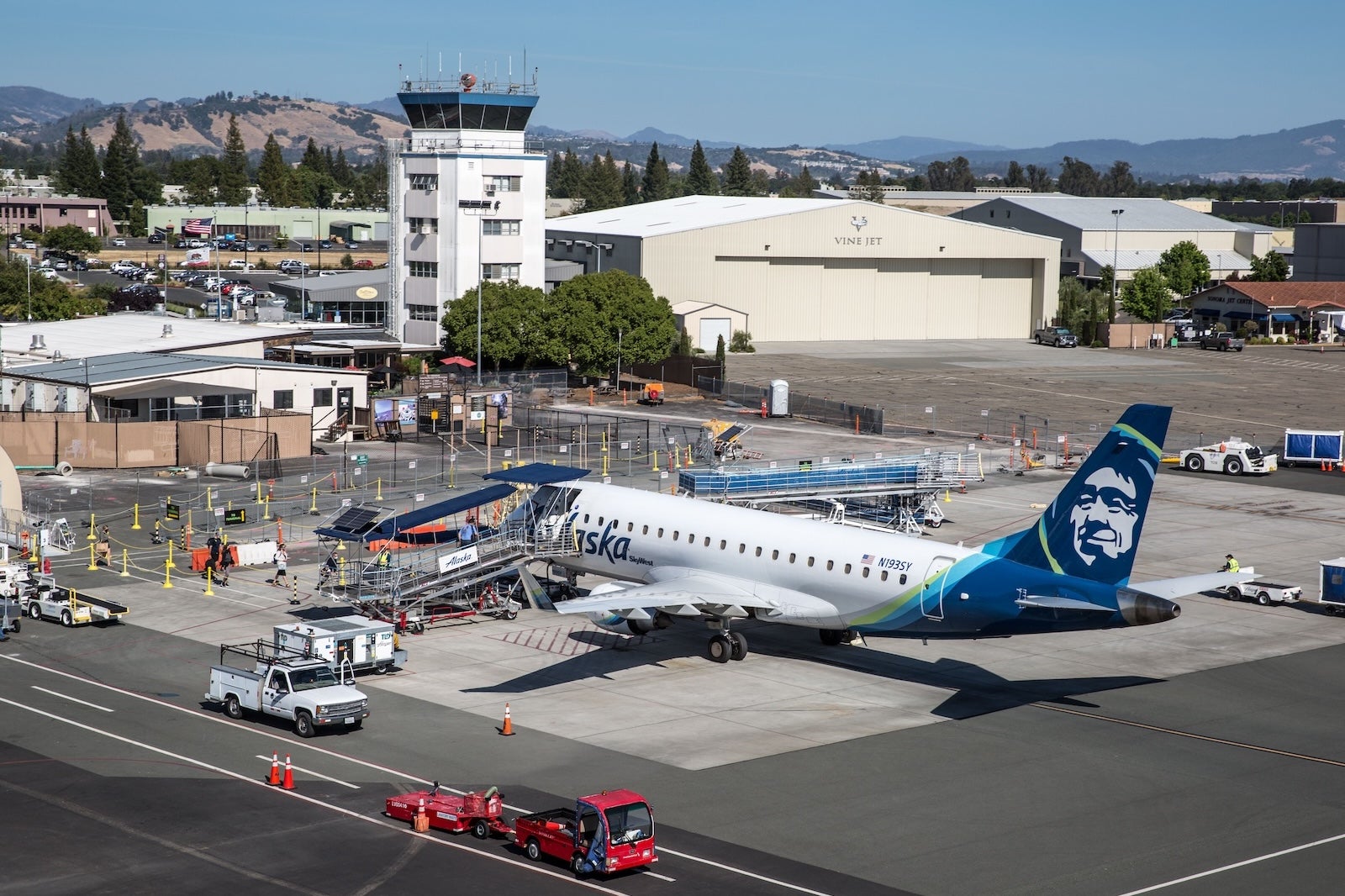
An Alaska Airlines plane at Charles M. Schulz Sonoma County Airport (STS) in 2021. GEORGE ROSE/GETTY IMAGES

STS is in the heart of Sonoma County wine country, and it’s situated about an hour’s drive from downtown Napa (though many of the most popular Napa vineyards in the northern valley are far closer).

And compared with the Bay Area’s larger hubs like San Francisco International Airport (SFO), travelers can enjoy a much smaller, quieter airport experience in STS. Plus, they’ll have a much lower chance of encountering traffic once they leave the terminal.

Flight details

Delta will operate its Salt Lake City-to-Santa Rosa route with a Delta Connection Embraer 175 regional jet, which sports 12 first-class recliners and 20 extra-legroom Comfort seats in front of the main cabin.

Related reading:

Editorial disclaimer: Opinions expressed here are the author’s alone, not those of any bank, credit card issuer, airline or hotel chain, and have not been reviewed, approved or otherwise endorsed by any of these entities.


Source link

Leave a Reply

Subscribe to Our Newsletter

Get our latest articles delivered straight to your inbox. No spam, we promise.

Recent Reviews


A class-action lawsuit alleging “Google caused Android mobile devices to transfer a variety of information to Google without users’ permission, consuming users’ cellular data,” is nearing its end. The two sides in Taylor v. Google LLC have agreed to a settlement and have begun resolving it. 

For years, Google has been accused of harvesting data from Android phones without users’ consent. A California lawsuit was settled for $314 million last year, and this new settlement could mean payouts for another 100 million people.

Without admitting fault, Google agreed to a preliminary settlement in the class action lawsuit Taylor v. Google LLC in January, committing to pay $135 million in damages. The official settlement website for the lawsuit is now live. 

The final approval hearing won’t occur until June 23, when the court will hear objections and consider whether Google’s settlement is fair. After that, the court will decide whether to approve the $135 million settlement. 

In the meantime, if you qualify and want to be paid as part of the settlement, you can select your preferred payment method on the official website. There, you can find information on speaking at the June 23 court hearing and on how to exclude yourself or write to the court to object by May 29.

As part of the settlement, Google will update its Google Play terms of service to clarify that certain data transfers do occur passively even when you’re not using your Android device, and that cellular data may be relied upon when not connected to Wi-Fi. This can’t always be disabled, but users will be asked to consent to it when setting up their device. 

Google will also fully stop collecting data when its “allow background data usage” option is toggled off. 

Who can be part of the Google data settlement?

In order to join the Taylor v. Google LLC settlement, you must meet four qualifications:

  1. Be a living, individual human being in the US.
  2. Have used an Android mobile device with a cellular data plan.
  3. Have used the aforementioned device at any time from Nov. 12, 2017, to the date when the settlement receives final approval.
  4. You’re not a class member in the Csupo v. Google LLC lawsuit, which is similar but specifically for California residents.

The final approval hearing is on June 23, so you can add your payment method until then. The hearing’s date and time may change, and any updates will be posted on the settlement website. 

If you choose to do nothing, you will still be issued a settlement payment, but you may not receive it if you don’t select a payment method.

Watch this: Your Phone is Disgusting: Let’s Fix That

How much could I get paid by Google?

It’s not currently known exactly how much each settlement class member will receive, but the maximum is $100. Payments will be distributed after final court approval and after the resolution of any appeals.

After all administrative, tax and attorney costs are paid, the settlement administrator will attempt to pay each member an equal amount. If any funds remain after payments are sent, and it’s economically feasible, they will be redistributed to members who were previously and successfully paid. If it’s not economically feasible, the funds will go to an organization approved by the court.


Source link