
The Delta SkyMiles® Platinum American Express Card is a good choice for Delta Air Lines flyers who want solid perks at a mid-tier annual fee point. The card’s annual companion certificate, free checked bags (the first bag is free worldwide and the second bag on domestic U.S. flights) and elite status boost help offset the $350 annual fee (see rates and fees) for frequent flyers. Card rating*: ⭐⭐⭐½
*Card rating is based on the opinion of TPG’s editors and is not influenced by the card issuer.
Delta SkyMiles Platinum Amex: The basics
The Delta Platinum is a mid-tier option for Delta flyers who travel with the airline frequently enough to offset the annual fee through the card’s benefits.
The airline-specific perks on the Delta Platinum include an annual companion certificate, free checked bags (the first bag is free worldwide and the second bag on domestic U.S. flights), priority boarding and a fast-track to Delta Medallion elite status through spending. If you book an expensive fare with your companion certificate, that one benefit alone could potentially offset the annual fee.

The Delta Platinum is a cobranded card between Delta and American Express. It earns Delta SkyMiles redeemable for flights on Delta and fellow SkyTeam alliance members, such as Air France and Virgin Atlantic, as well as some nonalliance partners.
TPG recommends a good to excellent credit score for this card.
Let’s dive into the details to determine if the Delta Platinum Amex would be a good addition to your wallet.
Related: Best Airlines Report 2026: Delta edges out rivals to win for eighth straight year
Delta SkyMiles Platinum Amex pros and cons
| Pros | Cons |
|---|---|
|
|
Related: Delta brings back Costa Rica route from New York JFK, 10 years later
Delta SkyMiles Platinum Amex benefits
The Delta Platinum provides a solid suite of benefits for a mid-tier airline card. Here are the highlights. (Enrollment is required for select benefits.)

Reward your inbox with the TPG Daily newsletter
Join over 700,000 readers for breaking news, in-depth guides and exclusive deals from TPG’s experts
Annual companion certificate
The Delta Platinum’s annual companion certificate is a cardmember-favorite benefit that you receive each year after your account renewal. When you use the companion certificate, you’ll pay only taxes and fees for a second ticket when you purchase one adult round-trip ticket.
There are just a few important restrictions. The Delta companion certificate is only valid for round-trip, domestic travel in the main cabin (booked in fare classes L, T, U, V or X). It excludes basic economy tickets (booked into the E fare class) and most higher-priced economy classes, so you’ll want to double-check that your fare is eligible before you rely on the certificate.

This perk covers travel to all 50 U.S. states (including Alaska and Hawaii), as well as flights to the Caribbean, Central America and Mexico.
Partnerships director Sophia Fen said the value she gets from this benefit (paired with the TakeOff 15 perk on all Delta cobranded cards to save on award flights) often covers the $350 annual fee.
Elite status perks
The Delta Platinum is a good card for SkyMiles members pursuing elite status, thanks to its Medallion Qualification Dollar boost and the unlimited MQDs you can earn through spending.
Cardmembers receive 2,500 MQDs at the start of each Medallion qualification year. They also earn 1 MQD for every $20 spent, with no limit on how many MQDs you can earn through credit card spending.
Preflight and inflight benefits
The Delta Platinum shines when it comes to preflight and inflight perks.
These include:
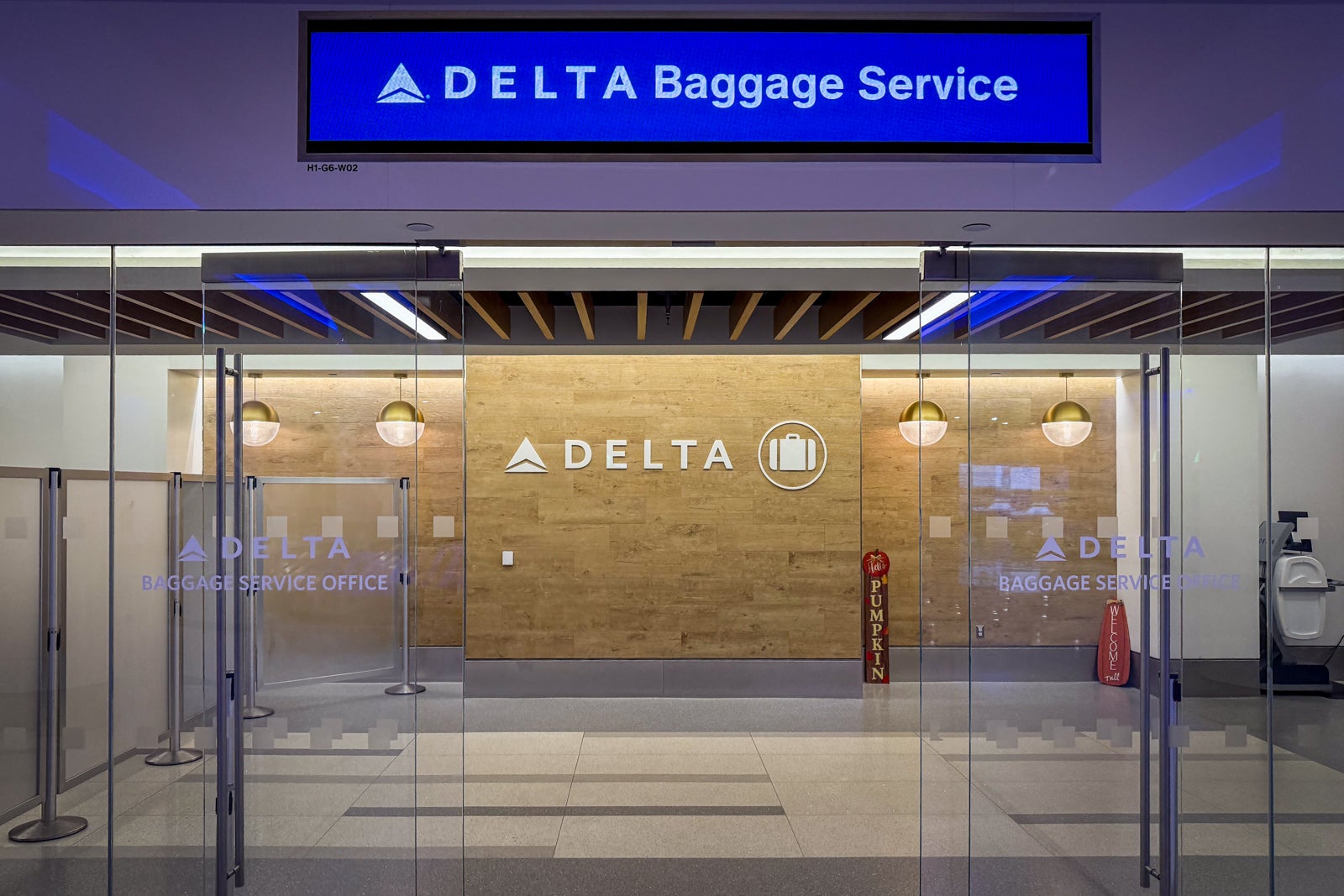
- Two free checked bags for the cardmember (and up to eight companions) traveling on the same reservation (the first bag is free worldwide and the second bag on domestic U.S. flights)
- Zone 5 priority boarding
- Access to the TakeOff 15 perk, which provides a 15% discount on award redemptions for Delta flights
- 20% off inflight purchases (excluding Wi-Fi purchases)
Other travel perks
There are other ways to help offset the Delta Platinum’s annual fee, including maximizing these benefits:
(Enrollment is required for select benefits.)
*Enrollment in the Hertz Gold+ Rewards Program is required; terms apply.
The card also charges no foreign transaction fees (see rates and fees), making it a solid choice to take abroad.
Related: Is the Delta Platinum Amex worth the annual fee?
How to earn and use SkyMiles
With the Delta Platinum, you’ll earn:
- 3 miles per dollar spent on Delta purchases and purchases made directly with hotels
- 2 miles per dollar spent at restaurants worldwide (including delivery and takeout in the U.S.) and at U.S. supermarkets
- 1 mile per dollar spent on all other eligible purchases
This is a decent suite of bonus categories, though it’s worth noting that SkyMiles aren’t among the most valuable airline miles.
According to TPG’s June 2026 valuations, Delta SkyMiles are worth 1.2 cents apiece. This means that spending on the Delta Platinum will get you a 3.6% return on Delta and hotel purchases, 2.4% back at restaurants worldwide and U.S. supermarkets and 1.2% back on everything else — generally less competitive than what many transferable points cards offer.
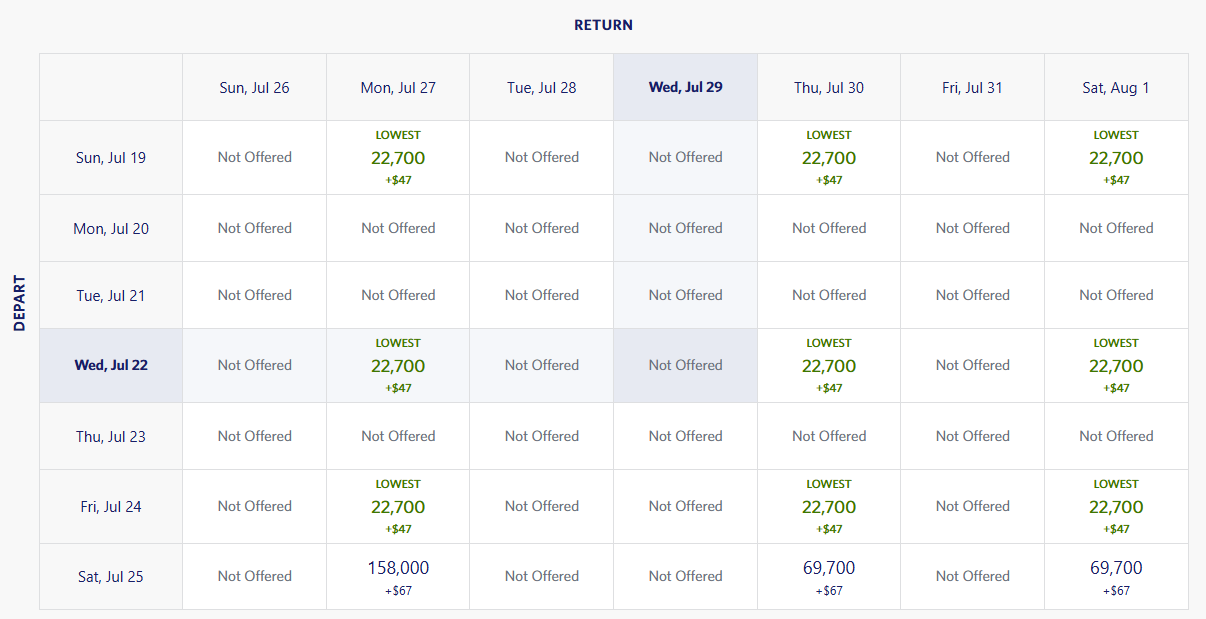
This relatively low valuation is likely due to Delta dynamically pricing its award flights, which means redemption rates often fluctuate with demand, rather than using a fixed award chart.
Even still, you can find some solid deals for certain routes on select dates. And, if your travel dates are flexible, you can use Delta’s award calendar to find cheaper award flights — especially around one of Delta’s frequent award deals.
TPG’s tentpoles managing editor, Madison Blancaflor, recently used 40,500 SkyMiles for a round-trip economy ticket from Newark Liberty International Airport (EWR) to Bill and Hillary Clinton National Airport (LIT) in Little Rock, Arkansas, for her siblings’ graduation. She said the cash price would’ve been $700.
You can also redeem SkyMiles for luxury trips, like TPG principal spokesperson Clint Henderson did when he flew Delta One from Tokyo’s Haneda Airport (HND) to Los Angeles International Airport (LAX) and then on to New York’s John F. Kennedy International Airport (JFK) for 182,700 SkyMiles.

Finally, you can also redeem SkyMiles to purchase premium alcoholic beverages in Sky Clubs, pay for hotels or cover the cost of rental cars, but we generally don’t recommend redeeming this way since you’ll get much less value per mile than if you were to redeem for flights.
Related: How to redeem your Delta SkyMiles for maximum value
Where the Delta SkyMiles Platinum Amex falls short
The Delta Platinum is likely not worth applying for if you don’t fly Delta regularly since many of its perks, including free checked bags (the first bag is free worldwide and the second bag on domestic U.S. flights), priority boarding and an elite status boost, are oriented toward its loyal flyers.
The card’s earning rates are also mediocre, especially given TPG’s valuation of SkyMiles at 1.2 cents apiece, which yields a low return on your spending.
Delta SkyMiles Platinum Amex vs. Delta SkyMiles Reserve Amex
If you’re a fierce Delta devotee who prioritizes airport lounge access (terms apply; subject to limitations), you may be better off with the Delta Platinum’s premium sibling, the Delta SkyMiles® Reserve American Express Card.

The Delta Reserve charges a higher $650 annual fee (see rates and fees) but provides better benefits, including Sky Club access and an enhanced companion certificate that can be used in first class, Delta Comfort or the main cabin.
Related: Delta Platinum vs. Delta Reserve: Picking a premium card for Delta perks
When to apply for the Delta SkyMiles Platinum Amex
New Delta Platinum cardmembers can earn up to 100,000 bonus miles: 80,000 bonus miles after spending $4,000 on purchases in the first six months of card membership, plus 20,000 bonus miles after spending an additional $2,000 on purchases (for a total of $6,000) in the first six months of card membership.
Per TPG’s valuations, this bonus is worth up to $1,200, which matches the highest number of bonus miles we’ve seen offered in the card’s history.
If the Delta Platinum is already on your radar, now is a great time to apply.
Other cards to consider in place of the Delta SkyMiles Platinum Amex
If the Delta Platinum isn’t the right fit for you, one of its competitors may be a better choice:
For additional options, check out our full list of the best travel cards.
Related: Sit up front: The ultimate guide to getting upgraded on Delta flights
Bottom line
The Delta Platinum is a solid mid-tier card, and many cardmembers can likely offset its $350 annual fee with a variety of useful benefits. If you’re a frequent Delta flyer, the annual companion certificate is a real highlight, as is the elite status boost.
However, the card may not be the best for those who won’t find value in these Delta-specific benefits or for travelers whose travel schedules aren’t flexible enough to take advantage of off-peak award pricing.
But, if you want to pay a moderate annual fee for some solid Delta perks, the Delta Platinum may be just the card for you.
Apply here: Delta SkyMiles Platinum American Express Card
For rates and fees of the Delta Platinum Amex, click here.
For rates and fees of the Delta Reserve Amex, click here.
For rates and fees of the Delta Gold Amex, click here.

Stacie Harris is a local resident and reporter of the Maple Grove area. Stacie reports on medicine and science for the Maple Grove Report.