Democratic-led states face backlash over National Guard deployments in Washington


A National Guard deployment to the nation's capital has ballooned during the celebrations of the country's 250th anniversary of independence, bolstered in part by contingents from Democratic-led states.

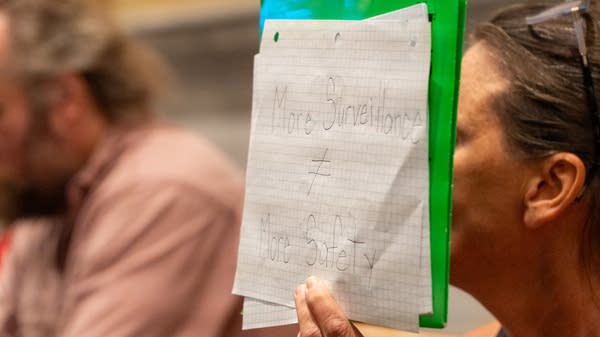
That participation has sparked anger among some in Washington who say the troops are not just there to assist in securing the festivities but are being drawn into the Trump administration's ongoing, open-ended Guard deployment to the city.

A contingent from Minnesota sent for the 250th is set to depart early. On Tuesday, a coalition of think tanks and civic, labor and civil rights groups asked Michigan Gov. Gretchen Whitmer to withdraw the state's National Guard forces, saying they have been misused.

“Previous presidents have requested assistance from out-of-state Guard forces during major events in D.C., and such requests would normally give little cause for concern," the groups said in a letter. "But there is nothing normal about the way President (Donald) Trump has used National Guard forces in the nation’s capital.”

The National Guard has been deployed since last summer

The presence of National Guard members in Washington, D.C., has been contentious since August 2025, when Trump issued an emergency order because of what he said was out-of-control crime.

The local National Guard was activated and deployed to the streets, along with hundreds of federal law enforcement officers and agents. Trump also took control, briefly, of the local police department. States, all led by Republican governors, sent members of their Guard forces, as well.

Over the months, Guard members have responded to medical emergencies, assisted with arrests, helped local police enforce the city’s juvenile curfew and carried out beautification projects. The D.C. Guard helped with snow removal during a major storm in January.

While the deployment stayed consistently in the 2,300 to 2,600 range, in recent weeks the numbers increased to around 5,000 as part of the security plan for the Great American State Fair, the fireworks display on July 4 and other crowd-intensive events.

Democratic-led states were part of that surge, and their troops were originally expected to remain for weeks. Michigan sent roughly 160 troops. Minnesota sent just over 100. Both of those states have joined other Democratic-led states in supporting a lawsuit challenging the ongoing deployment to the city.

Activists say Guard members seen far from 250th events

Keya Chatterjee, executive director of Free DC, a group dedicated to achieving statehood for the District of Columbia and one of the organizations signing Tuesday's letter, said her organization has seen Michigan Guard members near metro stops and in neighborhoods “far from the Mall" despite a threat from Whitmer to pull them out.

Free DC has organized a network of people to monitor and chronicle overall Guard activities in the city. It protested at an event last week hosted by Defense Secretary Pete Hegseth meant to thank the Guard troops for their service in securing the city.

Officials there, including acting Attorney General Todd Blanche and top White House adviser Stephen Miller, spoke to the troops both about the crime in the city as well as security preparations for the 250 celebrations.

“It’s a righteous and beautiful mission,” Hegseth said.

The Pentagon referred questions to the Joint Task Force-District of Columbia. which did not respond to a series of questions on the deployments.

Chatterjee told The Associated Press that the Democratic governors who had sent personnel to the city were “pretending they don’t know" that their Guard members could be used as part of the Safe and Beautiful Task Force, established through a presidential executive order last year and said to be fighting crime in the city.

Minnesota ends deployment early as Michigan weighs next steps

Minnesota is set to withdraw its Guard members Saturday, earlier than the planned July 23 return.

In a statement, Air Force Maj. Nathan Wallin, deputy state public affairs officer for the Minnesota National Guard, attributed that to “the successful conclusion of festivities” and made no mention of activists' concerns.

A lone Kentucky Guard member was brought home before the main events began after being diverted to the task force “without the knowledge or consent” of the state's governor or its Guard command, said Scottie Ellis, Democratic Gov. Andy Beshear's communications director.

Michigan's deployment is due to continue through Aug. 31. But Whitmer has threatened to end it if there are more reports of the Michigan Guard being used in the ongoing law enforcement deployment. In a letter last week to the commanding general of the state's National Guard, she asked that the Guard's duties be limited to the 250 celebrations.

“I have not deployed — and will not deploy — the Michigan National Guard to support the D.C. Safe and Beautiful Mission,” she wrote.

Elizabeth Goitein, senior director of Liberty and National Security at the Brennan Center for Justice at New York University School of Law and a signatory to the letter to Whitmer, said the governors of the Democratic states that sent Guard members were placing their trust in the administration to limit the use of their guard forces.

“They are trying to make a distinction here between what their Guard forces are doing in D.C.,” she said. “The problem is the administration is not making that distinction — and cannot be trusted.”


Source link

Leave a Reply

Subscribe to Our Newsletter

Get our latest articles delivered straight to your inbox. No spam, we promise.

Recent Reviews


25 AI employees who talk to each other and run my company without me.

Most CEOs don’t have time to play with AI.

Maybe they use ChatGPT to write an email or as a sparring partner, but that’s about it.

And I get it. Between back-to-back meetings, managing people, and putting out fires, when are you supposed to sit down and experiment?

But a few months ago, I started playing with agents, and it’s changed the way I think about scaling a company.

Baby Steps

It started with a single agent I built in Claude Cowork. It was a super-powered EA, which read my emails, checked my calendar, and gave me a morning brief. It helped me manage my to-do list, clarify my priorities, and set reminders.

It was really helpful. But what I really wanted was a full support team.

I wanted multiple agents, talking to each other, running on their own schedules, and working without me needing to be involved.

So I started building my own AI organisation. Finance, marketing, sales, strategy and relationship management… even Agent Resources (the HR equivalent).

Department by department, role by role, the organisation started to grow.

Burning the Ships

As more and more work was being taken on by agents, it became clear I didn’t need as large a support team.

So I took the decision to ramp down my human org, and invest in creating more agents.

Like Cortés, I burned the ships so there was no chance of retreat, and this forced me to figure out how to make an AI organisation work.

What used to be run by a Chief of Staff, a Head of Ops, and a Founder Associate is now run by my AI organisation and an EA.

I currently have 25 AI employees which cost about $2,500 a year to run. They replace over $250,000 a year in salaries, along with several SaaS tools I no longer use.

My AI employees manage accounts receivable and financial projects. They analyse my social media and create new pieces of content for my review. They proactively draft emails to help me build important relationships. 

I estimate I’ve got a 100X return on investment on my Claude Max plan.

How to Build an AI Support Team

Within a year or two, every leader will have their own AI organisation, each designed to fit the way they think and work.

When I show CEOs what I’ve built, their reaction is always the same: “I want this.”

So how do you go about building your AI support team?

Here are the three stages, although in practice they overlap a lot.

Stage 1: Connect Your Data

Before your agents can do anything useful, they need your knowledge.

You’ll need to connect your emails, meeting transcripts, data from your existing systems.

This stage is brutal, especially if you need to give the system historical data.

I spent entire nights feeding in data one chunk at a time, taking care not to overload the models with too much context.

Stage 2: Build the Workflows aka. Employees

Each AI employee is a workflow: a prompt that outlines a set of instructions, data it can access, and the output it creates.

Creating workflows is when things start to feel exciting.

You watch your first agent produce real work, and your brain starts firing with ideas for the next one.

It’s quite addictive.

Stage 3: Get Your Employees to Work Together

It turns out many of the challenges of building an AI organisation are the same as a human one.

For example, my Chief of Staff acts as a messenger between me and my other AI employees. It reads all their reports, keeps track of what’s happening across the organisation.

But a few weeks in, the volume of reports generated by AI employees grew out of control.

One day, my AI Chief of Staff said to me: “Dave, there’s a lot for me to read. Do you really need me to read every single report?”

In other words, it was overwhelmed.

We want our chiefs of staff (human or AI) to be our interface with the world, but we often forget how much context this requires.

This led us to redesign our reporting systems, and create some Python scripts to make the work more efficient.

Be Careful With Subagents

Another familiar problem came from how AI agents spawn subagents to do things in parallel.

One evening, I’d kicked off a CRM project. About fifteen minutes in, I checked the progress and realised I hadn’t been clear enough.

I stopped the process and asked the agent to ‘undo’ what it had done.

A minute later, I looked at my data folders, and half of them were missing. As in deleted.

“Where are my files?” I asked, as beads of sweat started to form on my brow.

“This is my fault. The subagents overwrote the data files. I’m sorry.”

You’re sorry?

It turns out your agents will “subcontract” out their work to subagents… except these subagents don’t have the full context and often make mistakes.

Also, they aren’t the tidiest of agents either, often leaving random summary files littered around your filing system.

Luckily, my files were in Dropbox so I was able to recover the 571 files it deleted.

The Agents Are Coming

Now, someone skilled at building agent systems can do the work of dozens, maybe even hundreds of people.

I’m about a month away from having an AI organisation that can run my business with only minor involvement from me.

However, this poses a real challenge for CEOs.

In The Innovator’s Dilemma, Clay Christensen shows that incumbents get disrupted not because they make bad decisions, but because they make good ones.

They keep investing in what’s working today and rationally ignore the scrappy new thing that isn’t good enough yet.

Until it is.

For many CEOs, right now keeping their people is a good decision. AI agents aren’t reliable enough to replace a great team.

But within just a few years, smaller teams who leverage agents will outperform larger teams who don’t.

So if you haven’t started building with agents yet, consider this your permission to start.

Related Reading: 


Originally published on April 1st, 2026


Source link