Europe Takes Step Toward Social Media Ban For Kids


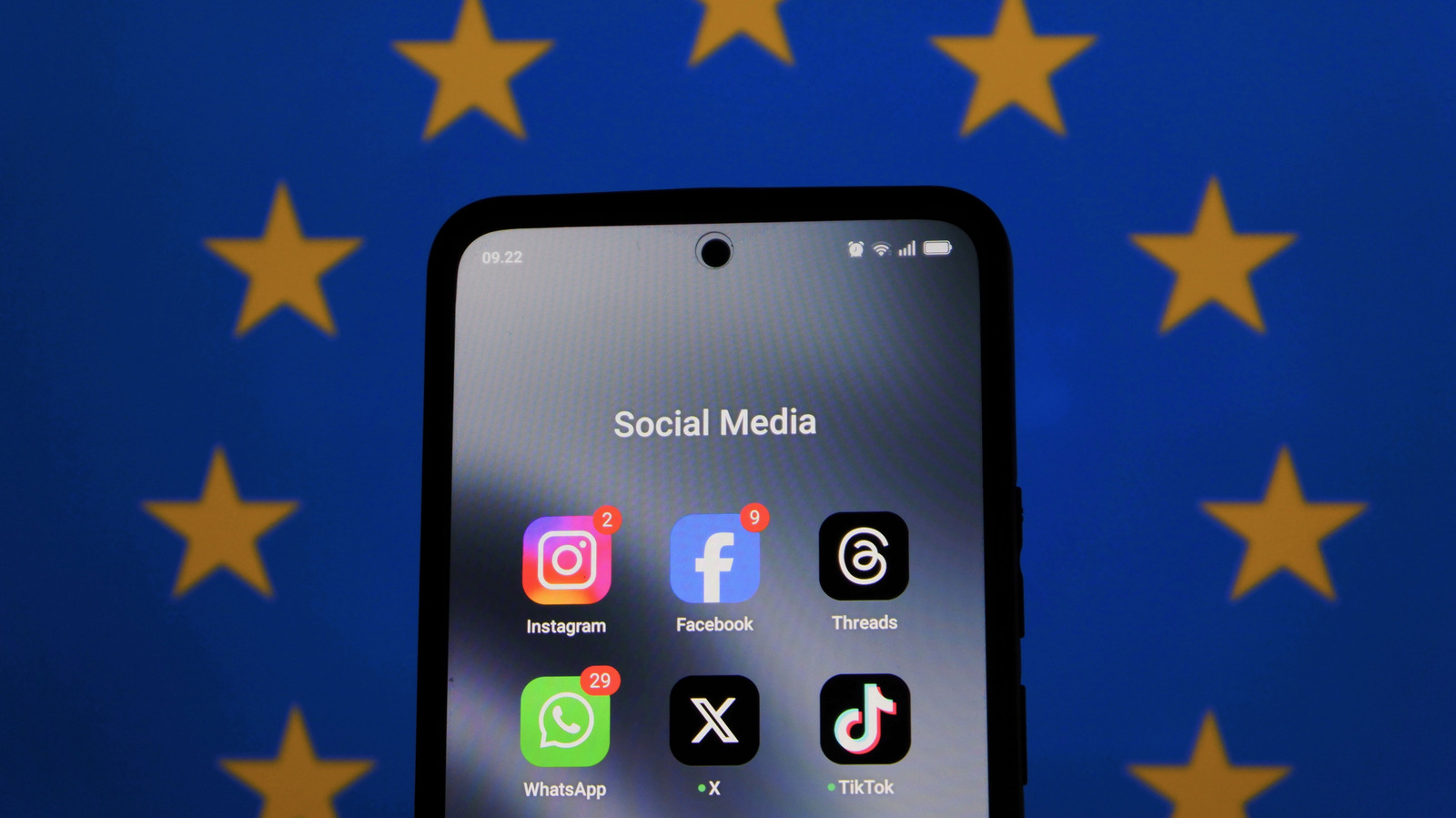
Following a new report from experts showing worrying data, Europe is taking steps toward barring children from using social media, EU Commission president Ursula von der Leyen announced in a press conference today. “It is clear we need age-appropriate restrictions to platforms,” von der Leyen said. “This is not about whether children can access social media. It is about whether and when social media can access our children.”

Authored by child psychologist Dr. Jörg M. Fegert and epidemiologist Dr. Maria Melchior, the report revealed some alarming statistics. Across Europe, kids now spend four to six hours per day on social media, and almost 60 percent of them had experienced “socio-emotional development and susceptibility to mental health issues… [resulting in] sleep and concentration problems, and increased rates of depression and anxiety.” 

As a result, the study recommended that the EU restrict social media access for kids under 13 unless supervised by a parent or teacher. It also advised that teens between 13 and 18 only get access to platforms with safety features like limits on infinite scrolling. It further recommended that toddlers under three have no screen access at all. 

Australia was the first country to bar children under 16 from social media, and multiple nations and territories including, France, Germany and Spain are looking into it. One US state, Florida, implemented a ban in 2024 on social media use for children under 14 without parental approval. 

Critics of the ban in Australia have said that kids can easily sidestep it by simply lying about their age or using fake accounts. The government there recently announced that it will double the maximum penalty for social media companies breaking its minimum age law to 99 million $AUD, or around $68 million. 

If Europe were to carry through with a new law, it would be the largest effort by far to ban social media use by children. The bloc is home to 450 million people of which 81 million or so are under the age of 18. However, creating such legislation would require negotiations and buy-in from all 27 nations in the bloc, something that could take a lot of time. 

The report may represent a tipping point, though. “The more we learn, and the more we see the impact on our children, the stronger the argument becomes for a social media start date,” said von der Layen. The EU Commission will now review the report and recommendations and present a proposal “after the summer.” 


Source link

Leave a Reply

Subscribe to Our Newsletter

Get our latest articles delivered straight to your inbox. No spam, we promise.

Recent Reviews


A day before SpaceX’s initial public offering, which set stock market records, a giant inflatable figure of the company’s CEO, Elon Musk, appeared in Times Square in New York.

An unflattering caricature of a bare-chested Musk, with the words “SpaceX’s Grok makes AI child porn” on its chest and back, the inflatable was the centerpiece of a demonstration organized by the advocacy group Safe AI Now. The goal: tie the landmark financial offering to deepfake sexualized images of children generated by SpaceX’s AI platform, Grok.

The protest took place just outside Nasdaq’s global headquarters on West 42nd Street on Thursday.

A representative for SpaceX did not immediately respond to a request for comment.

A spokesperson for SAIN said in an email that because SpaceX owns Grok, it makes child porn. “A company that enables child porn is inherently unstable and puts American investors and retirement funds at risk. SpaceX shareholders are on the hook for every Grok lawsuit, criminal investigation, and regulatory fine that is coming,” the spokesperson said.

The organization describes itself on its website as “a coalition of faith leaders, family advocates, child development experts, online safety organizations, legal professionals, technologists, and concerned citizens working to ensure that artificial intelligence advances human flourishing.” SAIN is effectively anonymous; it does not identity any of its leadership or any individuals associated with the group on the website.

The effigy, the spokesperson said, was chosen as a metaphor for Musk and the companies he owns or is associated with, including the social media platform X and the satellite broadband provider Starlink, which have been absorbed into SpaceX along with Grok and xAI. (Musk’s automaker, Tesla, is separate.)

“Much like Musk and his companies, it is inflated, full of hot air, and could pop at any minute — it served as a warning to investors eager to buy into Musk’s SpaceX IPO today,” the spokesperson said.

Grok’s history of deepfakes

CNET AI Atlas badge; click to see more

Ever since Musk introduced Grok in late 2023 and made it available to premium subscribers on X (formerly Twitter), the AI platform has had fewer guardrails than rivals such as ChatGPT and Claude.

It has a history of promoting antisemitism and hate speech while also allowing users, with its image-generation features, to do things such as undress photos of celebrities with AI-generated images or to create sexualized images of children. Those types of images have led to criminal investigations and lawsuits, and xAI made changes it said were meant to address Grok’s problems. 

But as Wired reported on Thursday, Grok continues to host sexualized deepfake images and videos of well-known women. 


Source link